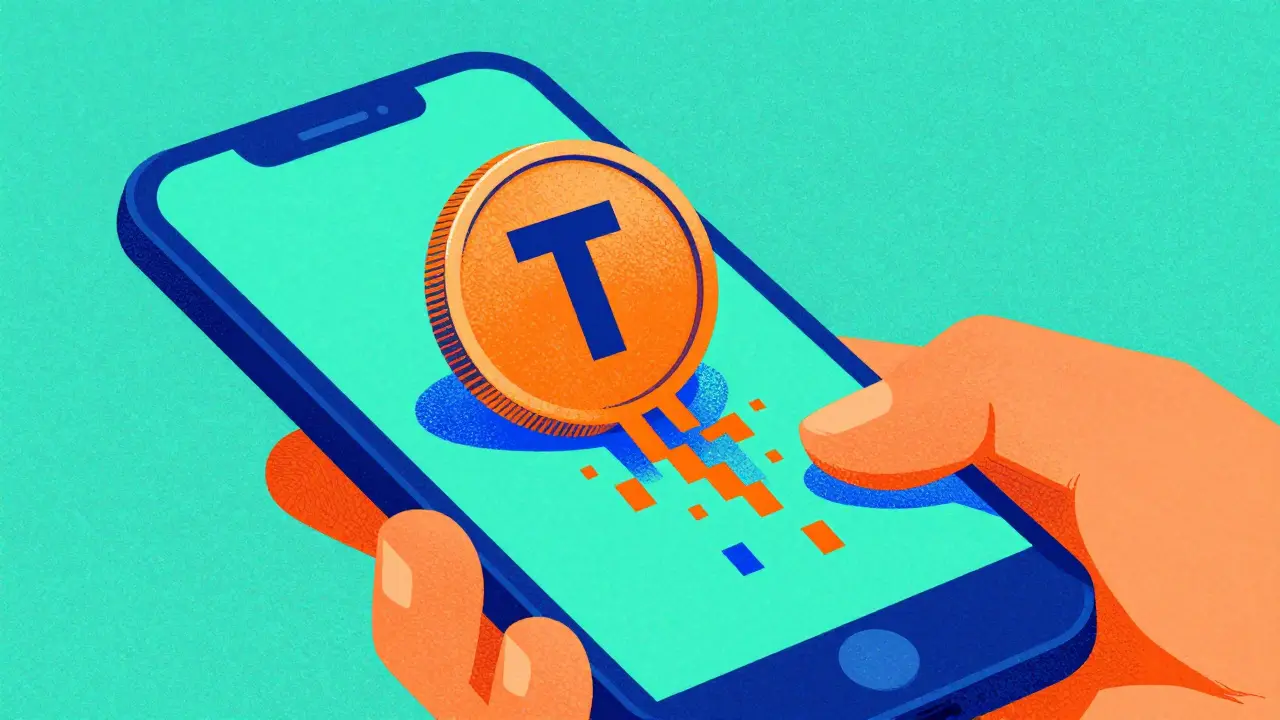
Imagine waking up to find the most popular stablecoin in the world suddenly vanishes from your favorite exchange. For millions of traders in Europe, this isn't a nightmare-it's the current reality. The USDT ban is now in full swing, driven by the European Union's aggressive push for financial stability through a massive new legal framework. If you're holding Tether in an EU-based account, you're likely feeling the pressure of a ticking clock.
The Law That Changed Everything
To understand why Tether is being pushed out, we have to look at MiCA (Markets in Crypto-Assets Regulation). MiCA is the EU's first comprehensive legislative framework designed to bring order to the wild west of crypto assets. Launched by the European Commission, it officially became law on June 29, 2023, but the real teeth of the regulation started showing on June 30, 2024, when stablecoin rules kicked in.
Under MiCA, the EU doesn't just see "stablecoins" as one big group. They split them into two camps: Electronic Money Tokens (EMTs) and Asset-Referenced Tokens (ARTs). Since USDT (Tether) and USDC aim to track a single currency (the US Dollar), they fall under the EMT category. To operate legally as an EMT in Europe, an issuer can't just claim they have the money; they need official authorization from authorities like France's ACPR (Autorité de Contrôle Prudentiel et de Résolution).
Why Tether Failed the Test
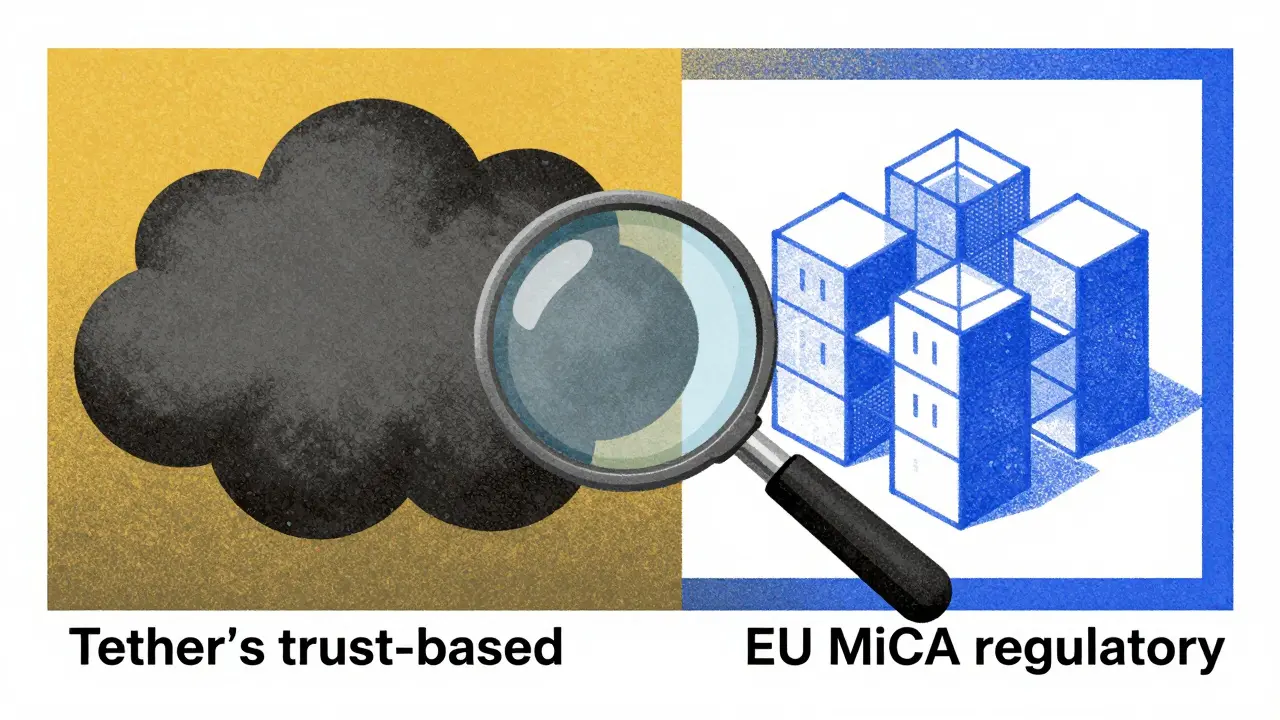
You might wonder: how can the biggest stablecoin in the world fail a regulatory test? It comes down to a clash of cultures. Tether has historically operated with a "trust us" approach, while the EU demands "show us." The regulators specifically pointed out several red flags that led to the trading ban effective July 1, 2025.
First, there's the reserve issue. MiCA requires a strict 1:1 backing using liquid assets that are kept completely separate from the company's own money. Tether's disclosure of these reserves hasn't met the EU's transparency standards. Regulators wanted real-time, independent audits and a level of blockchain transparency that Tether simply didn't provide. On top of that, the EU is obsessed with AML (Anti-Money Laundering) and KYC (Know Your Customer) automation. They want to see exactly where the money is moving, and Tether's processes were deemed too opaque.
| Requirement | EU MiCA Standard | Tether's Gap |
|---|---|---|
| Reserve Backing | 1:1 liquid assets, segregated | Insufficient disclosure of liquidity |
| Auditing | Regular, independent, real-time | Lack of transparent, frequent audits |
| AML/KYC | Automated, full traceability | Inadequate process automation |
| Legal Status | Authorized EMT issuer license | Failure to obtain EU registration |
The Great Exchange Exodus
Exchanges aren't waiting around for the regulators to knock on their doors. If a Crypto-Asset Service Provider (CASP) wants to keep its license, it has to purge non-compliant tokens. We've seen a domino effect starting in early 2025.
OKX took the lead by being the first major player to completely phase out USDT trading pairs for European users. Coinbase followed in February 2025, sending out blunt notifications telling users to swap their USDT for something else before the deadline. Then there's Binance, which took a slightly slower path. They started with a "sell-only" mode-meaning you could get rid of your USDT, but you couldn't buy more. By March 31, 2025, Binance completely terminated services for unauthorized spot stablecoin pairs, including USDT, TUSD, and DAI for EEA users.
The Hidden Risks of "Holding Out"
Some people think they can just keep their USDT in a private wallet and ignore the ban. While the EU can't "delete" a token from your Ledger, the problem arises when you try to move that money back into the real world. Experts at COREDO have warned that using USDT for cross-border transfers now carries massive regulatory risk.
If you try to move a large sum of USDT into a European bank account, you're likely to trigger a red flag. Because Tether isn't compliant, banks may view those funds as high-risk for money laundering. This can lead to your assets being blocked or, in worst-case scenarios, confiscated during a compliance check. The regulatory net is tightening, and the "grey area" for using non-compliant stablecoins is shrinking fast.
What Happens Next for European Traders?
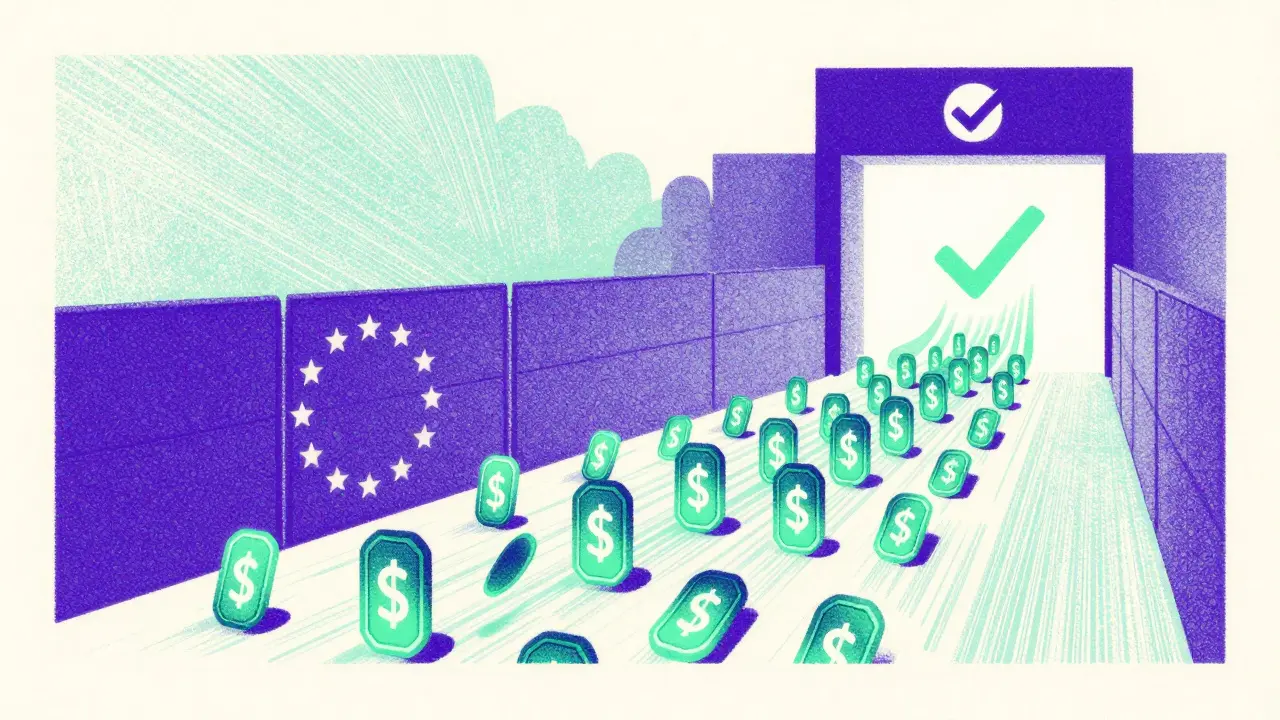
Is the stablecoin market dead in Europe? Not even close. In fact, analysts predict a 37% growth in the market following MiCA's full implementation. The money isn't leaving the ecosystem; it's just moving. Users are shifting toward MiCA-compliant alternatives-stablecoins that have done the hard work of getting licensed and auditing their reserves.
For businesses, the move is to secure a VASP (Virtual Asset Service Provider) license. This allows them to navigate the transition period, which for some legally operating providers lasts until July 1, 2026. However, this isn't a free pass; it's a grace period to get the paperwork in order before the EU shuts the door completely.
The Global Ripple Effect
The EU is essentially acting as the world's regulatory laboratory. By forcing a giant like Tether to either change or leave, they are setting a global standard for how stablecoins should be governed. Other jurisdictions are watching closely. If the EU successfully replaces USDT with compliant alternatives without crashing the market, expect other countries to copy the MiCA blueprint.
For the average user, the lesson is clear: regulatory compliance is now a core part of the "risk profile" of any asset. It's no longer just about whether a coin goes up or down; it's about whether the law allows you to hold it in the first place.
Can I still hold USDT in a private wallet in the EU?
Yes, you can keep USDT in a non-custodial wallet. However, you will find it increasingly difficult to trade it on regulated European exchanges or off-ramp the funds into Euro bank accounts due to strict AML/KYC checks.
What is the difference between an EMT and an ART under MiCA?
An Electronic Money Token (EMT) is a stablecoin pegged to a single official currency (like the USD or EUR). An Asset-Referenced Token (ART) is pegged to multiple assets, such as a basket of different currencies, commodities, or other crypto-assets.
When did the USDT trading ban officially start?
While MiCA provisions began in June 2024, the complete trading ban for non-compliant stablecoins like USDT on European exchanges became effective on July 1, 2025.
Why did Binance and Coinbase remove USDT?
These exchanges must comply with MiCA to maintain their operational licenses in the EU. Since Tether failed to meet transparency and reserve requirements, continuing to offer USDT would put the exchanges' own licenses at risk.
Are there any safe alternatives to USDT in Europe?
Yes, several MiCA-compliant stablecoins have emerged. You should look for tokens that are explicitly labeled as MiCA-compliant or issued by entities with an official EU EMT license.



Caiaphas Konkol
April 24, 2026 AT 14:33Obviously, this is just a sophisticated facade for the central banks to consolidate power. MiCA isn't about "stability"-it's a calculated move to kill decentralized liquidity and funnel everything into CBDCs where they can track every single cent you spend. The irony is that the masses think they're getting "protection" while the elites are just building a digital panopticon. It's almost laughable how predictable this is for anyone who actually understands the geopolitical landscape. Tether was an anomaly that allowed a level of freedom the EU simply cannot tolerate in its quest for total fiscal hegemony. If you think this ends with USDT, you are blissfully naive to the systemic architecture of the New World Order. This is the first domino in a global sequence of events designed to strip away financial sovereignty under the guise of regulatory compliance. I've seen this pattern before in various socioeconomic shifts, and the result is always the same: more control for the few, less for the many. Truly, the lack of critical thinking in the general public is staggering. We are witnessing the death of the original promise of crypto in real-time, replaced by a sterilized, government-approved version of "innovation." It's pathetic, really.
Kyle Bush
April 25, 2026 AT 20:43EU is just scared of US power!! 🇺🇸🇺🇸 Why are they trying to kill the most successful stablecoin? Absolute clowns over there trying to regulate things they don't understand. Keep your money in US-based assets and let Europe crash and burn with their red tape! 🤡🔥 Pure jealousy of American innovation! 🚀
Gloris Young
April 26, 2026 AT 13:43Just a heads up to anyone switching coins, check the fees first. Most platforms have pretty cheap swaps for compliant ones!
Eric Raines
April 28, 2026 AT 10:07Everyone's acting like this is news, but Tether has been a black box for years. I've been saying for ages that their audits were a joke. It was only a matter of time before a major jurisdiction like the EU grew a spine and demanded actual proof of reserves instead of those sketchy "attestations." Now everyone is surprised that the bubble is popping in Europe. It's honestly exhausting having to explain basic risk management to people who just want to gamble on a coin that might not even be fully backed. If you didn't move your funds out of USDT before the 2025 deadline, that's on you for ignoring the obvious red flags.
Doc Coyle
April 28, 2026 AT 18:34It is simply a matter of right and wrong. Companies that hide their books are not ethical and shouldn't be allowed to operate. It's not that complicated.
Hannah Rubia
April 29, 2026 AT 05:17It may be beneficial for users to explore Euro-backed stablecoins that adhere to the EMT guidelines to ensure continuous service without interruption.
Matthew Morse
May 1, 2026 AT 03:21too many words for a basic ban
Tara Aman
May 2, 2026 AT 12:00We can totally find a way through this! There are so many new compliant options coming out that are probably even safer than Tether was anyway. Let's just move forward and embrace the new standards!
debashish sahu
May 2, 2026 AT 22:00This transition is quite similar to how other financial sectors in Asia had to adapt to global standards over the last decade. It is a slow process but usually leads to more stability for the retail investor in the long run.
Mary Tawfall
May 4, 2026 AT 05:53It is great to see more transparency coming to the space. While it's a bit stressful for current holders, the long-term growth of the market will be much healthier with these rules in place.