You’ve probably seen the ticker WBS popping up on your exchange app or social media feeds. The marketing promises a "Web3 Digital Asset World for Global Youth" with rewards that sound too good to miss. But before you swap your hard-earned cash for this token, you need to know what’s actually under the hood. Is it a solid long-term hold, or just another speculative bubble waiting to burst?
Websea (WBS) is a cryptocurrency utility token built on the Polygon network, which is a Layer 2 scaling solution for Ethereum that enables fast and low-cost transactions. Launched in 2023, it serves as the internal currency for the Websea ecosystem-a platform mixing social features, gaming, and digital assets. While it has active trading volume, it remains a high-risk, micro-cap asset with significant transparency gaps regarding its team and detailed tokenomics.
The Core Concept: What Actually Is Websea?
At its heart, Websea isn’t just a coin; it’s an attempt to build a community-driven hub. The official branding targets young users globally, positioning itself as a gateway to the decentralized web through play-to-earn mechanics and social interaction. Think of it like a digital playground where holding or using WBS gives you access to games, social spaces, and potential earnings.
The primary incentive for new users? A newcomer reward package offering up to 999 WBS. This strategy is designed to bootstrap liquidity and user acquisition quickly. Instead of paying for ads, the project pays users in its own token. For a casual gamer or crypto-curious teen, getting nearly a thousand tokens for signing up sounds attractive. However, the value of those tokens depends entirely on whether others are willing to buy them later.
| Attribute | Detail |
|---|---|
| Ticker Symbol | WBS |
| Launch Year | 2023 |
| Blockchain Network | Polygon (EVM Compatible) |
| Total Supply | 300,000,000 WBS (Fixed) |
| Circulating Supply | Reported as 0 (Data Discrepancy) |
| Primary Use Case | Gaming, Social Rewards, Platform Utility |
Technical Architecture: Why Polygon Matters
One of the most critical details about WBS is that it operates on the Polygon network. If you’re familiar with Ethereum, you know that mainnet transactions can be slow and expensive during peak times. Polygon solves this by acting as a sidechain-processing transactions quickly and cheaply while still settling security back to Ethereum.
For Websea, this means two things:
- Low Barrier to Entry: Transferring WBS or interacting with its smart contracts costs fractions of a cent in gas fees (paid in MATIC). This makes it viable for micro-transactions common in gaming apps.
- Ecosystem Compatibility: Because Polygon is EVM (Ethereum Virtual Machine) compatible, you can store WBS in standard wallets like MetaMask or Trust Wallet without needing specialized hardware. You just need to add the Polygon network settings to your wallet.
However, being on Polygon doesn’t automatically make a token safe or valuable. It simply means the infrastructure is robust. The quality of the token itself depends on the developers behind it, which brings us to a major concern: transparency.
The Data Problem: Supply and Circulation Mysteries
Here is where things get confusing-and potentially risky. According to major data aggregators like Yahoo Finance and LiquidityFinder, Websea has a fixed total supply of 300 million tokens. Yet, these same platforms often report the circulating supply as zero.
How can a token trade with millions of dollars in daily volume if nothing is circulating? There are two likely explanations:
- Data Lag: Aggregators sometimes fail to update circulating supply metrics accurately for newer or smaller projects.
- Vesting/Locking Mechanisms: The project might have locked the majority of tokens in smart contracts, releasing them slowly over time. This is common but requires clear documentation.
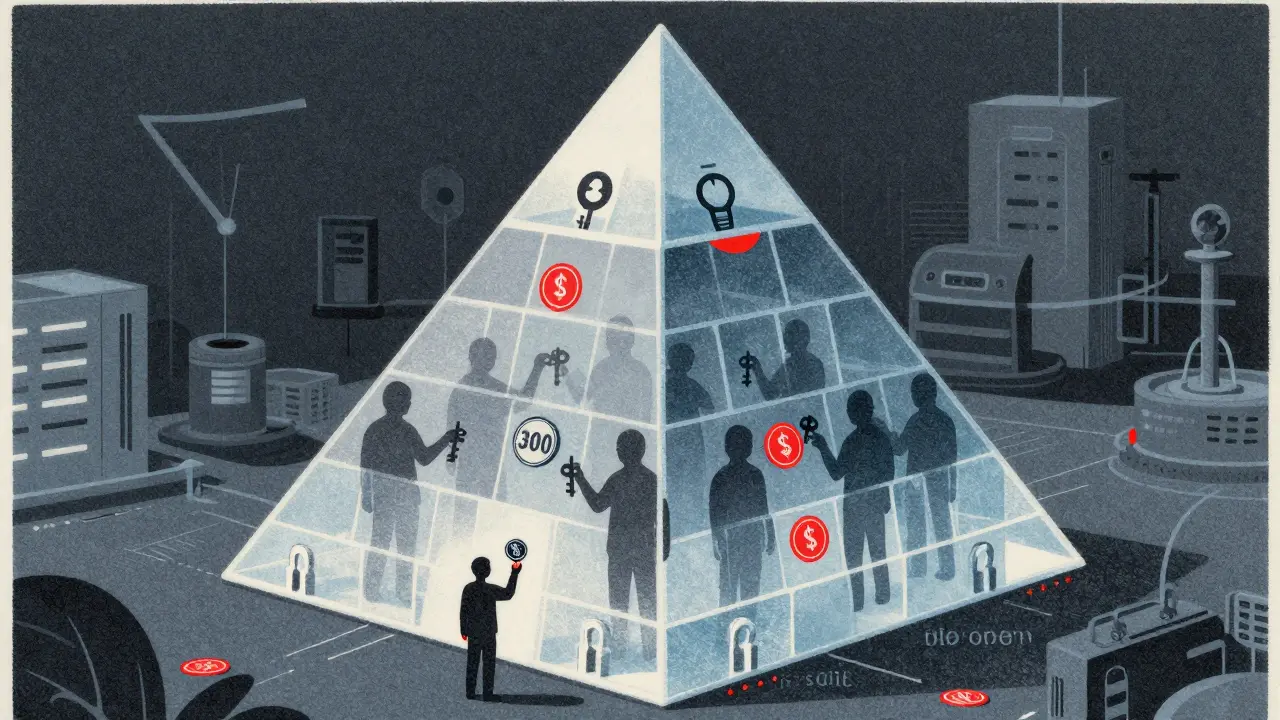
Without a publicly available whitepaper or clear tokenomics chart on major listing pages, you’re flying blind. You don’t know how many tokens are held by the team, investors, or early insiders. If 50% of the supply is unlocked tomorrow, the price could crash instantly due to sell pressure. Always calculate the Fully Diluted Valuation (FDV). At a price of ~$0.246, the FDV is roughly $73.8 million. Ask yourself: Does this small gaming platform truly represent $74 million in value?
Price History and Volatility: A Rollercoaster Ride
If you look at the charts, WBS is anything but stable. Historical data from Binance’s price directory shows an All-Time High (ATH) of $3.75 and an All-Time Low below $0.01. That is a massive range.
As of mid-2026, the price hovers between $0.23 and $0.44. Let’s break down what recent snapshots tell us:
- CoinMarketCap (May 2026): Listed at $0.246 with a 24-hour volume of over $9.4 million.
- Crypto.com (April 2026): Showed prices around $0.258 with significant daily swings (e.g., -5.29% in one day).
- Yahoo Finance: Recorded spikes in volume exceeding $15 million in a single day, indicating active trading interest despite the low market cap ranking.
This volatility is characteristic of "micro-cap" assets. Bitget ranks WBS at #3,675 globally, noting that its value is "not widely recognized by the market." In plain English: there aren’t many institutional investors or large funds holding this. Most traders are retail speculators chasing quick gains. When sentiment shifts, prices drop fast.
Where Can You Buy or Trade WBS?
Unlike Bitcoin or Ethereum, you won’t find WBS on every major exchange. Access is somewhat limited, which affects liquidity. Here is where you might find it:
- Centralized Exchanges (CEXs): Platforms like Bitget and Crypto.com list WBS pairs, typically against USDT (Tether) or USD. CoinLore tracks specific markets showing WBS/USDT pairs with moderate volume.
- Decentralized Options: Since it’s on Polygon, you could theoretically swap ETH/MATIC for WBS on DEXs (like QuickSwap or SushiSwap) if a liquidity pool exists. However, slippage can be high due to lower liquidity depth compared to CEXs.
- Platform Rewards: As mentioned, joining the Websea platform directly offers the 999 WBS newcomer bonus. This is the only way to get the token "for free," though it requires time and engagement rather than capital.
Note: Coinbase lists WBS for conversion tracking (showing rates like 1 WBS = ~38 JPY), but this doesn’t always mean you can directly trade it on their retail interface. Always check the specific exchange’s current listings.

Risks You Cannot Ignore
Before investing, you must weigh the risks. Websea falls into the high-risk category for several reasons:
- Lack of Transparency: No named founders, no public core team members, and no easily accessible whitepaper on major data sites. Who is building this? If the team disappears, the token becomes worthless.
- No Audit Reports: There is no mention of third-party smart contract audits in public summaries. Unaudited code can contain bugs or backdoors that allow developers to drain funds.
- Speculative Nature: With a rank of #3,675 and volatile pricing, WBS is driven by hype, not established utility. The "gaming" aspect needs proof of actual user retention, not just sign-up bonuses.
- Liquidity Risk: While daily volumes hit $9-15 million, this can evaporate quickly. If you try to sell a large amount, you might crash the price yourself.
Is Staking WBS Worth It?
StakingRewards lists Websea as an asset with staking opportunities. This implies you can lock your WBS to earn yield, possibly from transaction fees or new token emissions. However, the details are scarce. We don’t see clear APY (Annual Percentage Yield) figures, lock-up periods, or penalty structures in public data.
Be cautious. High yields in obscure tokens often signal inflationary pressure-the protocol prints more tokens to pay stakers, diluting the value of your original holdings. Without knowing the emission schedule, staking could end up costing you money in real terms.
Final Verdict: Proceed with Caution
Websea (WBS) is a real, actively traded token on the Polygon network with a clear niche in youth-oriented Web3 gaming. It offers low-cost transactions and easy wallet integration. However, it lacks the fundamental transparency required for serious investment. The missing team info, unclear circulating supply, and high volatility make it a speculative gamble rather than a financial plan.
If you want to experiment, use the newcomer rewards to get exposure without spending cash. If you consider buying, treat it as money you are prepared to lose entirely. Do not invest based on the promise of future bull markets alone; demand better data from the project first.
What blockchain is Websea (WBS) built on?
Websea (WBS) is built on the Polygon network. This means it is an ERC-20 compatible token that benefits from Polygon's fast transaction speeds and low gas fees, making it suitable for gaming and micro-transactions.
Why does some data show 0 circulating supply for WBS?
This is likely a data reporting error by aggregators or reflects a vesting schedule where most tokens are locked. Despite this, the token trades actively on exchanges, proving that tokens are indeed in circulation. Investors should rely on live trading volume rather than static supply numbers until clarified by the project.
Can I buy Websea on Coinbase or Binance?
Binance tracks the price of WBS in its directory, but this does not guarantee direct trading pairs on the exchange. Coinbase allows price conversion tracking. For actual trading, users currently rely on platforms like Bitget, Crypto.com, and various decentralized exchanges on Polygon.
What is the maximum number of WBS tokens?
The total fixed supply of Websea is 300,000,000 WBS. This cap prevents infinite inflation, but the distribution of these tokens among the team, investors, and community is not clearly disclosed in public sources.
Is Websea a safe investment?
Websea is considered a high-risk, speculative asset. It has a low market rank (#3,675), high historical volatility (dropping from $3.75 ATH to sub-$0.50 levels), and lacks transparent team information or audit reports. Only invest what you can afford to lose.
How do I get free WBS tokens?
New users can join the Websea platform and participate in their newcomer program, which offers rewards of up to 999 WBS. This is a promotional tactic to attract users to their social and gaming ecosystem.

nancy jarecki
June 25, 2026 AT 01:13It is frankly exhausting to witness the sheer cognitive dissonance required to take a token with zero circulating supply data and an anonymous dev team seriously. The notion that one might derive utility from a 'social gaming' platform built on such precarious fundamental architecture is, at best, naive and at worst, indicative of a broader societal decline in financial literacy. One must consider the epistemological void left by the absence of a whitepaper; without verifiable source code audits or transparent vesting schedules, we are merely participating in a decentralized casino where the house has not even revealed its identity. The reliance on Polygon for low-cost transactions is a technicality that does little to mitigate the existential risk of rug pulls inherent in micro-cap assets lacking institutional oversight.
Robert Hundley
June 25, 2026 AT 11:23Hey everyone! Just saw this thread pop up and wanted to chime in because I think there's some real potential here if you look past the noise :D
I've been playing around with some Web3 games lately and honestly? The gas fees on Ethereum mainnet are a killer for casual stuff. Polygon makes it so smooth to just swap tokens without paying $50 in fees. If WBS can actually deliver on the play-to-earn promise, it could be huge for the younger crowd who are tired of traditional finance gatekeeping them. Don't let the FUD scare you off completely, folks! Sometimes you gotta take a calculated risk to get ahead. Keep your eyes open and have fun with it! 🚀
Melissa L
June 27, 2026 AT 05:26i dont really get all teh big words but it sounds risky. i signed up for the free tokens cause why not right? got my 999 wbs already sitting in my wallet. hope it goes up soon lol
Rob Morton
June 27, 2026 AT 16:53There is a profound philosophical question embedded within the structure of these digital assets: what is value when it is detached from tangible production? When we observe the volatility of WBS, ranging from sub-penny values to nearly four dollars, we are witnessing the raw expression of collective human sentiment rather than economic reality. It invites us to reflect on our own relationship with scarcity and trust. Are we trusting the technology, or are we trusting each other? In the absence of a known team, the community itself becomes the foundation. This is both terrifying and liberating. We must ask ourselves if we are prepared to bear the weight of that uncertainty.
Routh Middaugh
June 29, 2026 AT 06:40I suppose one could argue that the ambiguity surrounding the tokenomics is actually a feature, not a bug? Perhaps the lack of transparency allows for greater flexibility in adapting to market conditions? However, I remain cautiously optimistic about the underlying technology. The integration with MetaMask and Trust Wallet is seamless, which speaks volumes about the developer's attention to user experience. It is certainly worth monitoring, albeit with a healthy dose of skepticism. Let us see how the next quarter unfolds before drawing any definitive conclusions.
Ryan Peters
June 29, 2026 AT 23:01This is exactly why American innovation is being stifled by globalist crypto scams. You have unregulated entities peddling vaporware to gullible teenagers while our domestic industries crumble. The fact that this 'project' hides behind anonymity is a red flag the size of the Liberty Bell. Real wealth is built on hard work and tangible assets, not speculative bubbles fueled by foreign capital and shady offshore servers. Wake up, people. Stop throwing your money into black holes designed to enrich criminals. Support local businesses, not these digital ponzi schemes.
ross harris
July 1, 2026 AT 15:15The entire narrative of Websea is a grotesque parody of genuine economic activity, a hollow shell propped up by the desperate hopes of those who believe they can outsmart the matrix. It is a carnival of greed, where the clowns wear suits and speak in buzzwords like 'utility' and 'ecosystem' while slowly draining the lifeblood from their investors. To stake these tokens is to willingly enter a gladiatorial arena where the sand is made of broken dreams and the lions are hungry venture capitalists. Do not be fooled by the shiny veneer of blockchain technology; beneath it lies the same old rot of exploitation and deceit. It is a beautiful disaster, really.
Carl Belgrave
July 2, 2026 AT 07:27Listen up, you absolute morons. If you are buying this trash based on a Reddit post, you deserve to lose every penny. I have seen hundreds of these projects come and go, and they all end the same way: in flames. The team is anonymous, the audit is missing, and the supply is a mystery. It is a scam, plain and simple. Get out of crypto if you cannot handle basic due diligence. Go buy stocks in companies that make actual products. Stop embarrassing yourselves with this garbage.