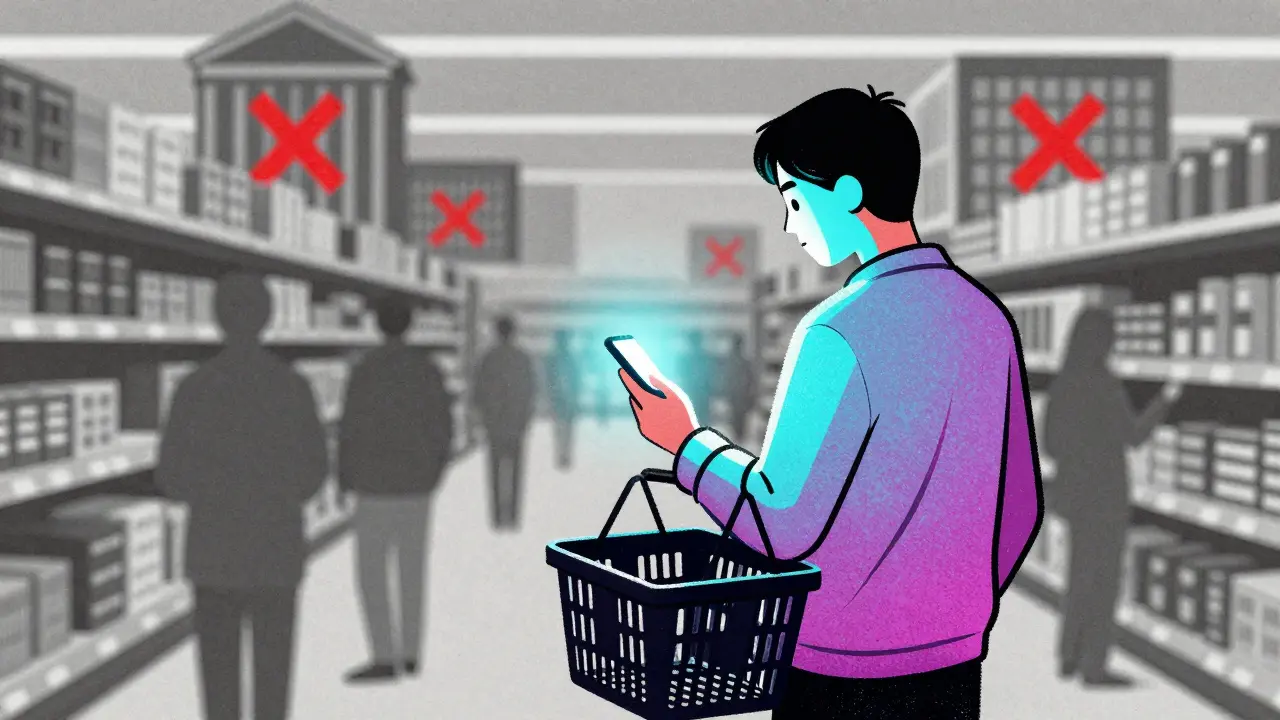
Imagine trying to buy groceries, but your bank account has been frozen because of a government decree. For millions of people living in nations with strict financial controls, this isn't a hypothetical nightmare-it's daily life. In 2026, the gap between traditional banking and digital freedom is wider than ever. While governments in countries like Nigeria, China, and Vietnam tighten their grip on fiat currency flows, citizens are finding ingenious ways to step outside the system using cryptocurrency.
You might wonder how anyone can trade when local banks block transactions and centralized exchanges ban residents. The answer lies in a complex web of peer-to-peer networks, decentralized technology, and privacy tools. This guide breaks down exactly how these workarounds function, the risks involved, and the specific methods users rely on to maintain financial sovereignty despite heavy restrictions.
The Landscape of Restrictions in 2026
To understand the solutions, you first need to grasp the severity of the problem. As of mid-2026, the regulatory environment for Cryptocurrency is a digital asset system that operates independently of central banks remains fragmented. According to data from CoinGecko’s 2025 analysis, nine countries have implemented complete bans on Bitcoin: Afghanistan, Algeria, Bangladesh, China, Egypt, Kuwait, Nepal, and North Macedonia. Other nations like Bolivia, Turkey, and Vietnam enforce severe restrictions that effectively criminalize or heavily penalize crypto usage.
In Nigeria, the Central Bank has maintained a banking ban on cryptocurrency transactions since January 17, 2017. A circular reinforced in February 2021 explicitly threatens penalties for any financial institution facilitating these payments. Similarly, China’s comprehensive ban, enforced since 2019, targets not just trading but also mining, aiming to reduce energy consumption and control capital flight. Even in places where crypto isn’t fully illegal, like Turkey, President Recep Tayyip Erdoğan’s regulations banned cryptocurrencies for payments following significant lira depreciation.
These restrictions aren't just theoretical; they carry real consequences. Algeria enforces prison sentences under Anti-Money Laundering laws for violations. Bangladesh classifies crypto trading as illegal under its Money Laundering Prevention Act. Yet, despite these harsh measures, adoption hasn't stopped. In fact, it has evolved into a resilient underground economy.
Peer-to-Peer (P2P) Trading: The Primary Workaround
If you live in a restricted country, the most common way to access crypto is through Peer-to-Peer (P2P) Platforms are marketplaces where individuals buy and sell cryptocurrency directly without an intermediary exchange holding funds. Platforms like Paxful, LocalBitcoins, and Binance P2P have become lifelines for millions. These platforms act as escrow services, allowing buyers and sellers to negotiate terms directly.
Why does this work? Because it bypasses the need for direct bank transfers to a centralized exchange that might flag your activity. Instead, you transfer local fiat currency to another individual’s bank account or via mobile money, and the platform releases the crypto once the payment is confirmed. In Q1 2025, Paxful reported 1.2 million active users from Nigeria, Venezuela, and Argentina alone. Globally, P2P transactions accounted for 38.7% of all crypto volume in restricted countries, totaling over $480 billion annually.
However, this method comes with premiums. Vietnamese users, for instance, often pay a 2.5% premium over the market rate to trade through Binance P2P using middlemen. Nigerian users frequently use virtual dollar cards from services like Chipper Cash to bridge the gap between their local naira accounts and international crypto platforms. One user, u/NaijaCryptoGuy, shared on Reddit in March 2025 that he had processed $3,200 monthly through Bybit using Chipper Cash for 18 months, though he experienced one temporary freeze. This highlights the fragility of even the best workarounds.
Decentralized Exchanges (DEXs) and No-KYC Options
For those who want to avoid intermediaries entirely, Decentralized Exchanges (DEXs) are blockchain-based platforms that allow direct token swaps without a central authority offer a solution. Unlike centralized exchanges (CEXs) like Coinbase or Binance, DEXs such as Uniswap and PancakeSwap do not require Know Your Customer (KYC) verification. You connect your wallet, and you trade. Period.
Koinly’s October 2025 analysis identified 20 no-KYC exchanges, including Bisq and Hodl Hodl, that facilitate private trading. These platforms are crucial for users in countries like Iran and North Korea, where internet surveillance is intense. The Tor browser saw adoption growth of 189% in Iran and 223% in North Korea in early 2025, largely driven by the need to access these anonymous trading venues.
But there’s a catch: liquidity. While CEXs like Coinbase handle billions in daily volume, no-KYC exchanges suffer from lower liquidity. Bisq, for example, averages only $1.2 million in daily trading volume compared to Coinbase’s $14.7 billion. This means you might struggle to execute large trades without significantly moving the price. Additionally, 67% of users in restricted countries report at least one security incident when using these platforms, according to Professor David Yermack of NYU Stern. Scams targeting inexperienced users on no-KYC sites are rampant.
Technical Tools: VPNs and Privacy Coins
Accessing these platforms often requires masking your location. Virtual Private Networks (VPNs) are software tools that encrypt internet traffic and mask the user's IP address and geographic location have become essential utilities. NordVPN reported a 217% increase in users from China and a 342% increase from Nigeria between late 2023 and late 2024. However, relying solely on a VPN is risky. Governments are getting better at detecting and blocking VPN traffic. In 2025, 47% of users in restricted countries experienced service interruptions during government-imposed internet blackouts.
To further protect their identity, many users turn to privacy coins like Monero (XMR) and Zcash (ZEC). These cryptocurrencies obscure transaction details on the blockchain. Adoption of privacy coins spiked by 317% in China and 289% in Iran since 2023. While they represent only 2.3% of the total crypto market cap, they are critical for high-risk users who cannot afford to have their financial activities traced back to them.
Alternative Payment Methods: Gift Cards and Hawala
When banks say no, people find other ways to move value. One creative workaround is gift card arbitrage. Users purchase Steam, iTunes, or Amazon gift cards with local currency and then trade them for cryptocurrency on platforms like Paxful. Chainalysis documented $427 million in gift card-based crypto transactions from restricted countries in 2024. It’s cumbersome and slow, but it works.
Another ancient method has seen a modern revival: the Hawala System is an informal value transfer network based on trust and reputation rather than physical movement of funds. Traditionally used in South Asia and the Middle East, Hawala networks have adapted to crypto. Users leverage Dubai-based services to convert fiat to crypto through UAE-compliant exchanges. The UAE’s Dubai Virtual Asset Regulatory Authority (VARA) has made it a hub for these transactions, processing over $30 billion in crypto transactions between July 2023 and June 2024. Alex Thorn of Galaxy Digital noted that hawala networks now process 15% of crypto transactions from restricted jurisdictions, highlighting the blend of old-world trust and new-world tech.
| Method | Anonymity Level | Ease of Use | Risk Factor | Best For |
|---|---|---|---|---|
| P2P Platforms (e.g., Paxful) | Medium | High | Medium (Scams, Freezes) | Daily transactions, small amounts |
| Decentralized Exchanges (DEXs) | High | Low (Technical skill needed) | High (Smart contract risks, scams) | Large holdings, privacy-focused users |
| Gift Card Arbitrage | Medium-High | Low (Time-consuming) | Low-Medium | Initial onboarding, avoiding banks |
| Hawala Networks | Very High | Medium (Requires connections) | Medium (Counterparty risk) | Large cross-border transfers |
| Privacy Coins (Monero) | Very High | Medium | High (Regulatory scrutiny) | Maximum anonymity |
Risks and Realities: What You Need to Know
It’s important to be clear: accessing crypto in a restricted country is not without danger. The IMF’s 2025 Financial Stability Report highlighted that 41% of Nigerian users reported pressure to use unregulated platforms that later collapsed, resulting in $217 million in losses in 2024. Security incidents are common. With 67% of users reporting at least one security breach, vigilance is paramount.
Furthermore, regulatory arms races are accelerating. In January 2025, OKX announced expanded restrictions affecting more than twenty countries, including Algeria and Bangladesh. This pushed many users toward decentralized solutions, with Uniswap v4 seeing a 187% increase in users from restricted regions. However, as governments enhance blockchain surveillance capabilities, traditional workarounds may become less effective. The U.S. FinCEN proposed rules in February 2025 requiring KYC for transactions over $300, which could disrupt access methods for citizens in restricted countries who rely on U.S.-connected infrastructure.
Technical barriers also remain high. A World Bank survey found that 78% of new users in restricted countries require assistance with seed phrase management. Only 37% of no-KYC exchanges offer multilingual customer service, with response times averaging 58 hours for non-English queries. Community-driven resources, like the 'Crypto Without Borders' Telegram channel with 147,000 members, have stepped in to fill this gap, providing country-specific guides for 43 restricted jurisdictions.
Step-by-Step: Establishing Secure Access
If you are considering navigating this landscape, here is a practical framework based on expert recommendations and user experiences:
- Secure Your Connection: Install a reputable VPN like NordVPN or ExpressVPN. Do not rely on free VPNs, as they often log data. Cost ranges from $11.95 to $12.95 per month.
- Create a Non-Custodial Wallet: Set up a wallet like Trust Wallet or MetaMask. Write down your seed phrase on paper and store it securely. Never share this phrase.
- Acquire Initial Crypto: Use P2P platforms or gift card arbitrage to get your first small amount of Bitcoin or Ethereum. Start small to test the process.
- Transfer to a DEX: Move your assets to a decentralized exchange if you want greater privacy. Ensure you are connecting via a secure network.
- Execute Trades Carefully: Be wary of slippage on low-liquidity pools. Double-check contract addresses to avoid fake tokens.
- Withdraw to Cold Storage: For long-term holding, transfer assets to a hardware wallet or a privacy-focused software wallet.
- Stay Informed: Join community channels for updates on regulatory changes and scam alerts.
This process typically takes 3-5 weeks to master, according to CryptoSlate’s 2025 guide. Patience and education are your best defenses against loss.
Is it legal to use crypto in restricted countries?
In many countries with banking restrictions, such as China, Algeria, and Bangladesh, using cryptocurrency for payments or trading is explicitly illegal and can result in fines or imprisonment. However, enforcement varies widely. Some countries ban domestic exchanges but do not actively prosecute individual holders. Always consult local legal experts before engaging in crypto activities.
What is the safest way to buy crypto without a bank account?
The safest method often involves using established Peer-to-Peer (P2P) platforms with escrow services, such as Paxful or Binance P2P. Alternatively, buying gift cards with cash and trading them for crypto on trusted marketplaces can bypass banking systems entirely. Decentralized Exchanges (DEXs) are also an option but require technical knowledge and initial crypto acquisition through other means.
Do VPNs guarantee anonymity when trading crypto?
No, VPNs do not guarantee complete anonymity. They hide your IP address from the website you are visiting, but they do not encrypt your entire online activity or protect you from metadata analysis by sophisticated state actors. For higher anonymity, combine VPNs with the Tor browser and use privacy-focused coins like Monero.
What are the biggest risks of using no-KYC exchanges?
The biggest risks include smart contract vulnerabilities, lack of customer support, and higher exposure to scams. Since these platforms do not verify identities, there is no recourse if you send funds to the wrong address or fall victim to a phishing attack. Additionally, some no-KYC exchanges have been known to collapse or disappear with user funds.
Can I use Hawala to convert fiat to crypto?
Yes, Hawala networks have adapted to facilitate crypto conversions. Users often partner with trusted brokers in friendly jurisdictions like the UAE to convert local fiat into crypto. This method relies heavily on personal trust and reputation, making it suitable for larger transactions but carrying counterparty risk if the broker defaults.

Heather Austin
July 15, 2026 AT 20:13look i know the article says p2p is the way to go but honestly if you are in a place with heavy surveillance like china or iran you really need to be careful about your metadata
even if you use a vpn they can still see that you are connecting to known exchange ips unless you route everything through tor and then even that is getting harder with deep packet inspection
i have been helping friends in vietnam set up bisq nodes and it takes forever to find liquidity but at least there is no central server to subpoena
the gift card method is also risky because those cards can be flagged by the merchant if they see unusual patterns so always buy small amounts from different stores
Lisa Chong
July 16, 2026 AT 01:59ThIs Is A DAngErOuS PaTh To Take And You Should All Be Ashamed Of Ignoring The Law
The ElIteS Want You To Think That Crypto Is Freedom But It Is Just Another Tool For Money Laundering And Tax Evasion By Criminals Who Hate Our Society
I Have Seen Too Many People Get Ruined By These Scams And Now They Are Trying To Normalize It By Writing Articles Like This Which Are Filled With Lies And Half Truths
You Are Playing With Fire And When The Government Comes Knocking On Your Door Do Not Come Crying To Me Because I Told You So
The System Is There For A Reason And If You Try To Break It You Will Only Hurt Yourself And Your Family
Please Stop Spreading This Dangerous Misinformation Before Someone Gets Arrested Or Worse
Ran Tao
July 16, 2026 AT 07:14Oh please Lisa spare me the moralizing lecture 🙄
As if anyone in this day and age cares about your precious laws when their bank accounts are frozen for no reason 😂
You sound like a broken record playing the same old tune while the world moves on without you 🎭
People are just trying to survive and you sit there judging them from your ivory tower 🏰
It is absolutely hilarious how out of touch you are with reality right now 🤡
Maybe try reading a book instead of posting these cringe worthy comments 📚
Sophie Nakasako
July 18, 2026 AT 05:51I think we should focus more on the educational aspect here rather than attacking each other
It is fascinating to see how technology empowers people who have been left behind by traditional financial systems
Imagine being able to send money to your family overseas without paying huge fees to banks that do not care about you
This is what true innovation looks like and we should support those who are brave enough to explore new options
We all learn differently and some people might need more guidance than others so let us be kind and helpful
The future is bright for those who are willing to adapt and learn new skills every single day
Kristy Morrow
July 19, 2026 AT 02:55you are all missing the point entirely
crypto is not about freedom it is about control
the real masters of the universe want you to believe that decentralization is good but it is just a trap to get your data
think deeper
why would they allow this if it was truly free
it is all an illusion
wake up sheeple