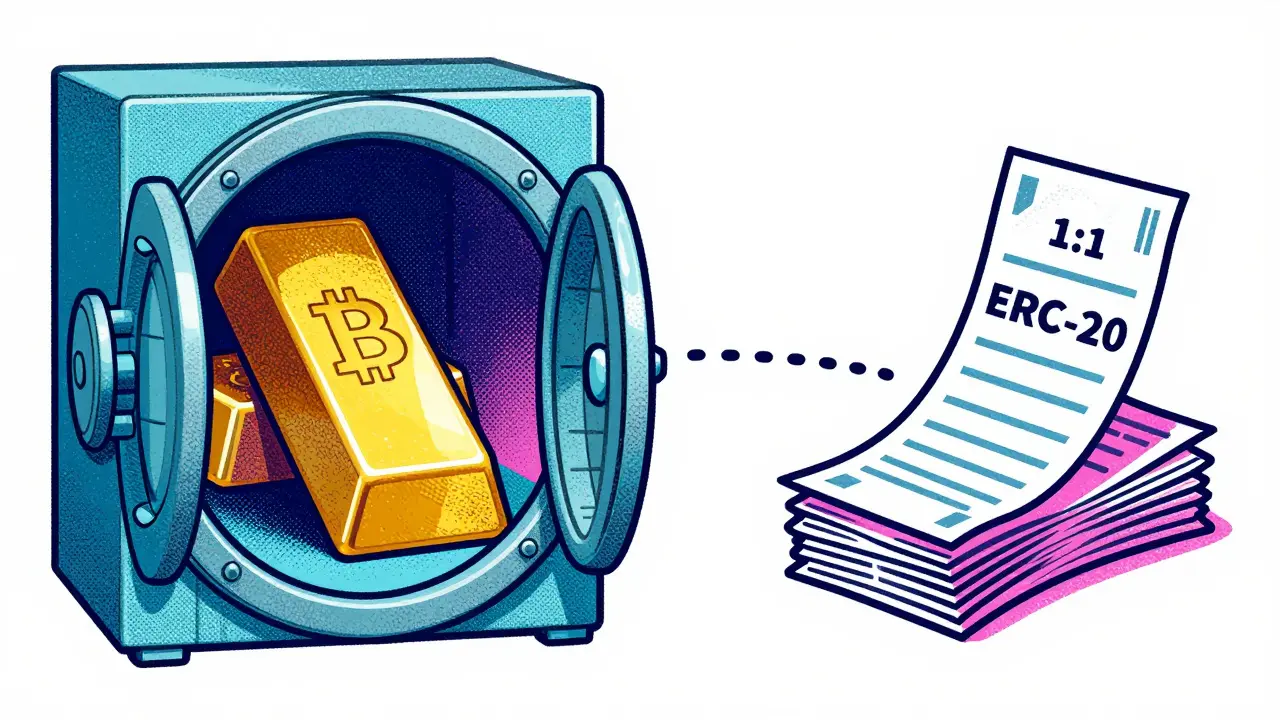
Imagine you have a gold bar locked in a vault. You want to use that gold as collateral to get a loan, but the bank doesn't accept physical bars-they only accept digital credits. So, you deposit the gold, and the bank gives you a paper receipt worth exactly one gold bar. You can now trade that receipt or use it for loans. That is essentially what Wrapped Bitcoin does.
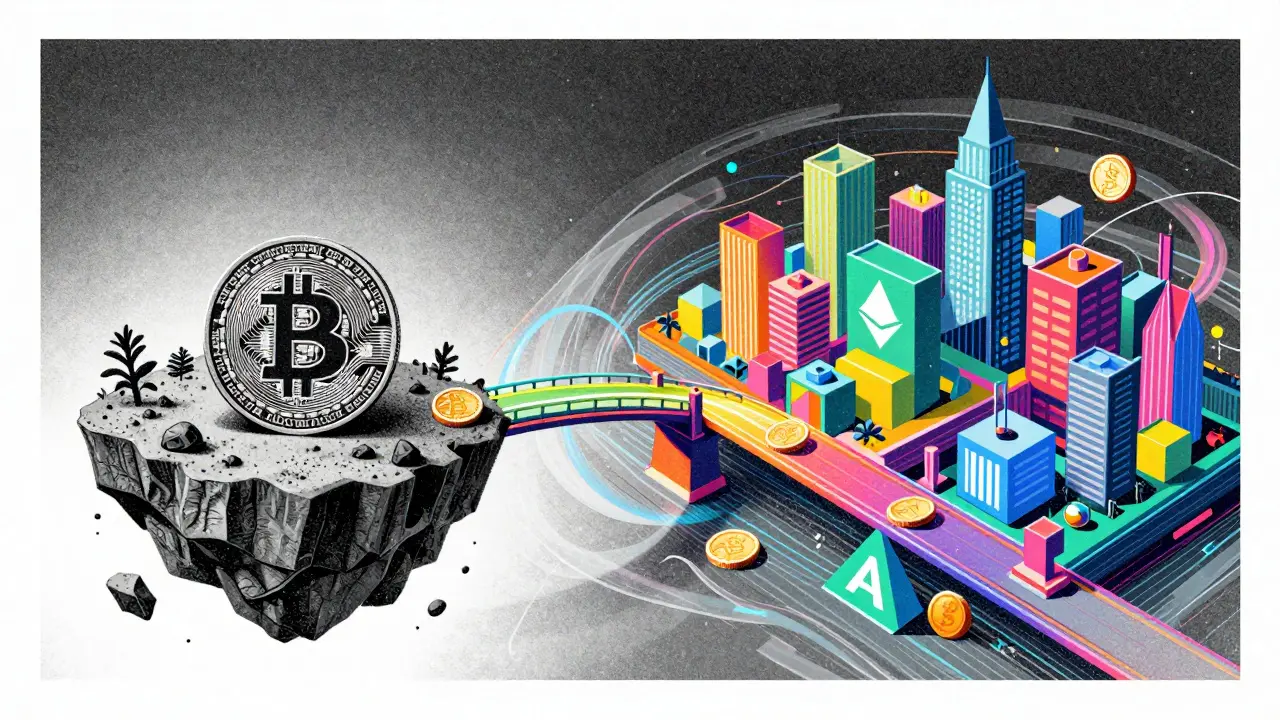
Bitcoin is the king of digital assets, but it’s stuck on its own blockchain. It can’t talk to smart contracts on Ethereum, which is where most decentralized finance (DeFi) happens. Wrapped Bitcoin (WBTC) solves this by creating an ERC-20 version of Bitcoin on the Ethereum network. This allows you to take your BTC and use it in lending protocols like Aave, liquidity pools on Uniswap, or yield farming strategies without ever selling your original coins.
The Core Mechanism: How Wrapping Actually Happens
WBTC isn't magic; it's a trust-based system built on three pillars: Merchants, Custodians, and the DAO. Understanding these roles is crucial because they determine how secure your asset really is.
When you decide to wrap your Bitcoin, you don't just send it to a random address. You go through an approved Merchant. These are entities like Dharma, AirSwap, or Kyber Network. Their job is to handle your identity verification (KYC) and facilitate the transaction. Once you verify who you are, you send your native Bitcoin to a specific wallet controlled by the Custodian.
As of 2026, BitGo is the sole custodian for WBTC. They hold the actual Bitcoin in cold storage. When BitGo confirms they have received your BTC, they signal the Ethereum smart contract to mint new WBTC tokens. These tokens are sent to your Ethereum wallet, usually within 15 to 30 minutes. For every 1 BTC deposited, exactly 1 WBTC is created. This maintains the strict 1:1 peg.
To unwrap-getting your Bitcoin back-you do the reverse. You send your WBTC to a burn address on Ethereum. The smart contract destroys those tokens. BitGo sees the burn event and releases the equivalent amount of Bitcoin from their cold storage to your Bitcoin wallet. This process typically takes 30 to 60 minutes.
Why Use WBTC Instead of Native Bitcoin?
You might ask, "Why not just keep my Bitcoin on the Bitcoin network?" The answer lies in utility. Native Bitcoin is excellent for storing value and sending payments, but it lacks programmability. You can't write complex financial logic on the Bitcoin blockchain easily.
Ethereum, however, is a computer. With WBTC, your Bitcoin becomes programmable. Here is what you can do with it:
- Earn Yield: Lend your WBTC on platforms like Aave or Compound to earn interest, often ranging from 2% to 5% APY depending on market demand. Native Bitcoin sitting in a wallet earns 0%.
- Provide Liquidity: Add WBTC to liquidity pools on decentralized exchanges (DEXs) like Uniswap or SushiSwap to earn trading fees.
- Collateralize Loans: Use WBTC as collateral to borrow stablecoins like USDC or DAI without selling your Bitcoin position.
- Access Derivatives: Trade leveraged positions or hedge against price drops using protocols like Synthetix or dYdX.
This interoperability unlocks billions in liquidity. As of early 2024, WBTC held over $1.2 billion in Total Value Locked (TVL) across various DeFi protocols, making it the dominant wrapped asset.
The Trust Factor: Centralization vs. Decentralization
Here is the catch. To make WBTC work, you have to trust BitGo. This is the biggest criticism of WBTC. In the crypto world, we love "not your keys, not your coins." But with WBTC, BitGo holds the keys to the underlying Bitcoin.
If BitGo gets hacked, goes bankrupt, or decides to freeze withdrawals, your WBTC could become worthless. While BitGo uses robust security measures-including multi-signature wallets requiring multiple parties to approve transactions and regular Proof of Reserves audits-the risk remains centralized.
Let's compare WBTC to its main competitors to see the trade-offs:
| Feature | WBTC | tBTC (Threshold) | sBTC (Synthetix) |
|---|---|---|---|
| Custody Model | Centralized (BitGo) | Decentralized Nodes | Over-collateralized Synthetics |
| Market Share | ~67% | ~5% | ~8% |
| Liquidity | Very High | Low | Medium |
| Speed to Mint | 15-30 mins | 6-12 hours | Instant (via SNX) |
| Primary Risk | Custodial Failure | Smart Contract Bugs | Oracle Manipulation |
WBTC wins on liquidity and ease of use. Most DeFi protocols support WBTC first because there is more money flowing through it. However, if you are a purist who refuses to trust a single company with your assets, alternatives like tBTC offer a decentralized alternative, though at the cost of lower liquidity and slower processing times.
Security and Audits: Is Your Money Safe?
Security in WBTC relies on two layers: the Ethereum smart contract code and the operational security of BitGo.
The smart contracts governing WBTC have been audited by top firms like Trail of Bits and Quantstamp. These audits generally find no critical vulnerabilities in the code itself. The risk isn't that the code will fail; it's that the human operators behind the scenes might make a mistake or be compromised.
BitGo mitigates this with Threshold Signature Schemes (TSS) and multi-sig requirements. They also publish monthly Proof of Reserves reports. These are cryptographic proofs showing that the Bitcoin in their wallets matches the amount of WBTC in circulation. In April 2024, for example, the reserve ratio was verified at 100.02%, ensuring full backing.
However, history shows us that central points of failure can break. In 2022, a temporary API outage at BitGo froze $300 million in WBTC conversions for four hours. No funds were lost, but the service was unavailable. This reminds us that while WBTC is secure, it is not immune to operational glitches.
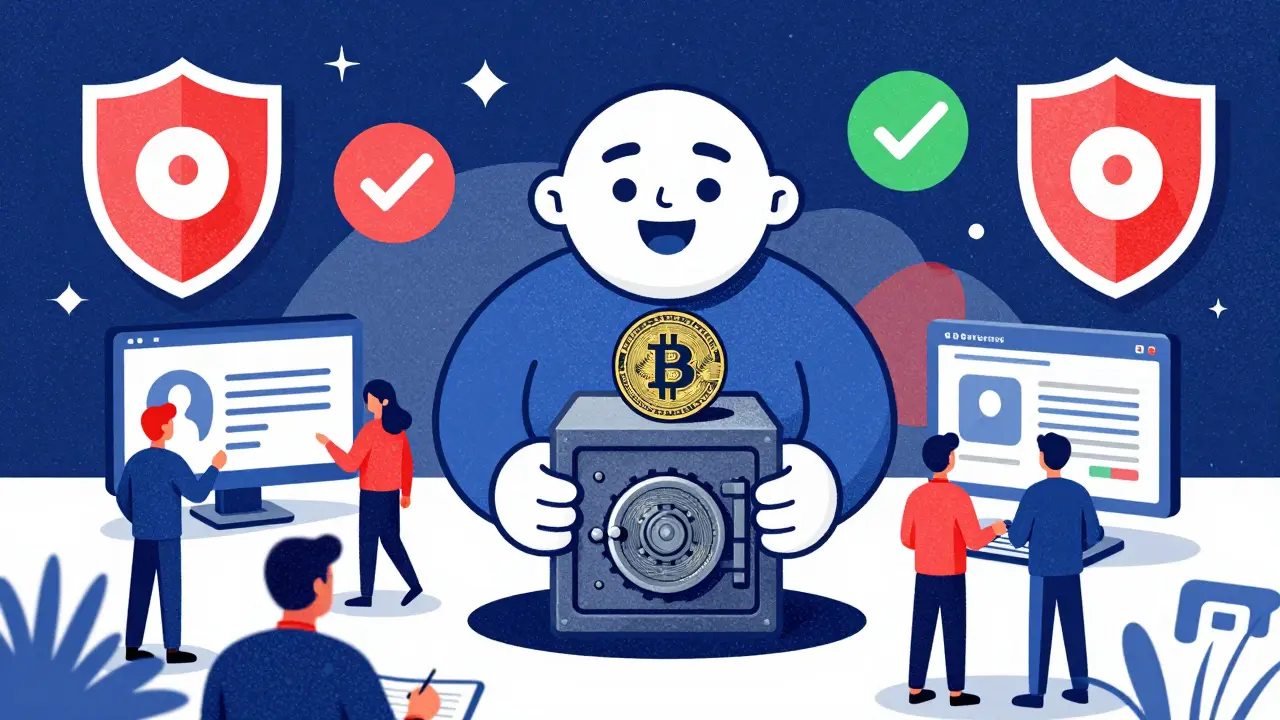
Step-by-Step: How to Wrap Your Bitcoin
If you are ready to try it, here is the practical workflow. Keep in mind that you need both Bitcoin and some Ethereum (ETH) for gas fees.
- Set Up Wallets: Ensure you have a Bitcoin wallet (like Electrum or Ledger) and an Ethereum-compatible wallet (like MetaMask).
- Choose a Merchant: Go to the official WBTC website and check the list of approved merchants. Popular choices include Dharma or AirSwap. Do not use unverified third-party sites.
- Complete KYC: Submit your identification documents to the merchant. This step is mandatory due to regulatory compliance. It usually takes 5-15 minutes, but can take up to 3 days during peak times.
- Deposit BTC: Send your Bitcoin to the unique address provided by the merchant. Wait for Bitcoin network confirmations (usually 1 block, ~10 minutes).
- Receive WBTC: Once BitGo confirms receipt, the merchant triggers the minting. You will receive WBTC in your MetaMask wallet shortly after.
- Use in DeFi: Connect your MetaMask to a protocol like Aave or Uniswap and start earning yield or providing liquidity.
A common pitfall is forgetting about gas fees. Even though you are moving Bitcoin, the minting and unwrapping happen on Ethereum. If the Ethereum network is congested, gas fees can spike, making small transactions uneconomical. Always check current gas prices before initiating a wrap.
Future Outlook: Where is WBTC Headed?
The landscape for wrapped assets is evolving. The WBTC DAO has been working to reduce reliance on a single custodian. Recent governance votes have explored expanding to other EVM chains like Polygon and Arbitrum, allowing WBTC to move faster and cheaper via Layer 2 solutions.
There is also ongoing development into integrating Taproot features from Bitcoin to improve efficiency. However, the core tension remains: regulators are scrutinizing custodial models. The SEC has hinted that instruments like WBTC might face stricter classification under future stablecoin legislation. Despite this, WBTC's network effect is strong. It is deeply embedded in the infrastructure of DeFi, making it unlikely to disappear soon, even as decentralized competitors gain ground.
Is WBTC the same as Bitcoin?
No. WBTC is an ERC-20 token on the Ethereum blockchain that represents Bitcoin. It tracks the price of Bitcoin 1:1, but it is not native Bitcoin. You cannot spend WBTC directly on the Bitcoin network, and you rely on a custodian to hold the actual BTC.
Can I lose my money if BitGo goes bankrupt?
Yes, there is a custodial risk. If BitGo loses the private keys to the Bitcoin reserves or faces legal seizure of assets, your WBTC could lose value. This is why many users prefer self-custody solutions for large amounts, despite the convenience of WBTC.
Do I need KYC to wrap Bitcoin?
Yes. Because WBTC involves a regulated custodian (BitGo), all approved merchants require Know Your Customer (KYC) verification. You must provide government ID and proof of address to mint WBTC.
What happens if the Ethereum network is congested?
You will pay higher gas fees. Since WBTC operates on Ethereum, any interaction (minting, burning, transferring) requires ETH for gas. During high congestion, these fees can exceed the value of the transaction, so it is wise to wait for low-traffic periods or use Layer 2 bridges.
Are there decentralized alternatives to WBTC?
Yes. Projects like tBTC (Threshold Network) and sBTC (Synthetix) offer decentralized wrapping mechanisms. tBTC uses a network of node operators instead of a single custodian, reducing counterparty risk, though it currently has less liquidity than WBTC.