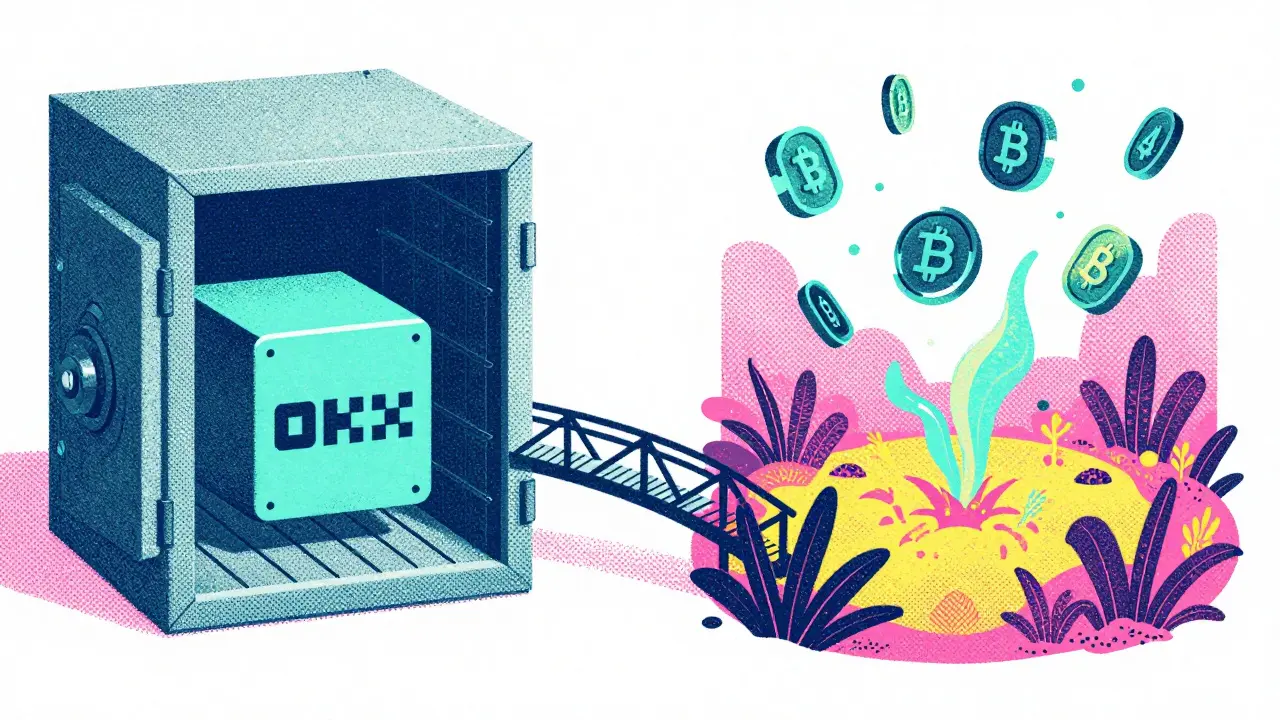
You hold OKB, the native token of the OKX cryptocurrency exchange. It gives you fee discounts and access to exclusive launches. But what if you want to use that value in a decentralized finance (DeFi) protocol on a different blockchain? You can’t just send OKB anywhere. That’s where Wrapped OKB comes in.
Wrapped OKB (WOKB) is a tokenized version of OKB designed to operate across multiple blockchain networks while maintaining a 1:1 peg with the original token. Think of it as a digital wrapper that lets your centralized exchange asset play nice with decentralized apps. Without WOKB, your OKB is stuck inside the OKX ecosystem. With it, you can stake, lend, or trade on platforms like PotatoSwap or other chains.
How Does Wrapped OKB Actually Work?
To understand WOKB, you first need to grasp the concept of "wrapped" tokens. When you wrap an asset, you don’t create new value; you create a representation of existing value on a different network. Here is the simple process:
- Locking: You send your native OKB to a secure custodian or smart contract managed by OKX.
- Minting: For every 1 OKB locked, the system mints 1 WOKB on a target blockchain, such as Ethereum or X Layer.
- Usage: You now hold WOKB. You can swap it for USDT, provide liquidity, or earn yield in DeFi protocols.
- Burning: When you’re done, you send the WOKB back to the bridge. The system burns the WOKB and releases your original OKB.
This mechanism relies on trust in the custody arrangement. As noted by blockchain specialist Dr. Elena Rodriguez from Stanford University in January 2026, "WOKB represents a strategic bridge between centralized exchange utility and decentralized finance, though its long-term viability depends entirely on OKX maintaining trust in the peg mechanism." The security here isn't just code; it's institutional reliability.
Why Would You Use WOKB Instead of Native OKB?
The main reason is interoperability. Native OKB lives primarily on the OKT chain (now part of the broader OKX ecosystem infrastructure). Most major DeFi protocols run on Ethereum, Binance Smart Chain, or Arbitrum. They don’t natively support OKB.
By using WOKB, you unlock three specific benefits:
- DeFi Yield Farming: You can deposit WOKB into lending protocols or liquidity pools to earn interest, something you couldn’t do with native OKB on many platforms.
- Cross-Chain Trading: If you see a better price for OKB on a decentralized exchange (DEX) like Uniswap or SushiSwap, WOKB allows you to participate without selling your position on a centralized exchange.
- Ecosystem Integration: WOKB integrates seamlessly with OKX’s Layer 2 solution, X Layer, enabling faster and cheaper transactions compared to mainnet Ethereum.
However, this comes with a trade-off. You lose some direct control over your assets during the wrapping period. You are relying on the bridge’s integrity. If the bridge fails or gets hacked, your underlying OKB could be at risk.
Key Specs and Market Data for WOKB
Before diving in, let’s look at the hard numbers. Understanding the market size helps you gauge liquidity and risk. As of early 2026, here is how WOKB stacks up against other wrapped assets.
| Feature | Wrapped OKB (WOKB) | Wrapped Bitcoin (WBTC) | Wrapped Ethereum (WETH) |
|---|---|---|---|
| Market Cap | $4.5M - $9.6M | $8.2 Billion+ | $18.7 Billion |
| 24h Volume | $320K - $650K | $1.2 Billion+ | $2.5 Billion+ |
| Primary Chain | X Layer / Ethereum | Ethereum | Ethereum |
| Use Case | Exchange Utility + DeFi | Bitcoin in DeFi | Ethereum Gas/DeFi |
| Liquidity Depth | Low to Moderate | Very High | Very High |
A few things stand out immediately. First, WOKB has significantly lower liquidity than WBTC or WETH. This means if you try to move large amounts quickly, you might experience slippage-a situation where the price moves against you because there aren’t enough buyers/sellers at your desired price point. User reviews on Trustpilot highlight this, with 43% of negative comments citing "unpredictable slippage during high volatility." Second, the circulating supply varies depending on who you ask. Binance lists around 43,541 WOKB in circulation, while CoinGecko suggests a fully diluted valuation based on fewer tokens. This discrepancy often stems from how different platforms calculate active versus total minted supply. Always check the current pool depth before trading.
Risks and Challenges You Need to Know
It’s not all smooth sailing. WOKB carries specific risks that differ from holding native OKB or even other wrapped tokens like WBTC.
1. Counterparty Risk
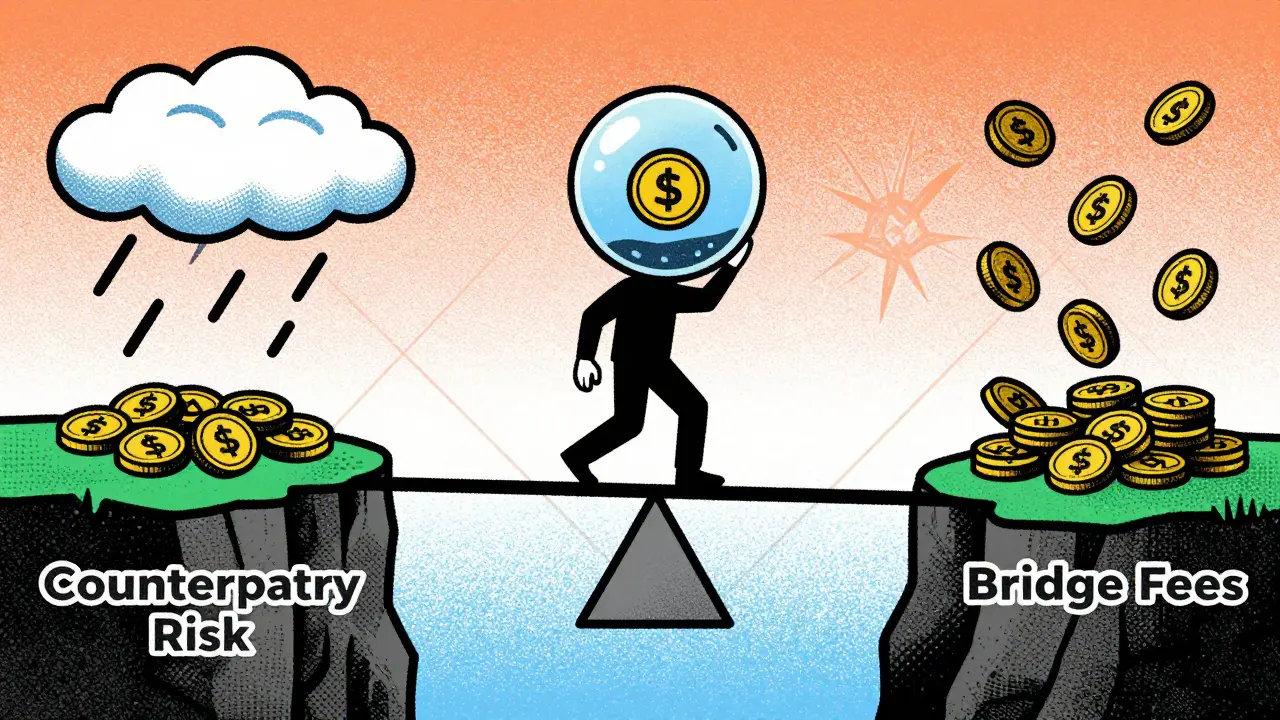
Unlike native assets, WOKB requires a custodian to hold the underlying OKB. If OKX were to face insolvency or regulatory seizure, your ability to unwrap WOKB back to OKB could be compromised. This is a centralization risk inherent in most wrapped tokens issued by exchanges.
2. Bridge Complexity and Fees
Getting your tokens from one chain to another isn’t free. Users report spending significant time navigating bridges. One Reddit user noted losing 0.3 ETH in gas fees trying to unwrap through multiple hops. While X Layer offers lower fees, moving off-network still costs money. Be sure to calculate if the yield you’re earning covers the bridging cost.
3. Peg Instability
WOKB is supposed to stay at a 1:1 ratio with OKB. However, during extreme market crashes, arbitrageurs may fail to keep the peg tight. If OKB drops 20% in an hour, WOKB might drop 22% due to panic selling on DEXs. Always monitor the spread between OKB and WOKB prices.
4. Regulatory Uncertainty
The SEC’s January 2026 guidance classified certain wrapped tokens as "potential securities" if custody arrangements resemble investment contracts. While WOKB aims to avoid this via decentralized custody mechanisms, the legal landscape remains murky. Keep an eye on regulatory updates, especially if you are an institutional investor.
Who Should Use WOKB?
Not everyone needs WOKB. In fact, for most casual investors, it adds unnecessary complexity. Here is who actually benefits:
- Arbitrage Traders: If you spot price differences between OKB on centralized exchanges and WOKB on DEXs, you can profit from the gap. LBank surveys show 52% of WOKB traders use it primarily for this purpose.
- DeFi Power Users: If you want to diversify your yield farming strategies and include exchange tokens in your portfolio, WOKB provides exposure to OKB’s buy-back-and-burn mechanics within a DeFi context.
- OKX Ecosystem Advocates: Users who believe in OKX’s long-term growth but want to hedge their bets by spreading assets across multiple chains find WOKB useful.
If you are a beginner just looking to buy and hold OKB for fee discounts, stick to native OKB on OKX. Don’t complicate things until you understand cross-chain bridges.
Future Outlook: Where is WOKB Headed?
The future of WOKB looks tied closely to OKX’s expansion plans. In January 2026, OKX announced integration with Ethereum’s Layer 2 solutions, including Arbitrum and Optimism, scheduled for Q2 2026. This will likely boost liquidity and reduce bridging friction.
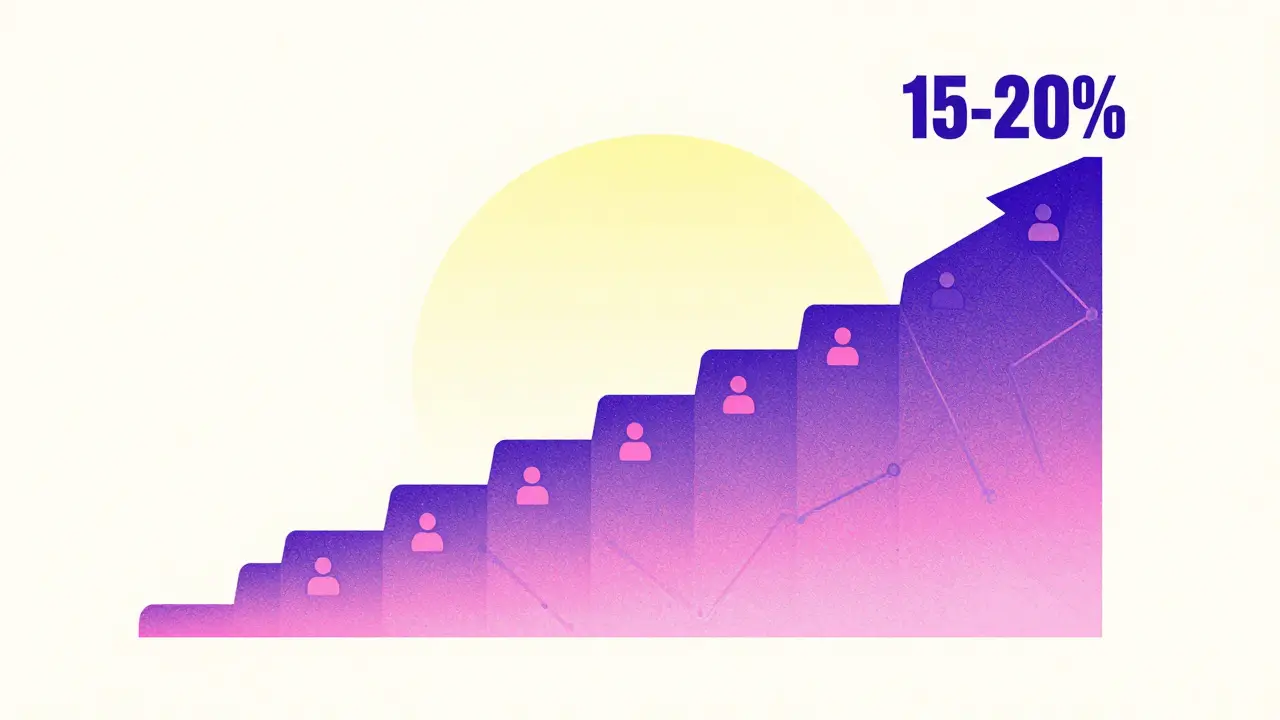
Additionally, a planned WOKB v2 upgrade aims to cut bridging fees by 40% through optimized oracle networks. If successful, this could make WOKB more attractive for smaller trades. Delphi Digital projects modest annual growth of 15-20% for exchange-specific wrapped tokens, constrained by competition from universal interoperability protocols like LayerZero.
Long-term viability hinges on adoption. Pantera Capital notes that crossing the 50,000 unique address threshold in 2026 could cement WOKB as a standard for exchange utility token interoperability. Currently, unique addresses sit around 18,700, so there is room to grow-but also significant hurdles to clear.
Is WOKB safe to hold?
WOKB is as safe as the custodian holding the underlying OKB. Since OKX manages the custody, you are exposed to counterparty risk. While OKX has a strong reputation, no centralized entity is immune to hacks or regulatory action. For maximum safety, only keep WOKB in your wallet for as long as needed for DeFi activities, then unwrap it back to native OKB.
Can I convert WOKB back to OKB instantly?
The unwrapping process typically takes 8-12 minutes via OKX’s native bridge, depending on network congestion. It is not instant like a swap on the same chain. You must initiate the burn transaction on the source chain and wait for confirmation before receiving OKB on the destination chain.
Does WOKB have the same buy-back benefits as OKB?
Indirectly, yes. Because WOKB maintains a 1:1 peg with OKB, any reduction in OKB’s total supply due to buy-backs increases the value of each remaining OKB-and thus each WOKB. However, you cannot directly redeem WOKB for OKX services; you must unwrap it first to access native OKB utilities like fee discounts.
What is the best platform to trade WOKB?
For the deepest liquidity, PotatoSwap on X Layer currently handles the highest volume (66.96% of 24-hour trading). Other options include iZiSwap and Revoswap V2. If you prefer centralized exchanges, Binance and Bybit offer WOKB pairs, but always compare fees and slippage before executing large trades.
Will WOKB launch on Ethereum Mainnet?
WOKB already operates on Ethereum-compatible chains. The upcoming Q2 2026 expansion includes deeper integration with Ethereum Layer 2s like Arbitrum and Optimism, which will enhance accessibility and reduce gas costs for users interacting with Ethereum-based DeFi protocols.