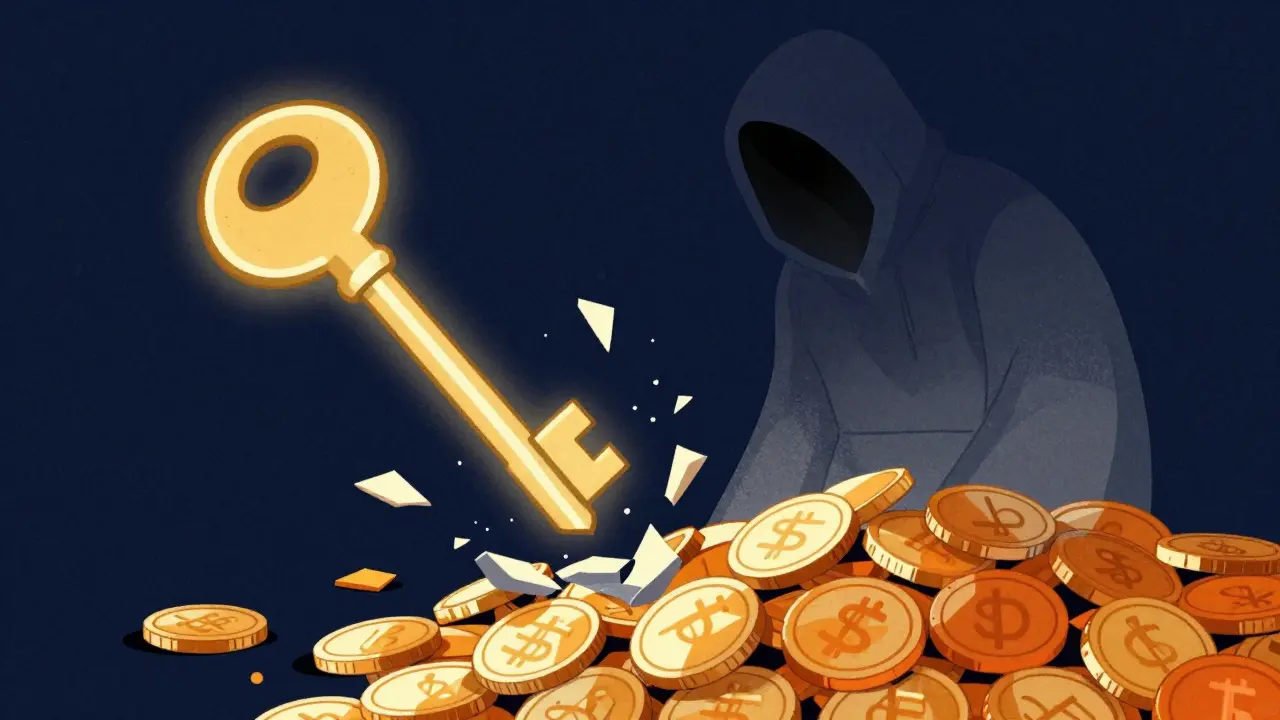
Imagine waking up to find your DAO's entire treasury-millions of dollars in assets-gone in a single transaction because one person's private key was leaked or a single founder decided to "go rogue." It sounds like a nightmare, but in the early days of Web3, this was a common occurrence. The solution that has since become the gold standard for digital asset protection is the MultiSig for DAO Treasury is a security architecture where multiple private keys are required to authorize any movement of funds from a shared wallet.
If you're managing a community fund, you can't rely on a single person's honesty or their ability to keep a password safe. Relying on one signature creates a single point of failure. MultiSig changes the game by distributing trust across a group of stakeholders, ensuring that no single individual has total control over the money.
Quick Summary of Key Takeaways
- Eliminates Single Points of Failure: Prevents theft via a single compromised key.
- Enforces Democratic Control: Requires a quorum of signers to approve spending.
- Industry Standard: Over 70% of top DeFi protocols use multisig custody.
- Hardware Integration: Pairs with cold storage to reduce exposure risks by 99.8%.
- Regulatory Signal: High-signer multisigs can help prove "sufficient decentralization" to regulators.
How MultiSig Actually Works
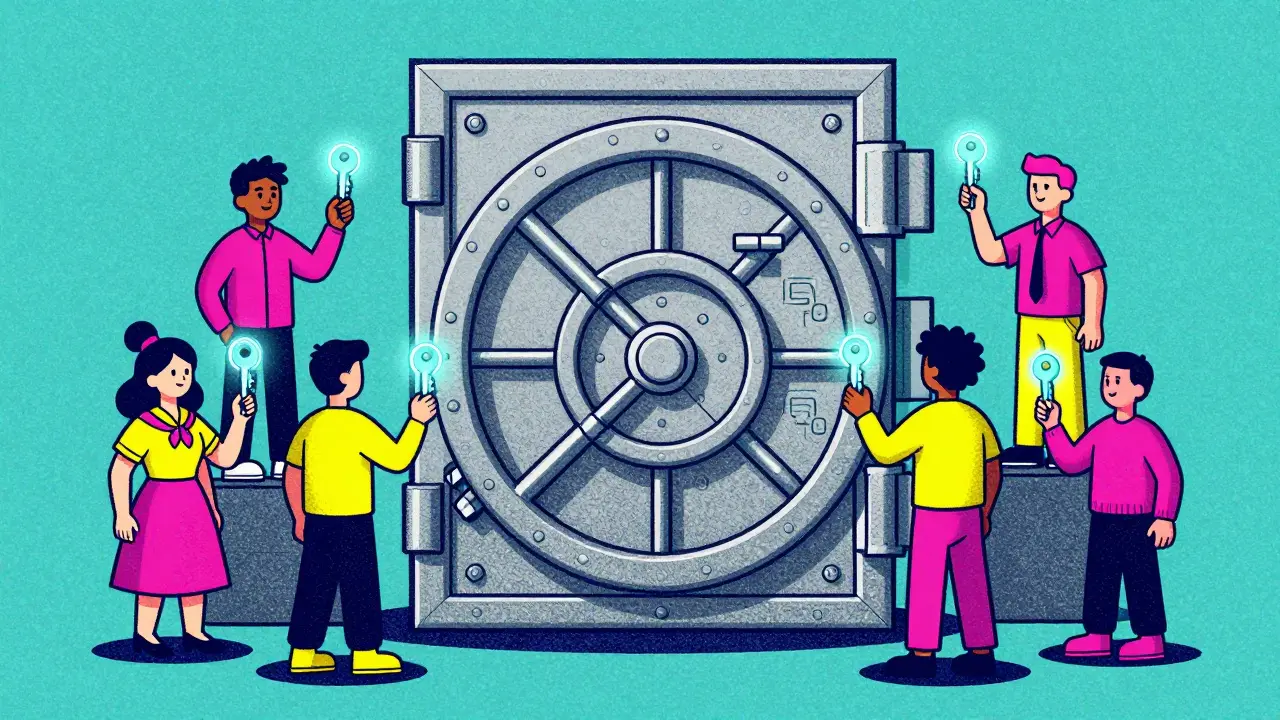
At its core, a multisig wallet is a smart contract. Unlike a standard wallet where one key opens the door, a multisig wallet has a digital "combination lock." You define a threshold-for example, 3-of-5-which means that while five people hold keys, at least three of them must digitally sign a transaction before the funds actually move.
The most popular tool for this is Gnosis Safe (now often just called Safe). It's not just a wallet; it's a programmable vault. When a proposal to spend funds is made, the transaction is initiated in the Safe interface. Each designated signer then logs in with their own private key to "approve" the request. Only when the required number of approvals is hit does the smart contract release the funds to the blockchain network.
This process adds a layer of friction, but that friction is exactly what saves money. For instance, if a hacker manages to phish one signer's key, they still can't steal the treasury because they don't have the other two or four keys needed to meet the threshold.
The Massive Security Benefits for DAOs
The data speaks for itself. According to a 2023 Immunefi report, DAOs using multisig protections saw 87% fewer successful hacks compared to those using single-signature wallets. To put that in perspective, single-sig wallets averaged 2.3 incidents per $100M in assets, while multisigs dropped that to just 0.3.
Consider the case of DAO Maker in August 2022. They attempted to thwart an internal fraud attempt worth $750,000. Because they used a Gnosis Safe implementation, the fraudulent transaction couldn't be pushed through by a single bad actor; the other signers spotted the red flag and refused to sign, effectively killing the attack in its tracks.
To maximize this security, most professional DAOs integrate Ledger or Trezor hardware wallets. By keeping the private keys offline (cold storage), the risk of a remote digital attack is nearly eliminated. A 2023 audit showed this reduces exposure by 99.8% compared to using software wallets like MetaMask alone.
Comparing Treasury Models
Not all treasury setups are created equal. Depending on your DAO's size and goals, you might choose between a simple wallet, a multisig, or a centralized custodian.
| Feature | Single-Sig Wallet | MultiSig (e.g., Safe) | Centralized Custodian |
|---|---|---|---|
| Security Risk | High (Single point of failure) | Low (Distributed trust) | Medium (Third-party risk) |
| Speed of Execution | Instant | Slow (Coordination needed) | Medium |
| Control | Absolute (1 person) | Democratic (Group) | External (Company) |
| Cost | Low (Gas only) | Moderate (Higher Gas) | High (Setup & Annual fees) |
Picking Your Threshold: The "Golden Ratio"
One of the biggest mistakes new DAOs make is picking the wrong signature threshold. If you require 5-of-5 signatures, you've created a "fragile" system-if one person loses their key or goes on vacation, your money is frozen forever. If you use 1-of-5, you have no security benefit over a single wallet.
Based on the 2024 Standard DAO Framework, here are the recommended configurations based on the value of your treasury:
- $100K to $1M: 3-of-5 setup. It's the sweet spot for small-to-mid teams.
- $1M to $10M: 4-of-7 setup. This provides a higher safety margin against collusion.
- Over $10M: 5-of-9 or higher. For massive treasuries, you need more eyes on the prize.
Beyond the numbers, think about who the signers are. You don't want all your signers to be in the same time zone or the same company. Diversity in signers prevents "social engineering" attacks where a hacker targets a specific group of friends to gain control.
The Trade-offs: Speed vs. Safety
Let's be honest: MultiSig is a pain in the neck for day-to-day operations. You can't just move funds in five seconds; you have to ping people on Discord, wait for them to wake up, and hope they're checking their wallets. This "coordination overhead" can make responding to emergencies slow.
For example, some community managers have reported delays of up to 72 hours just to get a simple transaction signed because one or two signers were unresponsive. This is why some high-frequency operations, like those at Yearn Finance, have moved toward Timelock Contracts. A timelock allows a transaction to be queued and then executed automatically after a set period (e.g., 48 hours) unless it is vetoed.
The cost is also slightly higher. A standard Ethereum transfer costs a certain amount of gas, but a Gnosis Safe transaction can cost significantly more because the blockchain has to process more complex smart contract logic. However, with upcoming upgrades like the Pectra hard fork, these costs are expected to drop by 35-45%.
Implementation Checklist for Your DAO
Setting up a production-ready treasury isn't something you do in ten minutes. It usually takes a professional team about 16 to 24 hours of focused work to get it right. Here is the path you should follow:
- Define Signer Criteria: Don't just pick friends. Choose people based on their role, trust level, and technical ability.
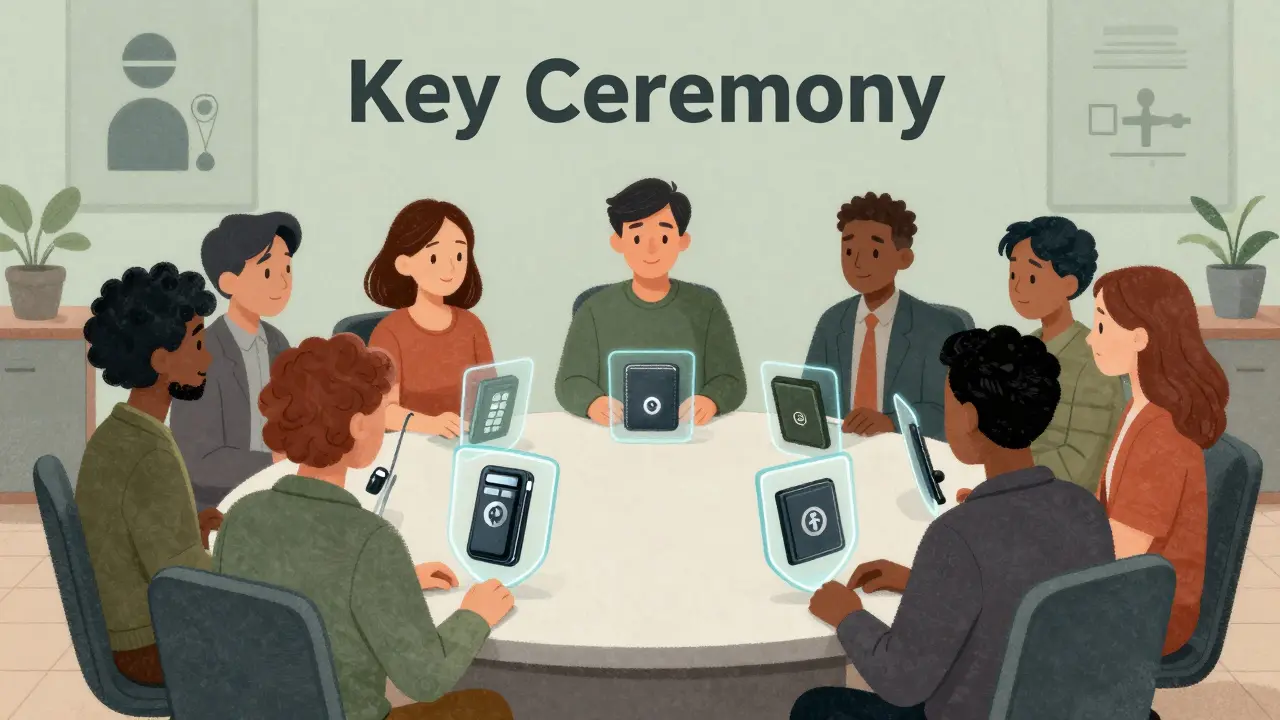
- Hold a Key Ceremony: Generate keys on hardware wallets (Ledger/Trezor) in a secure environment. Never share these keys.
- Set the Threshold: Use the guidelines mentioned above to decide your X-of-Y requirement.
- Establish a Backup Plan: What happens if a signer loses their device? Create a documented protocol for replacing a signer.
- Implement a Rotation Policy: Change your signers every few months or years to prevent stagnation and internal collusion.
The Regulatory Angle
If your DAO is operating in the US or Europe, MultiSig isn't just about security-it's about legal protection. The SEC has recently indicated that using a multisig with 7+ signers and a 51% approval threshold can be evidence of "sufficient decentralization."
Why does this matter? Because if a DAO is deemed "centralized," it might be treated as a traditional company, making the founders liable for securities law violations. By distributing the keys, you are effectively proving that no one person is "in charge," which can be a massive shield during a regulatory audit.
What happens if a MultiSig signer loses their private key?
This is why you never use a 100% threshold (like 5-of-5). In a 3-of-5 setup, if one person loses their key, the other four can still reach the 3-signature requirement to move funds. Once the treasury is accessed, the group can vote to remove the lost key and add a new signer to restore the wallet's health.
Is Gnosis Safe the only option for DAOs?
While Gnosis Safe dominates about 68% of the market, there are alternatives like SafeSnap or custom-built smart contract wallets. However, Safe is generally preferred because it has been extensively audited by firms like OpenZeppelin and supports multiple networks like Polygon and Arbitrum.
Can a MultiSig wallet be hacked?
The smart contract itself is very secure, but the "human element" is the weakness. If a hacker manages to steal the required number of keys (e.g., 3 out of 5), they can drain the wallet. This is why using hardware wallets and maintaining strict key hygiene is non-negotiable.
How much does it cost to run a MultiSig treasury?
There are no monthly fees, but you pay more in "gas fees" per transaction than a regular wallet. Depending on the network and transaction complexity, this overhead can be significant on Ethereum mainnet, though it is negligible on Layer 2 solutions like Polygon.
Does a MultiSig wallet replace the need for a DAO vote?
No. The multisig is the execution layer, not the governance layer. Usually, the DAO community votes on a proposal (via a tool like Snapshot), and once the vote passes, the multisig signers act as the "executors" who push the transaction through on-chain.
Heather Warren
April 13, 2026 AT 05:37Setting up a rotation policy for signers is such a great point. Many teams forget that people change roles or leave projects, and having a documented process for updating the multisig prevents a lot of future stress. It really helps maintain the long-term health of the treasury.
Lela Singh
April 13, 2026 AT 11:50Absolute game-changer! 🚀 Cold storage integration is the secret sauce for bulletproof security.
daniella davis
April 14, 2026 AT 05:38omg please. imagine thinking people dont already know about safe lol. basic stuff honestly. most legit projects have been doing this since forever and its like we're discovering fire all over again. so tedious.
Kieran Smith
April 15, 2026 AT 22:19i really like how you explained the golden ratio for thresholds. its super helpful for newcomers who might accidentally lock their funds by going 5-of-5. definitely makes the whole thing feel more reachable for smaller groups who are just startin out!
Surender Kumar
April 16, 2026 AT 17:24true that, the friction is worth the safety. i've seen a few projects struggle with the coordination part but its way better than losing everything in a flash hack. just gotta be patient with the signers man.