
Imagine living in a country where buying Bitcoin isn't just frowned upon-it’s a crime punishable by prison time and fines that could wipe out your life savings. That is the reality for millions of people in Egypt. Yet, rumors persist that despite a total legal blackout, 3 million crypto holders are quietly trading digital assets behind closed doors. Is this number real, or is it just internet noise?
The truth is messy. There is no official registry of crypto users in Egypt because using crypto is illegal. So, how do we know if 3 million people are actually involved? We have to look at the shadows: the black market, the peer-to-peer (P2P) networks, and the desperate need to protect money from inflation.
The Iron Fist: How Strict Is the Ban?
To understand why anyone would risk going to jail for crypto, you first need to understand the law. Egypt doesn’t just regulate cryptocurrencies; it bans them outright. This isn't a gray area. It is a hard line drawn in sand by the government.
The cornerstone of this prohibition is the Central Bank and Banking System Law No. 194 of 2020, specifically Article 206, which strictly prohibits the issuance, trading, promotion, or operation of any platform dealing with crypto assets without prior approval from the Central Bank of Egypt. In plain English? You cannot buy, sell, trade, or even promote Bitcoin, Ethereum, or any other token.
This law targets everyone:
- Individuals: You can be fined or imprisoned for holding or trading crypto.
- Banks: Financial institutions are banned from facilitating any transactions related to virtual currencies.
- Platforms: Any website or app operating in Egypt that deals in crypto is illegal.
Egypt joins a small club of countries with total bans, including China, Afghanistan, and Algeria. But unlike some nations that ban mining but allow trading, Egypt blocks almost all interaction with the blockchain space.
Why Did Egypt Say "No"?
Governments rarely ban things without a reason. For the Central Bank of Egypt (CBE), the primary concern is financial stability and control over the national currency, the Egyptian Pound (EGP).
Here are the three main fears driving the ban:
- Currency Flight: When the Egyptian Pound loses value-which it has done significantly in recent years-people want to move their money into stable assets like US Dollars or Gold. If they can easily convert Pounds to Bitcoin and then to Dollars abroad, the CBE loses control over foreign exchange reserves. Crypto makes this escape route too easy.
- Volatility Risk: Crypto markets swing wildly. Regulators worry that ordinary citizens will lose their life savings in a crash, leading to social unrest and demands for government bailouts.
- Illicit Activity: The decentralized nature of blockchain makes it harder to track money laundering, terrorism financing, and tax evasion. While cash is also anonymous, crypto leaves a digital trail that regulators currently struggle to monitor effectively within their existing frameworks.
It’s not just about hating technology. It’s about protecting the monetary system. When a central bank sees a parallel financial system growing outside its walls, it views it as an existential threat.
The "3 Million" Myth vs. Reality
So, back to that headline-grabbing number: 3 million holders. Where does it come from?
There is no verified data supporting this exact figure. Because crypto activity is illegal, there are no tax returns, no bank statements, and no official surveys asking, "Do you own Bitcoin?" Anyone claiming to know the exact number is guessing.
However, the spirit of the claim might be true. Here’s why experts believe adoption is high, even if hidden:
- Inflation Hedge: With inflation rates in Egypt hitting double digits, Egyptians are desperate to preserve wealth. Crypto acts as a digital dollar substitute.
- Remittances: Millions of Egyptians work abroad. Sending money home through traditional banks is slow and expensive. Crypto offers a faster, cheaper alternative, despite the risks.
- Youth Demographics: A large portion of Egypt’s population is young, tech-savvy, and globally connected. They use Telegram groups and P2P platforms to trade, often unaware of the full legal severity until they get flagged.
While "3 million" might be speculative, the underlying demand is undeniable. People don’t break the law for fun; they do it when the cost of obeying the law (losing purchasing power) feels higher than the risk of breaking it.

The Price of Breaking the Rules
If you decide to ignore the ban, what happens? The penalties are severe enough to make most people think twice.
Under the current legal framework, violations can lead to:
- Imprisonment: Jail time is a real possibility for those caught trading or promoting crypto.
- Massive Fines: Penalties range from EGP 1 million to EGP 10 million (approximately $20,000 to $200,000 USD, depending on exchange rates). For the average Egyptian, this is a fortune.
These fines aren't just slap-on-the-wrist warnings. They are designed to crush both individual traders and institutional players. The message from Cairo is clear: Do not test us.
How Do People Actually Trade?
If exchanges are banned and banks block transactions, how does the market function? It goes underground. Just like any prohibited good, a shadow economy emerges.
Most trading happens through Peer-to-Peer (P2P) platforms, such as Binance P2P or local Telegram channels, where individuals trade directly with each other. Here’s how it typically works:
- Finding a Counterparty: A buyer finds a seller on a P2P forum who accepts Egyptian Pounds via bank transfer or mobile wallet (like Vodafone Cash).
- Escrow Service: The crypto is held in escrow by the platform (if international) or trusted third party.
- Payment: The buyer sends fiat currency to the seller’s bank account.
- Release: Once the seller confirms receipt, the crypto is released to the buyer.
This method bypasses centralized exchanges but carries huge risks. Sellers can reverse bank transfers (chargebacks), leaving buyers with nothing. Scams are rampant. And if the Central Bank flags unusual transaction patterns, accounts can be frozen instantly.
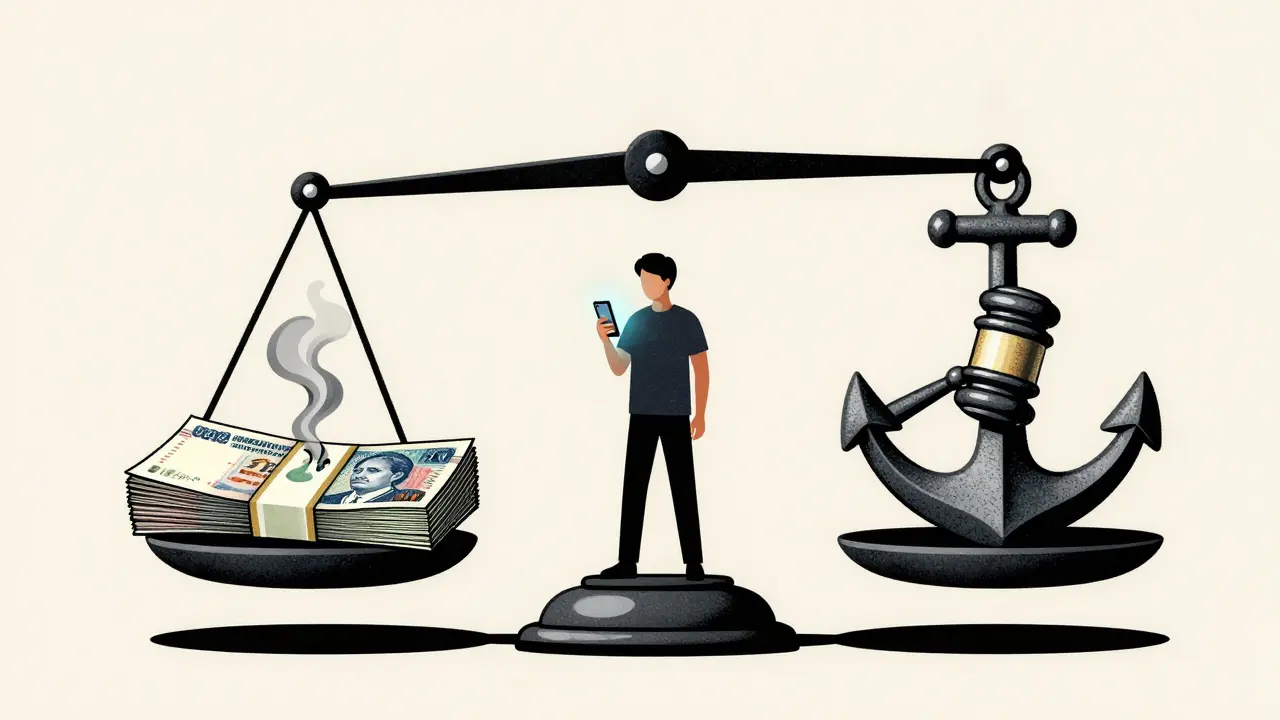
Is the Ban About to Lift?
Nothing in finance stays static forever. Even the strictest bans eventually crack under pressure.
Recent reports suggest that Egyptian officials are considering a shift in strategy. Instead of a total ban, there are whispers of legislation that would allow the Central Bank of Egypt to issue licenses for regulated cryptocurrency companies. This would mark a massive pivot from prohibition to regulation.
Why the change?
- Global Pressure: As more countries adopt crypto-friendly laws, Egypt risks being left out of the global financial conversation.
- Revenue Potential: Regulated crypto markets generate taxes and fees. Banning them means losing out on potential state revenue.
- Enforcement Fatigue: Policing every single crypto transaction is nearly impossible. Regulation brings transparency.
However, as of mid-2026, no concrete timeline exists. The ban remains in force. Until new laws are passed and signed, trading crypto in Egypt is still a gamble with your freedom and finances.
Regional Context: Egypt vs. Its Neighbors
Egypt isn't alone in North Africa. The region shares similar concerns about capital flight and monetary control.
| Country | Status | Key Restrictions |
|---|---|---|
| Egypt | Banned | No trading, no issuance, heavy fines (up to EGP 10M) |
| Algeria | Banned | Purchase, sale, and use of virtual currency explicitly prohibited |
| Morocco | Restricted | Transactions infringe exchange regulations; treated as financial asset, not currency |
| Tunisia | Restricted | Strict controls on capital movement; crypto trading faces legal hurdles |
While Morocco treats crypto as a financial asset rather than banning it entirely, Egypt and Algeria maintain the hardest lines. This regional consensus makes cross-border crypto arbitrage difficult and dangerous.
What Should You Do?
If you live in Egypt and are tempted by the world of cryptocurrency, pause. Think.
The allure of high returns is real, but so is the risk of losing everything-not just your investment, but your legal standing. Here are practical steps to consider:
- Stay Informed: Follow updates from the Central Bank of Egypt. Laws can change overnight.
- Avoid Public Promotion: Don’t post about your trades on social media. Article 206 bans promotion as well as trading.
- Use Caution with P2P: If you choose to trade, understand that you have zero legal recourse if scammed. Never send money to someone you haven’t verified thoroughly.
- Consider Alternatives: Look into regulated investment vehicles available in Egypt that offer inflation protection without legal risk.
The "3 million holders" statistic may be exaggerated, but the desire for financial autonomy is not. Until Egypt lifts its ban, that desire comes with a steep price tag.
Is it illegal to hold Bitcoin in Egypt?
Yes. Under the Central Bank and Banking System Law No. 194 of 2020, holding, trading, or issuing cryptocurrencies is strictly prohibited. Violations can result in imprisonment and fines up to EGP 10 million.
Can I use Binance in Egypt?
Technically, no. While Binance may not block IP addresses from Egypt, using it violates Egyptian law. Banks may freeze accounts if they detect transactions linked to known crypto exchanges.
Will Egypt legalize crypto soon?
There are rumors of potential licensing frameworks, but as of June 2026, no official legislation has been passed to legalize crypto. The ban remains in effect.
How do Egyptians buy crypto if it's banned?
Most users rely on Peer-to-Peer (P2P) platforms and informal networks like Telegram groups. These methods carry high risks of fraud and legal scrutiny.
What are the penalties for crypto trading in Egypt?
Penalties include imprisonment and fines ranging from EGP 1 million to EGP 10 million ($20,000-$200,000 USD). Both individuals and financial institutions can be prosecuted.


Sylvia Mossman
June 22, 2026 AT 14:27Let's be real, the "3 million" figure is pure marketing fluff designed to scare regulators into action or hype up retail investors. It's statistically impossible to verify in a black market economy. The government isn't banning crypto because they love stability; they're banning it because they can't control the narrative and the capital flight is embarrassing for their central bank's incompetence. People don't need permission to hedge against hyperinflation.
Steven Jacobowitz
June 23, 2026 AT 04:38I think you are missing the nuance of why the Central Bank is so aggressive here. It is not just about control, it is about survival of the currency. When you have inflation hitting double digits, allowing a parallel digital dollar system effectively declares war on your own monetary policy. The fines are high because the threat to the national economy is existential. If everyone moves to stablecoins, the Pound becomes worthless overnight. That is why they treat it like a crime rather than a regulatory issue.
Alexander DeVries
June 24, 2026 AT 14:10You guys are overthinking the legality and ignoring the human element! These people are desperate. They are watching their savings evaporate every single day while the government prints more money. Of course they will risk jail time. It is not a rational economic decision, it is a survival instinct. The ban is cruel because it punishes the poor for trying to protect their livelihoods. We should be supporting these individuals, not analyzing the legal framework like it is a game. They are fighting for their future!
Mark Corpuz
June 24, 2026 AT 18:36The distinction between Morocco and Egypt is quite telling. Morocco treats it as an asset class, which allows for some level of oversight without total prohibition. Egypt’s approach is binary and rigid. This rigidity often leads to the very instability it seeks to prevent by driving activity entirely underground where there is zero transparency. A regulated framework would likely yield higher tax revenue and better data for the central bank than this current cat-and-mouse game with Telegram groups.
Yogendra Dwivedi
June 25, 2026 AT 01:50It is interesting to see how P2P platforms have become the de facto banking system for many Egyptians. The risks are incredibly high, but the alternative is losing everything to inflation. I wonder if the government realizes that enforcement fatigue is setting in. You cannot police millions of small transactions across encrypted apps. Perhaps a softening of the stance is inevitable, not out of kindness, but out of sheer necessity.