
Why the world is finally getting on the same page with crypto rules
Five years ago, if you ran a crypto exchange in Tokyo, you followed Japan’s rules. If you issued a stablecoin in Berlin, you dealt with Germany’s patchwork of banking laws. If you raised funds in New York, you guessed whether the SEC or CFTC would come after you. Today, that chaos is fading. From Brussels to Singapore, governments are copying each other’s crypto rulebooks. This isn’t just coincidence-it’s a global shift. And it’s changing everything for businesses, investors, and everyday users.
How the EU’s MiCA became the blueprint
The European Union didn’t set out to lead the world on crypto regulation. But by the time MiCA (Markets in Crypto-Assets Regulation) fully kicked in on December 30, 2025, it had already become the default standard. MiCA doesn’t just regulate exchanges. It covers stablecoins, issuers, custody services, and even DeFi protocols in outline. Its most powerful feature? Extraterritorial reach. If your company wants to sell crypto to EU customers-even if you’re based in Miami or Manila-you have to follow MiCA. That forced dozens of non-EU firms to restructure overnight. By Q3 2025, 13 out of 19 major economies surveyed by Cambridge Judge Business School were aligning key parts of their rules with MiCA. That’s not just influence. That’s dominance.
What the U.S. finally got right
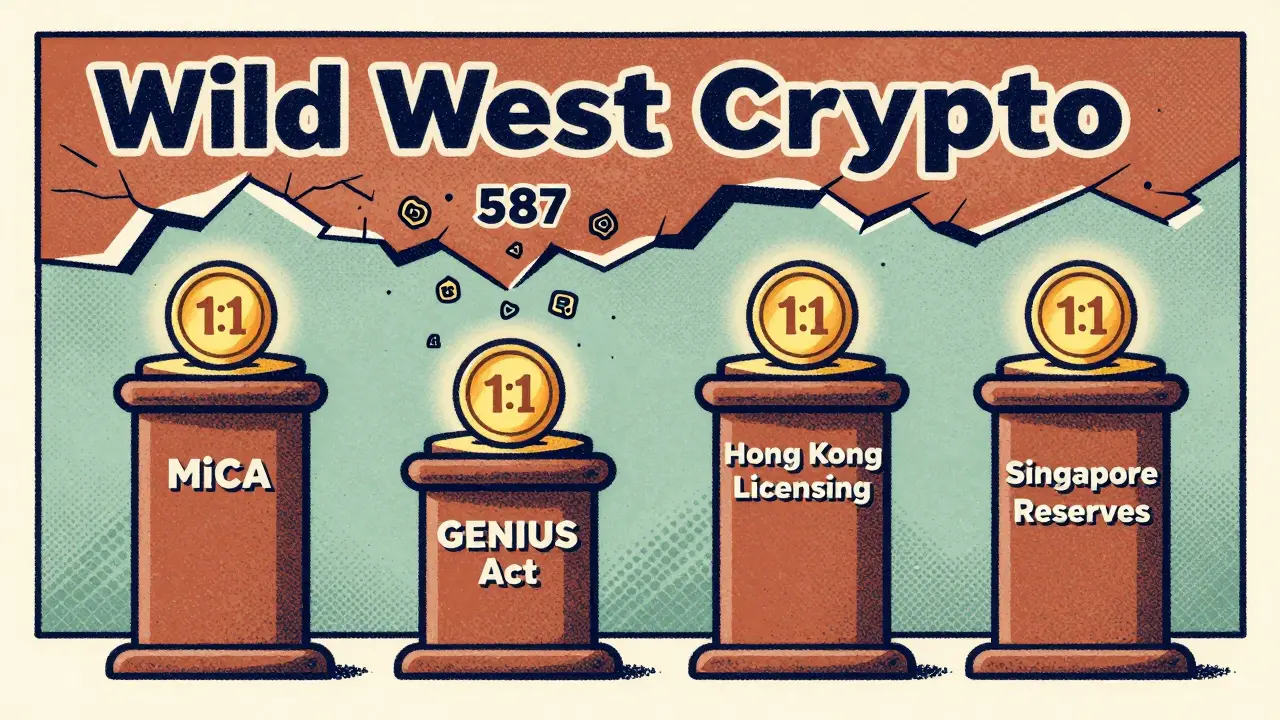
The United States spent years stuck in regulatory gridlock. The SEC said some tokens were securities. The CFTC said others were commodities. Companies had no clear path. That changed in 2025. The GENIUS Act, signed in March, created a federal licensing system for stablecoin issuers under the Fed and OCC. Then came the FIT Act in June, which finally drew a line: SEC handles tokens that act like stocks, CFTC handles those that act like commodities. This isn’t perfect-but it’s the first time the U.S. has a coherent map. And it’s strikingly similar to MiCA’s approach. Stablecoin issuers now need 1:1 backing, regular audits, and clear disclosures. That’s MiCA’s fingerprint.
Asia’s quiet but powerful push
While Europe and the U.S. made headlines, Asia quietly built the most rigorous system. Hong Kong launched its full licensing regime for crypto service providers on April 1, 2025. Every exchange, custodian, and OTC desk now needs government approval. They must prove they hold segregated reserves and submit quarterly audits. Singapore followed with its own stablecoin rules on February 12, 2025-requiring 1:1 backing in Singapore dollars for single-currency tokens, matching MiCA’s Article 34 exactly. By June 2025, every crypto firm operating in Singapore was licensed. No gray zones. No loopholes. These aren’t just rules. They’re barriers to entry for small players. But they’ve also made Asia the most trusted region for institutional crypto money.
Where the world still disagrees
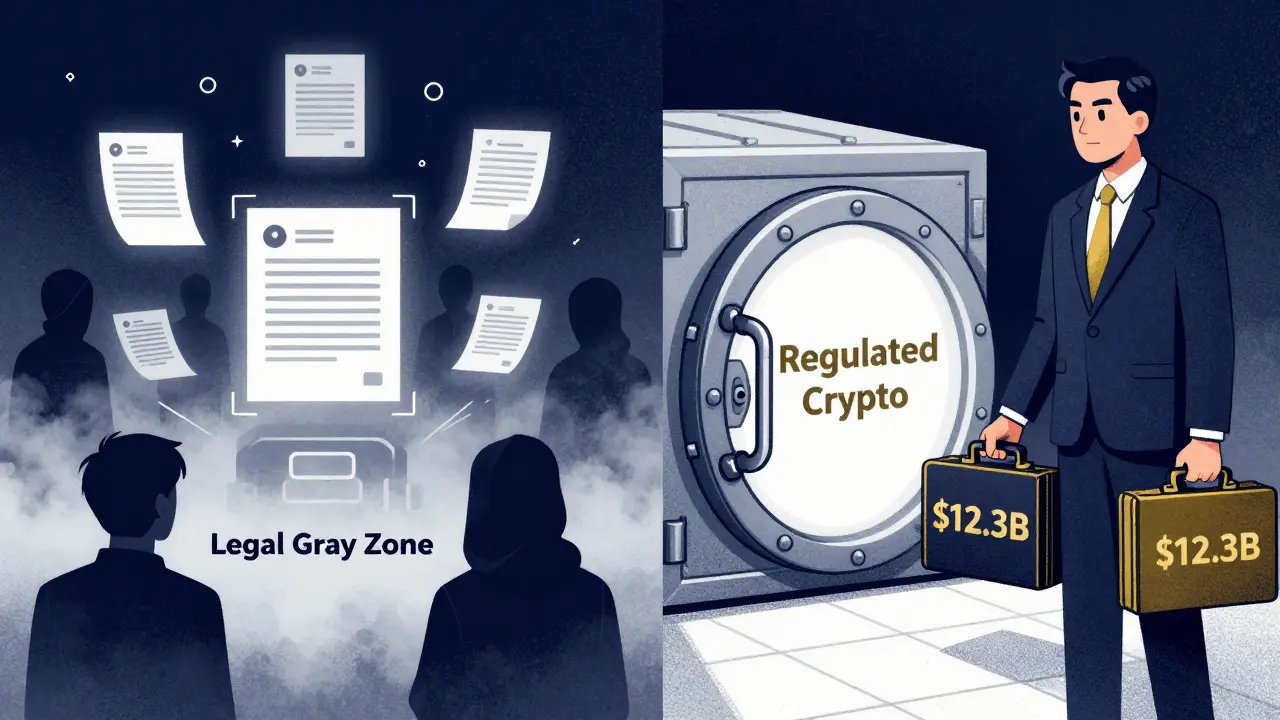
Not every rule is aligned. The biggest gap? Decentralized finance (DeFi). Only 7 out of 19 major economies have specific rules for DeFi protocols as of September 2025. The SEC and CFTC still haven’t finalized how to regulate smart contracts that operate without a company behind them. The EU’s MiCA includes DeFi in its scope-but only as a future requirement, due by December 2025. Until then, DeFi platforms operate in a legal gray zone. That’s why $85 billion in DeFi value still sits outside regulated systems. Experts warn that if regulators treat DeFi like traditional finance, they’ll kill its innovation. But if they do nothing, they risk systemic risk. That tension is the biggest unresolved issue in global crypto policy.
The real winners and losers
Regulatory convergence isn’t just about rules-it’s about who survives. Since January 2024, the number of active crypto exchanges has dropped from 587 to 312. Why? Compliance costs. PwC found the average annual cost to comply with one jurisdiction’s rules is $2.1 million. Multiply that by five countries, and you’re looking at $10 million just to stay legal. Big firms like Coinbase and Binance can afford it. Small exchanges? They can’t. That’s why 47% of exchanges vanished in two years. On the flip side, institutional investors are pouring money in. $12.3 billion flowed into crypto products in Q2 2025 alone. BlackRock’s IBIT ETF hit $42.7 billion in assets by September 2025. Regulators didn’t just create rules-they created trust. And trust brings capital.
What’s coming next
The next big milestones are all in late 2025. The EU will release its report on DeFi, NFTs, lending, and staking regulation-likely setting the next global standard. The Financial Stability Board will assess G20 countries’ progress. Preliminary numbers show 68% of required measures are already in place. The SEC plans to finalize rules for crypto trading on Alternative Trading Systems by December 2025. The CFTC will issue guidance on perpetual contracts. And by the end of the year, the IMF and FSB aim to have full harmonization of stablecoin supervision across 82% of member countries. If that happens, the next big wave won’t be price spikes. It’ll be institutional products: crypto bonds, tokenized real estate funds, regulated crypto derivatives. The market is maturing. And the rules are finally catching up.
What this means for you
If you’re an investor, this is good news. More rules mean less fraud, less pump-and-dump schemes, and more reliable products. If you’re a business, the path is clearer-but harder. You can’t just launch a crypto app anymore. You need legal teams, compliance officers, and audits. If you’re a regular user, expect safer wallets, clearer disclosures, and fewer rug pulls. The wild west is over. What’s replacing it isn’t perfect-but it’s stable. And that’s worth more than hype.
What is MiCA and why does it matter globally?
MiCA, or Markets in Crypto-Assets Regulation, is the European Union’s comprehensive legal framework for digital assets, fully effective by December 30, 2025. It sets rules for stablecoins, crypto service providers, and issuers, including reserve requirements, transparency, and licensing. Because it applies to any company serving EU customers-even those based outside the EU-it’s become the de facto global standard. Over 67% of major economies now align key parts of their rules with MiCA, making it the most influential crypto regulation in the world.
Are stablecoin rules the same everywhere now?
Mostly, yes. By Q3 2025, 78% of major jurisdictions had implemented stablecoin regulations, and 60% required 1:1 reserve backing with quarterly audits-directly mirroring MiCA’s standards. The U.S. GENIUS Act, Hong Kong’s licensing regime, and Singapore’s framework all require full collateralization and regular reporting. The only exceptions are countries with weak enforcement or no formal rules yet. For practical purposes, if you’re using a stablecoin issued by a major platform, it’s backed by real assets and audited.
Why did crypto exchanges shrink so much?
Compliance costs. The average annual cost to meet regulatory requirements in one jurisdiction is $2.1 million. For small exchanges operating in multiple countries, that could mean $10 million or more. Many couldn’t afford legal teams, audits, or licensing fees. Between January 2024 and September 2025, the number of active exchanges dropped 47%, from 587 to 312. Only well-funded firms survived. This isn’t about shutting down bad actors-it’s about raising the bar so high that only serious players can stay in the game.
Is DeFi regulated now?
Not really. Only 37% of major jurisdictions have specific rules for DeFi protocols as of September 2025. The EU, U.S., and others have committed to rules by late 2025, but none are finalized yet. DeFi platforms still operate in legal gray areas. Regulators are struggling to define who’s responsible when a smart contract runs without a company behind it. Until that’s resolved, DeFi remains the most volatile and risky part of the crypto ecosystem-despite holding $85 billion in value.
Will crypto become as regulated as stocks and banks?
For the core parts-exchanges, stablecoins, and custodians-yes. The trend is clear: crypto is being folded into the same regulatory structure as traditional finance. You’ll need licenses, audits, and disclosures just like a bank. But for decentralized tech like DeFi, NFTs, and peer-to-peer trading, regulators are moving slower. The goal isn’t to make crypto identical to banks-it’s to remove the wild west while preserving innovation. So expect heavy rules for institutions, lighter ones for open protocols.

Wayne mutunga
January 30, 2026 AT 20:17It’s wild how MiCA just kinda won by default. I didn’t think any single framework could pull this off, but now even U.S. regulators are borrowing paragraphs from it. Feels like the internet finally grew up-no more cowboy crypto, just clean, boring, bank-grade compliance. Not sexy, but honestly? I’ll take it.
Used to panic every time a new exchange popped up. Now I check if it’s MiCA-compliant before even loading the site. Feels safer. Not perfect, but way better than 2021.
Rob Duber
January 31, 2026 AT 08:41Ohhhh SO THIS is why my favorite meme coin got axed from Binance?!!
They didn’t shut it down ‘cause it was a scam-they shut it down ‘cause it didn’t have a 1:1 audit trail AND a compliance officer who drinks cold brew while filling out Form 8949. I’m not mad… I’m just impressed. The crypto gods are now wearing suits.
Still miss the days when ‘tokenomics’ meant ‘we printed 10 billion and called it a business model.’ RIP chaos. You were fun while it lasted.
Joshua Clark
February 2, 2026 AT 07:13It’s important to recognize that the convergence we’re seeing isn’t just regulatory alignment-it’s a structural evolution in how digital asset markets are being integrated into the broader financial infrastructure. The fact that MiCA’s extraterritorial provisions are being voluntarily adopted by jurisdictions outside the EU demonstrates a new paradigm in global governance: regulatory leadership through clarity, not coercion. The U.S. GENIUS Act and FIT Act, while fragmented in execution, are clearly responding to the same market pressures that MiCA anticipated. And Asia’s move toward mandatory licensing isn’t just about control-it’s about creating a predictable environment for institutional capital, which is exactly what the market needed after years of regulatory arbitrage. The drop in exchanges isn’t a sign of failure-it’s a sign of maturation. The cost of compliance is high, yes-but the cost of non-compliance, in terms of investor trust and systemic risk, was far higher. What we’re witnessing isn’t the death of crypto-it’s the birth of a regulated, institutional-grade asset class. And honestly? I’m relieved. The wild west was thrilling, but it was also unsustainable.
Now, if only they’d clarify DeFi… because smart contracts don’t have HR departments, and pretending they do is going to backfire spectacularly.
Parth Makwana
February 2, 2026 AT 08:37Regulatory convergence is not merely a technical alignment-it is a strategic imperative for global financial stability. The MiCA framework, with its robust reserve requirements and transparent disclosure protocols, has set a benchmark that no jurisdiction can afford to ignore. The U.S. GENIUS Act and Singapore’s licensing regime are not imitations-they are adaptations of a superior model. The 47% decline in exchanges reflects market efficiency, not suppression. Small players were never meant to survive in a system demanding institutional-grade safeguards. The real innovation now lies in tokenized real estate, regulated crypto bonds, and institutional custody solutions-products that require legal certainty, not decentralization theatrics. DeFi remains the last frontier, but its opacity is a liability, not a virtue. If regulators fail to act decisively by Q4 2025, systemic contagion risk will rise. The time for ambiguity is over. The future belongs to those who embrace structure, not those who romanticize chaos.
Christopher Michael
February 3, 2026 AT 22:15Just to clarify something everyone’s missing: MiCA didn’t win because it’s perfect-it won because it was the first to actually define *who* is responsible. In DeFi, no one’s liable. In MiCA, the issuer is. In the U.S., the stablecoin issuer is now under the Fed. In Hong Kong, the exchange owner signs a legal affidavit. That’s the real shift-not the rules, but accountability.
And yeah, the $10M compliance cost? That’s the tax of legitimacy. If you’re still running a crypto app out of your garage with a Discord mod team, you’re not a disruptor-you’re a liability. The market’s cleaning house. And honestly? Good riddance.
DeFi’s the last holdout. But when regulators finally slap a legal entity on a smart contract? That’s when the real fun begins.