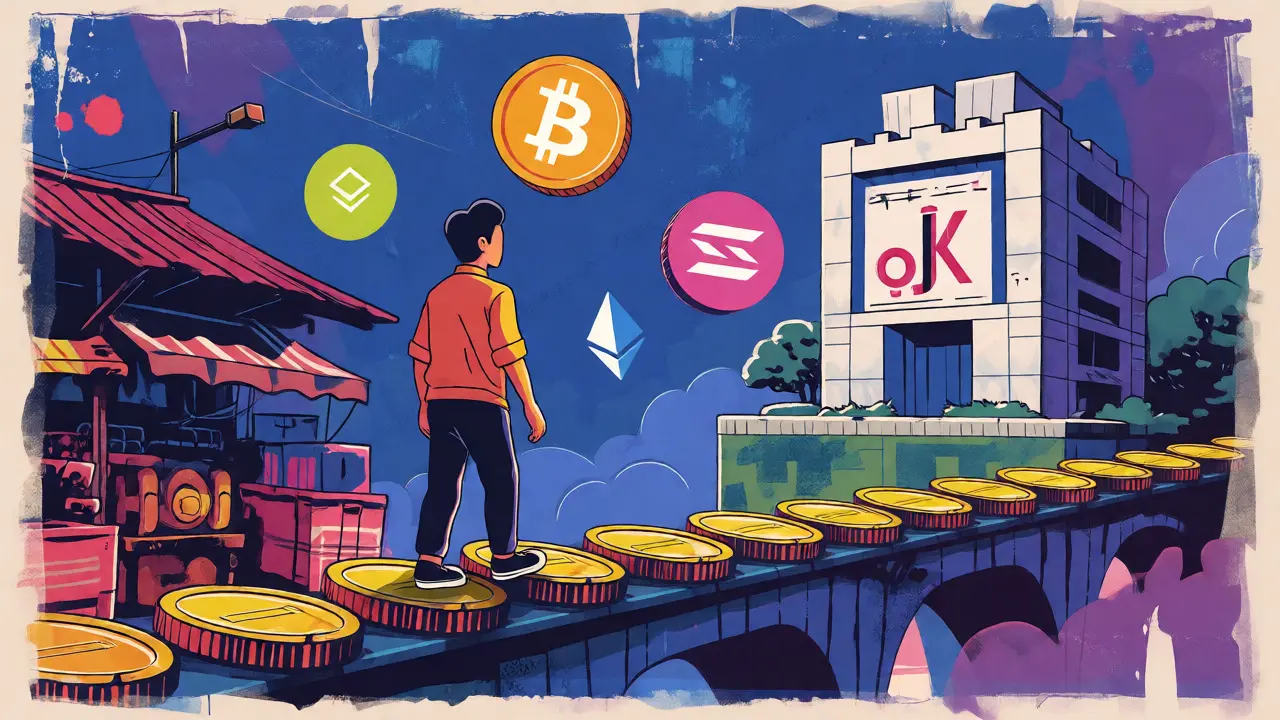
For years, if you wanted to trade Bitcoin in Jakarta, you dealt with Bappebti. But as of January 10, 2025, that era is officially over. The regulatory baton has passed from the Commodity Futures Trading Supervisory Body to the Financial Services Authority, known locally as OJK. This isn't just a name change on a license; it’s a fundamental reclassification of what cryptocurrency actually is in the eyes of Indonesian law.
If you are an investor, a local exchange operator, or someone eyeing entry into Southeast Asia's largest crypto market, understanding this shift is critical. You might be wondering: Does my old license still work? Do I need to re-register? And why does it matter that Bitcoin is no longer a "commodity" but a "digital financial asset"? Let’s break down exactly what happened, how the transition works, and what it means for your money.
The End of the Commodity Era
Under Bappebti’s tenure, which began in earnest with Regulation No. 8 of 2021, crypto assets were treated strictly as commodities. Think of them like gold or coffee beans-physical goods traded on a commodity exchange. This framework required exchanges to register specific tokens before they could be traded. By mid-2023, Bappebti had approved roughly 501 cryptocurrencies, including heavyweights like Bitcoin, Ethereum, and Solana.
This approach worked for basic spot trading, but it struggled to keep pace with complex financial products like staking, lending, and derivatives. Classifying crypto as a commodity meant it fell outside the rigorous oversight mechanisms designed for banks and securities. That changed with Government Regulation No. 49 of 2024, signed at the very end of 2024. This regulation legally moved crypto out of the commodity bucket and into the financial services domain, effective January 10, 2025.
The handover ceremony in Jakarta wasn’t just bureaucratic theater. It involved key figures from Bappebti, Bank Indonesia (BI), and OJK signing the Minutes of Handover (BAST). This formalizes the transfer of authority, ensuring that every rule, license, and enforcement action now falls under OJK’s purview.
Why the Transfer Matters for Investors
You might ask, "Who cares who regulates my trades as long as I can buy and sell?" Here’s why you should care. The shift to OJK brings crypto under the same umbrella as traditional finance. This implies stricter consumer protection, clearer dispute resolution mechanisms, and potentially higher capital requirements for exchanges.
Under the new OJK Regulation No. 27 of 2024, crypto is now defined as a "Digital Financial Asset." This classification allows regulators to apply standards similar to those used for stocks and bonds. For investors, this likely means fewer shady operators slipping through the cracks. Exchanges will face more scrutiny regarding their reserves, security protocols, and transparency.
Moreover, the dual-role structure remains important. While OJK handles the trading and service aspects, Bank Indonesia retains authority over payment system elements. This split ensures that while you can trade crypto freely, its use as a medium of exchange is still monitored by the central bank, maintaining stability in the broader economy.
Licensing and Compliance: What Changes?
If you run a crypto business in Indonesia, here is the good news: existing licenses issued by Bappebti remain valid during the transition period. OJK Regulation 27/2024 explicitly preserves current registrations to prevent market disruption. However, these licenses are now subject to OJK’s compliance standards.
New entrants must apply directly to OJK. The application process will likely mirror the rigor seen in banking and fintech sectors. Expect detailed disclosures on beneficial ownership, risk management frameworks, and technology infrastructure. The term "Crypto Asset Trader" is now formally recognized within OJK’s regulatory lexicon, replacing previous commodity trader designations.
| Feature | Bappebti (Pre-2025) | OJK (Post-Jan 2025) |
|---|---|---|
| Asset Classification | Commodity | Digital Financial Asset |
| Primary Regulator | Ministry of Trade / Bappebti | Financial Services Authority (OJK) |
| Key Regulation | Regulation No. 8/2021 & 13/2022 | Regulation No. 27/2024 |
| Focus Area | Physical Market Trading | Trading, Settlement, Infrastructure |
| Investor Protection | Basic Commodity Standards | Financial Services Standards |
Market Impact and Growth Trends
Indonesia’s crypto market didn’t shrink when the regulator changed-it exploded. By the end of 2023, the country boasted over 17 million crypto investors. Transaction volumes surged past IDR 300 trillion. In 2024, that number skyrocketed to over IDR 650 trillion. This growth trajectory continued into early 2025, proving that regulatory clarity often fuels adoption rather than stifling it.
During its final years, Bappebti laid crucial groundwork by establishing a dedicated crypto exchange, clearing house, and storage manager in July 2023. These institutions provided legal certainty and protected users from fraud. Now, OJK inherits this infrastructure. The challenge for OJK is scaling this capacity to handle institutional-grade demand while integrating newer technologies like DeFi and NFTs, which were harder to regulate under a commodity framework.
Navigating the Transition Period
We are currently in October 2026, well past the initial handover date. The dust has settled, but the effects are ongoing. International exchanges looking to enter Indonesia now face a unified point of contact: OJK. This simplifies compliance compared to the fragmented landscape where commodity rules clashed with financial innovations.
For local startups, the path forward involves aligning internal policies with OJK’s Digital Financial Innovation (DFI) guidelines. This includes robust anti-money laundering (AML) checks and transparent reporting. Experts note that this alignment helps Indonesian firms compete globally, as international partners recognize OJK’s authority as equivalent to other major financial regulators.

Frequently Asked Questions
Is Bappebti still responsible for crypto regulation in 2026?
No. As of January 10, 2025, regulatory authority for crypto assets transferred entirely to the Financial Services Authority (OJK). Bappebti no longer oversees crypto trading or licensing.
Do I need a new license if I already have one from Bappebti?
Existing Bappebti licenses remain valid during the transition. However, businesses must comply with OJK’s updated regulations and may need to update their registration details to reflect the new "Digital Financial Asset" classification.
Why did Indonesia move crypto from commodity to financial asset status?
The shift, mandated by Law No. 4 of 2023, aims to integrate crypto into the formal financial architecture. This allows for stronger investor protections, better oversight of complex financial products, and alignment with international financial standards.
Can I still trade Bitcoin in Indonesia?
Yes, trading is fully legal and active. Bitcoin and other approved cryptocurrencies are traded on licensed platforms supervised by OJK. The market continues to grow, with transaction volumes exceeding IDR 650 trillion in recent years.
What role does Bank Indonesia play now?
Bank Indonesia (BI) maintains authority over the payment system aspects of digital assets. While OJK regulates trading and investment services, BI monitors how crypto interacts with the national currency and payment infrastructure.
Next Steps for Stakeholders
If you are an investor, verify that your chosen exchange displays an OJK license number, not just a Bappebti reference. If you are a business owner, audit your compliance documents against OJK Regulation 27/2024 immediately. The grace period for full alignment is narrowing, and non-compliance risks revocation of trading privileges.
The move from Bappebti to OJK marks Indonesia’s maturity in the global crypto arena. It signals that the country is ready to treat digital assets with the same seriousness as stocks and bonds, paving the way for deeper institutional participation and innovation.