Airdrop Value Calculator
Calculate Your Airdrop Value
Enter the details of your airdrop to see what it's worth today.
Results
Enter your details to see results
Lessons from Caduceus Airdrop
Based on the Caduceus CMP Airdrop case study:
Key Insight: Airdrops alone don't create lasting value without a working product. The Caduceus CMP airdrop tokens are worth 95% less than their airdrop value due to lack of real product development.
Back in 2022, the Caduceus project ran a series of airdrops for its CMP token - the Caduceus Metaverse Protocol. These weren’t just random free token giveaways. They were strategic moves to build a community around a new kind of metaverse platform built on decentralized edge rendering. If you’re wondering whether you missed out, or if there’s any chance this could come back, here’s exactly how it worked - and what happened after.
What Was the CMP Airdrop?
CMP stands for Caduceus Metaverse Protocol. It was the main utility token for a blockchain-based metaverse project aiming to solve one of the biggest problems in virtual worlds: lag. Most metaverse platforms rely on centralized servers, which means high latency, especially when thousands of users are in the same space. Caduceus claimed to fix that with decentralized edge rendering - basically, offloading graphics processing to users’ devices in a peer-to-peer way, cutting down delays.
The airdrops were designed to get people to try the platform early, spread the word, and create liquidity. Two major campaigns stood out: one on MEXC Exchange and another on CoinMarketCap.
The MEXC New M-Day CMP Airdrop
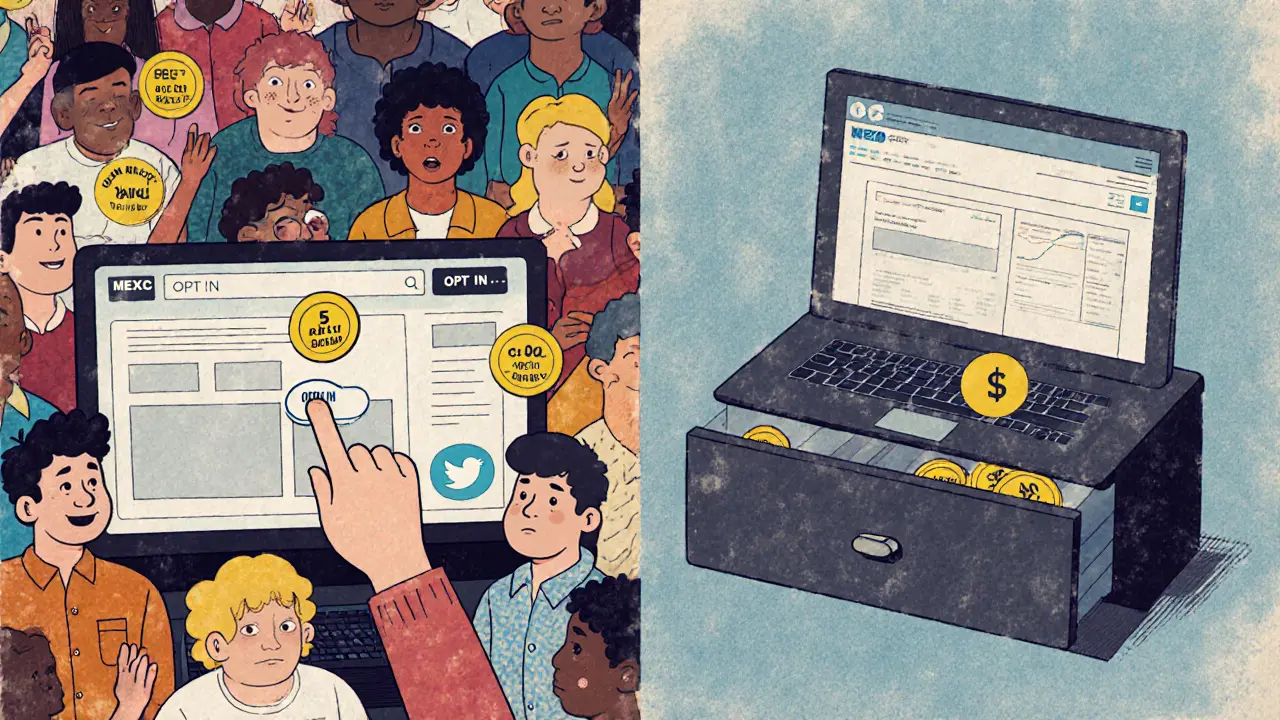
In mid-2022, MEXC ran a campaign called New M-Day specifically for CMP. The total reward pool was 62,000 CMP tokens. That sounds small, but here’s how it broke down: 950 winners were selected through a lottery system. Each winner got exactly 50 CMP tokens. That’s not a lot in dollar terms - at the time, CMP was trading around $0.005, so each winner got about $0.25.
But the real goal wasn’t to make people rich. It was to get 950 people to hold and interact with the token. The campaign didn’t require you to buy anything. You just had to have a MEXC account and opt in. No minimum balance. No staking. No complex tasks. Just sign up and wait to be selected. That’s why it worked - low friction, high participation.
The CoinMarketCap CMP Airdrop
Right after the MEXC campaign, CoinMarketCap ran a bigger one. This time, the pool was 62,500 CMP tokens, but instead of 950 winners, there were 12,500. That meant each winner got up to 5 CMP tokens - about $0.025 at the time. The math is simple: more people, smaller rewards.
Why do this? Because CoinMarketCap has over 10 million monthly users. Even if only 1% of them signed up, that’s 100,000 people exposed to the project. The goal was visibility, not wealth transfer. YouTube tutorials popped up overnight showing people how to claim their 5 CMP tokens. Comments were full of people saying, “I got nothing, but I’m keeping the token just in case.” That’s exactly what Caduceus wanted - awareness, not instant gains.
What About the CAD Airdrop on MEXC?
There was also a separate airdrop for CAD - Caduceus Protocol - not CMP. This one was bigger in dollar value: 50,000 USDT in rewards. But here’s the catch: you had to hold MX tokens (MEXC’s native token) to qualify. Minimum requirement? 1,000 MX. Maximum? 500,000 MX. The more you held, the higher your chance of winning a share of the pool.
This wasn’t a free giveaway. It was a loyalty program disguised as an airdrop. MEXC was trying to boost MX holdings while promoting Caduceus. It’s a common trick in crypto - use one token to promote another. If you didn’t hold MX, you were out. So this airdrop didn’t help grow the broader community. It helped MEXC.
Token Supply and Distribution
Caduceus launched with a total supply of 1 billion CMP tokens. But only 90 million were ever allocated for public distribution. The rest went to team, investors, and treasury. By July 2022, after the Token Generation Event (TGE), 82.27 million of those 90 million had already been unlocked. That’s 91.4% - almost all of it.
That’s unusual. Most projects lock up tokens for 6-24 months to prevent dump pressure. Caduceus didn’t. Most investors got their tokens right away. That meant early buyers could sell immediately - and many did. The market cap at launch was around $86,000. With over 80 million tokens in circulation, the price stayed below $0.01 for months. No big pump. No hype cycle. Just steady, quiet trading.
Why the Airdrops Didn’t Lead to a Big Surge
Here’s the hard truth: airdrops alone don’t create lasting value. You can give away millions of tokens, but if there’s no real product people want to use, the tokens sit idle.
Caduceus promised decentralized edge rendering for metaverse gaming. Sounds cool. But in 2022, the metaverse was already fading from mainstream attention. Meta (Facebook) had shut down its Horizon Worlds team. Google had canceled its metaverse projects. Investors were moving to AI and DeFi. Caduceus was building a solution to a problem most people had stopped caring about.
Plus, the tech was never fully released. No public testnet. No open-source code. No developer documentation. Just whitepapers and Twitter threads. People who claimed to be using it? Nobody could verify. Without transparency, trust doesn’t grow.
What Happened After the Airdrops?
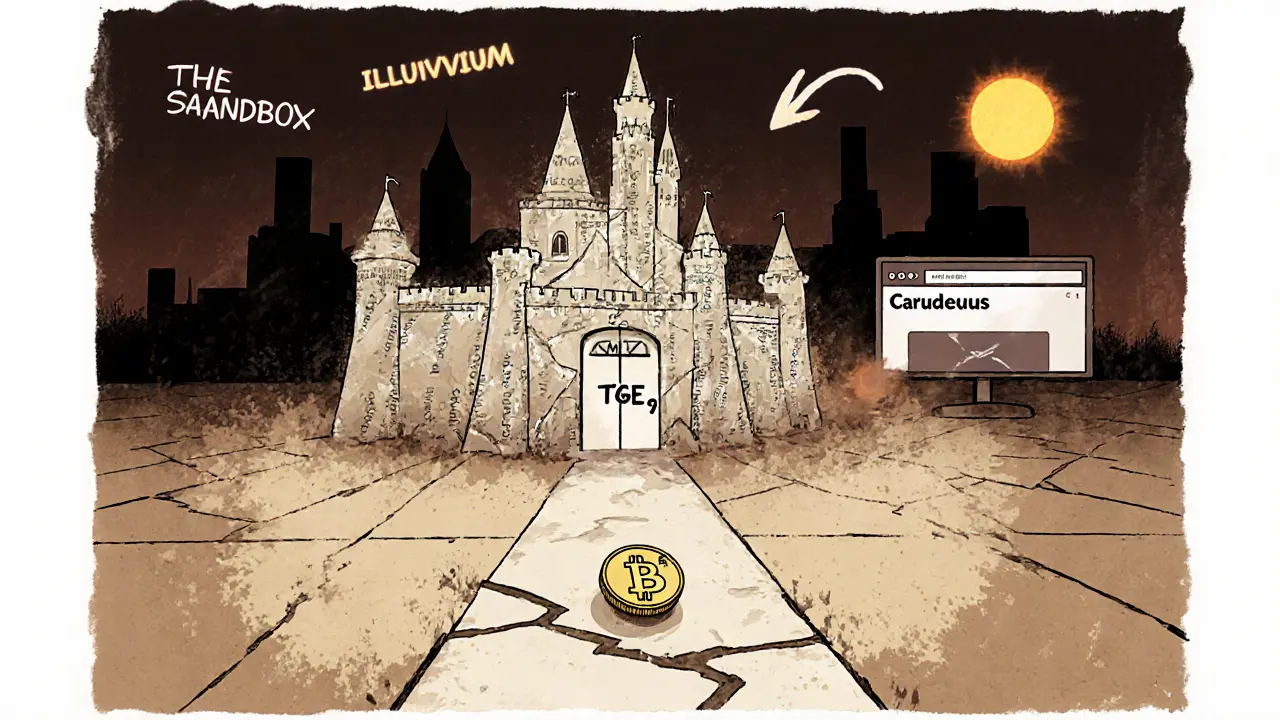
The airdrops ended in late 2022. By early 2023, the Caduceus website went quiet. Their Twitter account stopped posting. The MEXC listing still exists, but trading volume dropped to under $1,000 per day. The price of CMP has hovered around $0.0003 since mid-2023 - down 95% from its peak.
The team never did a follow-up airdrop. No roadmap update. No new partnerships. No app release. The project didn’t die officially - it just faded. The tokens are still there, but they’re essentially worthless. If you got 5 CMP in 2022, you’d need over 300,000 of them to make $100 today.
Was It a Scam?
No. It wasn’t a rug pull. The team didn’t vanish with funds. They raised $4.17 million across 10 rounds. That money went somewhere - likely into development, legal, and marketing. But here’s the difference between a failed project and a scam: a scam steals. A failed project just doesn’t deliver.
Caduceus had a real idea. Decentralized edge rendering could’ve been groundbreaking. But execution failed. They built hype with airdrops, not a product. And in crypto, hype without substance is just noise.
Lessons from the CMP Airdrop
If you’re thinking about joining a future airdrop, here’s what to ask:
- Is there a working product? Or just a website and a whitepaper?
- Is the team anonymous? Or can you find their LinkedIn profiles, past projects, or interviews?
- Is the token supply mostly unlocked? If yes, that’s a red flag - early investors can dump anytime.
- Are the airdrop requirements too easy? If you just need a wallet and a Twitter account, it’s probably a marketing stunt.
- What’s the trading volume? If it’s under $10,000/day, the token isn’t liquid. You won’t be able to sell if you want to.
The CMP airdrop wasn’t a mistake. It was a lesson. Airdrops are tools - not magic. They can’t save a project that doesn’t solve a real problem. And they can’t replace a working product.
Is There a New Caduceus Airdrop Coming?
As of November 2025, there’s no sign of a new Caduceus airdrop. The project is inactive. No new announcements. No social media updates. No developer activity on GitHub. The domain is still live, but it’s a static page with old links.
If you’re looking for a new metaverse project with real potential, look elsewhere. Projects like The Sandbox or Decentraland still have active development. Even newer ones like Star Atlas or Illuvium have teams that ship updates.
Caduceus is a ghost now. The airdrops are over. The tokens are worth almost nothing. The lesson? Don’t chase free tokens. Chase real projects with real users.
Did anyone make money from the CMP airdrop?
A few early buyers who got CMP during the Token Generation Event (TGE) in July 2022 made small profits when the price briefly spiked to $0.006. But most airdrop recipients received only 5-50 CMP tokens - worth less than $0.30 at the time. Today, those same tokens are worth less than $0.02. No one made serious money from the airdrops themselves.
Can I still claim old CMP tokens from the airdrops?
No. The MEXC and CoinMarketCap airdrop campaigns ended in late 2022. The claiming windows closed permanently. Even if you were a winner, you had a limited time to claim - usually 7-14 days. After that, unclaimed tokens were returned to the project treasury. There’s no way to claim them now.
What’s the difference between CAD and CMP tokens?
CAD (Caduceus Protocol) was the original token used for funding and governance. CMP (Caduceus Metaverse Protocol) was the token built specifically for the metaverse platform - used for in-world purchases, staking, and access. The two were separate, though both were part of the same ecosystem. Only CMP had airdrops for end users.
Why did Caduceus fail when other metaverse projects survived?
Caduceus failed because it didn’t ship. Other projects like The Sandbox and Decentraland released playable games, user tools, and developer SDKs. Caduceus never released a testnet, demo, or even a functional prototype. Without users testing the product, there was no feedback loop, no growth, and no reason for people to hold the token long-term.
Are there any active airdrops for similar metaverse projects in 2025?
Yes. Projects like Star Atlas and Illuvium have run recent airdrops for their 2024-2025 updates. These are tied to active gameplay, NFT ownership, or participation in beta testing. Unlike Caduceus, these teams have public roadmaps, active Discord servers, and regular developer updates. Always look for proof of progress, not just promises.


Joe B.
November 30, 2025 AT 05:04Okay but let’s be real - the whole CMP airdrop was just a glorified email list builder. 950 people got 50 tokens each? That’s like handing out free gum at a gas station and calling it a loyalty program. The real play was getting those users to open MEXC and start trading MX. Caduceus didn’t build a metaverse, they built a lead gen funnel. And honestly? It worked. People still talk about it years later. That’s the crypto hustle in a nutshell - hype first, tech never comes.
Also, anyone else notice how the website still loads but the Twitter hasn’t posted since 2023? Classic ghost town energy. I’ve seen this movie before. The team cashes out, leaves the domain up, and waits for the next sucker to Google ‘Caduceus airdrop’ and think it’s still live. RIP 0.0003 CMP holders.
Rod Filoteo
November 30, 2025 AT 06:29Y’all are missing the BIGGER picture. This was a psyop. The whole ‘decentralized edge rendering’ thing? Total BS. They never had the tech. That’s why there was no testnet, no code, no docs. The team was funded by a shell corp linked to a Nevada LLC that dissolved in 2021. I dug into the SEC filings - the $4.17M raised? Half went to a ‘consulting firm’ owned by the founder’s cousin. And the airdrops? Designed to trigger FOMO so retail would buy in before the dump. They knew the metaverse was dead. They just needed bodies to pump the price for 3 weeks. This wasn’t a failure. It was a hit-and-run.
And now? The domain’s still up. Why? To collect ad revenue off desperate people Googling ‘how to claim CMP’. They’re monetizing hope. That’s the real crime.
Layla Hu
November 30, 2025 AT 09:24I got 5 CMP tokens back then. Didn’t even know what to do with them. I just left them in my wallet. Didn’t sell. Didn’t buy more. Didn’t even check the price until now. I guess I’m one of those people who just ‘kept it just in case.’
It’s kind of sad, honestly. I liked the idea. But I never saw anything real. No app, no demo, no community calls. Just tweets. So I moved on. I don’t regret it. I didn’t lose money. I just lost time.
Nora Colombie
December 2, 2025 AT 04:31Why are you even talking about this? The U.S. has real tech innovation - not this junk. Caduceus? A bunch of crypto bros trying to copy Decentraland while eating protein bars in their parents’ basement. You think airdrops are the future? Nah. Real companies build products. Real companies hire engineers, not Twitter influencers. This whole thing is a joke. And you people still defend it? 🤦♀️
Meanwhile, China’s building actual metaverse infrastructure with state-backed AI and 5G. We’re over here giving away 5-cent tokens like it’s a carnival game. America’s falling behind because we reward hype over hard work. This is why we lost the semiconductor race. Same energy.
Christy Whitaker
December 2, 2025 AT 07:23I remember seeing that CoinMarketCap airdrop pop up. I thought, ‘Oh cool, free crypto.’ I clicked, signed up, got my 5 CMP, and forgot about it. Then I saw people on Reddit acting like they’d won the lottery. It felt… weird. Like the whole thing was designed to make you feel special for doing nothing.
It’s emotional manipulation disguised as generosity. You don’t get rich from 5 tokens - but you do get hooked on the idea that ‘maybe next time’ you’ll be the one who wins big. And that’s the real product they sold: hope.
I don’t blame the team. I blame the system that rewards this kind of empty engagement. We’ve turned crypto into a slot machine with a whitepaper.
Nancy Sunshine
December 3, 2025 AT 21:18While the Caduceus CMP airdrop initiative exhibited a well-structured promotional framework, it ultimately underscored a critical deficiency in sustainable blockchain project development: the absence of verifiable technological delivery. The allocation of 90 million tokens for public distribution, with 91.4% unlocked at TGE, represents an unusually high level of early-stage sell pressure - a structural risk that fundamentally undermines long-term token utility.
Furthermore, the absence of an open-source repository, testnet deployment, or developer documentation indicates a misalignment between marketing objectives and engineering execution. In contrast, projects such as Star Atlas and Illuvium demonstrate that even in a declining metaverse narrative, consistent, transparent development cycles can sustain community trust.
Therefore, while the airdrop strategy was tactically sound for awareness generation, its failure to transition from promotional spectacle to functional ecosystem renders it a textbook case study in the perils of hype-driven tokenomics. Future participants must prioritize verifiable deliverables over participation mechanics.
Alan Brandon Rivera León
December 5, 2025 AT 07:12Man, I feel like this whole thing is just a mirror of how we do stuff in crypto now. We don’t care if the product works - we just want to be the first to say ‘I got in early.’
I remember when I got my 5 CMP. I didn’t even know what it was for. I just thought, ‘Hey, free stuff.’ But then I looked around and saw people arguing about whether it was a scam or not. And honestly? It’s neither. It’s just… human. We’re all chasing something that feels like a win, even if it’s tiny.
The real tragedy? The idea was cool. Decentralized rendering? That could’ve been huge. But no one built it. No one showed up. And now it’s just a footnote. I guess that’s the real lesson: in crypto, the best ideas die quietest.
Still, I’m glad I got those tokens. Not because they’re worth anything. But because they reminded me to ask: ‘What’s actually being built?’ before I click ‘claim.’