For years, the world of digital assets felt like a bit of a wild west when it came to tax authorities. While you might have been tracking your own gains and losses, governments were largely flying blind, struggling to see what was happening inside private wallets and offshore exchanges. That era is officially ending. With the 2026 updates to the Common Reporting Standard and the introduction of the Crypto-Asset Reporting Framework, the "invisible" nature of crypto is being replaced by a global, automatic system of transparency.
If you've held assets on an exchange or used a custodial service, the days of hoping the tax office doesn't find your keys are over. We are moving toward a world where your crypto holdings are treated with the same scrutiny as a traditional bank account in Switzerland or the Cayman Islands. But how does this actually work, and why does it matter for the average holder?
The Basics: What is the Common Reporting Standard?
To understand the new rules, we first have to look at the foundation. Common Reporting Standard is a global information standard developed by the OECD that allows tax authorities to automatically exchange financial account information across borders. Originally launched in 2014, it was designed to stop tax evasion by ensuring that if a resident of Country A opens a bank account in Country B, Country B tells Country A about it automatically.
For a long time, the CRS focused on "traditional" finance-savings accounts, stocks, and bonds. However, as millions of people shifted their wealth into digital assets, a massive gap opened up. Tax authorities simply didn't have the tools to monitor cross-border crypto revenues. This is why the rules have been overhauled for 2026 to bring digital assets into the fold.
The Dynamic Duo: CRS 2.0 and CARF
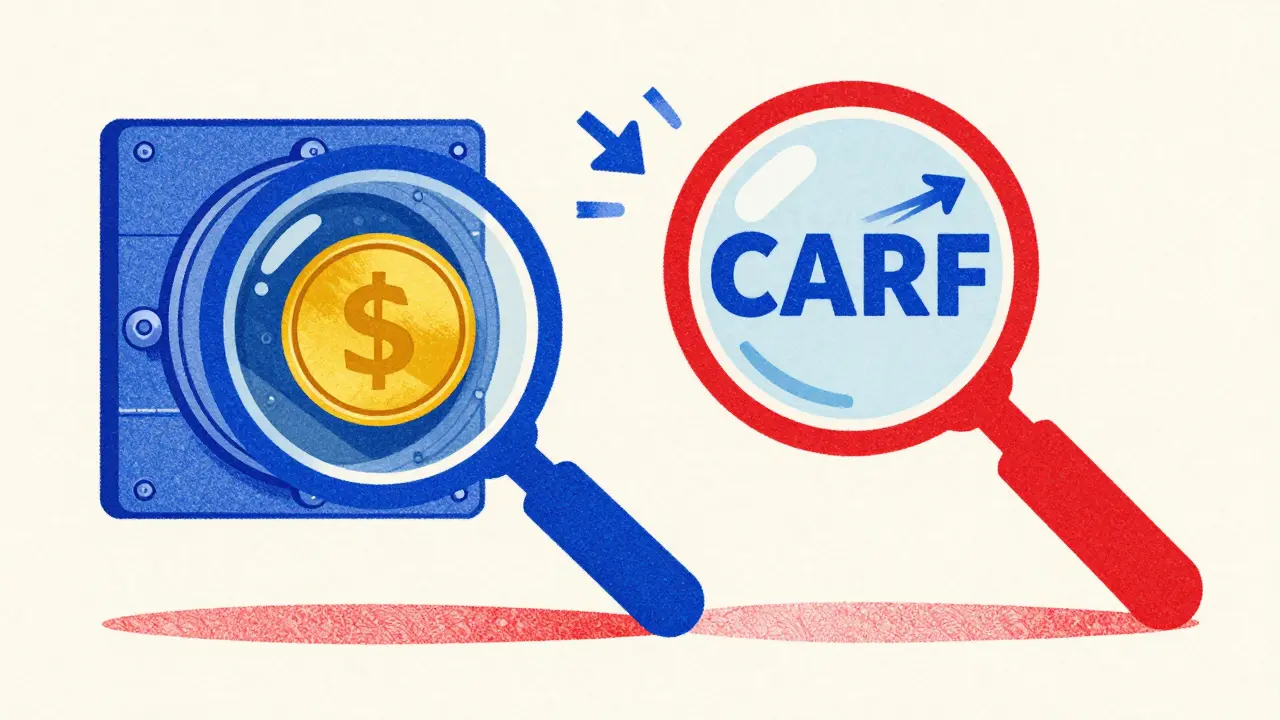
You'll often hear the Common Reporting Standard mentioned alongside CARF (the Crypto-Asset Reporting Framework). It's easy to confuse the two, but they actually do different jobs. Think of them as two different lenses looking at your portfolio.
The updated CRS (often called CRS 2.0) focuses on holdings. It looks at the "account" level. If you have a custodial account that holds crypto-assets, the CRS ensures the existence and value of that account are reported. On the other hand, CARF is designed to track transactions. It focuses on the movement of assets, the trades, and the specific activity occurring within those accounts.
| Feature | CRS 2.0 (Amended) | CARF |
|---|---|---|
| Primary Focus | Account Holdings & Balances | Transaction Data & Activity |
| Core Goal | Identify who owns what where | Track how assets move and trade |
| Entity Scope | Investment Entities & Custodians | Crypto-Asset Service Providers (CASPs) |
| Reporting Style | Annual Balance Reports | Detailed Transactional Reporting |
By combining these two, tax authorities get a 360-degree view. They know you have an account (via CRS) and they know exactly what you did with the money inside it (via CARF). This dual-framework approach is intended to prevent duplication of data while leaving no stone unturned.
What Exactly is Now "Reportable"?
The 2026 amendments have significantly widened the net. It's no longer just about Bitcoin and Ethereum. The OECD has expanded the definition of crypto-assets to include almost any digital representation of value that uses a cryptographically secured distributed ledger.
Here is a breakdown of what now falls under these reporting requirements:
- Stablecoins: Since these often act as a bridge to traditional fiat, they are high-priority targets for reporting.
- Central Bank Digital Currencies (CBDCs): As governments launch their own digital coins, they are integrating them directly into the reporting pipeline.
- NFTs: While not all Non-Fungible Tokens are reportable, certain NFTs that function as investment assets now fall within the scope.
- Crypto-Derivatives: If you hold a derivative that references a crypto-asset in a custodial account, it's now a reportable financial asset.
- Electronic Money Products: Specified digital money products that serve as alternatives to traditional bank accounts are now included.
If you are using a "non-custodial" or "cold" wallet (like a Ledger or Trezor), the reporting happens at the point where those assets interact with a regulated entity. The moment you move those funds to a centralized exchange to cash out, that exchange-acting as a Reporting Financial Institution-will trigger the CRS/CARF mechanisms.
How This Impacts Financial Institutions
It's not just the users who are feeling the heat; the institutions are facing a massive compliance headache. Banks, investment firms, and insurance companies that already report under the original CRS must now upgrade their entire infrastructure. They can't just add a new checkbox; they have to redefine how they categorize assets.
For instance, the definition of an Investment Entity has been specifically updated to include any entity that invests in crypto-assets. This means many hedge funds and venture capital firms that previously flew under the radar now have to provide detailed disclosures to tax authorities.
The implementation is also varying by region. In the European Union, this is being rolled out through DAC8 (the 8th amendment to the Directive on Administrative Cooperation). Meanwhile, jurisdictions like Guernsey are moving even faster, with both CARF and CRS 2.0 becoming effective as of January 1, 2026. This fragmented rollout means that a user might be "visible" in one jurisdiction before they are in another, creating a complex web of reporting timelines.
The End of the "Crypto Privacy" Myth
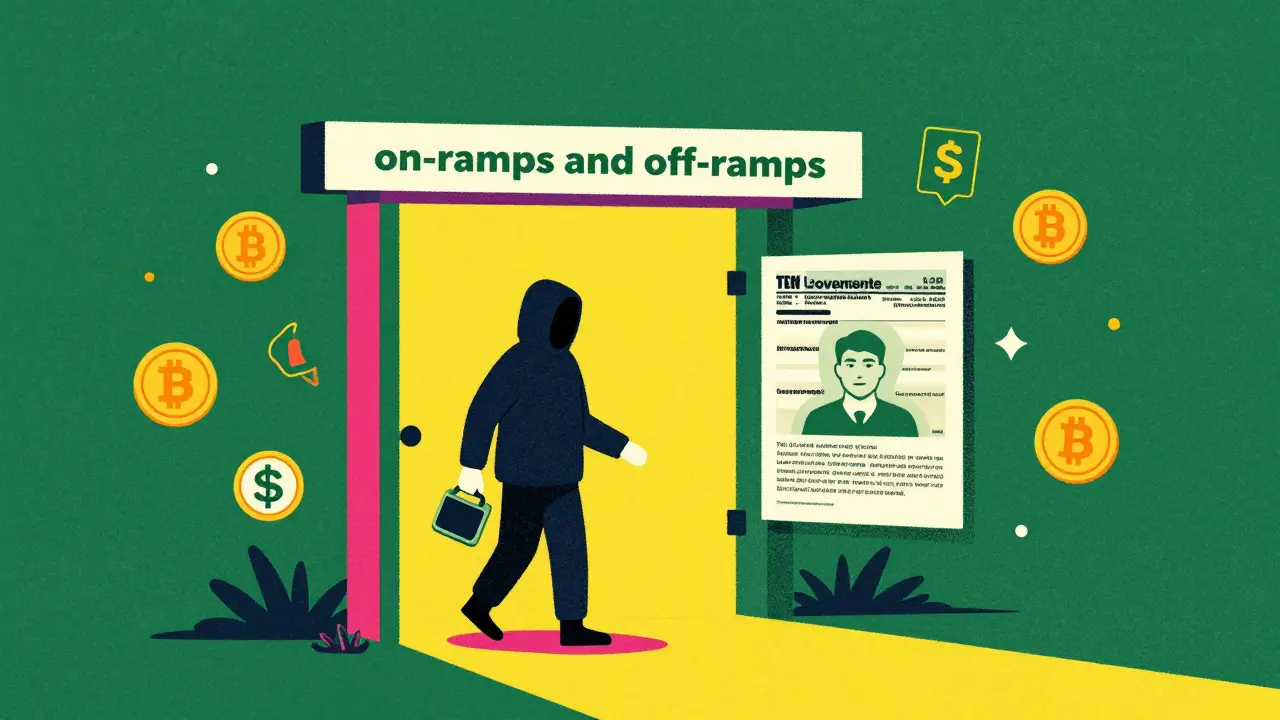
Many people entered the crypto space believing that blockchain's pseudonymity provided a shield against tax oversight. While the blockchain itself is public, the link between a wallet address and a real-world identity was often broken. The CRS-CARF combination fixes this for the government by focusing on the on-ramps and off-ramps.
When a regulated exchange performs KYC (Know Your Customer) checks, they link your identity to your wallet. Under the new rules, that link is shared automatically with your home country's tax office. If you're a resident of the US or UK and you use an exchange in a participating jurisdiction, your home government will likely know about those assets without you ever having to tell them.
Does this mean all crypto is now tracked? Not quite. Purely peer-to-peer (P2P) transactions between private wallets still happen in the shadows. However, the moment those assets touch a regulated service-which is where most people eventually go to spend or invest their gains-the transparency mechanism kicks in.
Practical Steps for Tax Compliance
With the 2026 deadlines looming, the best strategy is proactive transparency. Waiting for the tax office to send you a letter based on a CRS report is a recipe for audits and penalties. Here are a few rules of thumb for staying compliant:
- Audit Your Custodians: Make a list of every exchange and custodial service you use. Check if they operate in a jurisdiction that has signed the OECD's joint statement on CARF (currently over 47 jurisdictions, including the US, UK, and most of Europe).
- Maintain a Transaction Log: Because CARF tracks transactions, not just balances, you need to be able to prove the cost basis of your assets. If the government sees a $100k transaction but you can't prove you bought the asset for $80k, they may tax the full amount.
- Distinguish Between Asset Types: Keep separate records for stablecoins, NFTs, and volatile coins. As seen in the new definitions, these may be treated differently depending on the jurisdiction.
- Prepare for "Automatic" Discovery: Assume that any asset held in a regulated account is already known to your tax authority. This shift in mindset helps you avoid the mistake of omitting assets from your tax returns.
Will my private hardware wallet be reported under CRS?
Not directly. The Common Reporting Standard and CARF rely on "Reporting Financial Institutions" (like exchanges) to provide data. If your assets stay in a private wallet and never touch a regulated exchange, there is no institution to report them. However, as soon as you move them to an exchange to sell or trade, that activity becomes reportable.
What is the difference between FATCA and CRS?
FATCA is a US-specific law that requires foreign financial institutions to report assets held by US citizens. The Common Reporting Standard (CRS) is the global version of this, developed by the OECD, allowing over 120 countries to exchange information mutually rather than just reporting back to the US.
When do the new crypto reporting rules actually start?
Many of the amended CRS rules and CARF requirements are scheduled to take effect on January 1, 2026. Some jurisdictions, like Guernsey, have already committed to this date, while others may stagger their implementation through the end of 2026 and into 2027.
Do NFTs fall under these new tax rules?
Yes, but with caveats. The OECD's definition of crypto-assets includes certain NFTs, particularly those that function as investment assets or are issued in a way that mimics financial products. Purely collectible NFTs may have different treatment, but the general trend is toward including them in the reporting scope.
What happens if I ignore these rules?
Because the information exchange is automatic, the risk of discovery is significantly higher than it was in the past. Tax authorities can cross-reference the data received via CRS/CARF with your filed tax returns. Discrepancies often lead to audits, back taxes, and substantial financial penalties for tax evasion.



Prachi Bhadarge
April 15, 2026 AT 04:53Oh great, because the government definitely needs more ways to take our money while they can't even fix a pothole in the street. Just a heads up though, thinking you're safe with a cold wallet is cute until you realize you actually have to spend that money eventually, and that's when the trap snaps shut.
Yuhan Mo
April 15, 2026 AT 17:23The integration of CARF into the existing reporting architecture is basically going to eliminate the current delta between CEX and DEX reporting for the average retail user. It is a sophisticated move toward full financial transparency and a necessary evolution for the ecosystem to reach institutional maturity.
Kim Smith
April 16, 2026 AT 06:45its just kinda wild how we all thought we found this little loophole in the fabric of society but then the big gears of the state just start turnin again and we're all just little ants in the middle of it... like, does privacy even exist anymore or are we just pretendin that the walls dont have ears while we trade digital pictures of monkeys in hopes that the value goes to the moon and we can finally escape the cycle of a nine to five life which is honestly just a dream anyway lol
Abhinav Chaubey
April 16, 2026 AT 10:44You people act like this is a tragedy when it is simply the law of the land. If you are using these platforms, you are consenting to the jurisdiction. My country is far more efficient at implementing these digital frameworks than the West, and frankly, those of you whining about "privacy" are just admitting you've been dodging taxes like cowards. Deal with it.
siddharth narula
April 17, 2026 AT 22:24The erosion of financial anonymity is a spiritual tragedy for the modern age. 😔 We have traded the sanctity of private ownership for the illusion of digital convenience, and now the state demands a tithe on every single movement of our wealth. It is truly a lamentable state of affairs. 🏛️
Karen Mogollon Gutierrez
April 19, 2026 AT 05:22This is absolutely catastrophic! The sheer audacity of the OECD to implement such a draconian system without any regard for the individual's right to financial secrecy is nothing short of a global scandal. I am utterly appalled by the lack of transparency regarding how this data will be stored! It is an outrage!
Tracy Sperandio
April 19, 2026 AT 22:58Listen up everyone, the game has changed and it's time to get your act together! Stop whining about the rules and start mastering the strategy. Get those spreadsheets humming, organize your cost basis like your life depends on it, and swoop in on this transparency wave with confidence! Fortune favors the organized, so let's crush this compliance phase with style! 🚀💥
nathan jones
April 21, 2026 AT 02:52Yeah, it's pretty much the end of the road for the stealth era.