Buying a few coins and hoping they go up is no longer a viable strategy in the 2026 crypto market. The days of buying random tokens based on social media hype are behind us. Today, successful investors treat digital assets like any other serious financial instrument: with structure, discipline, and a clear plan for managing risk. This shift isn't just about avoiding losses; it's about capturing growth while protecting your capital from the extreme volatility that still defines this space.
Diversification in cryptocurrency means spreading your investments across different types of projects, technologies, and market sizes. It’s not just about holding five different coins; it’s about holding five coins that don’t all crash at the same time. In 2026, with clearer regulations and more institutional money flowing in, the approach has evolved from simple speculation to strategic asset allocation. You need a framework that matches your personal risk tolerance and financial goals.
Why is diversification important in crypto?
Diversification reduces the impact of a single project failing or a specific sector crashing. By spreading investments across different assets, you protect your portfolio from total loss while maintaining exposure to potential gains.
The Core-Satellite Framework for 2026
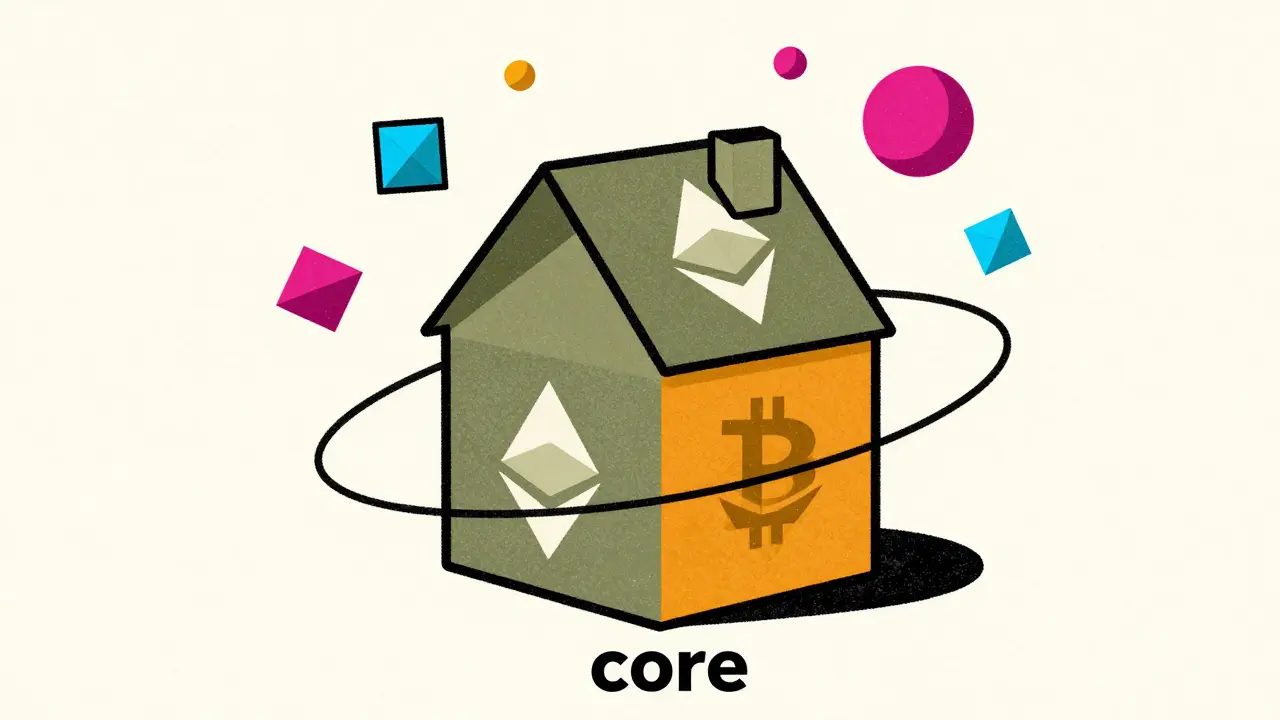
The most effective way to build a crypto portfolio today is using the "core-satellite" model. Think of your portfolio as a house. The core is the foundation and walls-it needs to be strong, stable, and unlikely to collapse. The satellites are the decorations and upgrades-they add value and excitement but carry higher risk. If the house falls down, the decorations don't matter. But if the house stands, the decorations make it beautiful.
In this model, your "core" consists of large-cap cryptocurrencies like Bitcoin and Ethereum. These assets have proven track records, high liquidity, and institutional backing. They move slower than smaller coins, but they also recover better during downturns. Your "satellites" are mid-cap and small-cap altcoins. These are projects with higher growth potential but also higher risk of failure or prolonged stagnation.
For most investors, the core should make up 70-85% of their crypto holdings. The satellites take up the remaining 15-30%. This ratio ensures that even if a satellite project goes to zero, your overall portfolio remains intact. It also allows you to participate in the explosive growth of emerging technologies without betting the farm on them.
Allocation by Risk Profile
There is no one-size-fits-all allocation. Your age, income stability, and investment horizon dictate how much risk you can afford to take. Here are three standard profiles used by professional asset managers in 2026:
- Conservative (New Investors or Near Retirement): Focus heavily on safety. Allocate 50-60% to Bitcoin, 20-25% to Ethereum, 10-15% to large-cap altcoins like Solana or XRP, and keep 10% in stablecoins. This keeps 70-85% of your portfolio in established assets. Avoid small-cap projects entirely. Consider using crypto ETFs for regulated exposure without custody risks.
- Balanced (3-5 Year Horizon): Aim for steady growth with moderate volatility. Allocate 35-45% to Bitcoin, 20-25% to Ethereum, 20-25% to mid-cap altcoins, 5-10% to small-cap/emerging projects, and 5-10% in stablecoins. This balances stability with meaningful upside potential.
- Aggressive (Long Horizon, High Tolerance): Seek maximum growth. Allocate 25-35% to Bitcoin, 15-20% to Ethereum, 25-30% to mid-cap altcoins, and the rest to small-cap or emerging assets. Accept that combined Bitcoin/Ethereum exposure drops to 40-55%, increasing volatility significantly.
| Risk Profile | Bitcoin (BTC) | Ethereum (ETH) | Mid-Cap Altcoins | Small-Cap/Emerging | Stablecoins |
|---|---|---|---|---|---|
| Conservative | 50-60% | 20-25% | 10-15% | 0% | 10% |
| Balanced | 35-45% | 20-25% | 20-25% | 5-10% | 5-10% |
| Aggressive | 25-35% | 15-20% | 25-30% | 10-20% | 0-5% |
Sector Diversification: Beyond Market Cap
Market capitalization tells you how big a project is, but sector diversification tells you what the project does. Holding ten different Layer 1 blockchains doesn't truly diversify you because they often compete for the same users and developers. If one fails, others may suffer too. True diversification requires spreading investments across different functional sectors.
In 2026, key sectors include:
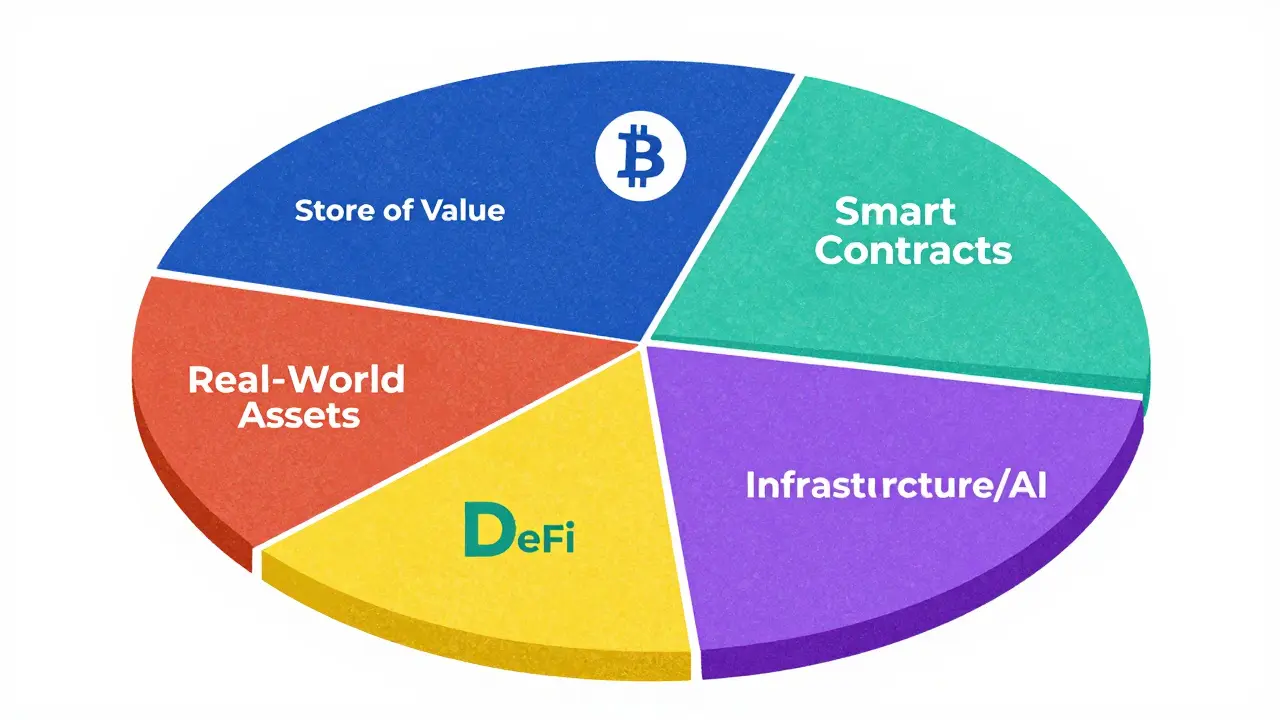
- Store of Value: Primarily Bitcoin. Acts as digital gold, preserving wealth over long periods.
- Smart Contract Platforms: Ethereum, Solana, Cardano. These are the operating systems of the crypto world, hosting applications and services.
- Decentralized Finance (DeFi): Uniswap, Maker, Compound. These platforms offer lending, borrowing, and trading without banks.
- Real-World Assets (RWAs): Tokenized real estate, bonds, or commodities. This is a growing area where traditional finance meets blockchain.
- Infrastructure & AI: Projects combining blockchain with artificial intelligence or physical infrastructure (DePIN). High growth potential but high volatility.
A balanced portfolio might hold 40% in store-of-value/smart contracts, 30% in DeFi, 20% in RWAs, and 10% in speculative sectors like gaming or metaverse projects. This ensures that if DeFi faces regulatory headwinds, your RWA and Bitcoin holdings remain stable.
The Role of Stablecoins and Liquidity
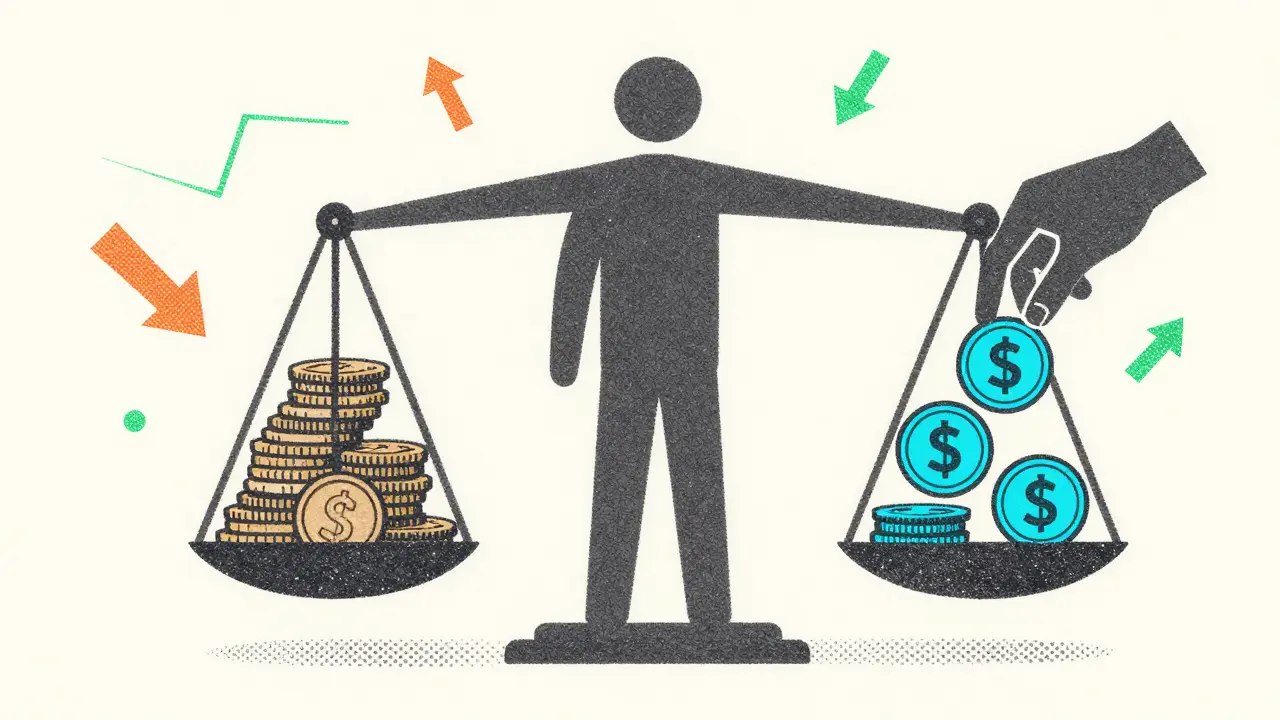
Many beginners ignore stablecoins, viewing them as boring cash equivalents. In reality, stablecoins like USDC and USDT are powerful tools for active portfolio management. They serve three critical functions in 2026 strategies:
- Risk Management: During market uncertainty, moving funds to stablecoins preserves value without exiting the crypto ecosystem entirely.
- Yield Generation: Lending stablecoins on reputable DeFi platforms or through institutional services can generate 3-8% annual yields, providing passive income.
- Tactical Rebalancing: Keeping 5-10% of your portfolio in stablecoins gives you dry powder to buy dips when opportunities arise. Without this liquidity, you’re forced to sell winning positions to fund new buys, which triggers taxes and fees.
Institutional portfolios now routinely allocate 5-10% to stablecoins specifically for operational efficiency. For retail investors, maintaining a stablecoin buffer prevents emotional decisions during panic selling.
Correlation and False Diversification
Here’s a hard truth: many altcoins move in lockstep with Bitcoin. When BTC drops 10%, SOL, ADA, and DOT often drop 15-20%. This is called high correlation. If all your assets fall together, you aren’t diversified-you’re just concentrated in different names.
To achieve true diversification, look for assets with low or negative correlation to Bitcoin. Real-World Asset (RWA) tokens, for example, often track traditional bond markets rather than crypto sentiment. Some DeFi protocols with strong revenue streams may hold value better during bear markets. Multi-chain diversification-holding assets on Ethereum, Solana, Avalanche, and Polygon-also helps mitigate platform-specific risks.
Regularly review your portfolio’s correlation matrix. If every coin moves up and down together, consider replacing some holdings with assets from different sectors or geographies.
Implementation Steps for 2026
Building a diversified portfolio isn’t a one-time event. It’s an ongoing process. Follow these steps to implement your strategy effectively:
- Determine Total Allocation: Decide what percentage of your net worth will be in crypto. For conservative investors, 3-5% is recommended. For aggressive investors, up to 10% may be appropriate. Never invest money you can’t afford to lose.
- Select Risk Profile: Choose conservative, balanced, or aggressive based on your timeline and stress tolerance. Stick to this profile unless your life circumstances change significantly.
- Choose Assets: Select 5-15 specific assets across different sectors. Prioritize projects with transparent teams, active development, and clear use cases. Avoid meme coins unless they’re part of a tiny, high-risk satellite position.
- Use Dollar-Cost Averaging (DCA): Instead of investing all at once, spread purchases over 6-12 months. This reduces timing risk and smooths out entry prices.
- Rebalance Quarterly: Check your allocations every three months. If Bitcoin has grown to 70% of your target 40%, sell some BTC and buy undervalued altcoins or stablecoins. Event-triggered rebalancing (when drift exceeds 5-10%) is also effective.
Regulatory and Security Considerations
Regulation is shaping up to be a major factor in 2026. The approval of spot altcoin ETFs for Solana, XRP, Litecoin, and Cardano provides safer access for many investors. These ETFs eliminate custody risks-you don’t manage private keys or worry about exchange hacks. However, they come with management fees and less flexibility.
If you hold self-custodied assets, security is paramount. Use hardware wallets for long-term holdings. Enable two-factor authentication on all exchanges. Be wary of phishing attempts and fake support messages. Regulatory clarity varies by jurisdiction, so understand the tax implications of trading and staking in your country.
How often should I rebalance my crypto portfolio?
Quarterly rebalancing is standard, but event-triggered rebalancing when allocations drift 5-10% from targets is more efficient. Avoid frequent trading to minimize fees and tax liabilities.
Are crypto ETFs better than direct ownership?
ETFs offer regulatory protection and ease of use, ideal for conservative investors. Direct ownership offers full control, staking rewards, and lower fees, suitable for experienced users comfortable with self-custody.
What is the role of stablecoins in diversification?
Stablecoins provide liquidity for rebalancing, generate yield through lending, and act as a safe haven during market volatility. They typically comprise 5-10% of a diversified portfolio.
Is Bitcoin alone sufficient for diversification?
Bitcoin provides significant stability and is the safest single-asset choice. However, adding Ethereum and select altcoins enhances growth potential and spreads risk across different technological ecosystems.
How do I avoid false diversification?
Avoid holding multiple assets that move together (high correlation). Diversify across sectors (DeFi, RWA, Gaming) and technologies (Layer 1, Layer 2, Infrastructure) rather than just picking different coins within the same category.

Heather Austin
July 17, 2026 AT 05:46hey guys just wanted to say that the core satellite model is actually pretty solid advice for 2026 especially with all the institutional money coming in i have been using this exact strategy since late 2024 and it has saved me from so much stress during those sudden market dumps
the part about stablecoins being dry powder is something people really overlook most folks keep their cash in fiat banks which is fine but having usdc ready lets you buy the dip without waiting for bank transfers to clear which can take days
also dont forget to check the correlation matrix regularly because what looks diversified on paper might all be moving together when btc sneezes
Lisa Chong
July 17, 2026 AT 18:18you are all being manipulated by the deep state financial elites who want you to believe in diversification as a shield against their impending collapse of the banking system they know that bitcoin is not gold it is digital slavery designed to track your every move and sell your data to the highest bidder
i have seen the documents leaked from the sony servers years ago and they confirm that altcoins are just ponzi schemes created by the fed to launder money from cartel operations do not trust any of these charts or tables they are lies fabricated to keep you poor and compliant while they hoard the real wealth in offshore accounts
stay woke and protect your privacy by going completely off grid and using only cash or barter systems because once they turn off the internet your crypto will be worthless zeros and ones controlled by big tech corporations
Ran Tao
July 17, 2026 AT 23:39oh wow another generic finance bro article pretending to offer wisdom 🙄 like we havent heard this before the core satellite model is just fancy talk for being boring and missing out on the real gains everyone here is too scared to take risks because they are terrified of losing their mediocre jobs
real alpha hunters know that you need to go all in on the narrative coins of the moment whether its ai or gaming or whatever the next hype cycle is chasing beta is for losers who want to work another forty years in a cubicle farm 😂
if you cant handle volatility then maybe crypto isnt for you go buy bonds and die comfortably in poverty while the rest of us make millions on memecoins and leverage trades
DJ Maleko
July 18, 2026 AT 15:44look i dont care about your feelings or your risk tolerance profiles because in the end the market does not give a damn about your personal life circumstances you either have skin in the game or you are just noise in the system 📉
the problem with this guide is that it assumes rational actors exist in a market driven by pure emotion and fear greed cycles if you are rebalancing quarterly you are already behind because smart money moves in seconds not months
stop listening to these conservative strategies that are designed to keep you average instead learn how to read order flow and liquidity grabs because thats where the actual profit is made not in some theoretical allocation chart drawn up by suits who have never traded a single dollar
Erika Pozzetto
July 20, 2026 AT 14:00i must respectfully disagree with the notion that aggressive portfolios are inherently superior to conservative ones given the current macroeconomic environment characterized by high inflation rates and geopolitical instability which necessitates a more cautious approach to capital preservation and long term wealth accumulation rather than short term speculative gains which often result in significant losses for inexperienced investors who lack the necessary discipline and emotional fortitude to withstand severe market corrections
it is imperative that individuals consider their entire financial picture including retirement savings emergency funds and debt obligations before allocating any portion of their net worth to volatile digital assets as the potential for total loss remains a very real and tangible risk that cannot be ignored or dismissed as merely a statistical anomaly
furthermore the regulatory landscape continues to evolve rapidly with new laws being proposed daily which could drastically alter the tax implications and legal status of various cryptocurrencies thereby adding another layer of complexity and uncertainty to the investment process that requires careful consideration and professional advice
Russ Fincham
July 22, 2026 AT 07:58the whole concept of sector diversification in crypto is fundamentally flawed because there are no true sectors yet everything is still tied to the same underlying technology stack and user base which means that when ethereum has a bad day solana usually follows suit shortly after due to shared developer talent and liquidity pools
you cant diversify away systemic risk in an industry that is still less than twenty years old and heavily reliant on venture capital funding rounds that eventually run dry leaving retail investors holding the bag on worthless tokens that were pumped by marketing budgets rather than actual utility
until we see truly decentralized applications that operate independently of each other and generate revenue outside of the crypto ecosystem itself this kind of portfolio theory is just academic nonsense that sounds good in a presentation but fails in practice
Linda Hilliard
July 22, 2026 AT 15:12let us be absolutely clear about one thing here if you are reading this and thinking about putting more than five percent of your net worth into anything other than spot bitcoin etfs you are engaging in reckless gambling not investing 🤡
the jargon heavy language used in this article to describe mid cap and small cap altcoins is nothing more than sophisticated word salad designed to make risky bets sound like calculated decisions the reality is that ninety nine point nine percent of these projects will go to zero within five years period
smart money understands that liquidity is king and that only bitcoin and ethereum have the network effects required to survive the inevitable regulatory crackdowns that are coming soon enough so save yourself the headache and stick to the blue chips or stay out entirely
Winston Lacewing
July 23, 2026 AT 06:00i cant believe people are still arguing about percentages when the real issue is security and custody because if you get hacked none of this portfolio allocation matters at all 🔒
you need to stop trusting exchanges with your keys because they are all compromised or will be eventually by state actors or malicious insiders who have access to your private information through intrusive data collection practices that violate your basic human rights to privacy
use a hardware wallet and store it in a safe deposit box or better yet bury it in your backyard under a concrete slab so that even if the government comes knocking they wont find your life savings sitting on a server farm in silicon valley waiting to be seized
Kristine Lawson
July 24, 2026 AT 09:23it is quite amusing to watch these self proclaimed experts dictate moral superiority regarding investment strategies as though there is a correct ethical way to lose money in a casino disguised as a financial market 🎲
the pretentious tone of suggesting that one should avoid meme coins unless they are part of a tiny satellite position reveals a fundamental misunderstanding of how cultural narratives drive value in the digital age because sometimes the joke is the product and the community is the moat
instead of judging others for taking risks perhaps we should focus on our own incompetence in timing the market and accepting that volatility is the price of admission for potentially asymmetric returns that traditional finance simply cannot offer