Living in Doha or planning to invest from Qatar means navigating a financial landscape that is both cautious and rapidly evolving. For years, the question of whether you can buy Bitcoin here had a simple answer: no. But as we move through 2026, the reality is more nuanced. The Central Bank of Qatar has maintained a strict ban on traditional cryptocurrencies, yet the government is simultaneously building a sophisticated framework for digital assets tied to real-world value.
If you are a resident trying to understand where the line is drawn between illegal speculation and legal innovation, this guide breaks down exactly what is prohibited, what is permitted, and how the new regulations affect your wallet. You will learn why Bitcoin remains off-limits while tokenized real estate becomes an option, and what this means for your personal finances.
The Core Rule: Cryptocurrencies Are Still Banned
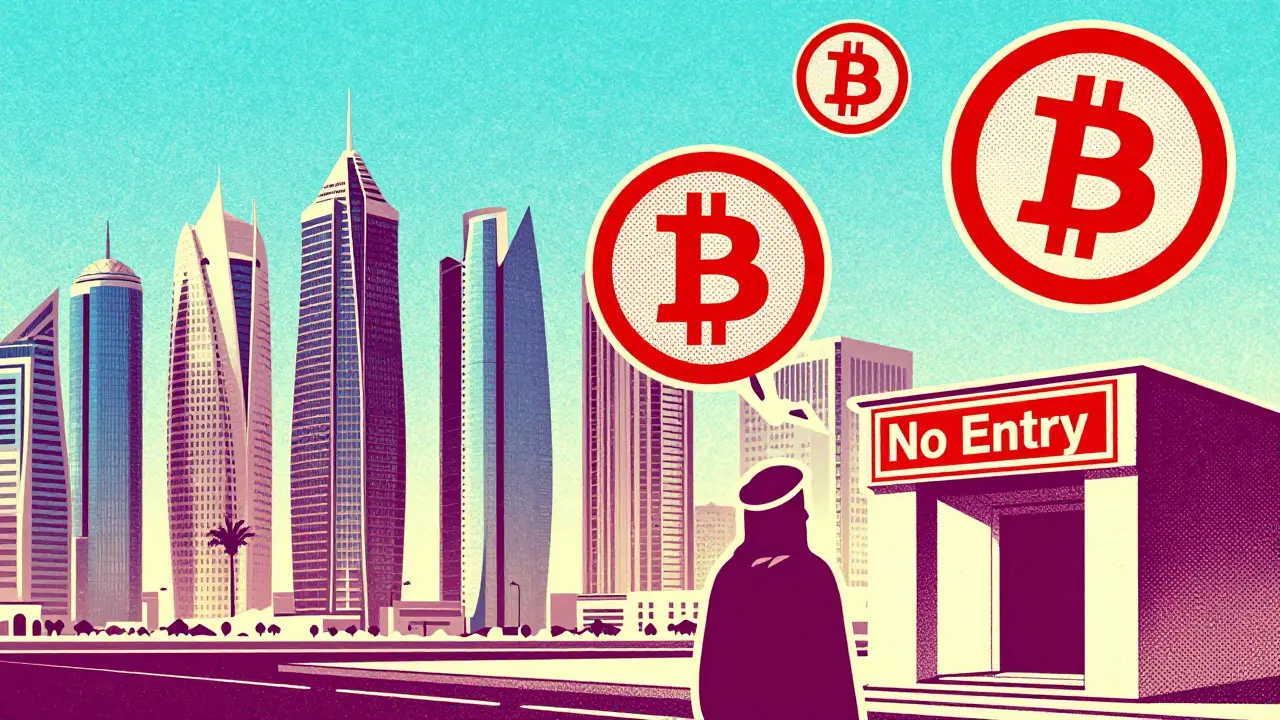
Let’s get the most critical point out of the way first. If you want to trade Bitcoin, Ethereum, or any major stablecoin like USDT through a local bank or exchange in Qatar, you are currently out of luck. The regulatory stance here is clear: traditional cryptocurrencies are classified as "Excluded Tokens."
This classification isn't new. It stems from a series of decisions starting in February 2018, when the Central Bank of Qatar banned all commercial banks from trading cryptocurrencies. By December 2019, the Qatar Financial Centre Regulatory Authority (QFCRA) issued alerts limiting services for virtual assets that act as currency substitutes. In 2020, they went further, prohibiting almost all virtual asset services within the Qatar Financial Centre jurisdiction.
So, why the ban? The primary concern is risk management. Regulators view unbacked cryptocurrencies as highly volatile and potentially dangerous tools for money laundering or illicit financing. Under Law No. 20 of 2019 on Combating Money Laundering and Terrorism Financing, "funds" are defined broadly to include assets obtained through electronic systems. This means that even if you hold crypto privately, it falls under the radar of anti-money laundering (AML) scrutiny. For the average resident, this translates to a lack of legal protection. If your crypto exchange goes bankrupt or gets hacked, there is no local regulator to call for help.
The Shift: Digital Assets Framework 2024
However, saying "crypto is dead in Qatar" would be inaccurate. While speculative coins are banned, the technology behind them-blockchain-is being embraced for a different purpose. On September 1, 2024, the Qatar Financial Centre (QFC) Authority introduced the Digital Assets Regulations 2024. This was a massive policy shift that created a dual-track system.
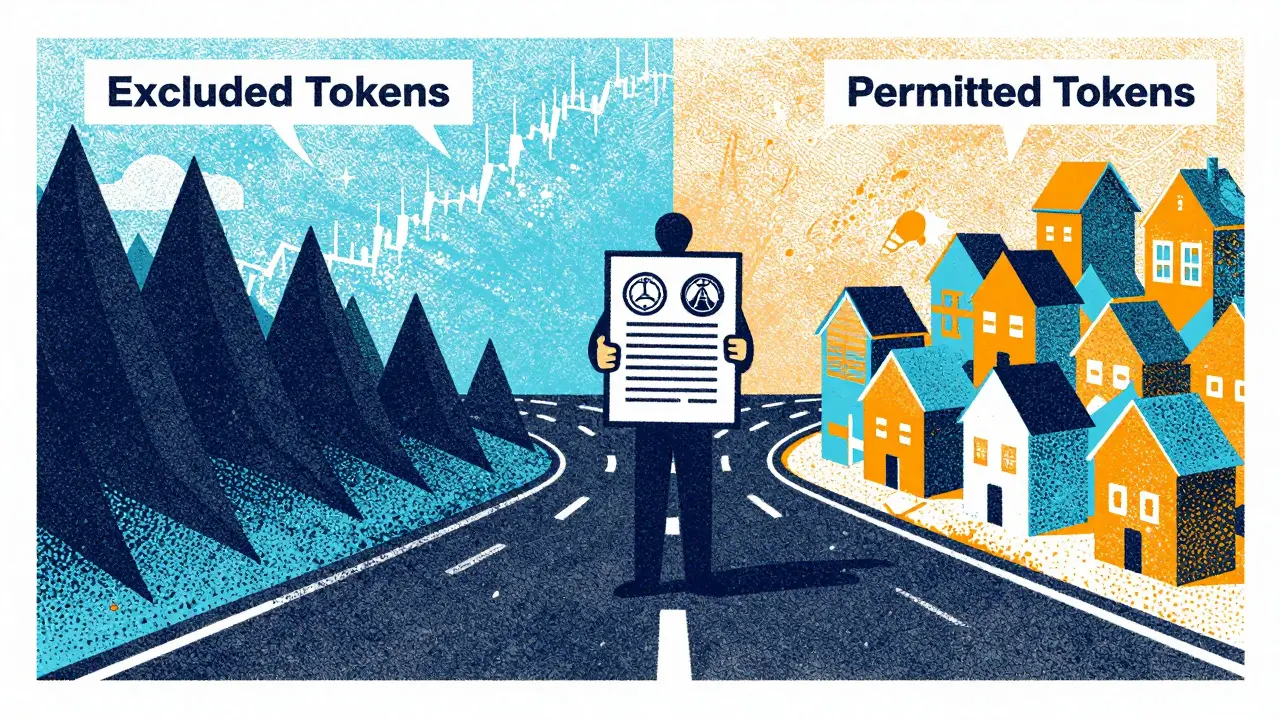
Think of it as a fork in the road. One path leads to "Excluded Tokens" (Bitcoin, stablecoins, CBDCs), which remain prohibited. The other path leads to "Permitted Tokens." These are digital representations tied to verified rights with a basis in real-world assets. This includes tokenized shares, bonds, sukuk, commodities, and real estate.
This framework doesn't just allow these assets; it gives them legal recognition. The regulations establish that smart contracts are legally binding and define ownership clearly. If you control the transferability of a permitted token, you are presumed to be its legal owner unless proven otherwise in court. This provides the security and clarity that traditional crypto investors often crave but rarely find in unregulated markets.
| Feature | Excluded Tokens (e.g., Bitcoin) | Permitted Tokens (e.g., Tokenized Real Estate) |
|---|---|---|
| Legal Status | Banned / Prohibited | Legally Recognized |
| Backing | No intrinsic value (speculative) | Tied to real-world assets (shares, property) |
| Service Providers | None allowed locally | Licensed Token Service Providers required |
| Ownership Rights | Unclear / Unprotected | Defined by law and smart contracts |
| Regulatory Oversight | None (because it's banned) | QFCRA supervised |
How Tokenization Works in Practice
If you are interested in participating in this new market, you need to understand the process. It is not as simple as downloading an app and buying a coin. The Digital Assets Framework 2024 mandates a three-step process for creating and transferring permitted tokens:
- Validation: A validator issues a certificate verifying the ownership of the underlying real-world asset. For example, if a company wants to tokenize a share of a building, a licensed validator confirms the company actually owns that building.
- Request: The asset owner makes a formal request for tokenization.
- Generation: A licensed token generator creates the digital token on specific digital infrastructure.
As a resident, you would interact with this system through licensed token service providers. These companies operate under strict licensing requirements set by the QFCRA. They handle the custody, trading, and exchange of these permitted tokens. This structure ensures that every digital token you buy has a tangible asset backing it, reducing the risk of total loss compared to speculative cryptocurrencies.
Implications for Personal Investment and Banking
For the everyday investor, the distinction between institutional and personal rules matters. The QFCRA explicitly bans financial institutions from dealing in cryptocurrencies. This means your local bank will not offer you a Bitcoin trading account. In fact, many banks may flag transactions sent to known international crypto exchanges, potentially freezing accounts due to AML concerns.
However, the door is open for investment in tokenized assets. Imagine buying a fraction of a luxury apartment in Doha or a share in a global commodity fund, all settled instantly on a blockchain. This is the future Qatar is betting on. It aligns with the country’s broader economic diversification goals, moving away from pure oil dependence toward a modern, tech-enabled financial sector.
What about holding crypto privately? The regulations are less explicit about personal possession than they are about commercial services. Technically, owning Bitcoin in a private wallet isn't criminalized in the same way running an exchange is. But without legal protection or banking support, it remains a high-risk activity. If you lose your private key, there is no customer service team to call. If the government decides to tighten rules further, your access could be cut off overnight.
Compliance and Business Risks
If you run a business in Qatar, the compliance message is straightforward: stay away from excluded tokens. Since the QFCRA bans most virtual asset services, there are no detailed KYC (Know Your Customer) procedures for dealing with Bitcoin because you aren't supposed to deal with it at all. The primary compliance mandate is adherence to the prohibition.
For businesses dealing with permitted tokens, the rules are stricter. You must work with licensed providers and follow the structured tokenization process. While detailed public guidance on record-keeping for these new assets is still emerging, the expectation is high transparency. The government justifies these restrictions based on risks including money laundering and illicit financing. Therefore, any business touching digital assets must demonstrate robust controls.
Future Outlook: Will Crypto Ever Be Legal?
Looking ahead, Qatar’s approach suggests a long-term commitment to controlled innovation rather than open adoption. The Digital Assets Framework 2024 is part of the Third Financial Sector Strategic Plan, indicating a serious, state-led effort to integrate blockchain technology safely.
Industry experts note that Qatar’s cautious stance contrasts with more permissive frameworks in neighboring Gulf states. However, this caution allows for stability. By focusing on real-world asset tokenization, Qatar aims to capture the efficiency benefits of blockchain without the volatility of crypto markets. The explicit classification of cryptocurrencies as "Excluded Tokens" suggests this prohibition will persist for the foreseeable future. Any change would likely require a fundamental shift in how regulators view monetary sovereignty and financial stability.
For residents, the takeaway is clear. If you seek speculative gains from Bitcoin, you will likely need to look outside the local regulatory perimeter, accepting the associated risks. If you seek secure, regulated investment opportunities, watch for the growth of licensed token service providers offering exposure to real estate, commodities, and equity markets through the new digital asset framework.
Is Bitcoin legal in Qatar for personal use?
Bitcoin is classified as an "Excluded Token" under the Digital Assets Regulations 2024. While personal possession is not explicitly criminalized in the same way as operating an exchange, it lacks legal protection and banking support. Local banks are banned from trading it, and transactions may trigger anti-money laundering scrutiny.
What are "Permitted Tokens" in Qatar?
Permitted Tokens are digital assets backed by real-world rights or assets, such as tokenized shares, bonds, sukuk, commodities, or real estate. Unlike cryptocurrencies, these tokens have legal recognition, clear ownership rights, and must be issued through a validated, licensed process.
Can I open a crypto exchange account in Qatar?
No. The QFCRA prohibits virtual asset services for excluded tokens like Bitcoin and stablecoins within the Qatar Financial Centre. Residents cannot legally access traditional cryptocurrency trading, exchange, or custody services through domestic financial institutions.
When did Qatar introduce its current digital asset laws?
The current framework, known as the Digital Assets Regulations 2024 and Investment Token Rules 2024, was introduced on September 1, 2024. This followed earlier bans starting in 2018 and expanded restrictions in 2019 and 2020.
Are smart contracts legally binding in Qatar?
Yes, for permitted tokens. The Digital Assets Regulations 2024 provide legal recognition for smart contracts used in the transfer and management of permitted digital assets, establishing clear ownership and enforceability in QFC courts.
Why does Qatar ban cryptocurrencies?
The primary reasons are risk management, specifically concerns over volatility, money laundering, and illicit financing. The government prefers to control financial stability by allowing only asset-backed digital tokens rather than speculative currencies.