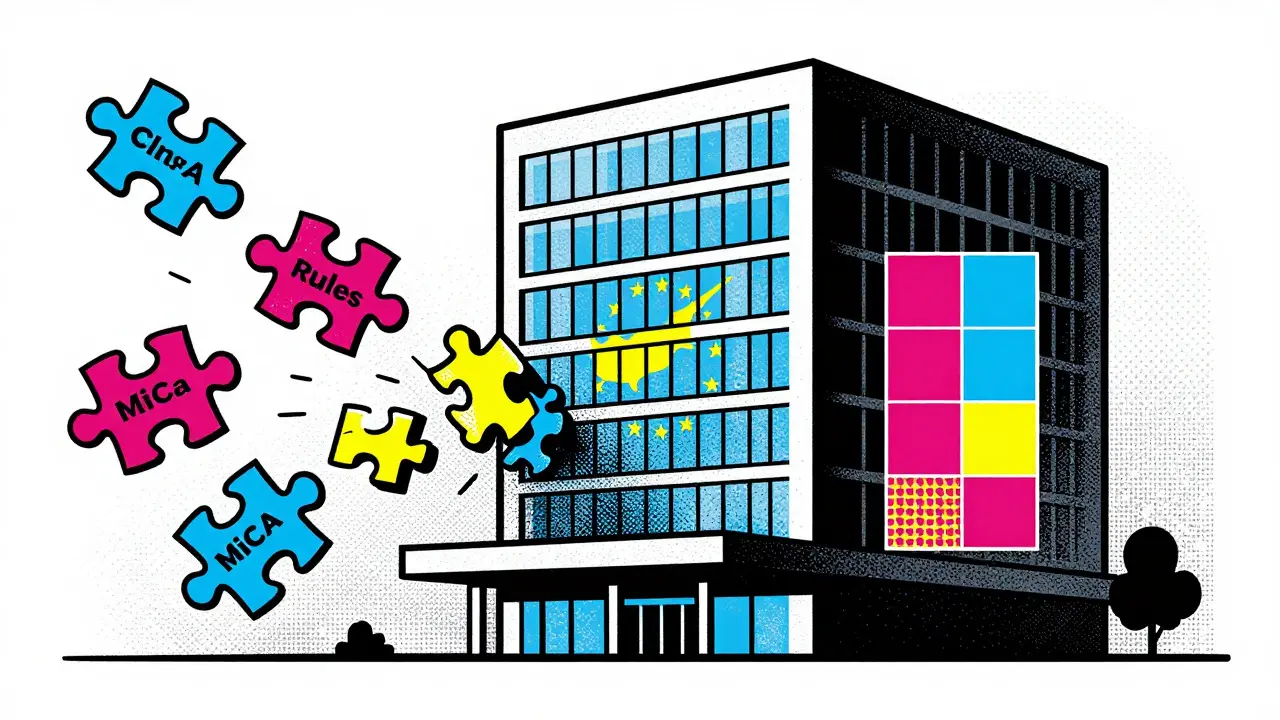
The landscape for cryptocurrency in Cyprus changed forever on December 30, 2024. That was the day the European Union’s Markets in Crypto-Assets (MiCA) regulation fully took effect, replacing fragmented national rules with a single, unified legal framework. For years, Cyprus had been building its reputation as a friendly hub for blockchain startups, but MiCA brought a new reality: strict oversight, higher costs, and zero tolerance for vague business models. If you are running a crypto business in Cyprus or planning to enter the market, understanding these changes is not just helpful-it is essential for survival.
As we move through mid-2026, the dust has settled enough to see the real impact. The transition has forced consolidation, pushed out smaller players who couldn't afford compliance, and elevated the standards for everyone remaining. This guide breaks down exactly how MiCA has reshaped the Cypriot crypto ecosystem, what it means for your operations, and where the opportunities lie in this stricter environment.
From National Rules to EU Harmonization
Before MiCA, the regulatory path for crypto businesses in Cyprus was a patchwork of interpretations. Companies registered under domestic laws overseen by the Cyprus Securities and Exchange Commission (CySEC) the national authority responsible for supervising financial markets and authorizing Crypto-Asset Service Providers in Cyprus.. However, that era ended sharply in October 2024 when CySEC stopped accepting new registrations under the old national framework. The message was clear: adapt to MiCA or leave.
MiCA did not arrive overnight. It entered into force in 2023, with staggered application dates throughout 2024. This phased approach allowed firms some breathing room, but the clock was ticking. For existing companies, there was an 18-month transitional period to obtain full authorization. That deadline arrives on July 1, 2026. If you are still operating under the old rules after this date, you are effectively operating illegally within the EU single market.
This shift from national discretion to EU-wide harmonization removes ambiguity. You no longer have to guess if your token qualifies as a security or a utility asset under local interpretation. MiCA provides clear definitions for stablecoins, asset-referenced tokens, and e-money tokens. For Cyprus, this means competing on a level playing field with other EU member states, rather than relying on perceived regulatory arbitrage.
The New Gatekeepers: CySEC and the Central Bank
Under MiCA, the division of labor in Cyprus is precise. CySEC acts as the designated competent authority for most Crypto-Asset Service Providers (CASPs). This includes exchanges, wallet providers, and trading platforms. Meanwhile, the Central Bank of Cyprus (CBC) the central banking institution of Cyprus that oversees Electronic Money Tokens and monetary policy. takes charge of Electronic Money Tokens (EMTs). EMTs are stablecoins pegged 1:1 to a single fiat currency, like the Euro. Because they function similarly to traditional bank deposits, the CBC views them through a lens of monetary stability and consumer protection.
This dual-authority structure requires careful navigation. If your platform issues both exchange-traded tokens and euro-pegged stablecoins, you will likely need to engage with both regulators. The coordination between CySEC and CBC has improved significantly since the rollout, but missteps in classification can lead to delayed approvals or even rejection of applications.
CySEC has also evolved its role beyond simple supervision. Its Innovation Hub, active since 2018, now serves as a critical dialogue point for fintech innovators. Through its Regulatory Sandbox, companies can test new business models in a controlled environment before seeking full authorization. This sandbox is not a loophole; it is a supervised testing ground where regulators watch closely to ensure consumer risks are managed. For startups, participating in the sandbox can provide invaluable feedback and signal credibility to potential investors.

Strict Governance and Operational Requirements
Gone are the days when a crypto company could be registered in Cyprus with a nominee director and a virtual office. MiCA demands substance. To get CASP authorization, your company must be legally established in Cyprus with effective management structures. This means the majority of your board members must be physically based in Cyprus and actively involved in decision-making. They cannot be figureheads.
Furthermore, at least half of the board must consist of independent non-executive directors. This requirement ensures robust governance and prevents conflicts of interest. It forces companies to hire experienced professionals who understand financial regulations, risk management, and corporate governance. This raises the cost of doing business but significantly enhances investor confidence.
The authorization process itself is rigorous. You must submit comprehensive documentation including:
- A detailed program of operations outlining your business model and revenue streams.
- Proof of prudential safeguards, such as capital reserves and insurance policies.
- Detailed descriptions of your governance arrangements, including internal controls and audit procedures.
- Evidence of technical infrastructure capable of handling transaction volumes securely.
These requirements filter out fly-by-night operators. The result is a market with fewer participants but higher quality. Smaller firms without the resources to meet these demands have either exited the market or merged with larger entities. This consolidation trend has reduced fragmentation and created a more stable environment for institutional investors.
The Travel Rule and Anti-Money Laundering Compliance
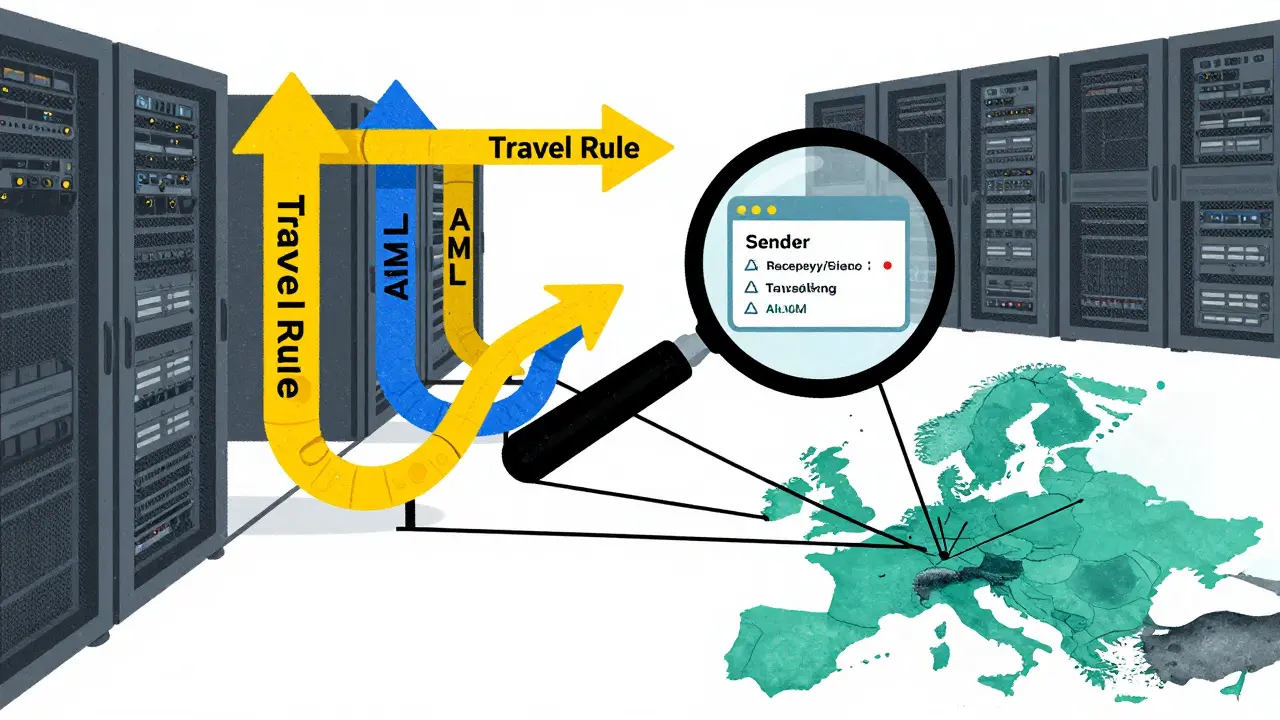
One of the most significant operational challenges introduced by MiCA in 2025 is the integration of the Transfer of Funds Regulation (TFR), commonly known as the Travel Rule. This rule requires CASPs to include specific sender and receiver information with every crypto-asset transfer. It applies to all transfers, including those involving self-hosted wallets above EUR 1,000.
This is not a minor administrative task. It forces CASPs to invest heavily in technology systems capable of collecting, verifying, and securely transmitting user data in real-time. Imagine trying to verify the identity of someone using a non-custodial wallet. The burden falls on the regulated entity to ensure traceability. Failure to comply results in hefty fines and potential revocation of licenses.
MiCA also designates CASPs as obliged entities under the EU Anti-Money Laundering (AML) framework. This subjects them to risk-based Customer Due Diligence (CDD) and Enhanced Due Diligence (EDD) for high-risk countries. You must maintain meticulous records of beneficial ownership and monitor transactions for suspicious activity. The forthcoming EU Anti-Money Laundering Authority (AMLA) will further standardize these rules, ensuring consistent application across all member states. For Cyprus-based firms, this means aligning your AML policies with EU-wide standards, not just local interpretations.
| Requirement | Pre-MiCA (National Framework) | Post-MiCA (EU Framework) |
|---|---|---|
| Board Composition | No strict independence requirements | At least 50% independent non-executive directors |
| Physical Presence | Virtual offices often accepted | Effective management and majority board members must be Cyprus-based |
| Transaction Monitoring | Basic AML checks | Travel Rule compliance for transfers >EUR 1,000, including self-hosted wallets |
| Regulatory Oversight | CySEC only | CySEC for CASPs, Central Bank of Cyprus for EMTs |
| Market Access | Limited to Cyprus/national recognition | Passporting rights across all EU member states |
Opportunities Amidst Restrictions
While MiCA imposes restrictions, it also creates opportunities. The regulatory certainty provided by the framework has encouraged traditional custodians to enter the Cyprus market. Banks and asset servicers that previously shied away from crypto due to legal ambiguity are now developing specialized custody solutions that meet MiCA standards. This brings deeper liquidity and professional-grade infrastructure to the island.
Tokenization is another emerging frontier. With clear rules for asset issuance, companies are exploring the creation of digital tokens representing fund units, real estate, or other assets. This can increase efficiency, enhance liquidity, and open up new product development avenues. Cyprus’s strategic position as a bridge between EU markets and international innovation makes it an ideal location for these experiments.
Moreover, the harmonized framework allows for passporting. Once authorized by CySEC, a CASP can operate across the entire EU without needing separate licenses in each country. This is a massive advantage for companies looking to scale. Instead of navigating 27 different regulatory regimes, you deal with one. This reduces long-term operational complexity and costs, despite the higher initial barrier to entry.
Practical Steps for Compliance and Growth
If you are preparing for MiCA authorization or adapting to the new rules, start with a thorough gap analysis. Compare your current operations against MiCA’s requirements for governance, capital, and technology. Identify weaknesses early. Engage with compliance experts who specialize in AML and crypto regulations. Firms offering support services for policy drafting, transaction monitoring design, and staff training have become critical partners in this transition.
Invest in your technology stack. Your systems must handle Travel Rule data transmission securely and efficiently. Ensure your customer onboarding processes are robust enough to satisfy EDD requirements. Do not cut corners here; regulators will scrutinize your tech infrastructure during the authorization process.
Finally, leverage CySEC’s resources. Participate in the Innovation Hub if you are testing new models. Seek pre-application advice to clarify ambiguous points. Building a relationship with regulators demonstrates good faith and can smooth the approval process. Remember, MiCA is not just a set of restrictions; it is a license to operate in the world’s largest single market with credibility and trust.
What is the deadline for existing crypto firms in Cyprus to get MiCA authorization?
Existing Crypto-Asset Service Providers (CASPs) in Cyprus have until July 1, 2026, to obtain full MiCA authorization. This 18-month transitional period allows firms time to adjust their governance, capital, and operational structures to meet the new EU standards. After this date, operating without authorization will be considered illegal.
How does MiCA affect small crypto startups in Cyprus?
MiCA increases the cost of compliance, which has led to market consolidation. Small startups may struggle to afford the necessary technology, independent board members, and legal fees required for authorization. Many have chosen to merge with larger firms or exit the market. However, those that survive benefit from a cleaner, more trustworthy industry with reduced competition from low-quality players.
What is the Travel Rule and why is it important for Cyprus crypto businesses?
The Travel Rule requires CASPs to attach sender and receiver information to every crypto transfer over EUR 1,000, including those to self-hosted wallets. This enhances traceability and combats money laundering. For Cyprus businesses, it means investing in advanced transaction monitoring systems and ensuring seamless data exchange with other regulated entities globally.
Can a Cyprus-based crypto firm operate in other EU countries after getting MiCA authorization?
Yes. One of the key benefits of MiCA is passporting. Once a CASP is authorized by CySEC in Cyprus, it can provide services across all EU member states without needing additional licenses. This simplifies expansion and allows firms to access the broader European market from a single base.
Who regulates stablecoins in Cyprus under MiCA?
Electronic Money Tokens (EMTs), which are stablecoins pegged 1:1 to a single fiat currency like the Euro, are regulated by the Central Bank of Cyprus (CBC). Other types of crypto-assets and service providers fall under the supervision of CySEC. This distinction is crucial for firms issuing multiple types of tokens.



Lisa Chong
July 26, 2026 AT 06:56They want us to believe this is about 'safety' and 'consumer protection' but we all know the truth. The elites are terrified of decentralization because it strips away their power to control the narrative and freeze assets at will. This MiCA nonsense is just a Trojan horse for total financial surveillance. Every transaction tracked, every wallet monitored, every move reported to the central banks who have already failed us so many times. It is not regulation, it is enslavement wrapped in bureaucratic language. They stop new registrations under old rules to force compliance with their new digital leash. Do not trust CySEC, do not trust the Central Bank, they are part of the same machine designed to keep you poor and compliant.
Eric Braddock
July 26, 2026 AT 07:17The paradigm shift here is fundamentally flawed from a first-principles perspective regarding market liquidity and regulatory arbitrage. You are conflating administrative overhead with actual security enhancements. The Travel Rule implementation creates a massive friction point that disproportionately affects retail users while doing absolutely nothing to stop sophisticated bad actors who use mixers or cross-chain bridges anyway. It is classic regulatory capture where incumbent institutions lobby for barriers to entry that crush innovation. The consolidation mentioned is just a euphemism for monopolization by well-capitalized entities with political connections. We are seeing the death of true decentralization replaced by permissioned ledgers controlled by banks.
Heather Austin
July 27, 2026 AT 08:28i think people are overreacting a bit though sure its strict but having clear rules is actually good for long term adoption. before this everyone was guessing what was legal and what wasnt which scared away big investors. now if you follow the rules you can operate across the whole EU without needing 27 different licenses. that passporting right is huge for scaling a business. yes small startups suffer but maybe they were never going to survive anyway without proper infrastructure. its a growing pain i guess
Nick G
July 28, 2026 AT 02:19It is important to consider the broader cultural context of European financial regulation when evaluating these changes, as there is a deep-seated desire for stability and consumer protection that often outweighs the libertarian ideals prevalent in other parts of the world. While the costs are indeed higher and the bureaucracy more dense, one must acknowledge that this framework provides a level of legitimacy that was previously absent, allowing traditional finance to engage with crypto in a manner that feels less like gambling and more like investing. Perhaps we should view this not as an attack on freedom, but as an integration of a new asset class into the existing social contract, ensuring that those who participate are protected from fraud and insolvency, even if it means sacrificing some of the wild west allure that initially attracted many to the space.
Johan Otto
July 28, 2026 AT 13:38Boring stuff. Just more red tape.
Alicia Hull
July 29, 2026 AT 09:37You are completely missing the point of the Travel Rule implementation! It is not just about tracking transfers, it is about creating a transparent ecosystem where illicit activities cannot hide behind anonymity tokens. If you think mixers solve the problem, you are ignoring the fact that exchanges are now obliged entities under AML frameworks, meaning they have to report suspicious patterns regardless of the mixing service used. This forces accountability onto the platforms themselves, making them liable for their customers' actions. It is aggressive, yes, but necessary to clean up the industry reputation that has been tarnished by scams and hacks for years.
Nick Wengel
July 30, 2026 AT 20:22I see both sides of this argument. On one hand, the high costs and strict board requirements definitely push out smaller players who might have had innovative ideas but lacked capital. On the other hand, having a regulated environment makes it easier for normal people to trust the system again. Maybe the future is a mix where big regulated firms handle custody and smaller devs build on top of that secure layer. Time will tell if this leads to stagnation or maturity.