To understand why this happened, we have to look at the Foreign P2P crypto platform ban in Thailand as a move to stop the bleeding from online scams and money laundering. The Thai Securities and Exchange Commission (or SEC) is the primary regulator responsible for overseeing digital asset businesses to ensure market integrity and investor protection. They decided that foreign platforms operating without a local license were a massive security loophole. By forcing users toward licensed domestic exchanges, the SEC can enforce strict Anti-Money Laundering (AML) and Know Your Customer (KYC) rules that global platforms often bypass or apply loosely.
The Legal Hammer: Royal Decrees and Penalties
This wasn't a casual request. The crackdown was powered by two heavy-hitting legal instruments. First, the Royal Decree on the Operation of Digital Asset Businesses (No. 2), B.E. 2568 (2025), made it mandatory for any foreign platform targeting Thai users to hold a license from the SEC. Then came the Royal Decree on Measures to Prevent and Suppress Technology Crimes (No. 2), B.E. 2568 (2025). This second decree is the one that really changed the game because it gave the Ministry of Digital Economy and Society (or MDES) the government agency tasked with managing Thailand's digital infrastructure and cybersecurity the power to block websites without waiting for a court order. It's essentially a "fast-track" button for censorship and regulation.
If you're an operator of an unlicensed platform, the stakes are high. We're talking about up to three years in prison and fines reaching 300,000 baht (about $8,700 USD). For the average user, the risk isn't jail, but the very real possibility of losing access to their funds if they don't move them in time.
Who Got Hit? The Blocked Platforms
On June 28, 2025, the hammer dropped. Five major players were blocked nationwide. If you were using these for P2P trades or holding assets, you likely felt the impact immediately:
- Bybit
- OKX
- CoinEx
- XT.COM
- 1000X
The SEC gave users a heads-up on May 29, leaving them roughly one month to migrate their assets. For some, this was plenty. For others with complex portfolios or large holdings, a few weeks wasn't nearly enough to find a safe, licensed alternative and execute withdrawals without hitting liquidity issues.
| Feature | Licensed Thai Exchange | Unlicensed Foreign Platform |
|---|---|---|
| Legal Status | Authorized by SEC | Banned/Illegal |
| Access | Open and legal | Blocked by MDES |
| User Protection | Thai legal recourse | Limited to platform ToS |
| Compliance | Strict Thai AML/KYC | Variable/International standards |
Impact on Cross-Border Business and Payments
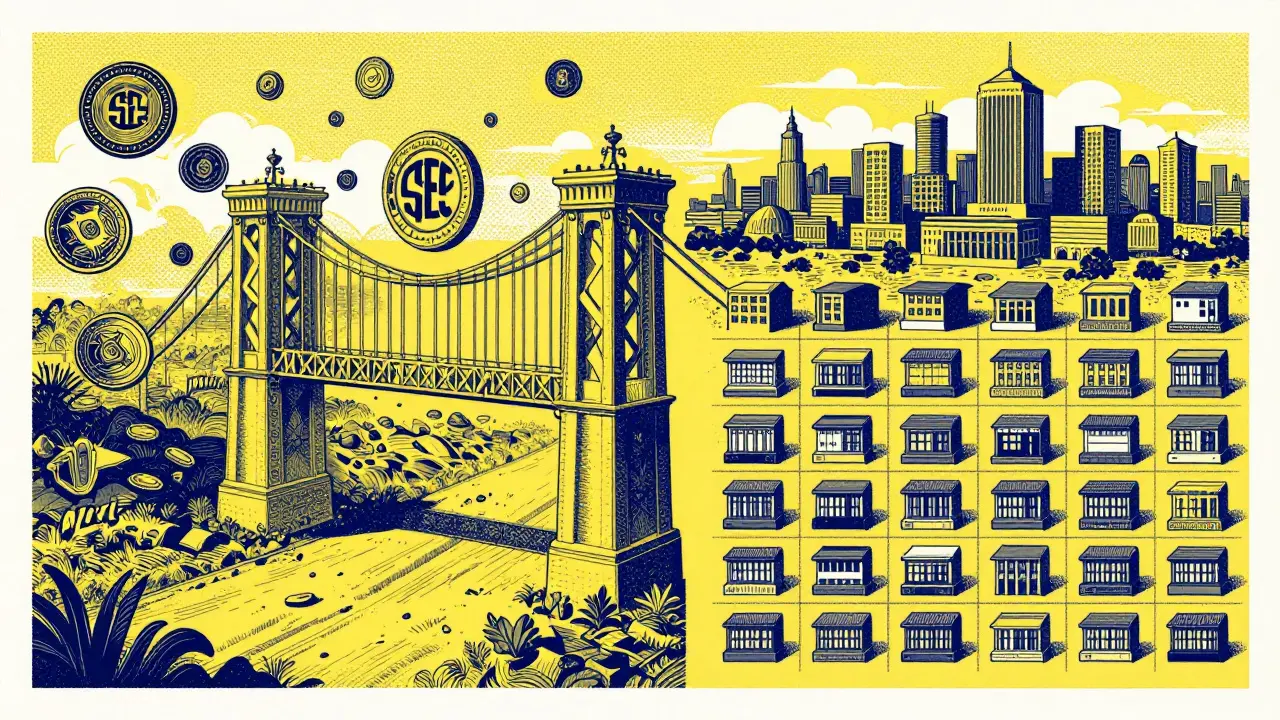
This ban isn't just a headache for retail traders; it's a logistical nightmare for businesses. If you're a company in India trying to pay a Thai supplier via crypto, you can't just send USDT from a foreign wallet to a foreign P2P seller in Thailand anymore. Every transaction must now flow through a regulated domestic intermediary.
This creates several "friction points":
- Higher Costs: You're now paying fees to both a global exchange and a local licensed exchange.
- Compliance Lag: You have to satisfy two different sets of KYC rules, which can delay payments by days.
- Blocking Risks: Since the MDES can block suspicious transactions, a legitimate business payment might get flagged as a "scam" if it doesn't perfectly align with new reporting standards.
Basically, the government has traded efficiency for control. While it stops the flow of "dirty money," it also slows down the speed of legitimate digital commerce.

The Paradox: Banning Foreigners while Building Local
Here is the strange part: while Thailand is kicking out foreign P2P platforms, it's actually leaning harder into blockchain technology. The government isn't anti-crypto; they're anti-uncontrolled crypto. They want to own the rails the money moves on.
For example, the government is planning a blockchain-based trading platform specifically for securities firms. Even more ambitious is the introduction of G Tokens Digital asset tokens issued as part of Thailand's public debt budget borrowing plan which saw an initial issuance of roughly 5 billion baht ($150 million). By issuing their own tokens and backing stablecoins with government bonds, Thailand is trying to create a "walled garden" where innovation happens, but the state keeps the keys.
How to Navigate the Current Environment
If you're currently operating in Thailand, you can't ignore these rules. Trying to use a VPN to access Bybit or OKX might work for a while, but it puts your funds at risk. If the platform freezes your account due to a location mismatch or if the Thai bank blocks the P2P transfer, you have zero legal protection.
The only safe play is to use exchanges that are explicitly licensed by the SEC. This means your assets are tied to an entity that is legally obligated to follow Thai law, giving you a fighting chance in court if things go sideways. It's less convenient, and the fees might be higher, but it's the only way to avoid having your funds locked in a digital limbo.
Is cryptocurrency still legal in Thailand?
Yes, cryptocurrency is legal in Thailand, but it is not considered legal tender. This means you cannot use it to pay taxes or as a legal replacement for the Thai Baht in official transactions. It is regulated as a "digital asset" under the Digital Asset Business Act.
What happens if I use a banned platform via VPN?
While a VPN might let you access the site, the real danger is the exit ramp. When you try to move funds to a Thai bank account via P2P, the bank or the MDES may flag the transaction. Furthermore, the platform itself may freeze your account if it detects inconsistent login locations, and you will have no legal recourse within Thailand to recover those funds.
How do I know if an exchange is licensed in Thailand?
The most reliable way is to check the official list of licensed digital asset business operators on the Thai SEC website. Any platform claiming to be legal must be registered and authorized to operate specifically within the Thai jurisdiction.
Why did the government block Bybit and OKX specifically?
These platforms were operating as digital asset exchanges without the required licenses from the Thai SEC. The government viewed them as high-risk for money laundering and as conduits for cryptocurrency scams that targeted Thai citizens.
What are G Tokens?
G Tokens are government-issued digital asset tokens used as a way to manage public debt. They represent a shift toward using blockchain for state finance, moving away from traditional borrowing and toward a tokenized system managed by the Thai government.
Prasanna Shembekar
April 9, 2026 AT 16:39absolute disaster for us traders
Jason Davis
April 10, 2026 AT 08:42its basicly the same thing happening in other SE Asian markets right now
governmnets want the tax revenue and total oversight so they kill the P2P side first because it is way harder to track
if you are still using a VPN just know that the off-ramp is where you get caught not the login
banks in thailand are super aggressive with flagging unusual transfers these days so be careful with your thb deposits
Jessie Tayaban
April 11, 2026 AT 09:29OMG this is just totaly insane!!
Imagine just waking up and your money is basically trapped behind a wall because the govt decided to play god with the internet
its legit terrifing how fast they can just block stuff without a court order
i cant even imagine the panic for people who didnt see the may warning!!!
Swati Sharma
April 11, 2026 AT 17:36From a systemic perspective, this is a classic move toward a centralized CBDC-lite framework. By forcing liquidity through licensed gateways, the SEC is essentially optimizing the on-boarding pipeline to ensure full KYC/AML compliance and mitigating slippage risks for the domestic market. It is a tough transition for those used to decentralized P2P rails, but integrating with the local regulatory stack is the only way to ensure long-term institutional viability in the region.
Agnessa Dale
April 12, 2026 AT 17:55It's a bit of a bump in the road for sure, but maybe this will actually lead to safer local platforms that we can trust more in the long run!
Emily H
April 14, 2026 AT 06:13One must consider that the introduction of G Tokens represents a sophisticated strategic pivot. The Thai government is not merely restricting access to foreign entities but is actively constructing a sovereign digital infrastructure to manage public debt and fiscal obligations. While the immediate impact on retail traders is undoubtedly restrictive, the overarching objective appears to be the establishment of a secure, state-sanctioned ecosystem that balances technological innovation with rigorous regulatory oversight. Such a transition, while disruptive, may ultimately provide a more stable environment for large-scale digital asset integration within the national economy, provided that the transparency of these state-run platforms is maintained through objective auditing and clear legal frameworks.
Mikayla Murphy
April 14, 2026 AT 07:08It is really important to remember that different countries have different ways of balancing security and freedom. While it feels restrictive, Thailand is trying to protect its citizens from the massive wave of scams that have hit the region lately. We should try to understand the cultural and political drive for stability there, even if it makes our trading a bit more complicated.