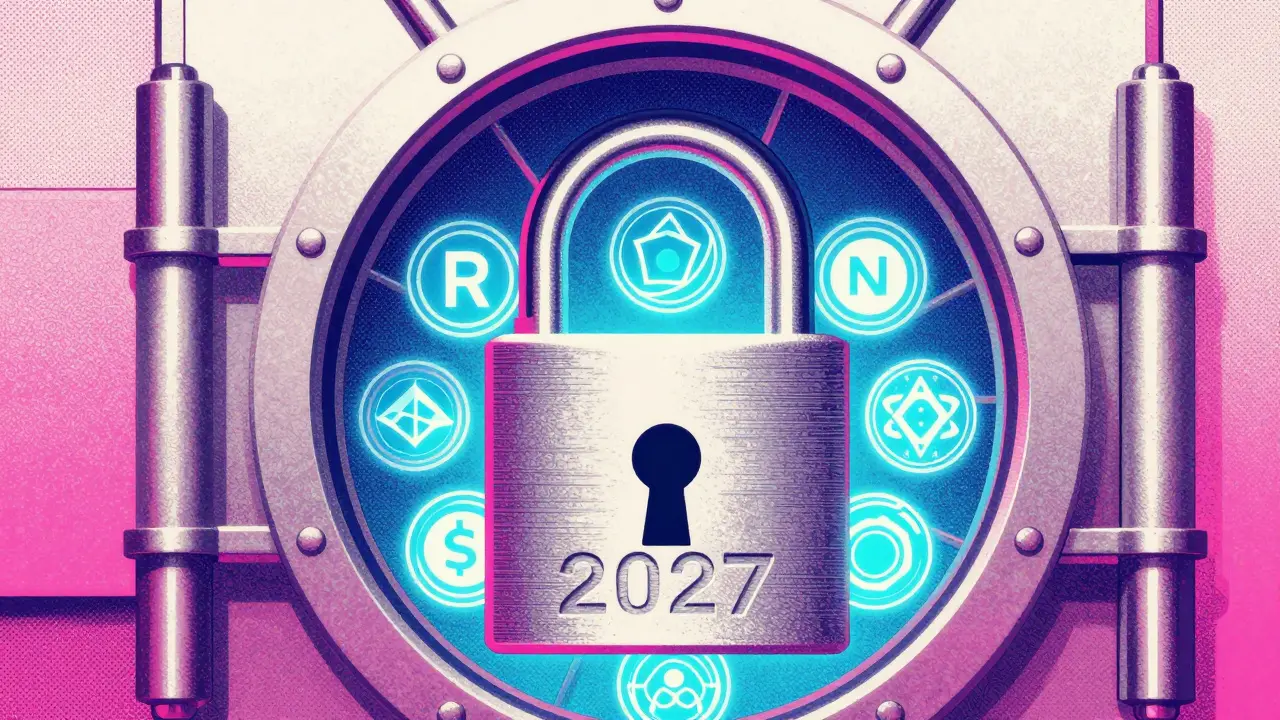
Imagine holding a digital asset that no one can trace. For years, that was the promise of privacy coins, cryptocurrencies designed to keep your financial life strictly private. But starting July 1, 2027, that promise effectively ends for anyone using regulated services in the European Union. The bloc has finalized a sweeping rule that bans platforms from handling assets like Monero (XMR) and Zcash (ZEC). This isn't just a rumor or a draft proposal; it is law. If you are holding these coins on an exchange or planning to trade them within the EU, the clock is ticking.
The New Rules Under Article 79
To understand why this is happening, you have to look at Regulation 2024/1624. Adopted by the European Parliament in May 2024, this legislation overhauls how the EU fights money laundering and terrorist financing. The specific clause killing privacy coin accessibility is Article 79. It explicitly forbids credit institutions, financial firms, and crypto-asset service providers (CASPs) from maintaining anonymous accounts or handling privacy-preserving digital assets.
This means exchanges like Binance Europe or Kraken cannot offer wallets for Monero. They cannot process deposits or withdrawals of Zcash. The regulation targets "anonymity-enhancing coins" directly. Regulators argue that these tools make it impossible to identify suspicious transactions. By banning the infrastructure that supports these coins, the EU aims to force all crypto activity into transparent channels where every transfer leaves a digital footprint.
Why Monero and Zcash Are Targeted
You might wonder why Bitcoin or Ethereum aren't facing the same fate. The difference lies in their underlying technology. Bitcoin transactions are public. Anyone can see who sent what to whom, even if they don't know the real names behind the addresses. Regulators call this "traceability."
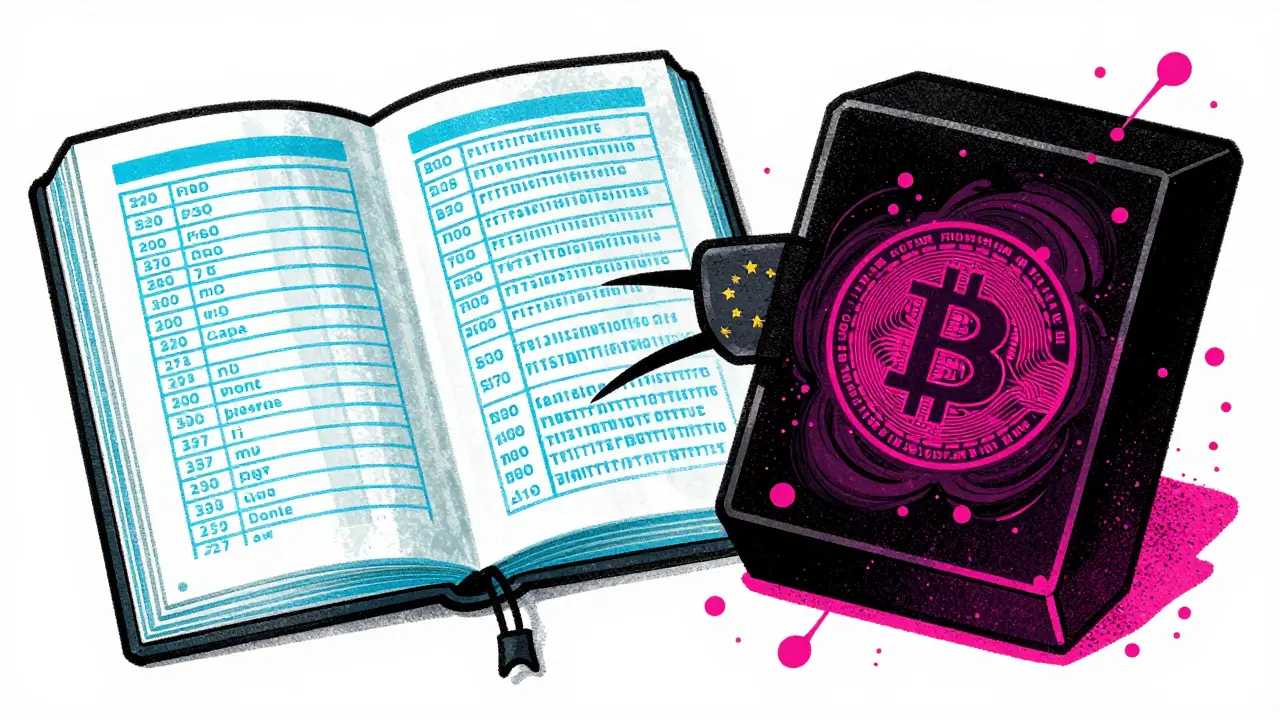
Monero works differently. It uses ring signatures to mix your transaction with others, making it look like any of the group could have sent the funds. It also uses stealth addresses to hide the receiver's identity. Zcash offers a similar shield through zero-knowledge proofs, which allow transactions to be verified without revealing the sender, receiver, or amount. These features are brilliant for privacy but terrible for compliance. European lawmakers view them as unacceptable risks for illicit finance.
Who Enforces the Ban?
Laws mean nothing without enforcement. The EU created a new body called AMLA (Anti-Money Laundering Authority) to oversee this transition. AMLA will focus its initial efforts on the biggest players in the market-firms serving tens of thousands of customers or processing over €50 million in transactions. About 40 major firms fall into this category right now.
The European Banking Authority (EBA) is currently translating the broad rules into specific technical standards. As of mid-2025, these details were still being refined through public consultations. However, the core ban on privacy coins is not up for debate. The European Crypto Initiative (EUCI) noted that while technical nuances remain, the prohibition itself is final. Firms need to update their internal policies immediately to prepare for the July 2027 deadline.
What Does This Mean for You?
If you are a casual investor, the impact depends on how you hold your assets. The ban does not criminalize individual possession. You can still own Monero or Zcash. However, you cannot buy, sell, or store them on any EU-regulated platform. This creates a significant hurdle. Most people use centralized exchanges because they are easy and secure. Those options will disappear for privacy coins.
Here is what you need to consider:
- Centralized Exchanges: Platforms operating under MiCA regulations must delist privacy coins. Expect announcements about withdrawal deadlines before July 2027.
- Decentralized Options: Peer-to-peer trading or decentralized exchanges (DEXs) may remain accessible, but they come with higher technical barriers and security risks.
- Non-EU Platforms: Some users may turn to exchanges based outside the EU. However, cross-border transfers often trigger strict scrutiny, and many global firms are choosing to comply with EU rules to avoid losing access to the massive European market.
Market Impact and Price Volatility
Markets hate uncertainty. Since the news broke, prices for Monero and Zcash have shown increased volatility. Traders are anticipating a supply shock. If large holders cannot easily sell their assets on major exchanges, liquidity could dry up. Conversely, some investors view the ban as a badge of honor, believing that scarcity will drive long-term value.
The EU represents one of the largest crypto markets in the world. Losing access to this region significantly contracts the user base for privacy coins. Industry experts suggest this regulatory pressure could lead to a shift in development resources. Projects might pivot toward privacy solutions that still allow for regulatory compliance, such as selective disclosure protocols, rather than total anonymity.

Global Ripple Effects
The EU rarely acts alone when it comes to financial regulation. Other jurisdictions are watching closely. Countries like Japan, South Korea, and potentially parts of the United States may adopt similar frameworks. The EU’s approach sets a template: prioritize transparency over anonymity. If other major economies follow suit, the global ecosystem for privacy coins could shrink dramatically.
This doesn't mean privacy is dead everywhere. Jurisdictions with different regulatory priorities may continue to support these assets. However, the fragmentation of the market makes it harder for developers to maintain robust networks. A divided user base can weaken network security and innovation.
How to Prepare Before 2027
You have roughly two years to adjust your strategy. Here are practical steps to take:
- Audit Your Holdings: Identify any privacy coins stored on centralized exchanges. Plan to move them to self-custody wallets if you intend to keep them.
- Understand Self-Custody: Learning to manage private keys securely is essential. If you lose access to your wallet, there is no customer support to help you recover your funds.
- Monitor Regulatory Updates: Keep an eye on EBA guidelines. Specific implementation details regarding reporting requirements for non-privacy assets may change, affecting how you handle mixed portfolios.
- Consider Alternatives: If you value privacy but want regulatory safety, look into tokens that offer enhanced privacy features without breaking AML rules. Some projects are developing compliant privacy layers that allow users to prove solvency without revealing transaction details.
The Future of Financial Privacy
This ban marks a turning point. The era of unrestricted financial privacy in mainstream crypto is ending in Europe. Regulators believe that transparency is necessary to protect the financial system. Privacy advocates argue that financial secrecy is a fundamental human right. Both sides have valid points, but the law favors transparency.
As we approach 2027, the question isn't whether privacy coins will exist-they will-but where they will live. They may become niche assets used primarily by those willing to navigate complex, unregulated channels. For the average user, the path of least resistance will likely involve transparent assets that fit comfortably within the new regulatory framework.
Is it illegal to own Monero in the EU after 2027?
No, owning Monero is not illegal for individuals. The ban applies to financial institutions and crypto service providers. They cannot facilitate buying, selling, or storing these coins. You can still hold them in a personal wallet, but you cannot use regulated exchanges to acquire or liquidate them.
Which exchanges will remove privacy coins?
Any exchange operating as a Crypto-Asset Service Provider (CASP) under the MiCA regulation within the EU must remove privacy coins. This includes major global platforms that serve EU customers, such as Binance, Coinbase, and Kraken, unless they isolate their EU operations completely.
When exactly does the ban start?
The full enforcement date is July 1, 2027. However, exchanges may begin delisting privacy coins earlier to ensure compliance and avoid penalties. It is wise to act well before this deadline.
Can I still trade Zcash using a decentralized exchange?
Technically, yes. Decentralized exchanges (DEXs) operate without central intermediaries and are not classified as CASPs in the same way. However, accessing DEXs requires technical knowledge, and you must be careful about how you fund your wallet, as fiat on-ramps are heavily regulated.
Will this affect the price of Monero?
It is highly likely. Reduced liquidity and limited access to major trading venues typically cause volatility. Some investors may sell off their holdings due to inconvenience, driving prices down. Others may buy in anticipation of scarcity, driving prices up. The net effect remains uncertain until closer to the deadline.
What is AMLA?
AMLA stands for the Anti-Money Laundering Authority. It is a new EU supervisory body responsible for enforcing anti-money laundering rules across the bloc. It will monitor large crypto firms to ensure they comply with the ban on privacy coins and other AML requirements.


Tracy McBurney
May 4, 2026 AT 04:27You are absolutely ignoring the fundamental reality that privacy is a shield for criminals, not a right for citizens.
Let’s be brutally honest here: if you need to hide your transactions from your government, you are likely doing something illegal.
The EU is simply cleaning up the digital gutter.
Monero and Zcash have always been the tools of choice for ransomware gangs and dark web marketplaces.
To suggest otherwise is either willful ignorance or malicious intent.
I see people whining about 'financial freedom' but what they really mean is 'freedom from accountability.'
This ban is long overdue.
Why should any legitimate business want to associate with assets that facilitate money laundering?
The fact that you are worried about losing access to these coins suggests you might have more to worry about than just regulatory compliance.
It is fascinating how quickly the crypto community turns on anyone who points out the obvious security risks.
You claim it is about privacy, but let us look at the transaction volumes.
Overwhelmingly, the volume in Monero is tied to illicit activities.
The EU is not banning privacy; they are banning anonymity that enables crime.
If you have nothing to hide, why are you so terrified of transparency?
This regulation forces innovation into safer, compliant channels rather than letting bad actors run wild.
Stop crying about your niche toy currency and accept that the adult world requires oversight.
Jimmy vasquez
May 5, 2026 AT 05:38Hey everyone, thanks for sharing this detailed breakdown!
I think it is super important to clarify that owning Monero isn't actually illegal, which is a huge relief for many holders.
The key takeaway here is really about custody.
If you are holding XMR on Binance or Kraken, you definitely need to move it to a self-custody wallet like Cake Wallet or Exodus before the exchanges delist them.
Self-custody can seem scary at first, but it is really just like having a physical safe deposit box instead of leaving your cash under the mattress.
Just make sure you write down your seed phrase on paper and store it somewhere safe, never digitally.
For those interested in staying compliant but still wanting some privacy features, looking into projects that use zero-knowledge proofs for selective disclosure might be a good middle ground.
It allows you to prove you have funds without revealing the full transaction history to the public ledger.
Also, keep an eye on the EBA guidelines as they finalize the technical standards later this year.
It is a lot to digest, but taking small steps now will save you a lot of stress closer to 2027.
Happy to answer any questions if you are unsure about how to set up a non-custodial wallet!
Andrew Todd
May 6, 2026 AT 10:26This is stupid.
America does not need this nonsense.
Europe is weak because they let bureaucrats tell them what to do with their money.
We should laugh at them.
Privacy is for Americans.
Let them ban their coins.
We will keep ours.
Strong country keeps strong crypto.
Weak countries get banned coins.
Ryan Nakielny
May 7, 2026 AT 08:46Oh wow, look at Andrew Todd, flexing his patriotism while missing the point entirely.
Did you really think shouting 'America' makes your argument valid?
Because last I checked, financial regulations don't stop at borders when it comes to global liquidity pools.
The EU is a massive market, and when they pull the plug, the ripple effects hit everyone, including our favorite US-centric dreamers.
But sure, keep pretending that isolationism is a strategy.
It is adorable how you think national pride fixes supply shocks.
Maybe try reading the article next time instead of just reacting to the word 'ban'.
Or maybe stick to yelling about flags, that seems to be your only skill.
Anyway, the rest of us are here discussing actual risk management strategies.
Feel free to join us in reality whenever you are ready.
Until then, enjoy your echo chamber.
Sri Astuti
May 8, 2026 AT 08:05:( It is truly disheartening to witness such a simplistic understanding of complex geopolitical and technological dynamics being presented as absolute truth by individuals who clearly lack the depth of analysis required to grasp the nuanced implications of this regulatory shift on the broader ecosystem of decentralized finance and personal sovereignty.
The notion that privacy equates solely to criminal activity is a dangerous oversimplification that ignores the legitimate needs of whistleblowers, political dissidents, and everyday citizens who wish to maintain control over their personal data without state surveillance, a concept that has been thoroughly debated in academic circles for decades yet remains woefully misunderstood by the general public.
Furthermore, the assertion that the European Union's approach is merely 'cleaning up the gutter' fails to acknowledge the potential for a chilling effect on innovation within the blockchain space, where developers may be forced to migrate their operations to less regulated jurisdictions, thereby fragmenting the network and potentially weakening the overall security and decentralization of these protocols.
One must also consider the historical precedents of financial censorship and how they have often been used as precursors to more extensive controls on capital movement, suggesting that this ban might be just the tip of the iceberg in a larger trend towards centralized control over digital assets.
While it is understandable to feel frustrated with the inconvenience caused by these regulations, it is crucial to engage in constructive dialogue and education rather than resorting to toxic rhetoric that alienates potential allies and reinforces the narrative that privacy advocates are inherently suspicious.
We need to focus on building resilient systems that can withstand such pressures, perhaps through greater adoption of peer-to-peer trading networks and decentralized identity solutions that offer privacy without relying on traditional financial intermediaries.
Let us not lose hope, but rather channel our energy into creating alternative pathways for financial autonomy that respect both individual rights and societal safety concerns. :/
Elle Kharitou
May 9, 2026 AT 18:45Hello friends! 🌟 It is wonderful to see such a vibrant discussion about the future of financial privacy. ✨ While the news about the EU ban might feel heavy, let us remember that change is often the catalyst for profound growth and innovation. 🌱
From my perspective, this situation invites us to reflect deeply on what privacy truly means in a digital age. Is it merely about hiding transactions, or is it about reclaiming agency over our personal narratives? 🤔 The philosophical implications are vast.
In Australia, we are seeing similar conversations, though our regulatory landscape is slightly different. 🇦🇺 It is fascinating how different cultures approach the balance between security and liberty.
I encourage everyone to view this not as an end, but as a transition to a more mature phase of cryptocurrency adoption. 💪 Many projects are already pivoting to 'compliant privacy' models, which could actually make privacy tech more accessible to the mainstream. 🚀
Let us support each other during this transition. If you are feeling overwhelmed by the technical aspects of self-custody, remember that learning is a journey, and every step counts. 📚
There is beauty in resilience. By adapting to these new rules, we are strengthening the fabric of the community. 🕸️ Let us continue to share knowledge and uplift one another. You are not alone in this. ❤️
Nitin Gupta
May 10, 2026 AT 04:02I agree with the sentiment that preparation is key here.
It is quite reasonable to assume that moving to self-custody is the most prudent step for anyone holding significant amounts of XMR or ZEC.
The timeline until July 2027 provides ample opportunity to educate oneself on secure wallet management.
I would gently suggest that users verify the compatibility of their chosen wallets with the specific versions of Monero or Zcash they hold, as protocol updates can sometimes cause issues.
Additionally, keeping a backup of private keys in multiple secure locations is a standard best practice that cannot be overstated.
It is also worth noting that decentralized exchanges (DEXs) will likely become more prominent for trading these assets, so familiarizing yourself with platforms like ThunderCore or local DEXs could be beneficial.
Thank you for posting this informative content, it really helps clarify the regulatory landscape for many of us.
Let us all strive to stay informed and compliant while preserving our financial options.