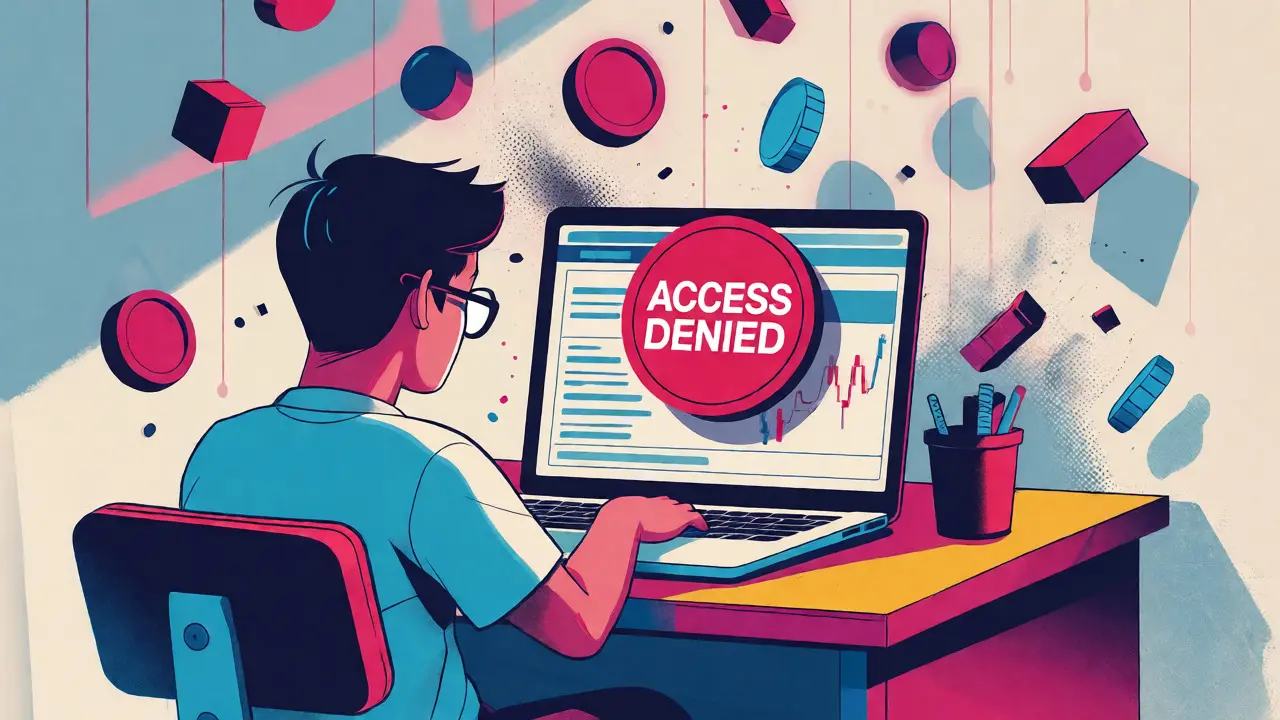
Imagine trying to trade your favorite altcoin on KuCoin, only to find a blank screen or a regulatory warning page instead of your dashboard. This isn't a glitch; it's the new reality for Filipino crypto traders following the Securities and Exchange Commission (SEC)'s aggressive crackdown on unlicensed platforms. In mid-2025, the Philippine government didn't just tweak the rules-they rewrote them entirely, effectively blacklisting fifteen major global exchanges that refused to jump through their new compliance hoops.
If you're wondering whether your favorite trading platform is still accessible, or if you need to start looking for a local alternative, you're in the right place. The situation has shifted rapidly since July 2025, when the new Crypto Asset Service Provider (CASP) framework took effect. We'll break down exactly which exchanges are banned, why the SEC made this move, and what practical steps you need to take to keep your digital assets safe and liquid.
The Core Problem: Why the SEC Blocked These Exchanges
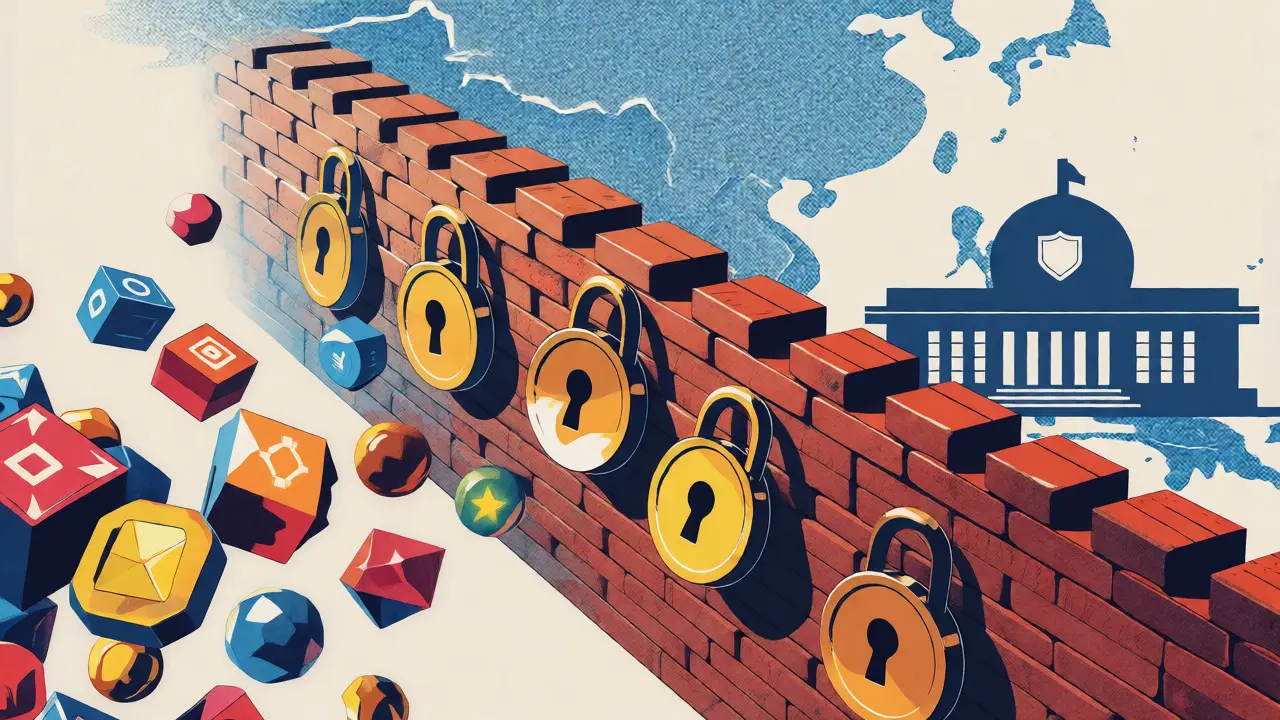
The root of this disruption lies in two specific regulations issued by the SEC in May 2025: Memorandum Circular No. 4 and No. 5. Before these rules, the Philippines had a relatively loose approach to cryptocurrency oversight. Binance, the world's largest exchange, was already blocked in 2024, but many other international players continued operating in a gray area, serving Filipino users without proper local licensing.
The new CASP framework changed everything. It requires any entity offering crypto services to Philippine residents to register as a domestic corporation. But here is the kicker: they must have a minimum capitalization of 100 million pesos (roughly $1.8 million USD) and maintain a physical office within the country. For many offshore exchanges, setting up a full legal entity with millions in locked capital just to serve the Philippine market wasn't financially viable, especially when compared to jurisdictions with lighter requirements.
The SEC's logic is straightforward investor protection. By forcing exchanges to hold significant local capital and separate customer funds from company assets, regulators aim to prevent scenarios like the FTX collapse, where user funds were mixed with corporate finances. If an exchange fails, the segregated funds should theoretically remain intact. Violations aren't taken lightly either-fines range from 50,000 to 10 million pesos per violation, plus daily penalties for ongoing non-compliance.
The Blacklist: Which Exchanges Are Blocked?
The enforcement action happened in waves. On August 1, 2025, the SEC flagged ten major platforms. Just three weeks later, on August 25, they added five more. As of late 2026, these fifteen platforms are officially considered in violation of Philippine securities laws if they continue to onboard new users without registration.
| Exchange Name | Primary Focus | Status |
|---|---|---|
| OKX | Spot & Derivatives | Blocked |
| Bybit | Futures & Options | Blocked |
| KuCoin | Altcoins | Blocked |
| Kraken | Security-focused Spot | Blocked |
| MEXC | High-volume Altcoins | Blocked |
| Bitget | Copy Trading | Blocked |
| CoinEx | Global Spot | Blocked |
| Phemex | Derivatives | Blocked |
| BitMart | Multi-asset | Blocked |
| Poloniex | Legacy Exchange | Blocked |
| Blofin | Derivatives | Blocked |
| CoinW | Global Spot | Blocked |
| DigiFinex | Altcoins | Blocked |
| LBank | Early Listings | Blocked |
| Pionex | Trading Bots | Blocked |
Notice the mix here. You have giants like OKX and Bybit, known for high liquidity and derivatives, alongside niche platforms like Pionex, famous for its built-in trading bots. The inclusion of Kraken is particularly notable because it has historically prided itself on regulatory compliance in the US and Europe. However, "compliant elsewhere" doesn't mean "compliant in Manila." The SEC applied the rule uniformly: no local license, no access.
How the Blockade Works Technically
You might wonder, how does a government actually block a website? It’s not just about deleting the app store icon. The SEC coordinated with major Internet Service Providers (ISPs) like PLDT and Globe Telecom. Starting around August 7, 2025, these ISPs began implementing DNS-level blocking.
When you try to visit one of these blocked sites using a standard Philippine internet connection, you won’t get a server error. Instead, you’ll likely see a notification page stating that the site is restricted due to regulatory violations. This method is effective because it stops casual users who don’t know how to bypass restrictions. However, tech-savvy traders often use Virtual Private Networks (VPNs) to mask their location. While using a VPN isn't illegal for individuals, the SEC has warned that platforms continuing to onboard users via these workarounds could face further enforcement actions.
It’s important to clarify one misconception: There is no ban on owning or trading cryptocurrency itself. The SEC explicitly stated in an August 14, 2025 advisory that citizens can still buy, sell, and hold Bitcoin, Ethereum, and other tokens. The restriction applies strictly to the service providers facilitating those trades without proper authorization.
Regional Context: Is the Philippines Alone?
The Philippines isn't acting in a vacuum. This crackdown mirrors a broader trend across Southeast Asia where governments are tightening control over digital assets. Thailand’s SEC also ordered blocks on several exchanges, including Bybit and OKX, earlier in 2025. Indonesia has increased taxes on crypto transactions, making offshore platforms less attractive due to higher costs.
This regional coordination suggests a strategic shift. Governments are moving from passive observation to active gatekeeping. They want to ensure that money flowing into crypto stays within regulated channels where anti-money laundering (AML) checks can be enforced. For Filipino investors, this means the era of freely accessing any global exchange at will is ending. The market is bifurcating into licensed local players and offshore entities that may eventually withdraw or adapt.
What Should Filipino Traders Do Now?
If you currently hold assets on one of the blacklisted exchanges, you have options. Here is a practical checklist to navigate this transition:
- Check Withdrawal Status: Most blocked exchanges allow existing users to withdraw funds. Log in immediately and verify if withdrawals are processed normally. Don’t wait until the platform restricts access entirely.
- Migrate to Licensed Platforms: Look for exchanges registered with the Philippine SEC under the CASP framework. These platforms offer legal protection and easier fiat on-ramps via local banks.
- Consider Decentralized Exchanges (DEXs): If you prefer self-custody, DEXs like Uniswap or PancakeSwap operate on blockchain protocols rather than centralized servers. They are generally harder to block via ISP-level filtering, though they require more technical knowledge.
- Beware of Scams: With confusion comes opportunity for fraudsters. Be skeptical of "new" exchanges promising instant registration or guaranteed returns during this transition period.
Using a VPN is a temporary fix for accessing the interface, but it doesn’t solve the underlying risk. If the exchange decides to exit the Philippine market entirely, you might face difficulties withdrawing funds if your KYC (Know Your Customer) details are tied to a jurisdiction they no longer support. Moving to a locally compliant provider reduces this counterparty risk.
Criticism and Future Outlook
Not everyone is happy with the strict enforcement. Critics argue that the 100-million-peso capital requirement creates a barrier to entry that stifles innovation. Smaller startups cannot afford the overhead, leaving the market dominated by a few large players. Some traders feel the SEC is being overly protective, limiting their ability to access diverse asset classes found on global platforms.
However, supporters point out that the Philippines has seen significant retail investment in crypto, often driven by social media hype. Without segregation of funds and local audits, a major exchange failure could devastate thousands of households. The SEC’s stance is clear: a free market is good, but a responsible market is better.
Looking ahead, we expect more exchanges to apply for licenses rather than fight the regulations. The SEC has hinted that the list could expand if other platforms continue to ignore the rules. Conversely, if major players like OKX or Bybit decide to set up local subsidiaries, they might return to the market. For now, stay informed, secure your keys, and prioritize platforms that play by the local rules.
Is it illegal to use a VPN to access blocked crypto exchanges in the Philippines?
No, using a VPN is not illegal for individual users in the Philippines. However, the SEC warns that exchanges continuing to onboard users via VPNs may face stricter enforcement. While you can access the site, your account status remains technically non-compliant with local regulations.
Can I still withdraw my funds from blacklisted exchanges like KuCoin or Bybit?
Yes, most blacklisted exchanges allow existing users to withdraw their funds. The SEC’s primary goal is to stop new registrations, not to freeze existing assets. It is highly recommended to withdraw funds promptly to avoid potential future restrictions on withdrawal processing.
Which cryptocurrency exchanges are legal in the Philippines?
Legal exchanges must be registered as Crypto Asset Service Providers (CASPs) with the Philippine SEC. Examples include Coinhouse, PDAX, and BitPinas. Always check the SEC’s official registry to confirm current licensing status before depositing funds.
Why did the SEC block Kraken if it is compliant in the US?
Regulatory compliance is jurisdiction-specific. Being compliant in the United States does not automatically grant permission to operate in the Philippines. Kraken had not established a local entity meeting the CASP requirements (such as the 100 million peso capitalization) at the time of the blockade.
Does the blacklist affect decentralized exchanges (DEXs)?
Generally, no. The CASP framework targets centralized intermediaries that hold custody of user funds. Decentralized exchanges like Uniswap operate on smart contracts and do not typically fall under the same definition of a service provider requiring a physical office and local incorporation.