India Crypto Tax Calculator
Calculate Your Crypto Taxes
Based on India's 2025 tax rules: 30% capital gains tax on profits + 1% TDS on all transactions.
Tax Calculation Results
Important: Capital gains tax applies only to profits (sale price > purchase price). TDS is applied on the full transaction value.
Note: This calculator reflects India's 2025 tax rules as outlined in the article.
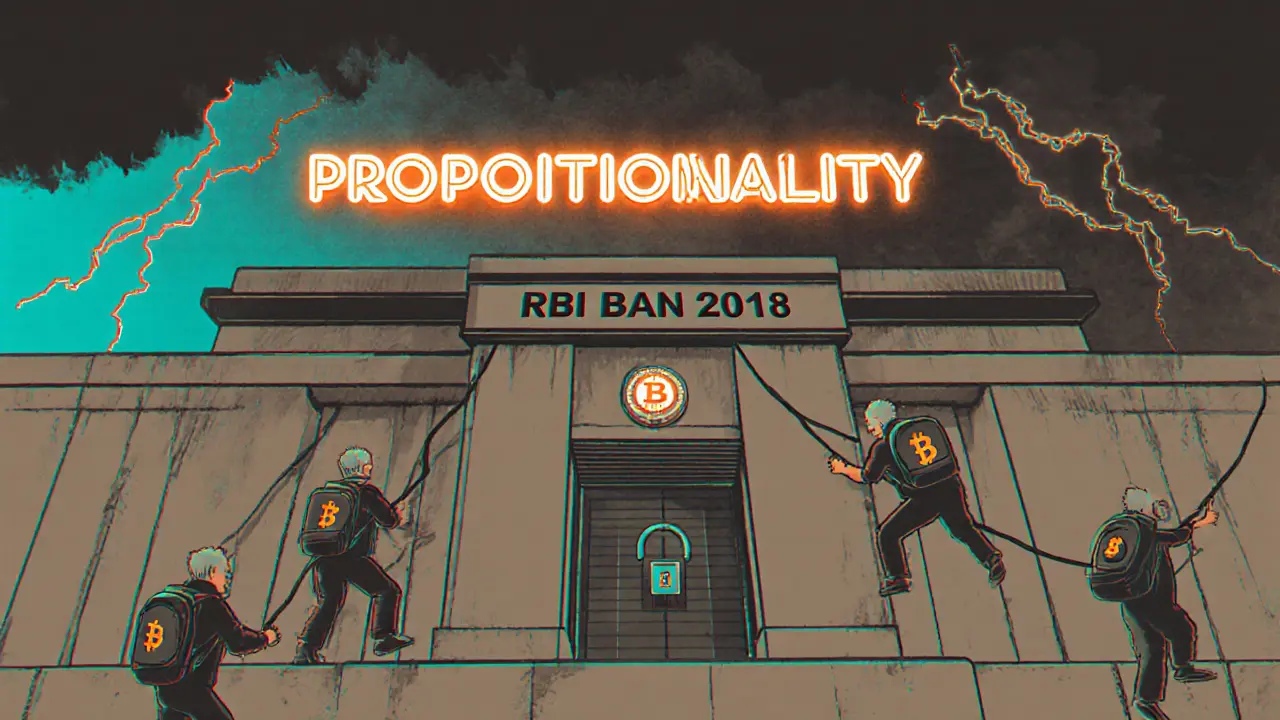
Before March 2020, if you wanted to buy Bitcoin in India, you had to find someone willing to trade cash in person. Banks had shut the door. Exchanges couldn’t process rupee deposits. Even simple things like paying for server hosting or payroll became impossible. The RBI banking ban didn’t say crypto was illegal - it just made it nearly impossible to operate. And for two years, that’s exactly what happened.
How the RBI’s 2018 Ban Broke India’s Crypto Scene
In April 2018, the Reserve Bank of India issued a circular that told every bank it regulated: stop doing business with anyone involved in cryptocurrency. That included exchanges like WazirX, CoinSwitch, and ZebPay. It wasn’t a law passed by Parliament. It wasn’t even a formal ban on crypto itself. It was a banking blockade. And it worked - too well. Banks froze accounts. Payment gateways dropped crypto firms. Even startups using blockchain for supply chain tracking or identity verification couldn’t open business accounts. The ripple effect hit more than just traders. Developers left. Investors pulled out. Some exchanges moved their operations to Singapore or the UAE just to survive. The RBI’s reasoning? Cryptocurrencies were too risky. Too volatile. Too easy to use for money laundering or tax evasion. They claimed they were protecting the financial system. But here’s the problem: they never showed proof that any bank had lost money because of crypto clients. No data. No case studies. Just fear.The Supreme Court’s Game-Changing Ruling
On March 4, 2020, the Supreme Court of India stepped in. In a unanimous decision, it overturned the RBI’s 2018 circular. The court didn’t say crypto was good or bad. It said the RBI’s ban was unconstitutional. The judges focused on one key principle: proportionality. You can’t use a sledgehammer to swat a fly. The RBI had banned an entire industry because it was worried about possible risks - without proving those risks were real or that less extreme measures couldn’t fix them. Justice Rohinton Fali Nariman wrote that the circular violated Article 19(1)(g) of the Constitution - the right to carry on any profession or business. The court made it clear: if the RBI was worried about money laundering, it could have required KYC checks. If it feared volatility, it could have capped trading volumes. But banning all banking services? That wasn’t a regulation. It was an eviction. The ruling didn’t legalize crypto. It didn’t make Bitcoin legal tender. But it did restore the basic infrastructure needed to make it work: bank accounts, payment processing, and access to the financial system.What Happened After the Ban Was Lifted
Within weeks, crypto exchanges in India went from survival mode to growth mode. WazirX reported a 300% spike in new users in the first month after the ruling. CoinSwitch Kuber added over 1 million users in just six months. Trading volumes, which had flatlined during the ban, surged past $1 billion per month by mid-2021. Banking access returned. Exchanges reopened rupee deposit channels. Payment processors like Razorpay and PayU started working with crypto firms again. Even small businesses began accepting crypto payments - not because they had to, but because they could. The Supreme Court’s decision didn’t just help traders. It helped builders. Startups using blockchain for land records, healthcare data, and agricultural supply chains suddenly had access to venture capital and bank loans. Investors who had been sitting on the sidelines started funding Indian crypto tech companies again.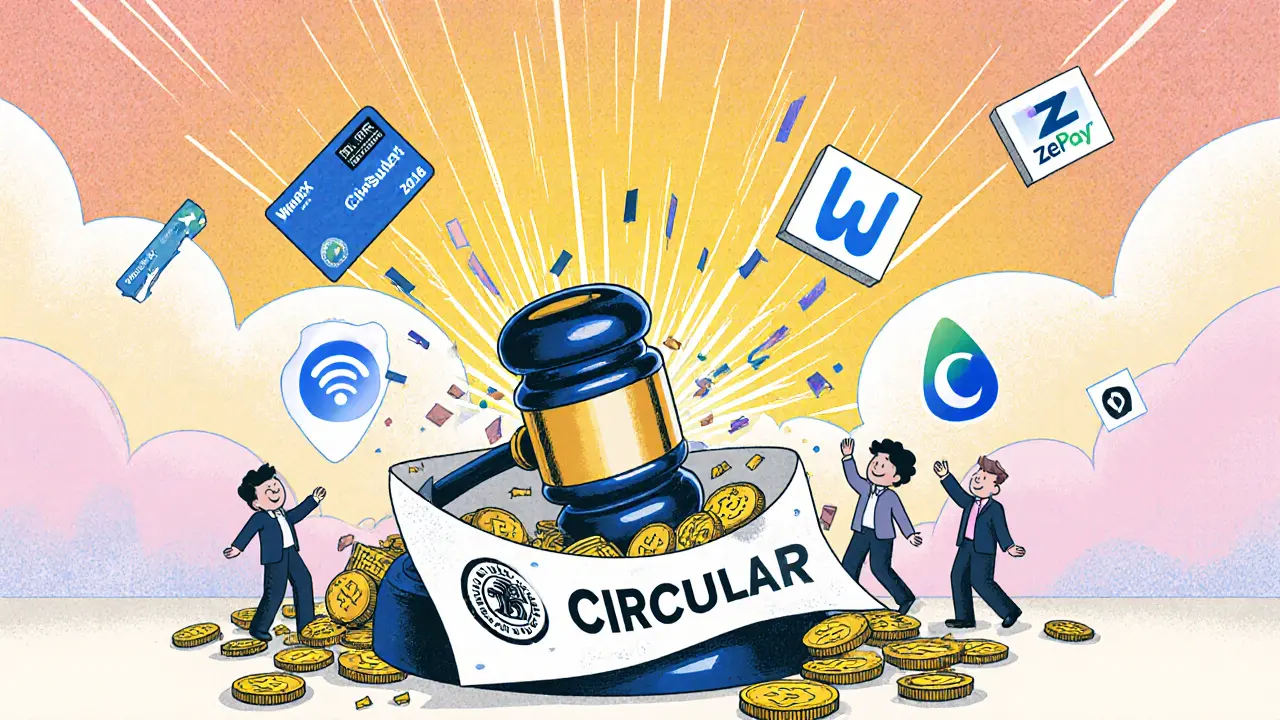
The Government’s Confusing Response: The 2021 Bill That Never Was
While the courts were restoring access, the government was drafting a new law - one that tried to undo everything the Supreme Court had fixed. In 2021, the Ministry of Finance leaked a draft called the Cryptocurrency and Regulation of Official Digital Currency Bill. It proposed a total ban on private cryptocurrencies - mining, trading, holding, even gifting. The only exception? A government-issued digital rupee, the CBDC. The bill caused panic. Crypto investors sold off. Exchanges scrambled to warn users. Experts pointed out the irony: the Supreme Court had just ruled that a blanket ban was illegal, and now the government was trying to do exactly that. But here’s the twist: the bill was never introduced in Parliament. Not in 2021. Not in 2022. Not in 2023. Not in 2024. As of 2025, it’s still just a draft - sitting on a shelf, collecting dust. That’s not an accident. The government realized it couldn’t ignore the Supreme Court’s precedent. It couldn’t ban crypto without facing another legal challenge - and it would lose again.Where Crypto Stands in India Today (2025)
As of November 2025, here’s the real state of crypto in India:- Legal? Yes. You can buy, sell, hold, and trade Bitcoin, Ethereum, and other coins without breaking any law.
- Legal tender? No. You can’t use Bitcoin to pay your electricity bill or buy groceries at a local store.
- Banking access? Yes. Exchanges and crypto businesses can open bank accounts and process rupee deposits.
- Taxed? Yes. The government imposes a 30% tax on crypto gains, plus a 1% TDS on every trade. That’s not regulation - it’s revenue collection.
- Regulated? Not really. There’s no licensing system, no investor protection rules, no anti-fraud framework. The only guardrail is the tax code.

Why This Matters Beyond Crypto
The RBI’s ban and its reversal isn’t just a crypto story. It’s a story about power. It showed that financial regulators can’t just ban innovation because they don’t understand it. It proved that courts will step in when rules are disproportionate. It gave startups and entrepreneurs a legal shield against overreach. Other countries watched. Thailand, Indonesia, and Nigeria all considered similar banking bans. After seeing how India’s ban backfired - and how the Supreme Court forced a reset - many backed off. India’s case became a textbook example: Don’t ban what you don’t understand. Regulate what you can’t stop.What’s Next? The Unwritten Rules
There’s no law. No clear rules. But the market is moving anyway. Here’s what’s happening on the ground:- Exchanges are building their own compliance teams - not because they’re forced to, but because they want to be taken seriously.
- Investors are demanding audits and transparency. The days of shady ICOs are over.
- Big Indian firms like Reliance and Infosys are quietly exploring blockchain for internal use - without announcing it.
- Tax authorities are using blockchain analytics to track crypto transactions. They’re not stopping you - they’re just watching.
India didn’t need a law to make crypto work. It just needed the freedom to try.
Is cryptocurrency legal in India as of 2025?
Yes, cryptocurrency is legal in India as of 2025. The Supreme Court’s 2020 ruling overturned the RBI’s 2018 banking ban, allowing exchanges and individuals to buy, sell, and hold digital assets. However, crypto is not legal tender - you can’t use it to pay for goods or services officially. It’s treated as a digital asset for tax and trading purposes.
Can I still use Indian banks to trade crypto?
Yes. Since the Supreme Court struck down the RBI’s 2018 circular, banks have resumed services for cryptocurrency exchanges. You can deposit rupees, withdraw profits, and link your bank account to platforms like CoinSwitch, WazirX, and ZebPay. Some banks still hesitate, but there’s no legal barrier anymore.
Why did the RBI ban crypto in the first place?
The RBI claimed cryptocurrencies posed risks to financial stability, could enable money laundering, and threatened India’s monetary sovereignty. They worried that widespread adoption could destabilize the rupee and bypass traditional banking controls. But they never provided evidence that banks had suffered losses from crypto clients - which is why the Supreme Court called the ban disproportionate.
Did the Indian government try to ban crypto after the Supreme Court ruling?
Yes. In 2021, the government drafted a bill that proposed a complete ban on private cryptocurrencies - including mining and holding. But the bill was never introduced in Parliament. As of 2025, it remains inactive. The government appears to have backed off after realizing it couldn’t override the Supreme Court’s ruling without another legal defeat.
Are crypto gains taxed in India?
Yes. The Indian government taxes crypto gains at 30%, with no deductions allowed. Additionally, a 1% TDS (Tax Deducted at Source) is applied to every crypto trade. This makes India one of the highest-taxing countries for crypto, but it also signals that the government acknowledges crypto as a legitimate asset class - even if it doesn’t fully embrace it.
What’s the difference between a crypto ban and a banking ban?
A crypto ban would make owning or trading Bitcoin illegal. A banking ban - like the RBI’s 2018 move - doesn’t outlaw crypto itself. It cuts off the financial infrastructure needed to use it. No bank accounts. No payment processors. No rupee deposits. That’s what made the 2018 ban so effective - and so destructive. The Supreme Court didn’t ban banking bans - it just said they must be proportional.
Will India ever regulate crypto properly?
It’s likely. The government has already started taxing it. Exchanges are building compliance systems. The RBI is monitoring blockchain activity. The next step is probably a licensing framework for exchanges, KYC rules for users, and clearer anti-fraud protections. But don’t expect a full embrace - regulation in India tends to be about control and revenue, not innovation.



Sharmishtha Sohoni
November 28, 2025 AT 23:55Finally, someone explained this clearly. I remember when WazirX froze my account in 2019 - I had to meet people in coffee shops to buy BTC. Wild times.
Durgesh Mehta
November 29, 2025 AT 12:09the court got it right banks cant just cut off access because they dont understand tech
Steve Savage
November 29, 2025 AT 18:59This is one of those rare cases where the system actually worked. Regulators panicked, courts stepped in with logic, and the people kept building anyway. India didn't need a law to make crypto work - it just needed space to breathe. That's the real win here. Not the tax, not the exchanges, not even the Supreme Court ruling. It's the quiet resilience of a generation that refused to wait for permission to innovate.
Joe B.
December 1, 2025 AT 15:43Let’s be real - the 30% tax is just the government saying ‘we don’t care if you make money, but we want our cut’. And the 1% TDS? That’s not regulation, that’s surveillance with receipts. Every trade gets logged, every wallet tracked, every profit reported. They’re not trying to stop crypto - they’re trying to monetize it while pretending they’re in control. Meanwhile, the real innovation is happening in decentralized lending, DAOs, and private chains that don’t even touch Indian banks. The tax is just a distraction. The real game is already off the grid.
Jess Bothun-Berg
December 2, 2025 AT 12:18Wait… so… the government drafted a bill to ban crypto… and then just… didn’t do it? 😂
That’s not ‘backing off’ - that’s cowardice. You can’t threaten an entire industry with annihilation and then ghost it like a bad date. And now they’re taxing it like it’s a side hustle? Pathetic. The RBI still thinks they’re in charge. They’re not. The market is. And the courts already said so.
Rod Filoteo
December 4, 2025 AT 08:08They’re watching us. Always. The tax system, the blockchain analytics, the banks quietly flagging transactions - it’s all part of the plan. The Supreme Court gave us breathing room, but the state never stopped trying to cage us. And don’t be fooled by the ‘legal’ label - this is a trap. You think you’re free because you can buy BTC? Nah. You’re just a data point now. The moment you cash out, they know where you are. The moment you trade, they track you. The moment you speak up, they label you. This isn’t freedom. It’s controlled chaos. And they’re smiling while they count your coins.
Althea Gwen
December 6, 2025 AT 07:33bro the fact that we’re taxed 30% but still have access is wild 😅
like… they hate it but they need the money 💸
Andrew Brady
December 7, 2025 AT 09:32India’s entire financial system is built on control - not innovation. The RBI didn’t ban crypto because it was dangerous. They banned it because it threatened their monopoly. The Supreme Court didn’t save crypto - it saved the people from a rogue institution. Now the government taxes it to fund its own bureaucracy. This isn’t progress. It’s the same old game with new labels. Don’t be fooled. The system still wants to own you. It just learned it can’t crush you outright anymore.
Sarah Roberge
December 9, 2025 AT 00:22ok but like… if the govt never passed the ban bill… then why are we even talking about this?? like… did the court just… win by default??
also i think the 30% tax is kinda sus?? like… why not 15%? why not 0%? why 30??
also who even uses crypto in india anymore?? i mean… like… is it even a thing??