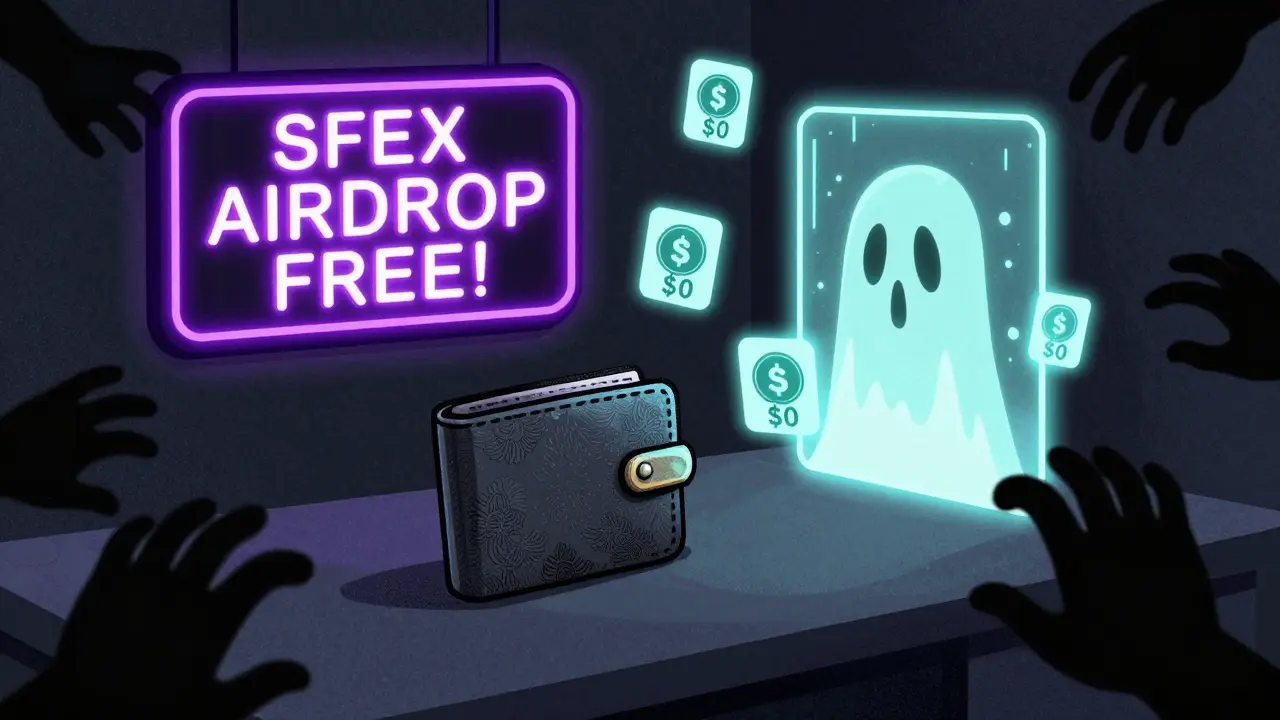
When you hear "SafeLaunch airdrop," you might imagine free tokens, instant profits, or a chance to get in early on the next big crypto project. But here’s the reality: as of February 2026, there is no verifiable, active airdrop for the SafeLaunch token (SFEX). In fact, the token shows no trading activity - its price is listed at $0 USD, and its 24-hour volume is $0. That’s not a glitch. That’s a red flag.
What Is SFEX, Really?
The SFEX token is tied to a project called SafeLaunch, which claims to be a launchpad for new blockchain projects. But unlike legitimate platforms like CoinList or Binance Launchpool, SafeLaunch doesn’t have public documentation, a clear team, or active social channels. You won’t find a whitepaper. No GitHub repo. No verified Telegram or Discord with real activity. On CoinMarketCap and CoinGecko, SFEX is either missing or marked as inactive. This isn’t just a quiet project - it’s a ghost.
Compare that to real airdrop projects. Take SAFE from Safe Global: they published exact numbers - 50 million tokens allocated for airdrops, with clear vesting schedules and distribution dates. They had live trading, $8.8 million daily volume, and a market cap over $226 million. SFEX has none of that. Zero. Nada.
Why You Haven’t Heard About a SafeLaunch Airdrop
Legitimate airdrops don’t hide. They announce them weeks in advance. They explain how to qualify - whether it’s holding a specific NFT, using their testnet, or interacting with their smart contracts. They even post countdowns and step-by-step guides.
SafeLaunch? No announcements. No timelines. No rules. That’s not a mistake. It’s a pattern. Projects that vanish after promising free tokens are often scams. They build hype on Twitter or Reddit, get people to connect wallets, then disappear. Or worse - they send you a "token" that looks real, but when you try to claim or sell it, your wallet gets drained.
The Hidden Danger of Fake Airdrops
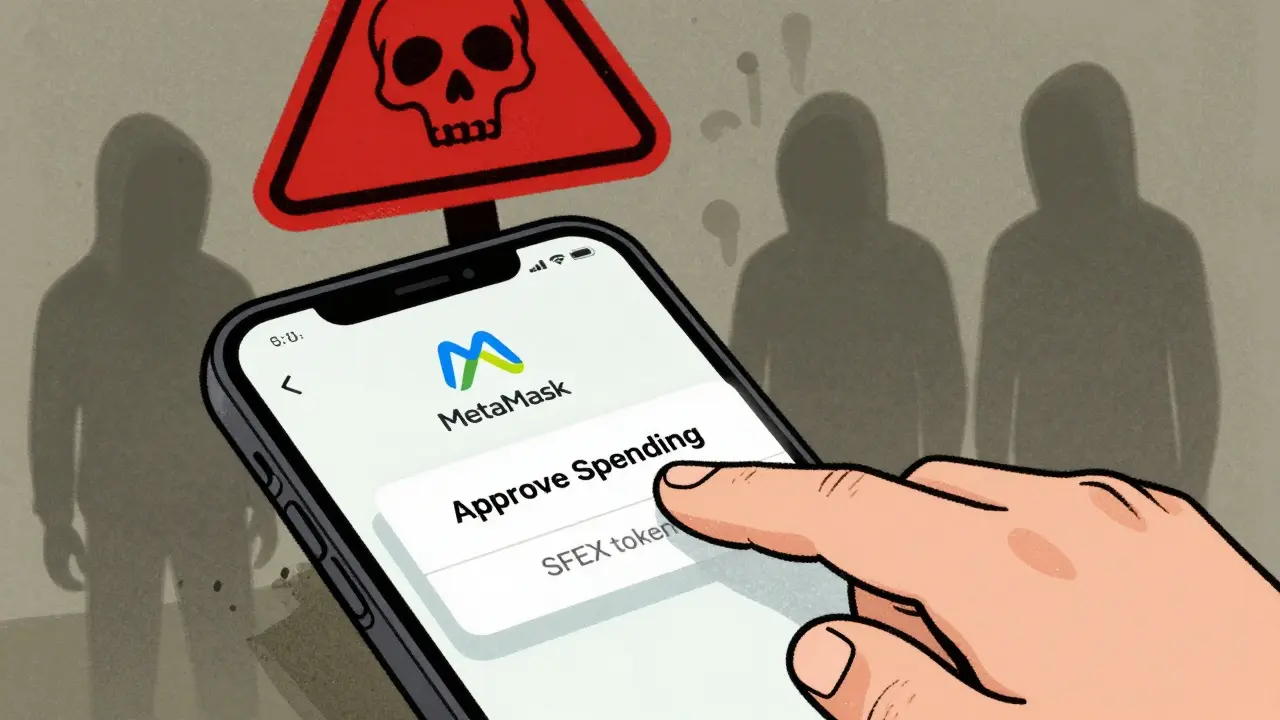
Scammers don’t need to trick you with fake websites anymore. They’ve gotten smarter. They send you a token - SFEX, maybe - directly into your wallet. It shows up in MetaMask like a real asset. You think, "Free money!" So you click "Claim" or try to sell it. That’s when the trap snaps shut.
That "claim" button? It’s a malicious smart contract. It doesn’t just take your SFEX token - it asks for approval to spend all your ETH, SOL, or BNB. Once you approve it, they can empty your entire wallet. This isn’t theory. It’s happening every day on Ethereum, Solana, and BNB Chain. Trezor Suite even updated its software in late 2025 to hide these scam tokens automatically.
Real projects don’t ask you to approve spending before claiming an airdrop. They use safe, one-click claiming systems that don’t require permissions. If you’re being asked to "approve" anything to get SFEX, walk away.
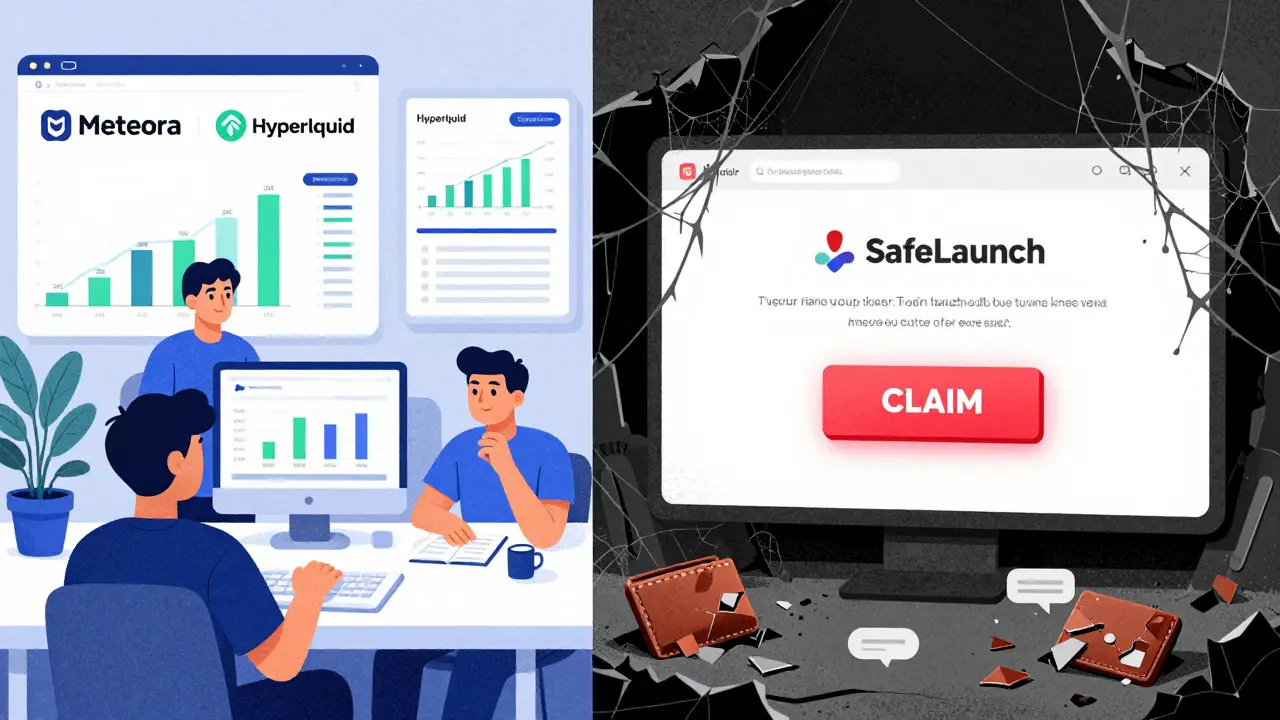
What Does a Real Airdrop Look Like in 2026?
Projects that are serious about airdrops now use on-chain activity as proof of participation. It’s not about retweeting. It’s about doing real work. For example:
- Using a Layer 2 testnet to swap tokens
- Staking assets on a decentralized exchange
- Providing liquidity to a new pool
- Interacting with a protocol’s governance system
Projects like EigenLayer and Monad reward users who help secure the network, not those who just join a Discord. If SafeLaunch is running an airdrop, where’s the proof of activity? Where’s the transaction history? Where’s the on-chain data you can verify?
There isn’t any. Because it doesn’t exist.
Should You Even Try to Claim SFEX?
No. Not unless you want to risk losing your entire crypto balance.
Even if someone sends you SFEX tokens, treat them like poison. Don’t interact with them. Don’t try to sell them. Don’t even open the token details in your wallet. The moment you do, you might be signing a contract that gives hackers full access.
And here’s the kicker: even if SFEX somehow came back to life tomorrow, the current market data suggests it has no value. Zero trading volume. Zero liquidity. Zero demand. That means even if you "claim" 10,000 SFEX tokens, you won’t be able to sell them. Not on Uniswap. Not on PancakeSwap. Not anywhere.
What to Do Instead
If you’re looking for real airdrops in 2026, focus on projects with:
- A live, active website with clear tokenomics
- Verified team members with LinkedIn profiles
- On-chain documentation you can check on Etherscan or Solana Explorer
- Trading volume over $1 million daily
- Audited smart contracts from firms like CertiK or Hacken
Look at projects like Meteora, Hyperliquid, or Pump.fun. They’re announcing airdrops with timelines, eligibility rules, and public data. You can track your eligibility. You can see the smart contracts. You can verify everything.
SafeLaunch? You can’t verify anything. And that’s the whole problem.
Final Warning
Don’t fall for the "too good to be true" trap. If you see "Claim your SFEX airdrop now!" on a random blog, Twitter bot, or YouTube video - it’s a scam. Period. No exceptions. No gray area.
The crypto space is full of real opportunities. But you don’t need to chase ghosts. Stick to projects that show their work. Projects that are transparent. Projects that have something to lose if they cheat you.
SafeLaunch (SFEX) isn’t one of them.
Is the SafeLaunch (SFEX) token real?
As of 2026, SFEX exists only as a token address on blockchains, with no active trading, no liquidity, and no official project presence. It has a $0 price and $0 volume on all major trackers. This strongly suggests it is inactive or abandoned. There is no verifiable team, whitepaper, or roadmap linked to SFEX.
Is there a SafeLaunch airdrop in 2026?
No verified airdrop for SafeLaunch (SFEX) exists in 2026. No official announcement has been made on any trusted platform, including the project’s own website (if it exists), Twitter, or Telegram. Any claims of an active SFEX airdrop are likely scams designed to trick users into approving malicious smart contracts.
Can I sell SFEX tokens if I receive them?
You shouldn’t try. Even if SFEX tokens appear in your wallet, they have no market value. Attempting to sell or swap them often requires you to interact with a smart contract - which could be designed to drain your entire wallet. Most reputable wallets, like Trezor Suite, now hide these tokens automatically to prevent accidental interaction.
How do I avoid crypto airdrop scams?
Never approve token spending for unknown tokens. Never click "claim" buttons from unsolicited messages. Always verify the project’s official channels before engaging. Look for audit reports, live trading volume, and team transparency. If it’s not on CoinMarketCap or CoinGecko with real data, assume it’s fake.
What are real airdrops like in 2026?
Real 2026 airdrops require on-chain activity - like using testnets, providing liquidity, or staking. Projects like Meteora, Hyperliquid, and Monad track your interactions and reward users who contribute to the network. They publish clear rules, timelines, and smart contract addresses. They don’t ask you to approve spending before claiming.


Jeff French
February 28, 2026 AT 06:25Been watching this for months. No one's minting, no one's swapping. Just a static token with a fake website that 404s on mobile.
Tracy Whetsel
February 28, 2026 AT 12:30Just delete the token from your wallet. Don't even open the details. That's the safest move. I lost a friend to this last year-$12k gone in 3 seconds because they "just wanted to see what it was worth."
Real airdrops don't beg you to click. They show you the contract. They show you the history. They show you the team. SFEX shows you nothing.
Elana Vorspan
March 2, 2026 AT 08:38My cousin got SFEX in her wallet last month. Thought it was a mistake. Tried to send it to Binance to "cash out." Didn't even get a transaction failed message-just a blank screen. Then her whole ETH balance vanished. She cried for days.
Just... don't. Even looking at it too long feels like inviting trouble. Delete. Hide. Walk away.
Danny Kim
March 4, 2026 AT 02:37Meanwhile, I’m over here trying to figure out why my wallet still has 0.0000000001 SFEX. Like… why? What’s the point? Did someone send me a digital ghost?
Michael Rozputniy
March 5, 2026 AT 19:32Even Trezor hiding the token is a sign. They didn't do that for every scam token. Only the ones that are *systematically* dangerous. This isn't random. It's organized.
Alyssa Herndon
March 7, 2026 AT 01:27Some things are better left unopened.
Richard Cooper
March 8, 2026 AT 14:30Cathy Sunshine
March 10, 2026 AT 05:20I’ve read the whitepapers of real projects. They’re dense. They’re technical. They’re audited. SFEX? A 200-word Medium post written by a GPT-4 bot with a fake name and a stock photo of a handshake. It’s not incompetence. It’s arrogance. They think we’re all too lazy to check.
Jeff French
March 11, 2026 AT 00:44