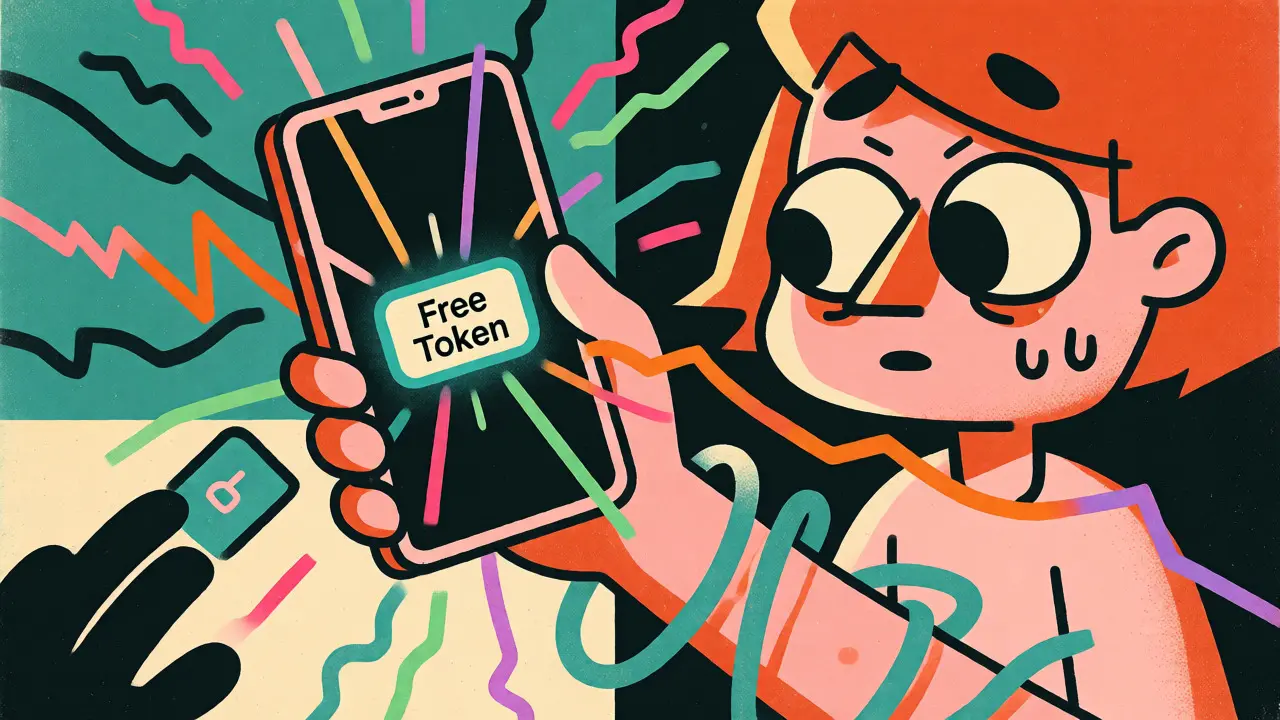
You click a link in Telegram. It looks just like the official Hamster Kombat announcement. The design is slick. The promise? Free tokens worth hundreds of dollars. You connect your MetaMask. One signature later, your wallet is empty. This isn't a glitch; it's a targeted attack. In 2025 alone, Chainalysis reported nearly $10 billion in global crypto scam damages, with fake airdrops playing a massive role. If you're tired of seeing friends lose their savings to "free" money, this guide breaks down exactly how these traps work and how you can stay safe.
Why Scammers Love Airdrops
Airdrops started as a legitimate marketing tool. Projects like Uniswap, Arbitrum, and ApeCoin used them to reward early users and decentralize token ownership. It was a win-win: users got free assets, and projects got loyal communities. But scammers saw an opportunity. They realized that the fear of missing out (FOMO) makes people drop their guard. When you see a countdown timer or a limited-time offer, your brain switches from analytical thinking to impulse mode. Scammers exploit this psychology perfectly. They don't need to hack your computer; they just need to trick you into handing over the keys yourself.
The Anatomy of a Fake Airdrop
Not all bad deals are obvious. Sophisticated scams mimic real ones so closely that even experienced traders get caught. Here’s what usually happens behind the scenes:
- The Hook: You receive a direct message on Discord or Twitter, or you see a sponsored ad. It claims you’re eligible for a retroactive airdrop because you interacted with a specific protocol months ago.
- The Site: The URL looks similar but has a typo (e.g., `uniswap-airdrop.com` instead of `app.uniswap.org`). The site often uses AI-generated graphics that look professional but lack substance.
- The Trap: To claim your tokens, you must "connect wallet." Once connected, the site asks you to sign a transaction. This isn't just claiming tokens; it's often a malicious smart contract approval.
- The Drain: That single signature grants the scammer unlimited permission to move your ERC-20 tokens. Within seconds, your USDC, ETH, or other assets vanish.
Red Flags You Can’t Ignore
Spotting a scam doesn't require a degree in cryptography. You just need to know what to look for. If any of these boxes tick, walk away immediately.
| Feature | Legitimate Airdrop | Scam Airdrop |
|---|---|---|
| Private Keys | Never asked for. | Often requested for "verification" or "claiming." |
| Upfront Fees | Rarely required; gas fees are standard network costs. | Demands payment in ETH/BTC to "unlock" rewards. |
| Source | Official website, verified social media, major news outlets. | Random DMs, suspicious URLs, unverified accounts. |
| Token Name | Clean name matching the project. | Contains URLs or weird characters (e.g., `FreeETH.io`). |
| Urgency | Clear timeline, no pressure. | "Claim within 1 hour!" or "Only 5 spots left!" |
Pay special attention to the token names. Uniswap’s support team explicitly warns that if a token description contains a website URL, it is almost certainly a scam designed to lure you into clicking a malicious link. Also, watch out for grammar errors. Legitimate projects spend millions on marketing; they don't publish typos in their main announcements.
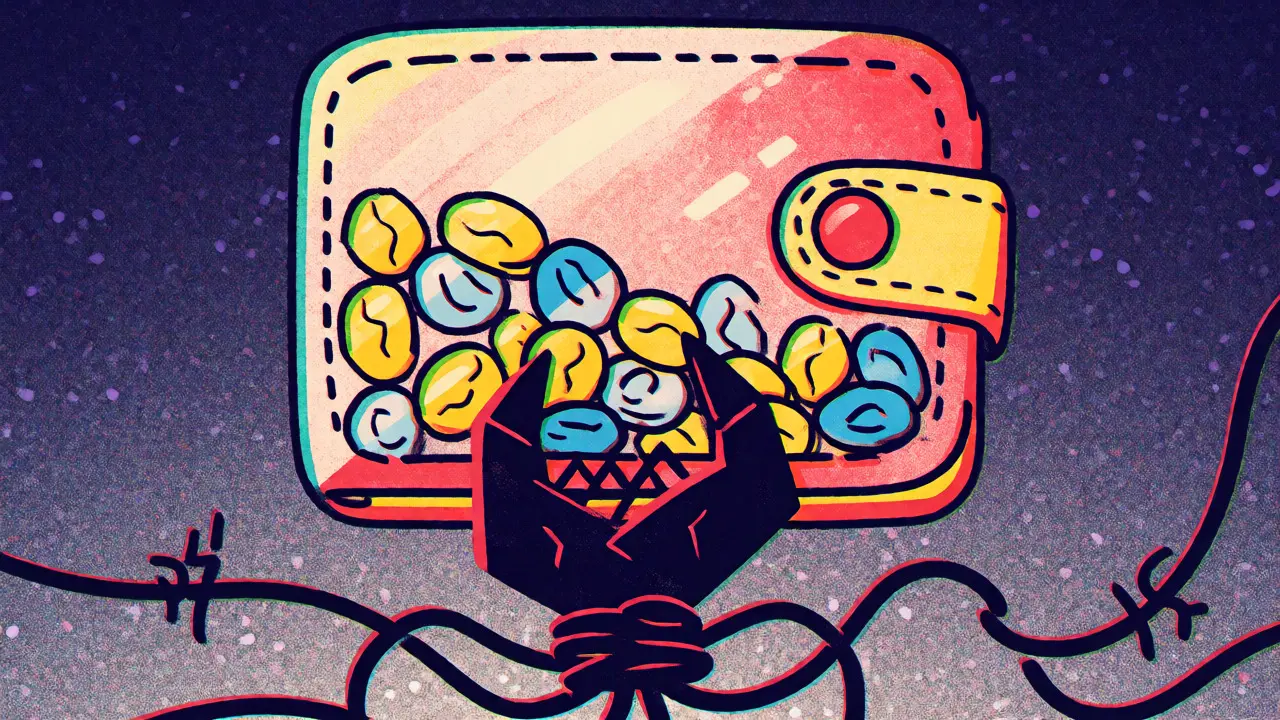
The Hidden Danger: Malicious Smart Contracts
Here is the part most beginners miss. You might think, "I won't give them my seed phrase, so I'm safe." Wrong. The biggest threat today isn't stealing your password; it's tricking you into signing a bad transaction. When you connect your wallet to a dApp (decentralized application), you aren't giving them your money directly. You're giving them permission to act on your behalf.
Scammers use "wallet drainer" contracts. These are pre-written pieces of code that, once approved by you, can sweep every token in your wallet. Hardware wallets like Ledger or Trezor protect your private keys, but they cannot stop you from approving a malicious transaction if you blindly hit "Confirm." The device secures the key, not the logic of what you're agreeing to.
How to Protect Your Wallet
So, how do you participate in airdrops without risking your life savings? It comes down to separation and verification.
- Use a Burner Wallet: Never use your main cold storage wallet for new airdrops. Create a separate hot wallet containing only a small amount of funds for testing and claiming. If it gets drained, you only lose a few dollars, not your entire portfolio.
- Verify the Source: Do not click links in DMs. Go directly to the project's official Twitter handle or Discord server. Check if the account has a blue checkmark (though verify carefully, as bots can buy these too). Cross-reference the announcement with reputable news sources like CoinDesk or The Block.
- Check the Contract Address: Before interacting, copy the token contract address and paste it into Etherscan (for Ethereum) or Solscan (for Solana). Look at the number of holders and recent transactions. If the contract was created yesterday and has zero activity, be skeptical.
- Revoke Permissions Regularly: Use tools like Revoke.cash to periodically review which dApps have access to your wallet. If you see unknown permissions, revoke them immediately.
The Evolution of Social Engineering
Scammers aren't static. They adapt. Recently, we've seen a rise in AI-driven attacks. In May 2025, Coinbase faced a breach where insiders were bribed to leak user data. Scammers then used this personal info to impersonate support staff, creating highly convincing narratives. They knew your balance, your recent trades, and your location. This level of personalization makes it hard to spot a fake.
Another trend is the use of deepfakes. Videos featuring Elon Musk or Vitalik Buterin announcing "new" airdrops are becoming common. These videos look real but are generated by AI. Always remember: if a celebrity announces a giveaway via a YouTube ad linking to a random website, it's likely a scam. Real partnerships are announced through official press releases, not paid ads with countdown timers.
What to Do If You Get Scammed
If you realize you've signed a malicious transaction, act fast. First, disconnect the compromised wallet from all dApps. Second, try to revoke approvals using a revocation tool before the attacker moves the funds. Third, report the incident to relevant authorities. While recovering stolen crypto is difficult due to its irreversible nature, reporting helps track patterns. The California Department of Financial Protection and Innovation maintains a tracker for such incidents, highlighting the growing regulatory focus on these schemes.
Don't fall for "recovery services" that promise to get your money back for a fee. Most of these are secondary scams targeting victims who are already desperate. Stick to technical solutions and education.
Do I need to pay a fee to claim an airdrop?
Typically, no. Legitimate airdrops are distributed to your wallet automatically or require you to sign a transaction that only covers the network gas fee. If a site asks you to send ETH, BTC, or stablecoins upfront to "verify" or "unlock" your airdrop, it is almost certainly a scam.
Can a hardware wallet protect me from airdrop scams?
Hardware wallets secure your private keys, meaning your keys never leave the device. However, they do not prevent you from approving malicious transactions. If you blind-sign a bad contract while your hardware wallet is connected, the scammer can still drain your funds. You must always read the transaction details carefully.
Why does my wallet show unknown tokens after an airdrop?
Scammers often send unsolicited tokens to active wallets. These are often "dust" attacks or bait. Do not try to sell or swap these unknown tokens. Interacting with them can trigger malicious code. Simply hide them in your wallet interface or ignore them completely.
Are all retroactive airdrops legitimate?
No. While many successful projects like Arbitrum used retroactive airdrops, scammers launch fake campaigns mimicking these. Always verify the announcement on the project's official website and social media channels. If you didn't apply or opt-in previously, be extra cautious about sudden "you're eligible" messages.
What is a wallet drainer?
A wallet drainer is a malicious smart contract that requests unlimited permission to transfer your tokens. Once you approve it, the contract can instantly move all your assets to the scammer's address. This is why reading the transaction prompt before signing is critical.

Janis Abraham
November 13, 2026 AT 16:06the article is decent but honestly most people are just too lazy to read the contract address. they see a logo and click approve. its not fraud its negligence