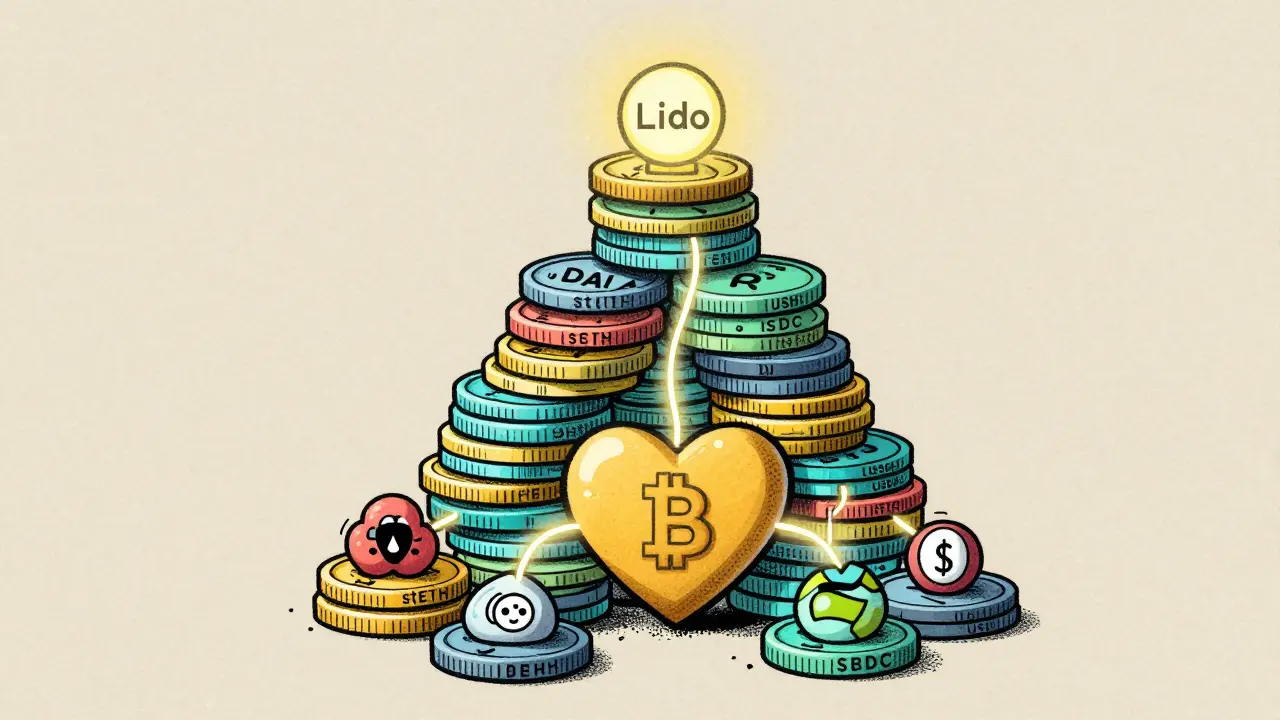
When you hear "DeFi," you might think of high yields, complex apps, or scary gas fees. But the real heartbeat of decentralized finance isn’t the hype - it’s the money. Specifically, the Total Value Locked (TVL). This number tells you how much real cryptocurrency people have trusted a protocol with. It’s not about how many users a project has - it’s about how much cash is actually sitting inside its smart contracts. As of January 2026, over $145 billion is locked across all DeFi protocols. And the top few are holding most of it.
What TVL Really Means (And Why It Matters)
TVL isn’t just a fancy metric. It’s the closest thing DeFi has to a balance sheet. Every dollar deposited into a lending pool, liquidity pool, or staking contract gets counted. If you put $1,000 worth of ETH into Lido to earn staking rewards, that $1,000 shows up in TVL. Same if you add USDC to Aave to earn interest, or lock up DAI in MakerDAO to borrow against it. The value is calculated in real-time using price feeds from Chainlink, Pyth, and other oracles - so it moves with the market. But here’s the catch: TVL doesn’t tell you if a protocol is safe, sustainable, or even useful. It just tells you how much money is in there. In 2023, Anchor Protocol had $20 billion in TVL because it was paying 20% APY on UST. When UST collapsed, that TVL vanished overnight. So TVL is a snapshot - not a guarantee. Still, it’s the best starting point. High TVL means people trust the protocol. It attracts more developers, more users, and more capital. The top protocols by TVL aren’t just popular - they’re the backbone of the entire DeFi ecosystem.Lido: The King of Liquid Staking
Lido leads the pack with $14.2 billion in TVL as of January 2026. That’s more than the entire market cap of many public companies. Lido doesn’t lend, trade, or swap. It solves one simple problem: you can’t use your staked ETH until Ethereum fully upgrades. Lido lets you stake your ETH and get stETH in return - a token that represents your staked ETH and earns rewards in real time. You can trade stETH, use it in other DeFi apps, or even borrow against it. That’s why 32% of all ETH staking happens through Lido. It’s not just the biggest - it’s the most integrated. You’ll find stETH in Aave, Uniswap, and even Curve. But it’s not perfect. During the March 2024 banking panic, stETH briefly depegged from ETH by 8%, causing panic. Lido responded by adding more oracle safeguards and improving its redemption queue. Today, it’s the most trusted liquid staking protocol - and the one most other protocols depend on.Aave: The Lending Powerhouse
Aave sits at $4.8 billion in TVL, making it the second-largest protocol. Unlike Lido, Aave is all about lending and borrowing. You deposit ETH, USDC, or DAI - and others can borrow it. You earn interest. Borrowers pay interest. Aave’s secret sauce? Isolated lending pools and credit delegation. Isolated pools mean if one asset crashes (say, a risky altcoin), it won’t drag down the whole system. Credit delegation lets users lend their borrowing power to others - useful for traders who don’t want to lock up collateral. During the 2024 market crash, Aave’s bad debt rate was 78% lower than Compound’s. That’s not luck - it’s architecture. Aave runs on 9 blockchains, including Ethereum, Polygon, and Solana. That’s rare. Most protocols stick to one chain. Aave’s cross-chain presence gives it stability. If Ethereum fees spike, users shift to Polygon. If Solana goes down, they move to Base. It’s not just big - it’s resilient.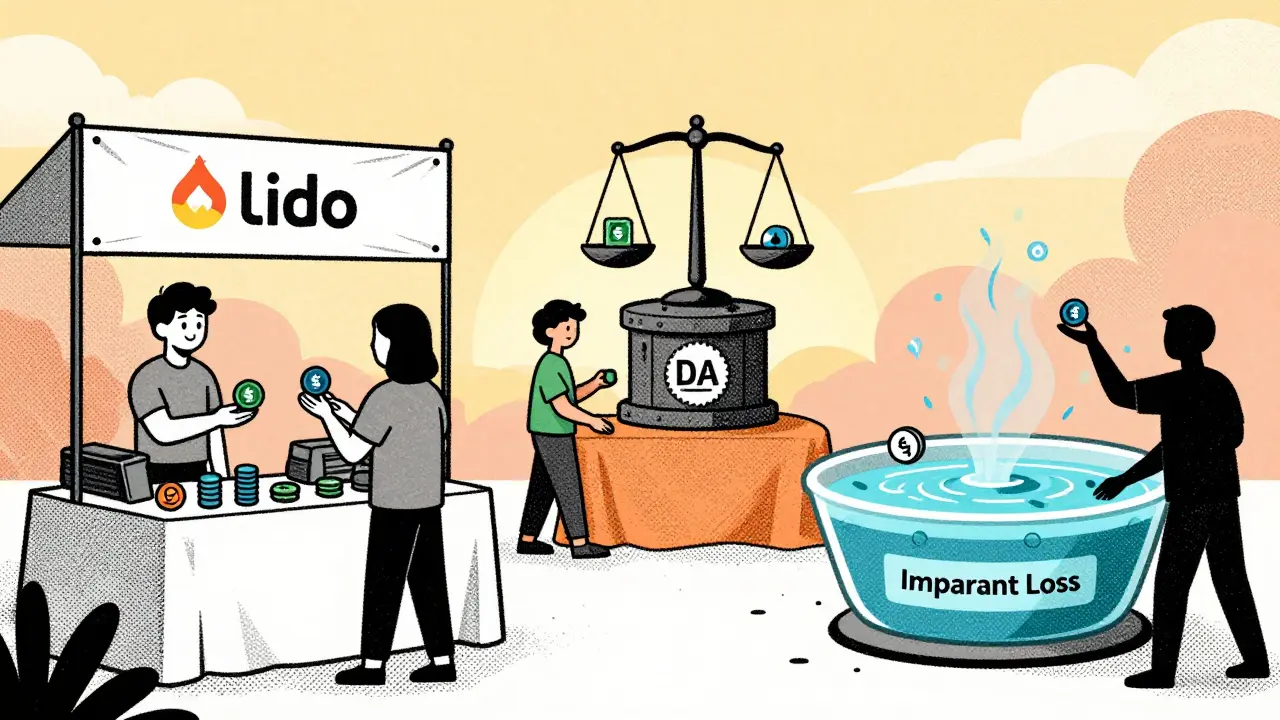
MakerDAO: The Stablecoin Engine
MakerDAO’s Sky protocol holds $5.1 billion in TVL. But here’s the twist: most of that value isn’t locked ETH or BTC. It’s DAI - the most widely used decentralized stablecoin. DAI is worth $1, and it’s backed by collateral locked in Maker’s vaults. If you want to borrow DAI, you lock up ETH or other assets. The system automatically adjusts interest rates to keep DAI stable. In January 2025, ETH dropped 35% in two weeks. Thousands of Maker vaults got liquidated. But the system didn’t break. DAI stayed pegged. That’s the power of overcollateralization. MakerDAO doesn’t chase yield. It’s a financial utility - like a digital bank that never sleeps. Still, it’s complicated. New users often don’t understand collateral ratios or liquidation thresholds. Reddit threads in r/MakerDAO are full of people asking, "Why did I lose my ETH?" That’s why MakerDAO’s user onboarding time is still 27 minutes - longer than any other top protocol. But for those who stick with it, DAI is the most reliable stablecoin in DeFi.Uniswap: The Decentralized Exchange Leader
Uniswap has $3.4 billion in TVL - less than Lido or Aave, but its impact is massive. It’s the go-to place to swap tokens. And since 2023, its v3 version changed everything. Instead of spreading liquidity across a wide price range, users can concentrate it in a narrow band. That means less slippage, higher returns, and better capital efficiency. Uniswap processes $18.7 billion in monthly volume. That’s more than most centralized exchanges. But it’s not easy to use. 68% of new users struggle to set price ranges correctly. Many end up with their liquidity stuck outside the trading range - earning zero fees. That’s why tools like Zapper.fi and DeFi Saver are so popular. They automate the process. Uniswap’s TVL is also tied to its token, UNI. But UNI isn’t used to secure the protocol - it’s a governance token. That’s different from Lido or Aave, where staking tokens earn yield. Uniswap’s value comes from usage, not yield.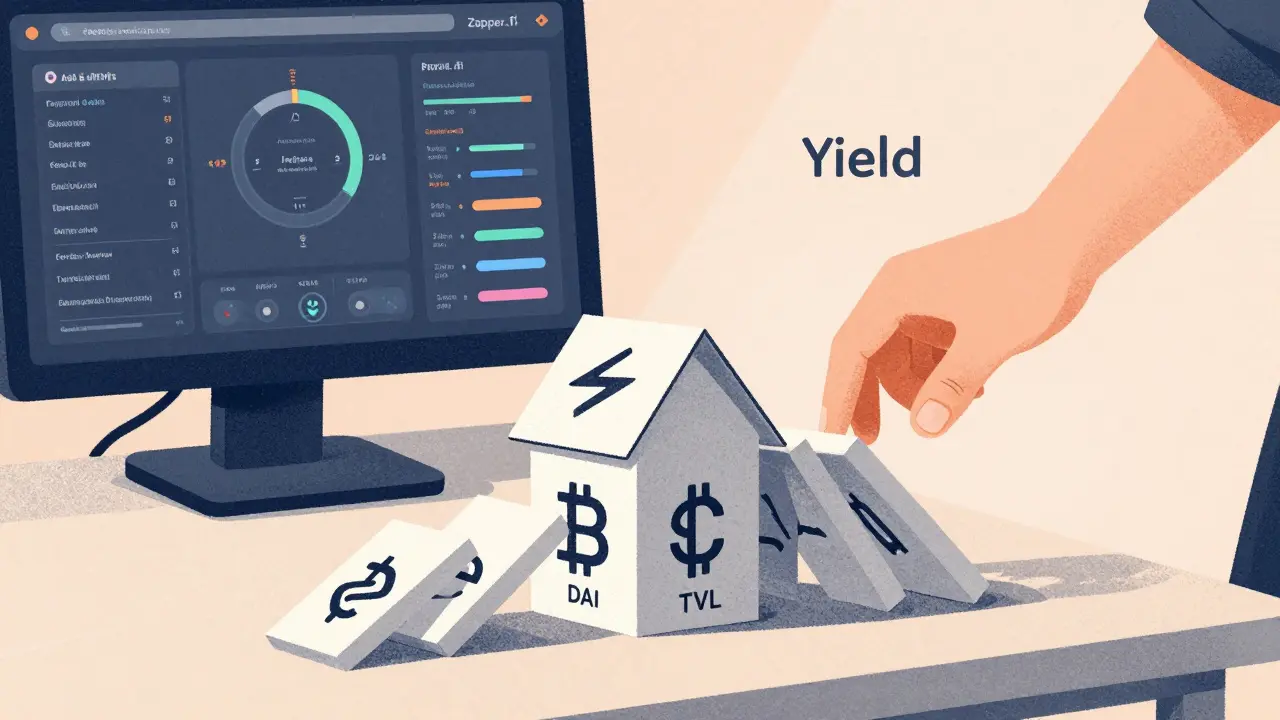
Curve Finance: The Stablecoin Swap Specialist
Curve has $2.3 billion in TVL. It doesn’t look like much next to Lido or Aave. But Curve is the hidden engine behind DeFi’s stablecoin economy. It’s optimized for swapping USDC, DAI, USDT, and other $1 tokens with near-zero slippage and fees as low as 0.04%. Why does this matter? Because most DeFi strategies rely on stablecoins. Lending? You need DAI. Yield farming? You need USDC. Trading? You need to swap between them. Curve is the quiet workhorse that makes it all possible. And it’s not alone - Convex Finance, which optimizes Curve yields, holds $1.7 billion in TVL. That’s more than most protocols. But Curve has a dark side: impermanent loss. If the price of two assets in a pool moves too far apart, liquidity providers lose money. 57% of negative reviews on Trustpilot mention this. Curve doesn’t fix that - it just makes swaps cheap. Users need to understand the risk.What’s Next for DeFi TVL?
TVL isn’t standing still. Ethereum’s Pectra upgrade in May 2025 slashed staking fees by 37%, making Lido even more attractive. EigenLayer’s restaking - letting ETH stakers secure other protocols - has added $3.9 billion in TVL and is expected to hit $8 billion by Q3 2026. But there’s trouble brewing. The SEC classified 12 DeFi protocols as unregistered exchanges in early 2025. That caused $18.3 billion in TVL to shift to non-custodial, anonymous platforms. Institutional money is growing - Fidelity and Fireblocks now hold $35.7 billion in DeFi assets - but 78% of it is in stablecoins. That’s safe, but it’s not innovation. And then there’s the yield problem. Only 31% of top protocols earn more in fees than they spend on operations. The rest are burning cash to attract users. That’s a house of cards. When rates normalize, the ones without real revenue will collapse.How to Use TVL Wisely
Don’t just chase the biggest TVL. Ask yourself:- Is the protocol’s revenue sustainable?
- Does it have real users, or just yield farmers?
- Is the code audited by CertiK or OpenZeppelin?
- Is the collateral overfunded?
- Does it work on multiple chains?
What is TVL in DeFi?
TVL, or Total Value Locked, is the total amount of cryptocurrency deposited into a DeFi protocol’s smart contracts. It’s measured in USD and reflects how much value users have entrusted to that platform. TVL is calculated by checking on-chain balances and multiplying them by real-time prices from oracles like Chainlink. It’s the most common metric for measuring DeFi adoption.
Is a high TVL always a good sign?
No. A high TVL means lots of money is locked in, but it doesn’t mean the protocol is safe or sustainable. In 2023, Anchor Protocol had $20 billion in TVL because it offered 20% APY - but when its stablecoin collapsed, the TVL vanished. TVL can be inflated by short-term yield farming or fake deposits. Always check if the protocol generates real fees and has a history of stability.
Why is Lido’s TVL so much higher than others?
Lido dominates because it solves a key problem: you can’t use staked ETH until Ethereum fully upgrades. Lido lets you stake ETH and get stETH - a token that acts like ETH but earns staking rewards. You can trade, lend, or use stETH in other DeFi apps. This makes it the most integrated staking solution. As a result, over 30% of all ETH staking goes through Lido, giving it a massive TVL lead.
How do Aave and MakerDAO differ?
Aave is a lending protocol - you deposit crypto to earn interest, or borrow against it. MakerDAO is a stablecoin system - you lock collateral to borrow DAI, a $1 stablecoin. Aave earns revenue from interest rates and has 9-chain support. MakerDAO earns revenue from borrowing fees and focuses on keeping DAI stable. Aave is about liquidity movement; MakerDAO is about monetary stability.
Should I trust DeFi protocols with my money?
Only if you understand the risks. Top protocols like Lido, Aave, and MakerDAO have been audited, have multi-sig treasury controls, and have survived market crashes. But DeFi is still new. You can lose money to smart contract bugs, oracle failures, or sudden price swings. Never invest more than you can afford to lose. Use tools like Zapper.fi to monitor your exposure, and avoid protocols that pay unrealistically high yields.
What’s the biggest risk to DeFi TVL right now?
The biggest risk is unsustainable yields. Over 40% of current TVL comes from users chasing high APYs that can’t last - like lending tokens that pay 15% when the underlying asset only earns 3%. When yields drop, that money flees. Add to that regulatory pressure, Ethereum’s high gas fees, and the fact that only 31% of top protocols are profitable, and you have a fragile foundation. TVL growth may slow or even reverse if these issues aren’t fixed.
Mathew Finch
January 22, 2026 AT 07:00Let’s be real - TVL is just a vanity metric for degens who think more money in a contract equals more legitimacy. Lido’s $14B? That’s just ETH stakers too lazy to run their own node. And don’t get me started on Aave’s ‘resilience’ - it’s just a patchwork of cross-chain bandaids. Real DeFi is on-chain sovereignty, not liquidity farming on 9 chains. This whole ecosystem is one oracle failure away from a 2022-style bloodbath.
Nadia Silva
January 22, 2026 AT 08:24TVL is not a measure of value. It is a measure of trust. And trust, in this context, is often misplaced. Lido’s dominance is not innovation - it is centralization disguised as decentralization. The fact that 32% of all ETH is staked through a single entity is a systemic risk. This is not finance. This is a casino with better branding.
tim ang
January 23, 2026 AT 08:37Yo I just got into DeFi last month and this post actually helped a ton. I thought TVL was just a marketing thing but now I get it - it’s like seeing how many people are actually using a app vs how many downloaded it. Lido’s stETH is wild, I used it to get yield on Aave and it felt like magic. Also big ups to MakerDAO for keeping DAI stable during that ETH crash. Keep the real talk coming!
Bonnie Sands
January 23, 2026 AT 15:21TVL is a Fed-backed decoy. The real story? The SEC’s been quietly forcing protocols to migrate to anonymous chains. That $18B that vanished? It didn’t disappear - it went dark. And the ‘top protocols’? They’re all owned by the same VC group that also runs Circle. You think Lido’s independent? Think again. Your ‘stable’ DAI is just a proxy for the dollar. Wake up.
Jennifer Duke
January 24, 2026 AT 14:28It’s fascinating how people treat TVL like gospel when it’s just a snapshot - and a manipulated one at that. I love how Lido gets praised for integration, but no one mentions that stETH is now the most liquidated asset in DeFi after price swings. And Aave’s ‘resilience’? That’s just because they’ve been burning cash on liquidity mining since 2021. The real winners? The auditors and the oracles. They’re the ones getting paid while everyone else gambles.
Andy Marsland
January 26, 2026 AT 05:04Let’s cut through the noise. The entire premise of this post is dangerously naive. TVL does not equal safety. TVL does not equal sustainability. TVL does not equal utility. It equals one thing: capital inflow driven by yield incentives that are mathematically unsustainable. Look at Anchor. Look at Terra. Look at any protocol that paid more than 10% APY for more than six months. They all collapsed. And now we have EigenLayer, which is just staking-as-a-service for other protocols - a pyramid scheme wrapped in Ethereum’s code. The fact that people still treat this as ‘finance’ is a testament to how little understanding there is about basic monetary principles. Real financial systems don’t rely on perpetual yield inflation. They rely on real economic activity. DeFi has none. It’s a digital Ponzi dressed up with smart contracts and Chainlink oracles. And the worst part? Everyone knows it - but they’re too busy chasing the next 20% APY to care.
Anna Topping
January 28, 2026 AT 00:19TVL is just the echo of collective belief. It’s not money - it’s faith. And faith, like any religion, needs constant ritual to survive. The rituals? Yield farming, liquidity mining, token incentives. We’re not building a financial system. We’re building a temple. And the priests? The VCs who funded the first protocols. The congregants? The retail users chasing APY like it’s salvation. The holy text? This very post. The altar? The smart contracts. The sacrifice? Your capital. And when the next oracle fails, or the next stablecoin depegs, the temple will burn - and everyone will say, ‘I didn’t know it was made of paper.’ But you did. You just chose to believe.