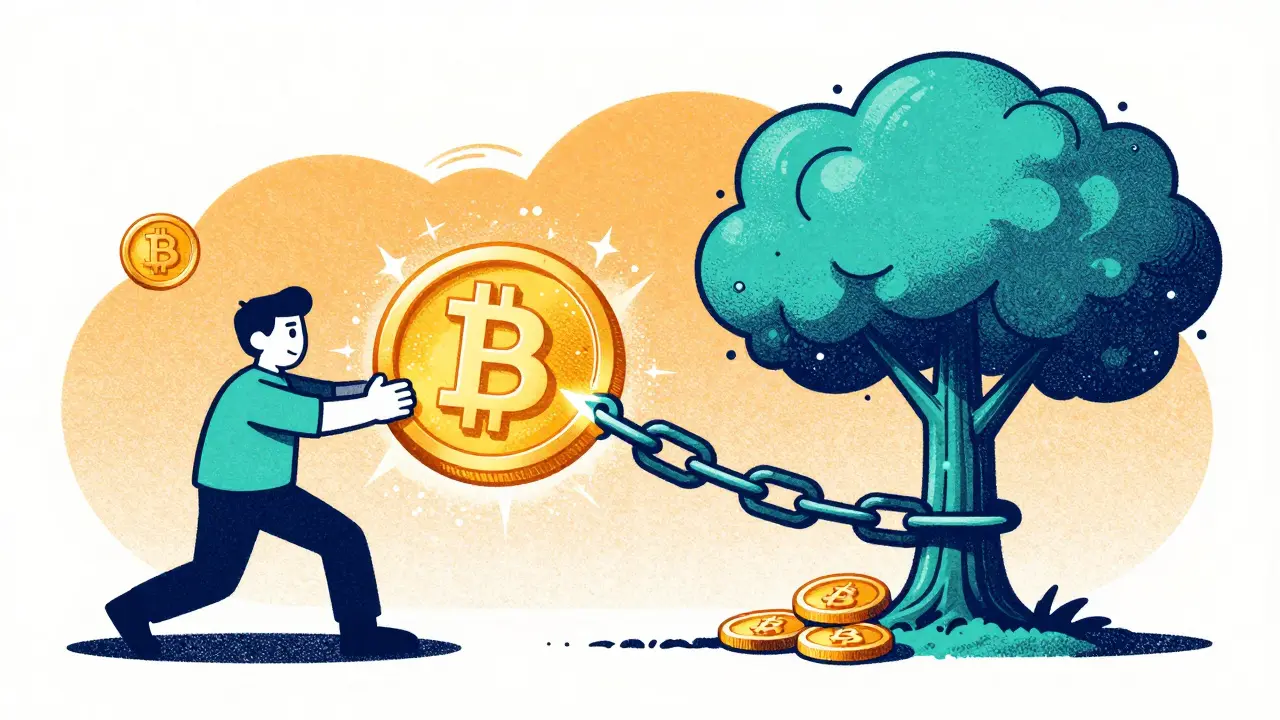
Imagine you're a founder of a new blockchain project. You've minted 100 million tokens. If you and your early investors could sell all those tokens the second they hit the market, you'd probably be tempted to cash out during the first big price spike. This "dumping" doesn't just crash the price; it tells the rest of the community that the creators don't actually believe in their own project. To stop this from happening, the industry uses vesting schedules is a predetermined timeline over which crypto tokens are gradually released to recipients like team members and investors, rather than distributing everything at once.
Essentially, these schedules act as a digital leash. They ensure that the people with the most power and tokens are incentivized to keep the project alive and healthy for years, not just weeks. Without them, the crypto world would be a revolving door of "pump and dump" schemes. In fact, projects that use well-structured vesting schedules have a 43% higher survival rate after two years compared to those that don't. If you're looking at a project's whitepaper and you don't see a clear plan for how tokens are released, that's a massive red flag.
How Vesting Actually Works
Vesting isn't just a pinky promise; it's usually hard-coded into smart contracts is self-executing contracts with the terms of the agreement directly written into code, typically on the Ethereum blockchain . These contracts hold the tokens in escrow and only release them when specific conditions-usually time-are met.
Most schedules are built around two main concepts: the cliff and the vesting period. The cliff period is an initial lock phase where no tokens are released to the recipient, regardless of their contribution . Think of it as a probationary period. For example, a common industry standard is a 1-year cliff. If you join a team on January 1st, you get absolutely nothing until the following January 1st. If you quit or are fired before that date, you usually walk away with zero tokens.
Once the cliff is over, the actual vesting schedules kick in. This is when the tokens start flowing. Instead of getting a massive pile of coins at once, you might get a small amount every month for the next three years. This keeps the market supply stable and keeps the team motivated to actually build the product.
The Three Main Types of Token Releases
Not all vesting schedules are created equal. Depending on the project's goals, they'll choose one of these three common paths:
- Cliff Vesting: This is the "all or nothing" approach. You get 0% for a set time, and then 100% of your allocation hits your wallet at once. This is risky because it can create a massive sell-off event.
- Linear Vesting: This is the most popular method, used by about 72% of projects. Tokens are released in equal installments-usually monthly or quarterly. If you're owed 120,000 tokens over a year, you get 10,000 every month. It's a smooth stream that prevents price shocks.
- Milestone-Based Vesting: Instead of a calendar, this uses achievements. Tokens might unlock only when the project hits 1 million users or completes a specific software update. While this is great for accountability, it can be tricky because someone has to decide if the milestone was actually "met."
| Feature | Cliff Vesting | Linear Vesting | Milestone Vesting |
|---|---|---|---|
| Release Speed | Instant (after cliff) | Gradual / Steady | Event-driven |
| Price Volatility | High risk of crashes | Low / Predictable | Moderate |
| Primary Goal | Quick entry/exit | Long-term stability | Performance incentive |
| Complexity | Low | Medium | High (requires oracles) |
Vesting vs. Lockups: What's the Difference?
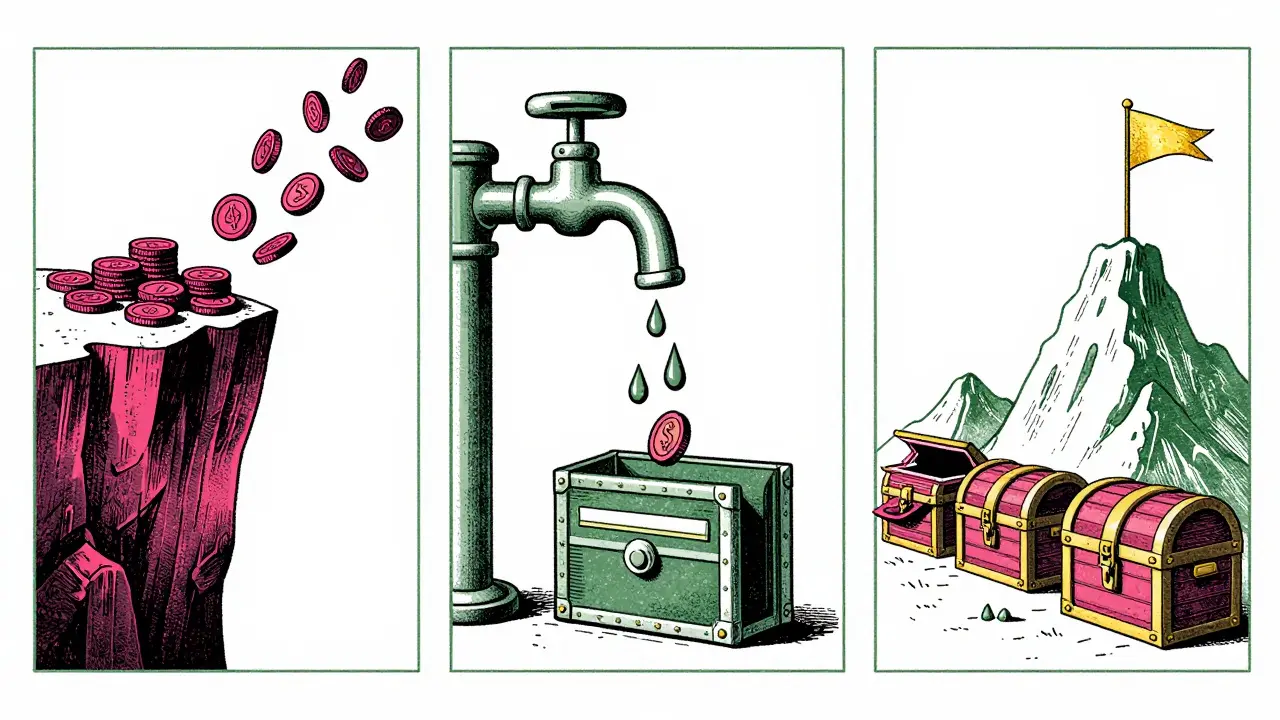
People often use these terms interchangeably, but they are very different. A lockup period is a restriction that prevents any transfer of tokens for a fixed duration, after which the full amount is released at once . If you have a 6-month lockup, your tokens are frozen. On day 181, you suddenly own 100% of them.
Vesting, on the other hand, is a gradual process. While a lockup is like a dam that eventually breaks, vesting is like a leaky faucet. Lockups are more common for public sales or staking rewards, whereas vesting is the gold standard for team members, advisors, and venture capitalists. The difference is huge for investors: a massive lockup expiry can lead to a "price cliff" where the value plummets because everyone sells at the same time.
The Strategic Side: Why This Matters for Your Wallet
If you're investing in a token, the vesting schedule is just as important as the technology. Why? Because it tells you when "sell pressure" is coming. If a project has a huge amount of tokens vesting for the founders in six months, you can expect the price to struggle around that time.
Experts like Vitalik Buterin have suggested that a 4-year vesting schedule should be the bare minimum for core developers. Why so long? Because building a decentralized protocol takes years. If a developer can leave after 12 months with all their tokens, they have no reason to stick around when the hard work of scaling begins. In fact, projects with transparent, long-term vesting see 63% lower price volatility in their first year post-launch.
However, it's not always perfect. Some employees find these periods frustrating. There are plenty of stories on Reddit and Cointracker from early hires who left a project because they couldn't benefit from a 100x price jump due to a restrictive 4-year schedule. This creates a tension between project stability and individual reward.

Common Pitfalls and Red Flags
Not every vesting plan is honest. You need to watch out for a few specific traps. The first is "vesting manipulation." This happens when a project promises a 4-year schedule to get investors on board, but then uses a governance vote to shorten that period to 1 year. This usually leads to a massive crash as the team dumps their tokens earlier than expected.
Then there are the technical failures. Some projects write their own custom escrow contracts instead of using audited templates like OpenZeppelin is a standard library of secure, upgradable, and audited smart contracts for blockchain development . This can lead to vulnerabilities, like reentrancy attacks, where a hacker drains the escrow wallet before the tokens are even vested.
Lastly, look for "opaque" schedules. If a project says "tokens will vest over time" but doesn't provide a chart, a date, or a smart contract address, assume they are hiding something. The most successful projects, like Chainlink, maintain total transparency about their distribution, which builds a level of trust that you can't buy with marketing.
What happens if a team member leaves before the cliff ends?
In most cases, the person forfeits all their tokens. The cliff acts as a minimum commitment period; if you don't make it to the end of the cliff, you typically don't earn any part of the allocation.
Can a project change its vesting schedule after launch?
Yes, they can, usually through a governance vote or a smart contract upgrade. However, doing this is often seen as a red flag by the community and can lead to a sharp drop in token price if the change favors the insiders.
What is the most common vesting schedule for DeFi projects?
The industry standard for DeFi is typically a 1-year cliff followed by a 3-year linear vesting period. This ensures a total 4-year commitment from the core team.
Why are milestone-based schedules better than time-based ones?
Milestone-based schedules tie rewards to actual work. This prevents "clock-watching," where employees just wait for the date to hit regardless of whether the project is actually succeeding.
Does vesting affect the token price?
Absolutely. When a large amount of tokens vest, it increases the circulating supply. If the demand doesn't increase at the same rate, the price will generally drop due to the increased selling pressure.
Next Steps for Investors and Builders
If you're a builder, don't just copy-paste a schedule. If you're building a GameFi project, consider milestone-based vesting tied to game releases. For a DeFi protocol, stick to the classic 4-year linear model to satisfy institutional investors. Use audited templates and be 100% transparent in your whitepaper.
If you're an investor, start using on-chain analytics tools to track when major unlocks are happening. Don't just look at the current price; look at the "unlock calendar." If a massive amount of tokens are about to hit the market, it might be a good time to hedge your position or wait for the volatility to settle before jumping in.



Siddharth Bhandari
April 6, 2026 AT 10:55Actually, many developers now use conditional vesting where tokens are returned to the treasury if the person leaves on bad terms. It's a safer way to handle early exits without just relying on the cliff.
sekhar reddy
April 6, 2026 AT 20:20Omg the absolute HORROR of a price cliff!!! I've seen portfolios vanish overnight just because some whale decided it was unlock day. It's literally a massacre of retail investors!! Totaly insane how some projects just ignore the pain they cause with these schedules!
Trish Swanson
April 8, 2026 AT 10:19Totally a red flag...!!!
Matthew Wright
April 8, 2026 AT 17:40The part about custom escrow contracts is so critical...!!! A lot of people forget that "audited" doesn't always mean "bulletproof," especially when teams try to be too clever with their own logic...!!! Has anyone seen a project actually successfully use an oracle for milestone vesting without it being a total mess???
Diana Martín Prieto
April 9, 2026 AT 09:33I've seen a few projects do this well by using a multi-sig wallet where a community DAO votes on whether the milestone was reached. It takes the power away from a single founder and makes the whole process way more transparent for everyone involved. If you're building a project, definitely look into DAO-governed releases because it builds so much more trust with your early backers than just a hard-coded timer.
Suzanne Robitaille
April 10, 2026 AT 14:14There is something profoundly poetic about the tension between the collective stability of a project and the individual's desire for reward. We are essentially asking humans to gamble their immediate financial freedom on a futuristic vision of a decentralized world. It's a heavy burden for a developer to carry for four long years, almost like a digital penance for the crime of being an early adopter. While the math makes sense for the market, the human soul often rebels against such rigid constraints. It truly highlights the struggle between greed and the greater good in the crypto space. I believe this friction is where the real evolution of these protocols will happen. We must find a way to honor the contribution without shackling the contributor. Perhaps a hybrid model that rewards milestones more generously could bridge this gap. Until then, we just watch the clocks tick down. It's a strange, digital dance of patience and hope. Let us hope the vision is worth the wait.
Susan Payne
April 11, 2026 AT 01:16It is utterly pedestrian to suggest that a 4-year schedule is a "minimum." In a market characterized by such extreme volatility, any professional with a shred of dignity would demand more rigorous safeguards than a simple linear release. The lack of sophistication in most current vesting models is frankly embarrassing.
akash temgire
April 11, 2026 AT 17:24The correlation between transparent vesting and lower volatility is undeniable. Opaque schedules are an unacceptable risk.