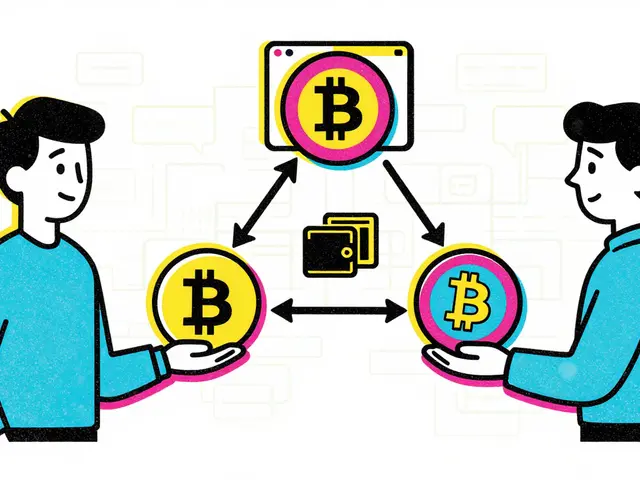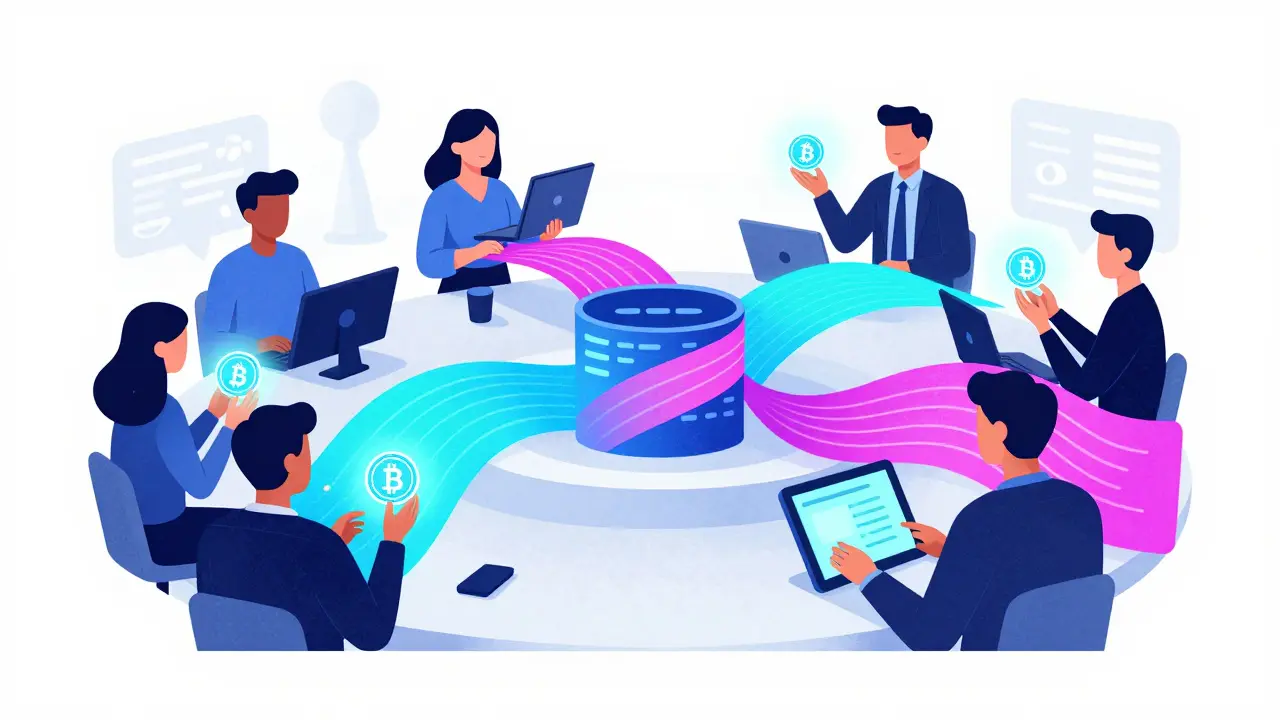
Imagine walking into a busy stock exchange floor in the 1920s. Shouts echo across the room as brokers trade shares of companies like Ford or General Electric. Now, fast-forward to today. The shouting has stopped, replaced by silent screens and algorithms, but the core activity remains the same: people buying and selling assets based on perceived value. This is exactly what happens when you use a cryptocurrency exchange, which is a digital marketplace platform that allows users to buy, sell, and trade cryptocurrencies and other digital assets.
If you are new to the world of blockchain, the term "exchange" might sound intimidating. You might wonder if it is just another bank, a gambling site, or something entirely different. The truth is simpler. An exchange is simply a middleman-or in some cases, no middleman at all-that connects buyers with sellers. It is the gateway through which almost everyone enters the crypto ecosystem. Without these platforms, converting mechanisms, your Bitcoin would sit in a digital void, useful only to other Bitcoin holders who happen to need your specific amount of cash.
The Three Main Types of Crypto Exchanges
Not all exchanges work the same way. In fact, they differ so significantly in how they operate, who controls your money, and how safe they are that choosing the wrong one can be costly. There are three primary models you will encounter: Centralized Exchanges (CEX), Decentralized Exchanges (DEX), and Hybrid Exchanges. Understanding the difference between them is the first step to trading safely.
Centralized Exchanges (CEX)
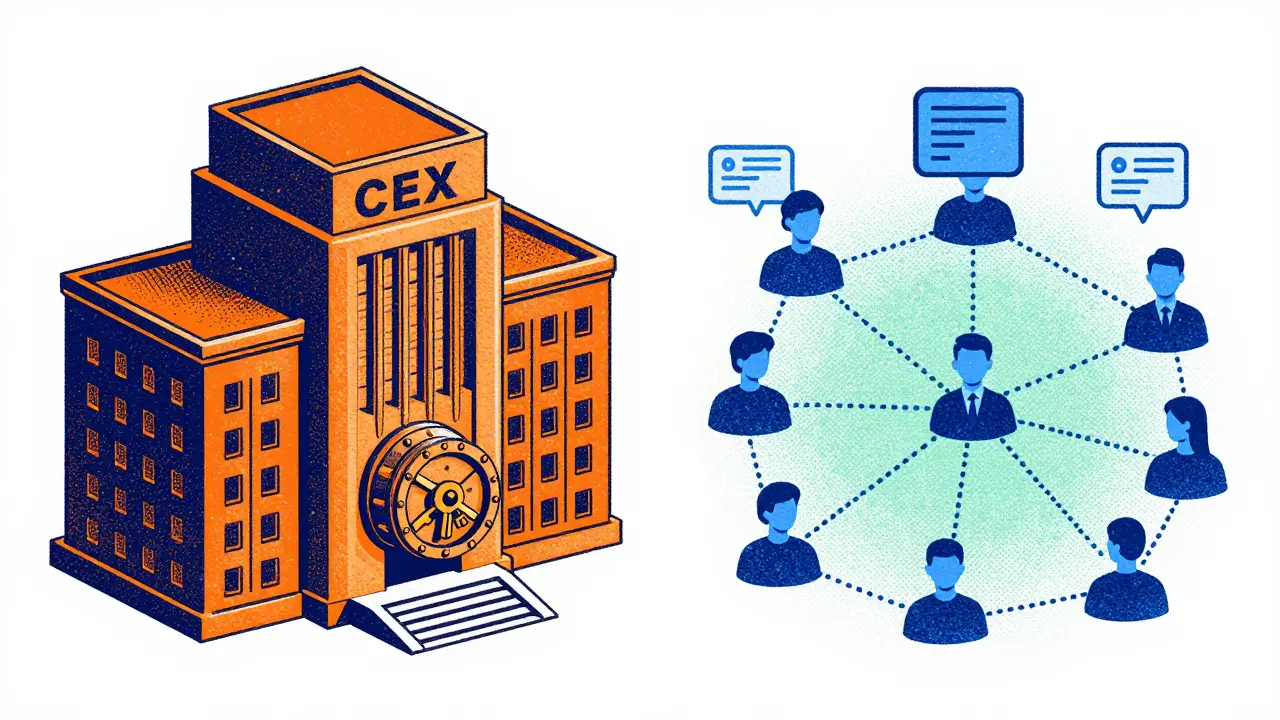
A Centralized Exchange is a platform operated by a single company that acts as an intermediary between buyers and sellers, holding custody of user funds. Think of Coinbase, Binance, or Kraken. These platforms function very much like traditional banks or stock brokerages. When you deposit money into a CEX, you are trusting that company to hold your assets securely.
Here is how it works in practice. You create an account, verify your identity (a process known as KYC, or Know Your Customer), and transfer funds from your bank account. The exchange then credits your internal balance. When you want to buy Bitcoin, you aren't actually receiving Bitcoin directly from another person; you are telling the exchange to move value from its general pool to your personal wallet within their system. Only when you decide to withdraw do the coins move onto the actual blockchain network.
This model offers several advantages. First, it is incredibly user-friendly. If you forget your password, customer support can help you reset it. Second, transactions are lightning-fast because they happen internally on the exchange's database, not on the slower public blockchain. Third, liquidity is high, meaning you can usually buy or sell large amounts without drastically affecting the price. However, there is a catch: "Not your keys, not your coins." If the exchange gets hacked, goes bankrupt, or freezes your account, you could lose everything. History has shown us this risk repeatedly, from the collapse of Mt. Gox to more recent incidents involving FTX.
Decentralized Exchanges (DEX)
In contrast, a Decentralized Exchange is a peer-to-peer marketplace where trades occur directly between users via smart contracts on a blockchain, without a central authority holding funds. Examples include Uniswap, SushiSwap, and PancakeSwap. With a DEX, there is no company behind the scenes. There is no CEO, no customer service hotline, and no office building.
Instead of a central server, DEXs run on code called smart contracts deployed on blockchains like Ethereum or Solana. When you trade on a DEX, you connect your own personal cryptocurrency wallet (like MetaMask or Phantom) directly to the website. You approve the transaction, and the smart contract automatically swaps your tokens for the ones you want. At no point does a third party hold your money. You maintain full control over your private keys and your assets at all times.
This approach solves the trust issue inherent in CEXs. No one can freeze your account because there is no account to freeze. However, it comes with significant trade-offs. DEXs often have lower liquidity, which can lead to higher slippage (getting a worse price than expected). They also require you to manage your own security. If you lose your private key or send funds to the wrong address, there is no "undo" button and no support team to call. Additionally, the user experience can be clunky, requiring knowledge of gas fees, network congestion, and wallet connections.
Hybrid Exchanges
Hybrid Exchanges are platforms that combine the order-matching speed of centralized exchanges with the non-custodial security of decentralized networks. These platforms aim to get the best of both worlds. They use centralized databases to match buy and sell orders quickly, ensuring fast execution and good prices. However, once the trade is matched, the settlement happens on-chain, meaning the assets never leave your control until the final moment.
While still a smaller segment of the market, hybrid exchanges are gaining traction among traders who want the ease of a CEX interface but refuse to give up custody of their funds. They represent a middle ground, though they can sometimes suffer from complexity in their fee structures and regulatory ambiguity.
| Feature | Centralized Exchange (CEX) | Decentralized Exchange (DEX) |
|---|---|---|
| Custody of Funds | Exchange holds your assets | You hold your assets in your wallet |
| Identity Verification (KYC) | Required | Not required |
| User Experience | Easy, similar to banking apps | Complex, requires technical knowledge |
| Transaction Speed | Very fast (internal ledger) | Depends on blockchain congestion |
| Security Risk | Hack of exchange affects all users | User responsible for own wallet security |
| Liquidity | High | Variable, often lower for niche tokens |
How Do Crypto Exchanges Make Money?
You might be wondering why these platforms exist if they are just facilitating trades. Like any business, exchanges need to generate revenue to cover operational costs, pay developers, and make a profit. Understanding their business model helps you understand potential conflicts of interest.
The primary source of income for most exchanges is trading fees. Every time you buy or sell, the exchange takes a small percentage. On a centralized exchange like Coinbase, this might range from 0.5% to 1.5% depending on whether you use their standard or professional interface. On a DEX like Uniswap, the fee is typically fixed at 0.3% and goes to liquidity providers rather than a central company. Some exchanges also charge withdrawal fees to cover the cost of moving coins off their servers onto the blockchain.
Beyond basic trading, many exchanges offer additional services. Staking allows users to earn interest on their holdings, and the exchange takes a cut of those rewards. Lending platforms let users borrow against their crypto, charging interest rates. Derivatives trading, such as futures and options, generates significant volume and fees. For example, Binance and Bybit derive a large portion of their revenue from these advanced trading products, which appeal to institutional investors and experienced traders looking to hedge risk or speculate on price movements.
Security and Regulation: What You Need to Know
Security is the elephant in the room when discussing cryptocurrency. Because digital assets are irreversible and borderless, they are attractive targets for hackers. However, the biggest risk often isn't external hacking-it's internal mismanagement or fraud.
Centralized exchanges are subject to increasing regulatory scrutiny. In the United States, the Securities and Exchange Commission (SEC) and the Commodity Futures Trading Commission (CFTC) are actively defining rules for how these platforms must operate. This includes requirements for capital reserves, insurance funds, and regular audits. In Europe, the Markets in Crypto-Assets (MiCA) regulation provides a comprehensive framework for consumer protection. While regulation adds bureaucracy, it also provides a layer of safety. If a regulated exchange fails, there may be legal recourse for users, unlike in the wild west of unregulated offshore platforms.
For decentralized exchanges, regulation is trickier. Since there is no central entity to regulate, lawmakers are focusing on the developers and the interfaces themselves. However, the security burden shifts entirely to the user. Best practices include using hardware wallets (like Ledger or Trezor) to store long-term holdings, enabling two-factor authentication (2FA) on all accounts, and being wary of phishing links. Never share your seed phrase-the twelve or twenty-four words that grant access to your wallet-with anyone, ever. Legitimate exchanges will never ask for it.
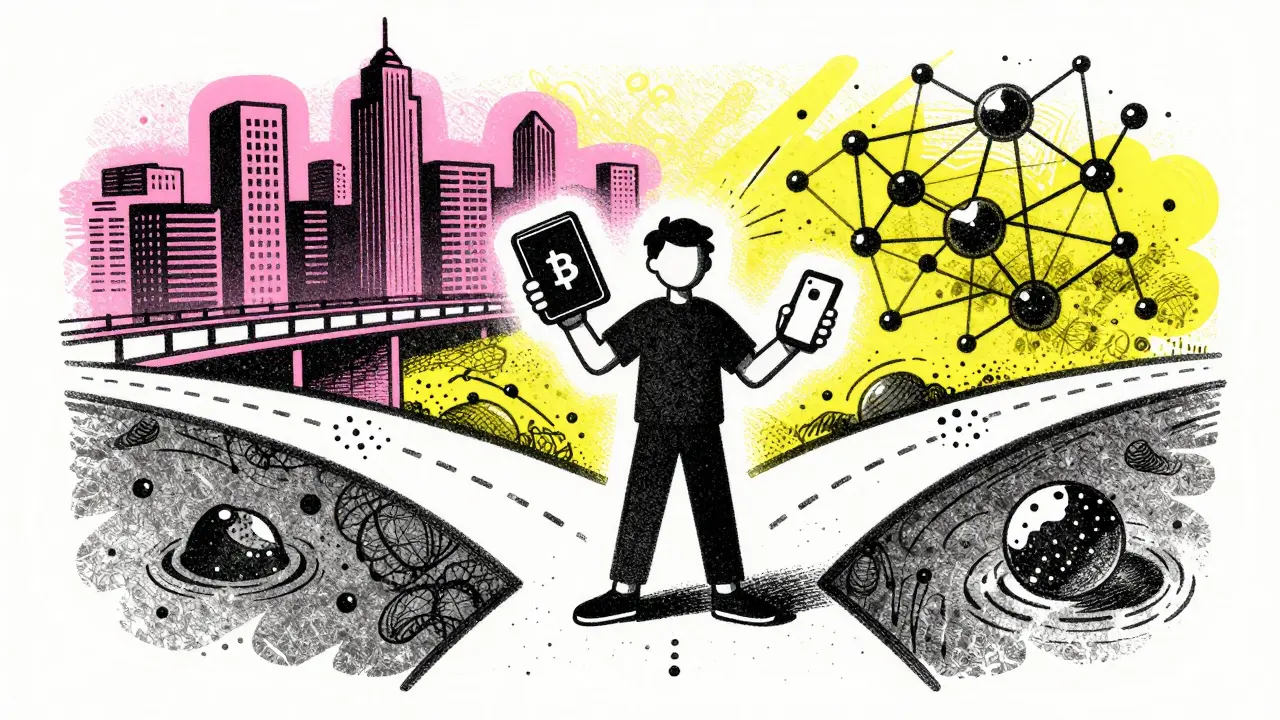
Choosing the Right Exchange for You
So, which type of exchange should you use? The answer depends on your experience level, the size of your investment, and your tolerance for risk.
- Beginners: Start with a reputable centralized exchange like Coinbase or Kraken. The intuitive interface, fiat on-ramps (ability to buy with credit cards or bank transfers), and customer support make the learning curve manageable. Just remember to withdraw your funds to a personal wallet once you have accumulated a significant amount.
- Active Traders: If you trade frequently, look for CEXs with low maker/taker fees and high liquidity. Binance and OKX are popular choices for their deep order books and advanced charting tools.
- Privacy Advocates and DeFi Users: If you prefer not to provide ID documents or want to trade obscure tokens not listed on major exchanges, a DEX like Uniswap or Curve is essential. You will need to learn how to manage gas fees and interact with smart contracts, but you gain full autonomy.
- Institutional Investors: Large firms often use specialized OTC (Over-The-Counter) desks provided by major exchanges to execute large trades without slipping the market price. They prioritize compliance, audit trails, and dedicated account managers.
Ultimately, diversification is key. Many experienced users keep a small amount of liquid crypto on a CEX for quick trades, while storing the majority of their wealth in cold storage or interacting with DEXs for specific DeFi opportunities. This balanced approach mitigates the risks associated with any single platform failing.
Is it safe to keep my cryptocurrency on an exchange?
It is generally not recommended to keep large amounts of cryptocurrency on a centralized exchange for long periods. While reputable exchanges invest heavily in security measures like cold storage and insurance, they remain targets for hackers and can face insolvency issues. For long-term holding, it is safer to transfer your assets to a personal hardware wallet where you control the private keys.
Do I need to provide my ID to use a crypto exchange?
For centralized exchanges (CEX), yes. Most jurisdictions require exchanges to perform Know Your Customer (KYC) checks to prevent money laundering and terrorist financing. This involves submitting a government-issued ID and sometimes proof of address. Decentralized exchanges (DEX) typically do not require ID verification, allowing for anonymous trading, though this lack of anonymity can raise red flags with tax authorities in some countries.
What is the difference between a spot exchange and a derivatives exchange?
A spot exchange allows you to buy and sell the actual underlying asset immediately. If you buy Bitcoin on a spot exchange, you own that Bitcoin. A derivatives exchange allows you to trade contracts based on the price of the asset, such as futures or options, without necessarily owning the asset itself. Derivatives often involve leverage, which amplifies both potential gains and losses, making them riskier for beginners.
Can I lose money due to high fees on an exchange?
Yes, especially if you are a frequent trader. High trading fees, withdrawal fees, and spread costs (the difference between the buy and sell price) can eat into your profits significantly. Always compare fee structures before choosing a platform. For example, using a limit order on a centralized exchange often incurs lower fees than a market order. On DEXs, high network gas fees during peak times can also make small trades uneconomical.
Are decentralized exchanges completely anonymous?
While DEXs do not require personal identification, they are not truly anonymous. All transactions are recorded on the public blockchain, which is transparent and permanent. Sophisticated analysis tools can often link wallet addresses to real-world identities, especially if you have ever used a centralized exchange or linked your wallet to a social media profile. True privacy usually requires additional tools like privacy-focused coins or mixing services, which carry their own legal and security risks.