
You’ve probably seen the hype around artificial intelligence and blockchain colliding. It’s a massive trend. But when you dig into specific projects like AIVIA, things get tricky fast. This isn’t one of the household names like Bitcoin or Ethereum. In fact, if you’re looking at AIVIA in mid-2026, you’re looking at a project that has survived a brutal market cycle but remains on the fringes of mainstream adoption.
So, what exactly is AI Virtual Agents (AIVIA), a cryptocurrency designed to power autonomous AI agents on the blockchain? Is it a hidden gem waiting to explode, or is it a speculative gamble with thin liquidity? Let’s break down the technology, the tokenomics, and the hard numbers so you can decide if this fits your portfolio-or if it’s best left alone.
The Core Concept: AI Meets Blockchain
At its heart, AIVIA aims to solve a specific problem: how do we create, deploy, and monetize AI agents in a decentralized way? The platform is built on the Solana blockchain. Why Solana? Because it offers high throughput and low transaction costs, which are essential for an ecosystem where AI agents might need to perform frequent, small-scale transactions or data verifications.
The project promises an AI Agent Marketplace. Think of this as an app store, but instead of downloading games, developers and businesses upload autonomous AI agents. These agents could handle customer service for an e-commerce site, analyze financial data, or even manage social media moderation. The idea is that these agents aren’t just static code; they have adaptive learning capabilities and long-term memory functions, allowing them to personalize interactions over time.
Here’s the catch: while the concept is solid on paper, execution is everything. Many projects promise "AI + Blockchain," but few deliver usable products. AIVIA claims to support industries like healthcare, finance, and e-commerce. However, as of 2026, there is limited public evidence of widespread enterprise adoption. You won’t see major banks using AIVIA agents yet. It’s still largely in the developer and early-user phase.
Tokenomics and Supply Structure
Understanding the money behind the tech is crucial. AIVIA operates with a fixed supply model. Here are the key metrics:
- Total Supply: 1 Billion tokens
- Circulating Supply: 1 Billion tokens (100% circulating)
- Max Supply: 1 Billion tokens
Because all tokens are already in circulation, there is no future inflation from new minting. This means the price movement depends entirely on demand versus supply dynamics. If more people want to buy AIVIA than sell it, the price goes up. If confidence wanes, the price drops without any buffer from locked-up team tokens being released later.
The token serves multiple utility functions within the ecosystem. You use AIVIA to pay for deploying agents, to reward training hubs that refine agent performance, and to participate in the token launchpad for creating exclusive rewards. Essentially, holding the token gives you access to the platform’s features. But remember: utility doesn’t guarantee value if nobody is using the platform.
Price History and Market Reality (2025-2026)
This is where the story gets serious. If you bought AIVIA at its peak, you’re likely feeling the pain. Let’s look at the data, because the numbers tell a stark story about volatility.
| Metric | Value | Date/Context |
|---|---|---|
| All-Time High (ATH) | $0.001191 | January 16, 2025 |
| All-Time Low (ATL) | $0.0000537 | June 5, 2025 |
| Recent Price (March 2026) | $0.00000378 | Micro-cap status |
| Market Cap (March 2026) | ~$3,780 | Extremely low liquidity |
| Primary Exchange | Raydium (DEX) | Solana-based trading pair |
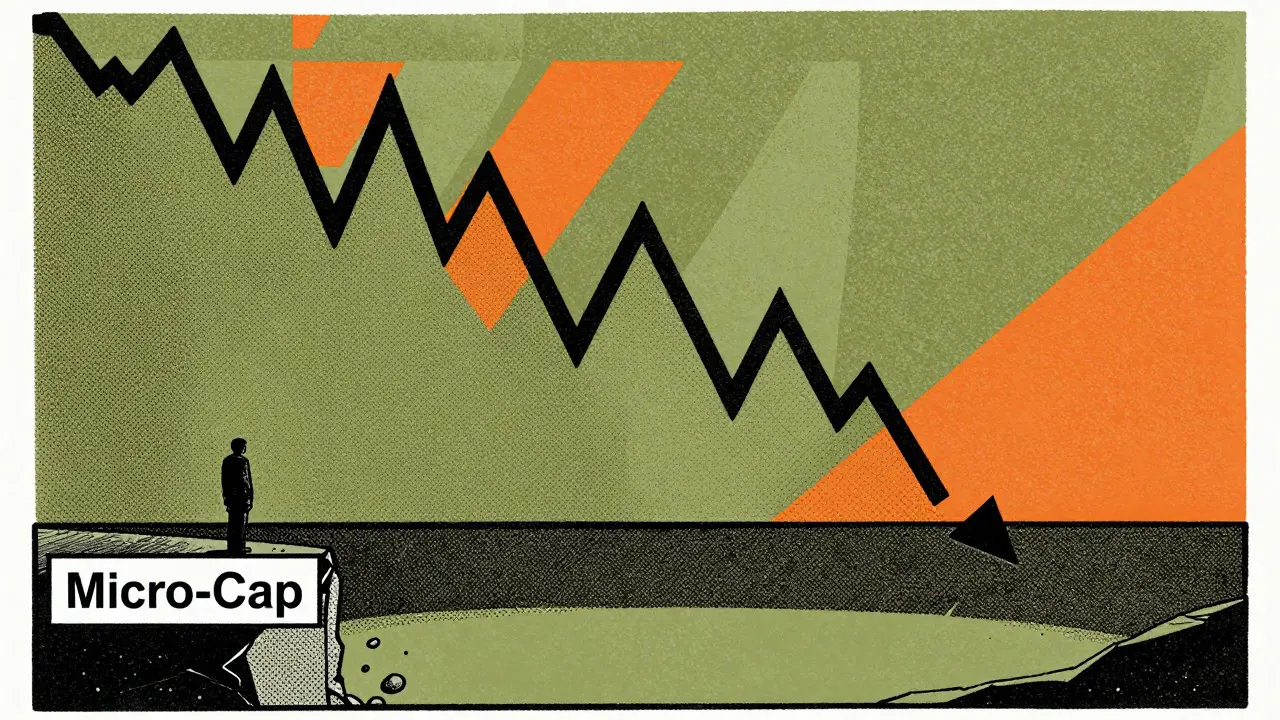
Notice the drop? From its January 2025 high of roughly $0.001191, the token fell by nearly 98% by late 2025. By March 2026, it was trading around $0.00000378. That’s not a dip; that’s a collapse in valuation. The market cap sits at a mere $3,780. To put that in perspective, most established cryptocurrencies have market caps in the millions or billions. A sub-$10k market cap means this is a micro-cap asset.
Why did this happen? Several factors likely contributed. First, the broader crypto market cooled off after the initial AI hype cycle of early 2025. Second, many AI-focused tokens struggled to show real revenue. Without consistent user growth or enterprise partnerships, investors moved their capital to safer bets. Third, the lack of listing on major centralized exchanges (CEXs) like Binance or Coinbase limited accessibility. Most trading happens on Raydium, a decentralized exchange, which often has lower volume and higher slippage.
Liquidity and Trading Risks
If you’re considering buying AIVIA, you need to understand liquidity risk. Liquidity refers to how easily you can buy or sell an asset without affecting its price. For AIVIA, liquidity is extremely thin.
In late 2025, the 24-hour trading volume on CoinGecko was reported at just $853.62. Yes, less than a thousand dollars a day. What does this mean for you? Imagine you want to sell $1,000 worth of AIVIA. With such low volume, your single sale could crash the price significantly because there aren’t enough buyers in the order book to absorb your sell order. This is known as slippage.
Conversely, if you’re trying to buy, you might end up paying much more than the displayed price because you’re eating through the available bids. This makes AIVIA a dangerous play for anyone who needs quick exit strategies. It’s a hold-and-hope scenario, not a trade-and-flip opportunity.
Future Roadmap: Multi-Chain Ambitions
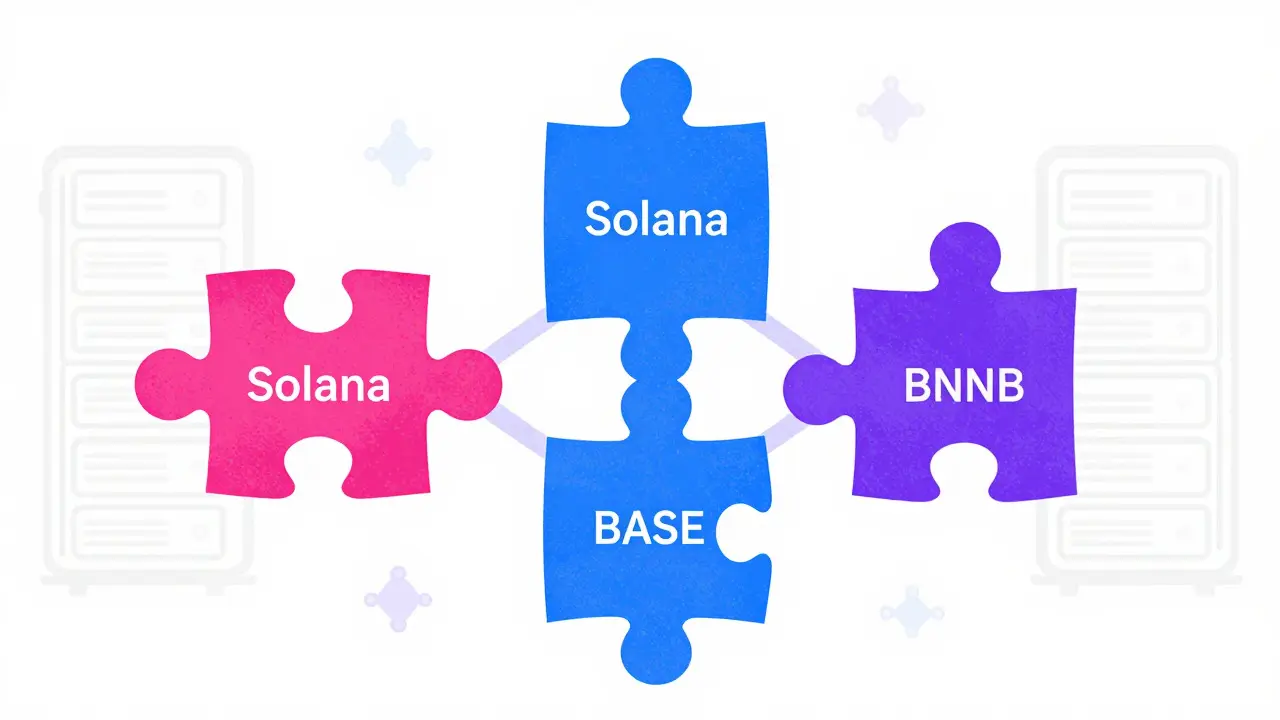
Despite the current struggles, the development team hasn’t disappeared. They’ve announced plans to expand beyond Solana. The roadmap includes integration with BASE (Coinbase’s Layer 2 network) and BNB Smart Chain.
Why is this important? Multi-chain operability allows AIVIA to tap into larger liquidity pools and different user bases. BASE attracts users familiar with Coinbase, while BNB Smart Chain has a massive community of DeFi users. If these integrations launch successfully, they could boost visibility and trading activity. However, as of mid-2026, these remain "planned." There are no confirmed launch dates. In crypto, "planned" often means "we hope to do this soon," which is very different from "live and working."
The team also emphasizes the Training Hub, where users can refine agent performance and earn AIVIA rewards. This gamification approach aims to keep the community engaged even when the token price is stagnant. But again, engagement metrics are scarce. Without transparent data on active users or daily transactions, it’s hard to verify if the hub is actually being used.
Is AIVIA Worth Your Attention?
Let’s be direct. AIVIA is a high-risk, highly speculative asset. It is not suitable for conservative investors. If you’re looking for stability, look elsewhere. But if you’re a degenerate trader who enjoys hunting for micro-caps with potential upside, here’s what you should weigh:
- The Bull Case: If the multi-chain expansion launches and gains traction, the low market cap could lead to rapid percentage gains. Even a small influx of capital could double or triple the price due to the thin float. The AI narrative remains strong in the long term, and if AIVIA delivers a genuinely useful product, it could carve out a niche.
- The Bear Case: The token has already lost 98% of its value. Momentum is gone. Liquidity is near zero. There’s no major exchange listing. The competition in the AI-agent space is fierce, with better-funded projects vying for the same attention. The risk of total loss is real.
Before you buy, ask yourself: Do I trust the team’s ability to execute the roadmap? Can I afford to lose 100% of this investment? If the answer to the second question is no, stick to blue-chip assets.
How to Trade AIVIA Safely (If You Must)
If you decide to take the plunge, follow these steps to minimize unnecessary losses:
- Use a Wallet Compatible with Solana: Since AIVIA is primarily on Solana, ensure your wallet (like Phantom or Solflare) supports SPL tokens.
- Trade on Raydium: This is the primary DEX for AIVIA/SOL pairs. Connect your wallet directly to Raydium’s interface.
- Check Liquidity Before Buying: Look at the order book depth. If the spread between buy and sell prices is wide, expect slippage.
- Start Small: Given the volatility, only invest what you can afford to lose completely. Treat it as venture capital, not savings.
- Monitor Official Channels: Follow the project’s official announcements for updates on BASE and BNB chain integrations. Beware of scams-always verify links from official sources.
Remember, past performance is not indicative of future results. The dramatic drop from 2025 to 2026 shows that even promising narratives can fail to sustain value without adoption.
What is the current price of AIVIA in 2026?
As of March 2026, AIVIA was trading at approximately $0.00000378. Prices fluctuate rapidly due to low liquidity, so check real-time data on Raydium or CoinGecko before trading.
Is AIVIA a good investment?
AIVIA is considered a high-risk, speculative micro-cap cryptocurrency. It has experienced a 98% decline from its all-time high. It may offer high returns if the project succeeds, but there is a significant risk of total loss. Only invest what you can afford to lose.
Which blockchain is AIVIA built on?
AIVIA is primarily built on the Solana blockchain. The team has announced plans to expand to BASE and BNB Smart Chain, but these integrations were still in the planning stage as of mid-2026.
Where can I buy AIVIA tokens?
AIVIA is traded on decentralized exchanges (DEXs), primarily Raydium. It is not listed on major centralized exchanges like Binance or Coinbase as of 2026.
What is the total supply of AIVIA?
The total supply of AIVIA is 1 billion tokens, and all of them are currently in circulation. There are no additional tokens to be minted.
Why did AIVIA’s price drop so much?
The price drop is attributed to broader market cooling, lack of widespread adoption, low liquidity, and intense competition in the AI-crypto sector. The token fell from its January 2025 peak due to decreased investor confidence and trading volume.
Does AIVIA have real-world use cases?
Theoretically, yes. AIVIA aims to enable autonomous AI agents for industries like healthcare and e-commerce. However, as of 2026, there is limited public evidence of large-scale enterprise adoption or significant user activity on the platform.
What is the AI Agent Marketplace?
It is a central hub within the AIVIA ecosystem where users can discover, deploy, and interact with various AI virtual agents. Developers can also monetize their agents through this marketplace.