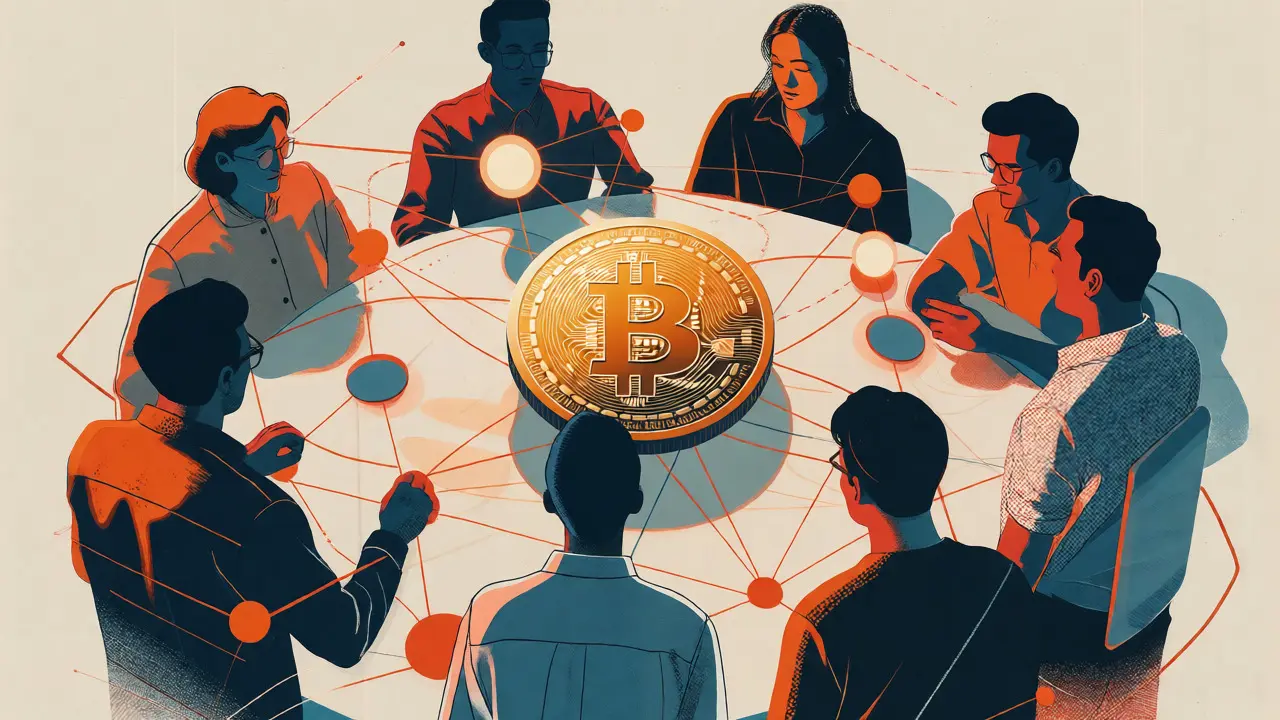
You’ve probably heard the term Bitcoin thrown around in finance news, tech podcasts, or even casual dinner conversations. Maybe someone told you it’s “digital gold,” while another friend warned you it’s a bubble waiting to burst. So, what actually is this thing? At its core, Bitcoin (BTC) is a decentralized digital currency that allows people to send money directly to each other without needing a bank, government, or payment processor like PayPal. It’s not just a coin; it’s a global network of computers working together to keep track of who owns what.
Think of it less like a traditional bank account and more like a shared public ledger that no single person controls. This system was invented in 2008 by an anonymous creator using the pseudonym Satoshi Nakamoto. The goal wasn’t just to create new money, but to fix a fundamental problem: how do you trust strangers with your value when there’s no middleman to referee? Bitcoin solves this through math and code rather than laws and institutions. If you’re wondering whether it’s worth your time or money, understanding how it works is the first step before making any decisions.
The Core Idea: Why We Need Bitcoin
Traditional money relies on trust. When you swipe your credit card, you trust the bank to process the transaction correctly. When you deposit cash, you trust the government to keep its value stable. But these systems have flaws. Banks can freeze accounts, governments can print too much money causing inflation, and cross-border transfers can take days and cost a fortune in fees.
Bitcoin removes the need for trusted third parties. Instead of asking a bank if a transaction is valid, the entire network checks it against a set of strict rules. This makes it censorship-resistant, meaning no government can easily stop you from sending money to someone else. It also creates digital scarcity, because unlike fiat currencies which can be printed endlessly, Bitcoin has a hard cap on how many coins will ever exist.
This doesn’t mean Bitcoin is perfect. It’s volatile, meaning its price swings wildly. It’s irreversible, so if you send money to the wrong address, there’s no customer service number to call. But for millions of people, especially those in countries with unstable economies, the ability to hold wealth outside the control of local banks is a powerful feature.
How Does It Actually Work?
To understand Bitcoin, you need to grasp three main concepts: the Blockchain, Mining, and Private Keys.
The Blockchain: Imagine a notebook where every transaction ever made is recorded. This notebook is public, so anyone can read it, but once a page is written, it cannot be erased or changed. This chain of records is called the blockchain. Each "page" is a block containing a batch of transactions. These blocks are linked together chronologically, creating a secure history of ownership.
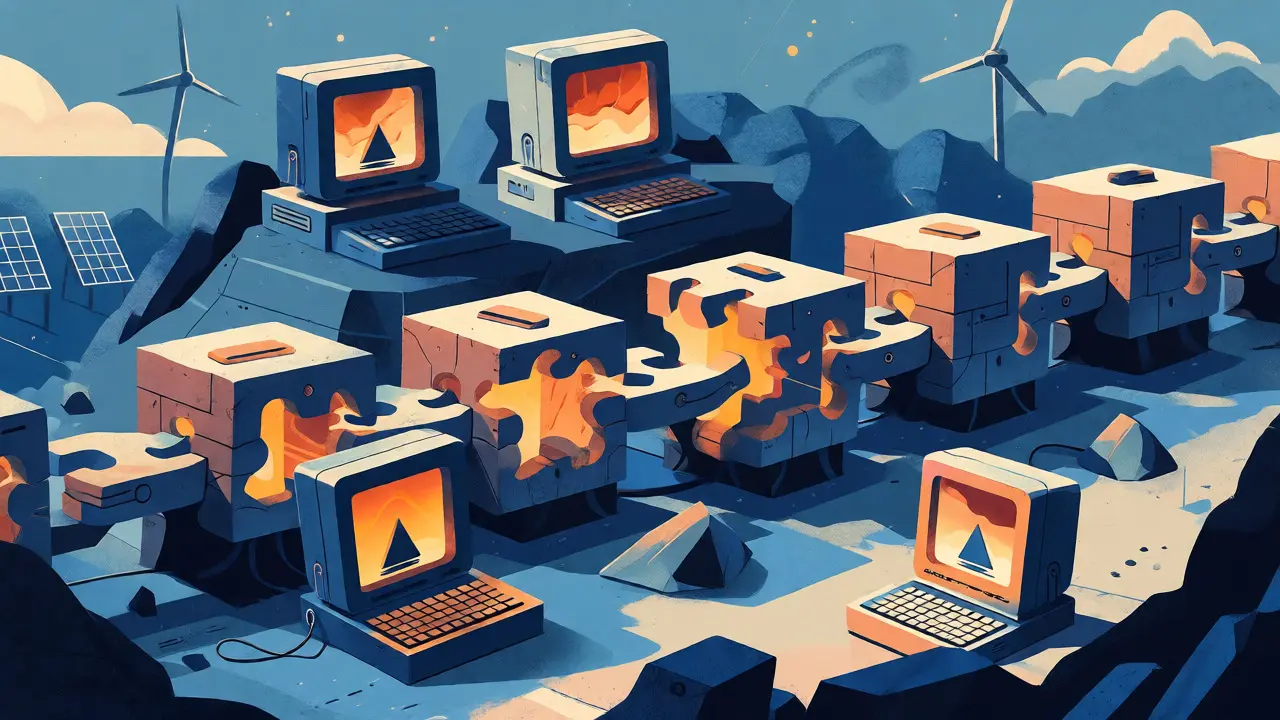
Mining: Who writes these pages? Miners. They use powerful computers to solve complex mathematical puzzles. The first miner to solve the puzzle gets to add the next block to the chain and is rewarded with newly created Bitcoin. This process, known as Proof-of-Work, secures the network. To cheat the system, a hacker would need to control more than half of all the computing power in the world, which is incredibly expensive and difficult.
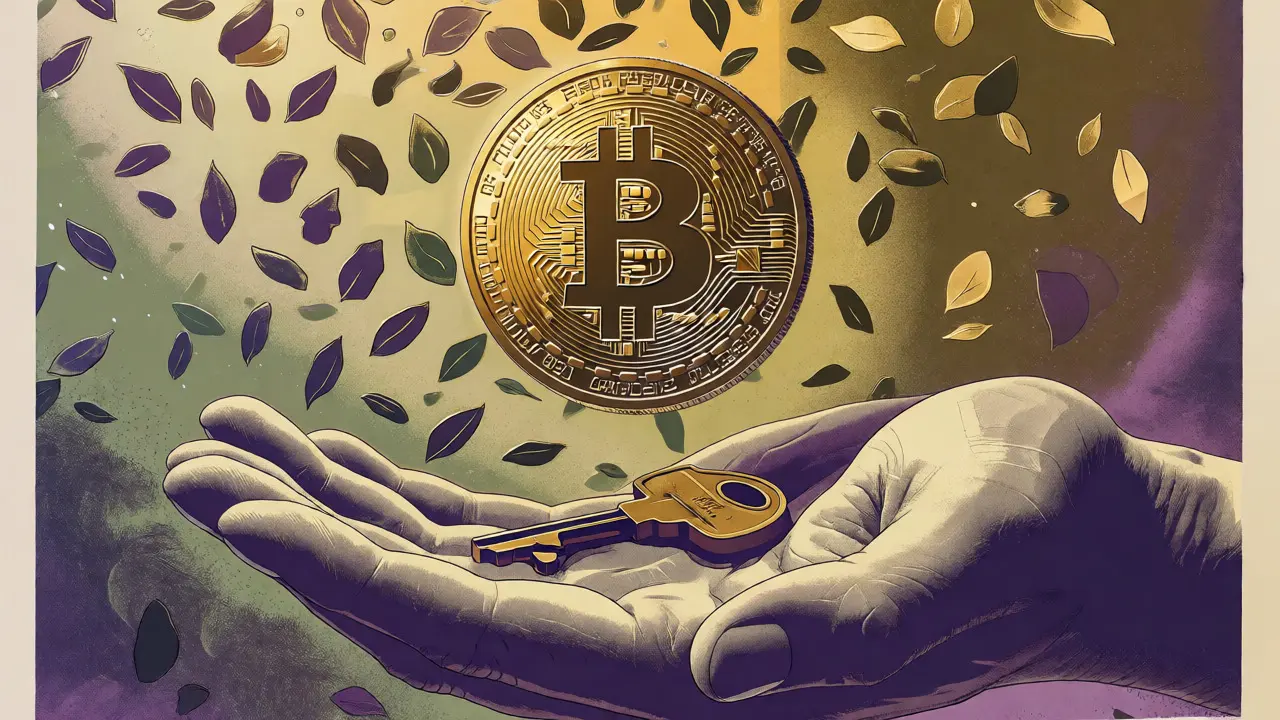
Private Keys: You don’t store Bitcoin in a physical wallet. You own it by holding a private key-a long string of random characters that acts like a password. Only the holder of the private key can spend the Bitcoin associated with it. If you lose this key, you lose your money forever. There is no "forgot password" link in Bitcoin.
Why Is Bitcoin Limited to 21 Million Coins?
One of Bitcoin’s most famous features is its fixed supply. There will never be more than 21 million BTC. This limit is hardcoded into the software. As of October 2026, approximately 20.1 million bitcoins have already been mined. The remaining coins will be released slowly over time until around the year 2140.
How does the supply slow down? Through an event called the halving. Every four years (or after 210,000 blocks), the reward miners receive for adding a new block is cut in half. In 2024, the last halving reduced the block reward to 3.125 BTC. This predictable reduction in supply is why many investors compare Bitcoin to gold-it’s scarce, and you can’t just dig up more of it whenever you want.
| Period | Block Reward | Key Event |
|---|---|---|
| 2009-2012 | 50 BTC | Genesis Block Mined |
| 2012-2016 | 25 BTC | First Halving |
| 2016-2020 | 12.5 BTC | Second Halving |
| 2020-2024 | 6.25 BTC | Third Halving |
| 2024-Present | 3.125 BTC | Fourth Halving |
Is Bitcoin Money or Just an Asset?
This is the big debate. Technically, Bitcoin functions as both, but not equally well in today’s economy.
As a Store of Value: Many people treat Bitcoin like "digital gold." They buy it and hold it for years, hoping its value rises against traditional currencies like the US Dollar. Since its launch in 2009, Bitcoin has seen massive growth, though it comes with extreme volatility. On October 11, 2026, one BTC traded at roughly $82,715. While impressive, prices can drop 50% or more in a bear market, making it risky for short-term savings.
As a Medium of Exchange: Can you buy coffee with it? Yes, but it’s not always practical on the main network. Bitcoin transactions can take 10 minutes to confirm and may cost several dollars in fees during busy periods. For small purchases, this is inefficient. However, second-layer solutions like the Lightning Network allow for instant, low-cost payments. By late 2025, the Lightning Network had processed billions of dollars in volume, proving that Bitcoin can handle retail transactions if used correctly.
Most users today interact with Bitcoin primarily as an investment asset rather than daily spending money. El Salvador made headlines by adopting it as legal tender, but widespread day-to-day usage remains limited compared to traditional banking apps.
Risks and Downsides You Should Know
Bitcoin isn’t magic. It carries significant risks that every potential buyer should understand.
- Volatility: The price changes rapidly. What looks like a great entry point today could be a loss tomorrow. Historical data shows annualized volatility often exceeds 80%, far higher than stocks or bonds.
- Custody Risk: "Not your keys, not your coins." If you leave Bitcoin on an exchange, you rely on them to stay solvent and secure. Exchanges have gone bankrupt (like FTX) or been hacked. If you hold your own keys, you must protect them from theft, loss, or damage.
- Regulatory Uncertainty: Governments are still figuring out how to tax and regulate crypto. Rules vary by country and can change suddenly. In the US, the SEC approved spot Bitcoin ETFs in 2024, bringing institutional money in, but they also warn that Bitcoin is highly speculative.
- Environmental Concerns: Mining requires electricity. Estimates suggest Bitcoin mining consumes around 138-190 TWh annually, comparable to medium-sized countries. Critics argue this carbon footprint is excessive, while supporters point out that much mining uses stranded renewable energy.
How to Get Started Safely
If you decide to explore Bitcoin, start small and prioritize security. Here’s a simple roadmap:
- Choose a Reputable Exchange: Use a well-known platform like Coinbase, Kraken, or Binance. Ensure they operate legally in your region.
- Buy Small: Start with an amount you can afford to lose completely. Never invest rent money.
- Withdraw to Self-Custody: For larger amounts, move your Bitcoin off the exchange. Use a hardware wallet (like Ledger or Trezor) for maximum security.
- Back Up Your Seed Phrase: When you set up a wallet, you’ll get a list of 12-24 words. Write these down on paper or metal. Never store them digitally or take a photo. If you lose this phrase, you lose your funds.
- Understand Taxes: Selling or trading Bitcoin often triggers a taxable event. Keep records of your buys and sells.
Remember, Bitcoin is a technology, not a guaranteed get-rich-quick scheme. Its value comes from its network effect-more people using it makes it more useful and secure. Whether it becomes the world’s reserve currency or just a niche digital asset, understanding the mechanics puts you ahead of the hype.
Can I buy less than one Bitcoin?
Yes. Bitcoin is divisible up to eight decimal places. The smallest unit is called a satoshi (one hundred millionth of a bitcoin). You can buy $10 worth of BTC, which would be a tiny fraction of a whole coin.
Is Bitcoin anonymous?
No, it is pseudonymous. Transactions are public on the blockchain. While names aren't attached directly, advanced analysis can often link addresses to real-world identities, especially when interacting with regulated exchanges that require KYC (Know Your Customer) verification.
What happens if I forget my password?
If you hold your own keys, there is no password recovery. You must use your seed phrase to restore access. If you lose both your device and your seed phrase, your Bitcoin is lost forever. If you use an exchange, their support team might help you reset your login, but you don't control the underlying keys.
How long does a Bitcoin transaction take?
On the main network, a transaction typically waits about 10 minutes to be included in a block. For high-value transfers, many wait for six confirmations (roughly one hour) for finality. Using the Lightning Network, payments can be instant.
Who controls Bitcoin?
No single entity controls Bitcoin. It is maintained by a global community of developers, miners, and node operators. Changes to the protocol require broad consensus among these groups. If everyone agrees to upgrade, the network continues; if not, it splits (a hard fork).