Imagine losing half a billion dollars because of a single line of bad code. It sounds like a movie plot, but in the world of blockchain technology, it is a recurring reality. Since 2014, attackers have stolen over $3 billion by exploiting vulnerabilities in smart contracts. These are self-executing agreements written in code that run on decentralized networks. When they fail, there is no customer support hotline to call. There is no bank manager to reverse the transaction. The money is gone.
Understanding these historical breaches is not just about reading crime reports. It is about learning how the industry evolved from a "wild west" era into a more secure ecosystem. By looking at the biggest hacks-from the foundational errors of 2016 to the sophisticated state-sponsored attacks of 2022-we can see exactly where the cracks lie and how developers and users protect themselves today.
The Dark Age: How The DAO Changed Everything
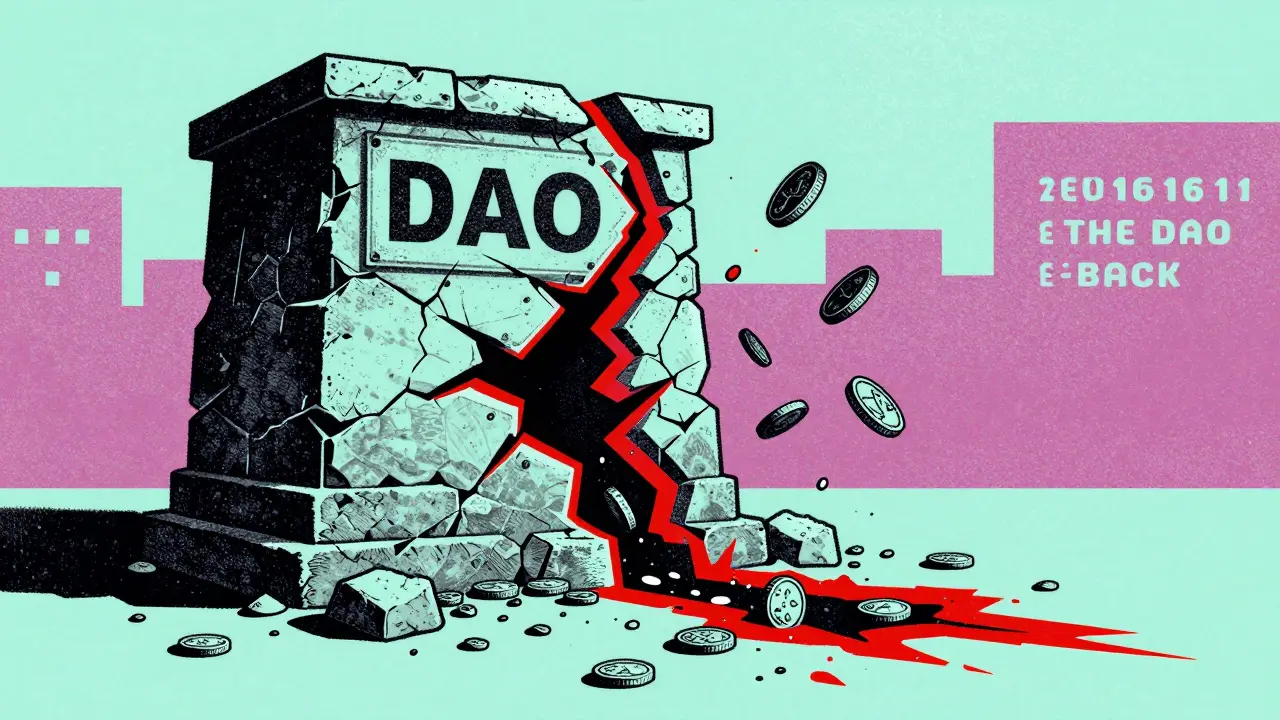
To understand modern security, you have to look back at 2016. This was the year The DAO was hacked. The DAO was an ambitious experiment: a decentralized autonomous organization designed to function as a venture capital fund without human intervention. It raised over $150 million in Ether, making it one of the largest crowdfunding events in history at the time.
The vulnerability was simple yet devastating. A flaw in the contract’s code allowed an attacker to recursively split the organization, siphoning off funds before the balance could be updated. In total, about $50 million worth of Ether was stolen. This wasn’t just a financial loss; it was an existential crisis for the Ethereum network. The community faced a impossible choice: let the theft stand and uphold the principle of "code is law," or change the rules of the blockchain to recover the funds.
They chose to fork the chain, creating Ethereum (ETH) and leaving behind Ethereum Classic (ETC). This event proved that even well-funded, heavily reviewed projects could harbor critical flaws. Security researcher Peter Vessenes had warned months earlier that Ethereum contracts would be "candy for hackers." He was right. The aftermath led to the creation of professional auditing firms and established the baseline for smart contract security standards we still use today.
Programming Errors: When Typos Cost Millions
Not every hack involves complex cryptography or nation-state actors. Some of the most expensive losses come from basic human error. Consider the Rubixi incident in 2016. The team renamed their smart contract but forgot to update the constructor name in the code. In Solidity, the programming language used for Ethereum, this mistake accidentally made the owner-setting function public. Anyone could call it, claim ownership, and drain the wallet. They lost $70,000 in minutes.
This pattern repeated itself across the early years. Manuel Araoz from OpenZeppelin described this period as the "Dark Age" of smart contract security, noting that contracts were riddled with poor practices. Developers were rushing to build features without understanding the irreversible nature of blockchain transactions. A missing check, an unupdated variable, or a logic loop could open the doors to thieves. These incidents taught the industry a hard lesson: testing must be exhaustive, and code must be verified by third parties before deployment.
The Bridge Problem: Cross-Chain Vulnerabilities
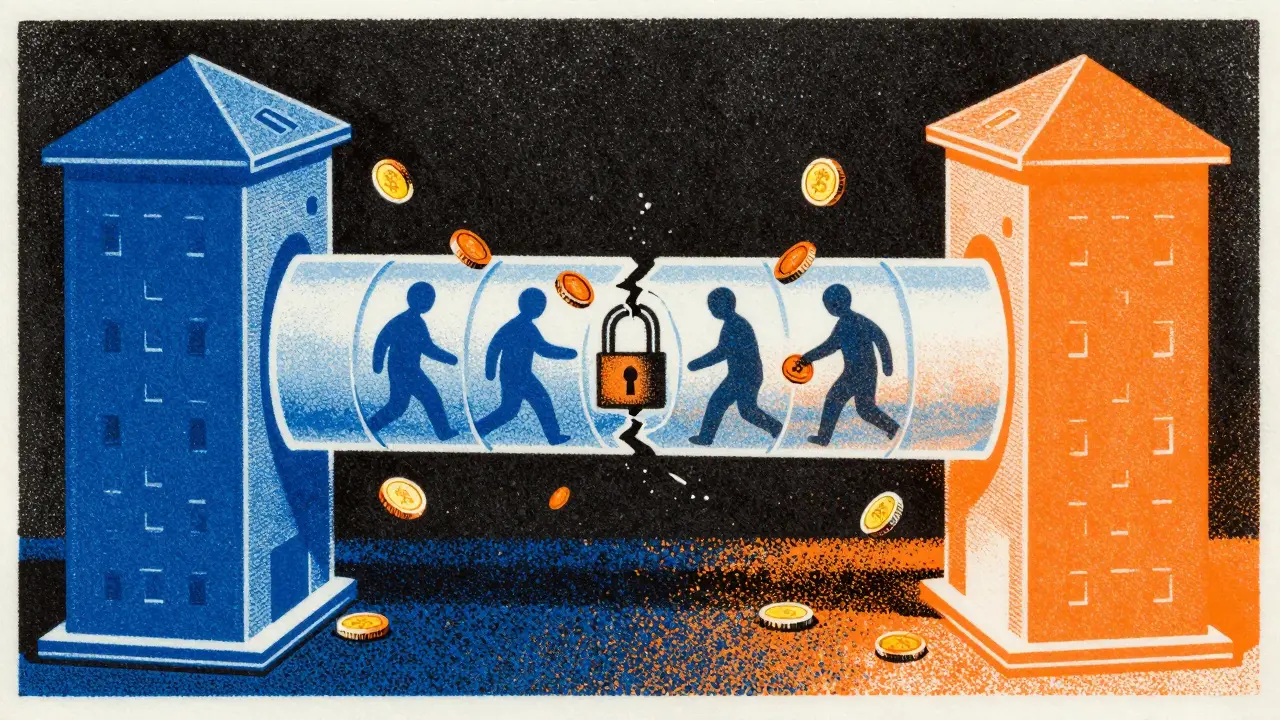
As the crypto ecosystem grew, different blockchains emerged-Ethereum, Binance Smart Chain, Solana, and others. To move assets between them, developers built cross-chain bridges. These protocols act as tunnels, locking tokens on one chain and minting equivalent tokens on another. Unfortunately, these bridges became the weakest link in the chain, accounting for roughly 40% of all smart contract losses in 2022.
The complexity of bridging two entirely different systems creates multiple points of failure. If the bridge’s validation logic is flawed, attackers can mint tokens out of thin air. This is exactly what happened with the Wormhole hack in February 2022. Attackers found a way to bypass the collateral requirement, minting 120,000 wrapped ETH (wETH) without depositing any real Ether. They then swapped these fraudulent tokens for legitimate assets, stealing $326 million. Wormhole offered a $10 million bounty for the return of the funds, but the hacker ignored it.
Similarly, the Nomad Bridge suffered a $190 million loss in August 2022. What made Nomad unique was its "crowd-sourced" nature. Once the initial exploit was discovered, the vulnerability was so easy to replicate that hundreds of other users joined in to drain the protocol. It turned into a digital mob looting scenario, highlighting how quickly decentralized systems can collapse when trust is broken.
| Incident | Date | Amount Lost | Vulnerability Type | Key Lesson |
|---|---|---|---|---|
| The DAO | June 2016 | $50 Million | Reentrancy Attack | Code reviews are essential; forks are controversial. |
| Rubixi | July 2016 | $70,000 | Constructor Naming Error | Basic syntax checks prevent catastrophic access issues. |
| Coincheck | Jan 2018 | $532 Million | Hot Wallet Compromise | Cold storage is mandatory for large reserves. |
| Poly Network | Aug 2021 | $611 Million | Access Control Flaw | Attackers may return funds if motivated by ego/challenge. |
| Ronin Network | March 2022 | $625 Million | Validator Key Compromise | Nation-state actors target high-value infrastructure. |
| Wormhole | Feb 2022 | $326 Million | Collateral Verification Bypass | Bridges require rigorous formal verification. |
Sophisticated Attacks: State Actors and Gaming Platforms
While early hacks were often committed by lone wolves, the landscape has shifted toward organized crime and state-sponsored groups. The largest smart contract hack in history occurred in March 2022 against the Ronin Network. Ronin supports Axie Infinity, a popular blockchain game. Attackers compromised five of the nine validator keys required to authorize transactions on the network.
This breach was attributed to the Lazarus Group, a North Korean hacking collective. They stole $625 million worth of Ether and USDC. Unlike typical cybercriminals who seek quick profit, state actors have unlimited resources and patience. They targeted the infrastructure layer itself, showing that even highly secure networks can fall if key management is weak. The U.S. Treasury subsequently sanctioned the addresses involved, marking a significant step in regulatory response.
Another notable case is the Poly Network hack in August 2021. A hacker exploited a vulnerability to steal over $611 million. However, instead of running, the attacker engaged in a dialogue with the Poly team and returned most of the funds. The hacker claimed the attack was "for fun" and to prove a point about security weaknesses. This incident highlighted the psychological dimension of crypto crimes, where reputation and challenge sometimes outweigh pure financial gain.
Exchange Breaches vs. Smart Contract Exploits
It is important to distinguish between smart contract hacks and exchange breaches. The Coincheck incident in January 2018 resulted in the theft of $532 million in NEM coins. However, this was not a smart contract exploit. Coincheck stored user funds in "hot wallets" connected to the internet, which were compromised by malware. Similarly, the infamous Mt. Gox collapse in 2014 involved centralized database failures rather than code vulnerabilities.
These events shaped user behavior significantly. After Mt. Gox, many users moved away from trusting centralized exchanges with long-term holdings. The rise of hardware wallets and self-custody solutions directly correlates with these historical losses. Users learned that "not your keys, not your coins" is not just a slogan, but a survival strategy.

The Evolution of Defense: Audits and Formal Verification
In response to these breaches, the industry has matured rapidly. Professional security auditing is now a standard phase in development. Firms like Trail of Bits, ConsenSys Diligence, and OpenZeppelin charge between $100,000 and $500,000 for comprehensive audits. Major protocols allocate 15-20% of their development budgets to security.
Techniques have also advanced. Early days relied on manual code review. Today, teams use formal verification tools that mathematically prove a contract behaves as intended under all conditions. Automated scanners detect common patterns like reentrancy or integer overflow. Additionally, bug bounty programs incentivize white-hat hackers to find flaws before malicious actors do.
Regulatory pressure has also accelerated adoption. The European Union’s MiCA regulation requires operational resilience plans for crypto service providers. Japan tightened exchange security laws after Coincheck. These frameworks force companies to prioritize security over speed-to-market.
What This Means for You Today
If you are interacting with DeFi protocols, here is how to stay safe:
- Use Established Protocols: Stick to platforms with a long track record and multiple independent audits.
- Check for Bug Bounties: Active bug bounty programs indicate a project values security and has external eyes on its code.
- Limit Exposure: Never keep more funds in a smart contract interaction than necessary. Use multi-signature wallets for large amounts.
- Understand Bridges: Be cautious with cross-chain bridges. They remain the highest-risk component in the ecosystem. Consider using native assets on each chain instead of bridged versions when possible.
- Stay Updated: Follow security news. New vulnerabilities emerge regularly, and awareness is your first line of defense.
The history of smart contract hacks is a story of trial and error. Each breach exposed a weakness, leading to stronger defenses. While the threat landscape evolves-with AI-driven attacks and increasingly complex DeFi compositions-the core principles remain: verify the code, secure the keys, and never trust blindly.
What was the largest smart contract hack in history?
The largest smart contract hack occurred in March 2022 when the Ronin Network was compromised. Attackers, linked to the North Korean Lazarus Group, stole approximately $625 million worth of Ether and USDC by compromising validator keys.
Why are cross-chain bridges so vulnerable?
Cross-chain bridges connect two different blockchain networks, requiring complex logic to validate transactions across systems. This complexity creates multiple potential points of failure. If the validation mechanism is flawed, attackers can mint tokens without providing collateral, as seen in the Wormhole and Nomad hacks.
Did the Poly Network hacker return the stolen funds?
Yes. The hacker who exploited Poly Network in August 2021 stole over $611 million but returned most of the funds. The attacker claimed the hack was conducted "for fun" and to highlight security weaknesses, rather than for pure financial gain.
How did The DAO hack affect Ethereum?
The DAO hack in 2016 led to a controversial hard fork of the Ethereum blockchain. The majority of the community voted to revert the transactions to recover the stolen funds, resulting in the creation of Ethereum (ETH) and the preservation of the original chain as Ethereum Classic (ETC).
What is the difference between a smart contract hack and an exchange hack?
A smart contract hack involves exploiting vulnerabilities in the code of a decentralized application or protocol. An exchange hack, like Coincheck or Mt. Gox, typically involves compromising centralized servers, databases, or hot wallets where user funds are stored by a company.
How much do professional smart contract audits cost?
Professional smart contract audits from reputable firms like Trail of Bits or OpenZeppelin typically range from $100,000 to $500,000, depending on the complexity of the code and the depth of the review required.
Are smart contracts safer now than in 2016?
Yes, significantly. The industry has adopted standardized libraries, automated testing tools, formal verification methods, and mandatory third-party audits. However, as protocols become more complex, new attack vectors continue to emerge, requiring constant vigilance.