You’ve probably seen the name Grok Imagine Penguin (PENGU) pop up on a social media feed or a crypto tracker. It sounds like it belongs to the same family as the popular AI chatbot Grok or the massive NFT project Pudgy Penguins. But here is the hard truth: this specific token is not an investment opportunity. It is a low-value meme coin with virtually no market significance, designed to confuse investors who are looking for the real thing.
If you are holding a bag of PENGU tokens or thinking about buying them because they look "cheap," you need to pause. The numbers behind this project tell a story of abandonment and negligible utility. Let’s break down exactly what this token is, why it exists, and how it differs from the legitimate projects sharing its ticker symbol.
The Reality Behind the Numbers
To understand why Grok Imagine Penguin is an Ethereum-based ERC-20 meme token with no fundamental value, we have to look at the data. In the world of cryptocurrency, supply and demand dictate price. Most serious projects have supplies in the millions or billions. Grok Imagine Penguin has a supply of 420 quadrillion tokens (420,000,000,000,000,000).
Why such a huge number? It’s a psychological trick common in meme coins. By creating a supply that is astronomically high, the per-token price becomes infinitesimally small. As of late 2025, the price hovered around $0.00000000000000106 USD. That is fourteen zeros after the decimal point before you hit a digit. At that price, your entire life savings wouldn’t even buy you a single whole token.
More importantly, look at the market capitalization. While major cryptocurrencies boast billions in market cap, Grok Imagine Penguin had a market cap of just $358.89 USD. Its 24-hour trading volume was roughly $2.72. This means almost nobody is buying or selling it. There is no liquidity. If you somehow managed to acquire these tokens, you would likely find it impossible to sell them without crashing the price to zero instantly.
| Metric | Value | Implication |
|---|---|---|
| Total Supply | 420 Quadrillion | Inflated artificially to make price seem low |
| Market Cap | ~$358 USD | Negligible; indicates no investor interest |
| 24h Volume | ~$2.72 USD | No liquidity; extremely difficult to trade |
| Blockchain | Ethereum (ERC-20) | High gas fees relative to token value |
The Name Confusion: Grok, Penguins, and Tickers
The biggest danger with this token isn't just its lack of value-it's the confusion it creates. The name "Grok Imagine Penguin" mashes together two very hot topics in crypto: Grok (the AI assistant developed by xAI, Elon Musk's company) and Pudgy Penguins (a successful NFT collection and ecosystem).
However, Grok Imagine Penguin has no official connection to either. It does not integrate with Grok’s AI capabilities. It is not part of the Pudgy Penguins brand. It simply uses similar keywords to attract clicks from people searching for those legitimate entities.
This is a classic tactic in the "copycat" meme coin space. Creators launch tokens with names that sound like established brands, hoping retail investors will buy them by mistake. The marketing copy for this token claims it "blends icy cool logic with sharp innovation," but there is no code, no whitepaper, and no technology to back up those words. It is pure speculation wrapped in buzzwords.
Grok Imagine PENGU vs. Pudgy Penguins (PENGU)
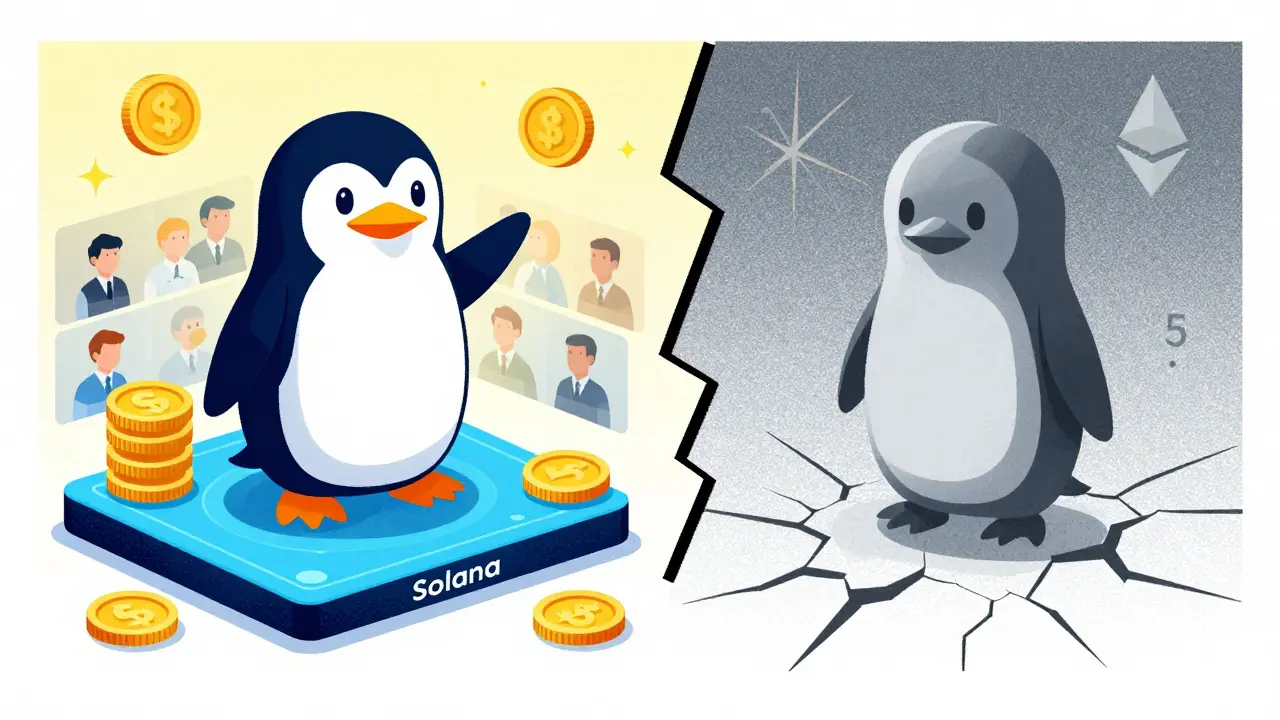
The most critical distinction you must make is between Grok Imagine Penguin and Pudgy Penguins. Both use the ticker symbol **PENGU**, but they are worlds apart in terms of legitimacy, blockchain, and value.
Pudgy Penguins is a legitimate, high-profile project. Launched in December 2024, it operates on the Solana blockchain. It has a total supply of ~88 billion tokens, launched with a price of $0.068, and reached a market cap of over $2 billion. It is backed by an active community, real-world merchandise, and strategic partnerships. You can buy it on major centralized exchanges like Binance.
In contrast, Grok Imagine Penguin operates on Ethereum. It has no exchange listings outside of obscure decentralized trackers. It has no community. It has no utility. When you see "PENGU" on a chart, you must check the contract address and the blockchain network. If it’s on Ethereum and costs fractions of a penny, it is likely the worthless Grok Imagine version, not the Solana-based Pudgy Penguins token.
| Feature | Grok Imagine Penguin | Pudgy Penguins |
|---|---|---|
| Blockchain | Ethereum (ERC-20) | Solana (SPL) |
| Market Cap | ~$358 (Negligible) | Billions (Top 100 Crypto) |
| Supply | 420 Quadrillion | ~88 Billion |
| Legitimacy | Meme/Speculative Copycat | Established Brand/Ecosystem |
| Exchange Listings | None (DEX only) | Binance, Coinbase, etc. |
How to Check if You Hold the Wrong Token
If you think you own PENGU tokens, you need to verify which one you actually hold. Here is how to do it safely:
- Check the Blockchain: Open your wallet (like MetaMask). Are you on the Ethereum network or the Solana network? If you are on Ethereum and holding a token called "Penguin" or "Grok Penguin," be very skeptical.
- Verify the Contract Address: The contract address for Grok Imagine Penguin starts with
0x220d...83490b. Compare this to the official Pudgy Penguins contract address on Solana. They will look completely different. - Look at Liquidity: Try to swap a tiny amount on a decentralized exchange like Uniswap. If the slippage is massive or the transaction fails due to insufficient liquidity, you are dealing with a dead token.
Adding the Grok Imagine Penguin token to your wallet is technically easy-you just paste the contract address into MetaMask. But doing so serves no purpose other than cluttering your portfolio with a digital asset that has no path to recovery or growth.
Why These Tokens Exist
You might wonder why anyone creates a token like Grok Imagine Penguin. The answer is usually simple: quick profit through deception or hope. Developers create these tokens with minimal effort. They deploy a basic ERC-20 smart contract on Ethereum, mint a quadrillion tokens, and list them on a decentralized exchange with a tiny amount of liquidity.
They then promote the token on social media using hashtags related to AI (#Grok) and popular NFTs (#Penguins). Early buyers might see a temporary spike if enough people fall for the hype. Once the initial wave of confused buyers passes, the developers often abandon the project. The liquidity dries up, the price crashes, and the remaining holders are left with worthless digits.
This is known as a "rug pull" or a "scam coin" in its mildest form. Even if the developers didn't steal the liquidity pool directly, the token is still a financial trap. It relies entirely on new victims buying in to pay off earlier sellers. With a market cap of less than $400, there is no room for sustainable growth.
Red Flags to Watch For
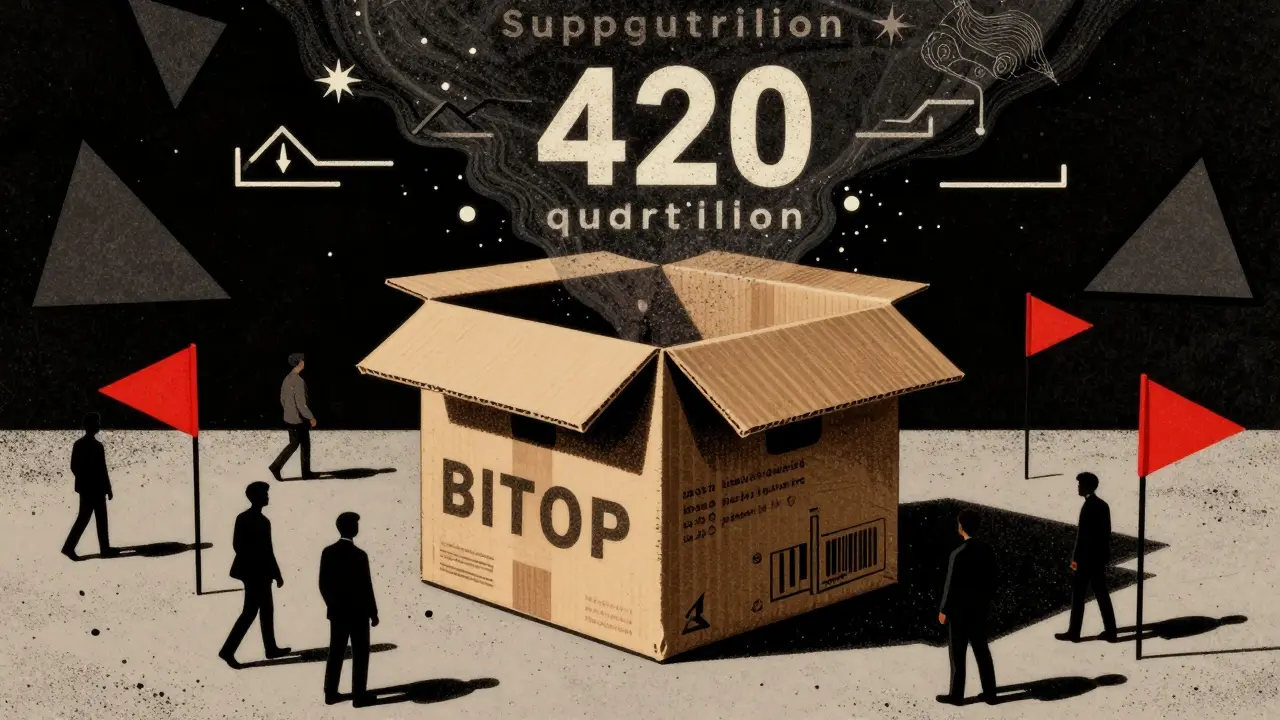
When evaluating any new crypto project, especially meme coins, look for these warning signs that were present in the Grok Imagine Penguin case:
- Astronomical Supply: Supplies in the trillions or quadrillions are almost always a sign of a meme coin with no utility. Legitimate projects rarely exceed billions unless they are stablecoins.
- Name Mimicry: Does the name sound like a mix of two famous brands? This is a tactic to hijack search traffic.
- No Whitepaper or Roadmap: Serious projects explain their technology and future plans. Grok Imagine Penguin offered only vague marketing slogans about "icy cool logic."
- Lack of Social Presence: No active Twitter account, no Telegram group, no Reddit community. If you can’t find a human team discussing development, run away.
- Micro Market Cap: If the total value of all tokens is less than $1,000, it is not an investment. It is a lottery ticket with odds against you.
Conclusion: Protect Your Capital
Grok Imagine Penguin (PENGU) is a cautionary tale in the crypto space. It demonstrates how easily new investors can be misled by familiar names and ticker symbols. While the Pudgy Penguins project on Solana represents a vibrant, high-value ecosystem, the Ethereum-based Grok Imagine Penguin is a hollow shell.
There is no hidden potential here. There is no upcoming AI integration. There is no secret partnership. It is a static ERC-20 token with a quadrillion supply and near-zero liquidity. If you encounter this token, treat it as noise. Focus your research on projects with transparent teams, verifiable utility, and healthy market metrics. In crypto, if something looks too cheap to be true-and especially if it tries to ride the coattails of bigger brands-it probably is.
Is Grok Imagine Penguin (PENGU) a scam?
While it may not be a direct "rug pull" where developers steal funds, it functions as a speculative trap. It has no utility, no team, and negligible value. It mimics legitimate brands to attract buyers, making it highly risky and likely worthless in the long term.
What is the difference between Grok Imagine PENGU and Pudgy Penguins PENGU?
Pudgy Penguins is a legitimate, high-market-cap token on the Solana blockchain associated with a major NFT brand. Grok Imagine Penguin is a low-value meme coin on the Ethereum blockchain with no official connection to the Pudgy Penguins brand or the AI tool Grok.
Can I buy Grok Imagine Penguin on Binance or Coinbase?
No. Grok Imagine Penguin is not listed on major centralized exchanges like Binance or Coinbase. It only appears on obscure decentralized exchange (DEX) trackers, indicating a lack of regulatory compliance and investor trust.
Why does Grok Imagine Penguin have such a high supply?
The supply of 420 quadrillion is a common meme coin tactic. By inflating the supply, the price per token appears extremely low (fractions of a cent), which psychologically tricks investors into thinking the token is "cheap" and has room to grow, despite having no actual value.
How do I remove Grok Imagine Penguin from my MetaMask wallet?
You can hide the token in MetaMask by clicking on it, selecting "Hide Token," or removing it from your watchlist. Note that hiding it does not delete the tokens from the blockchain, but it cleans up your interface. Since the tokens have no value, there is no benefit to keeping them visible.