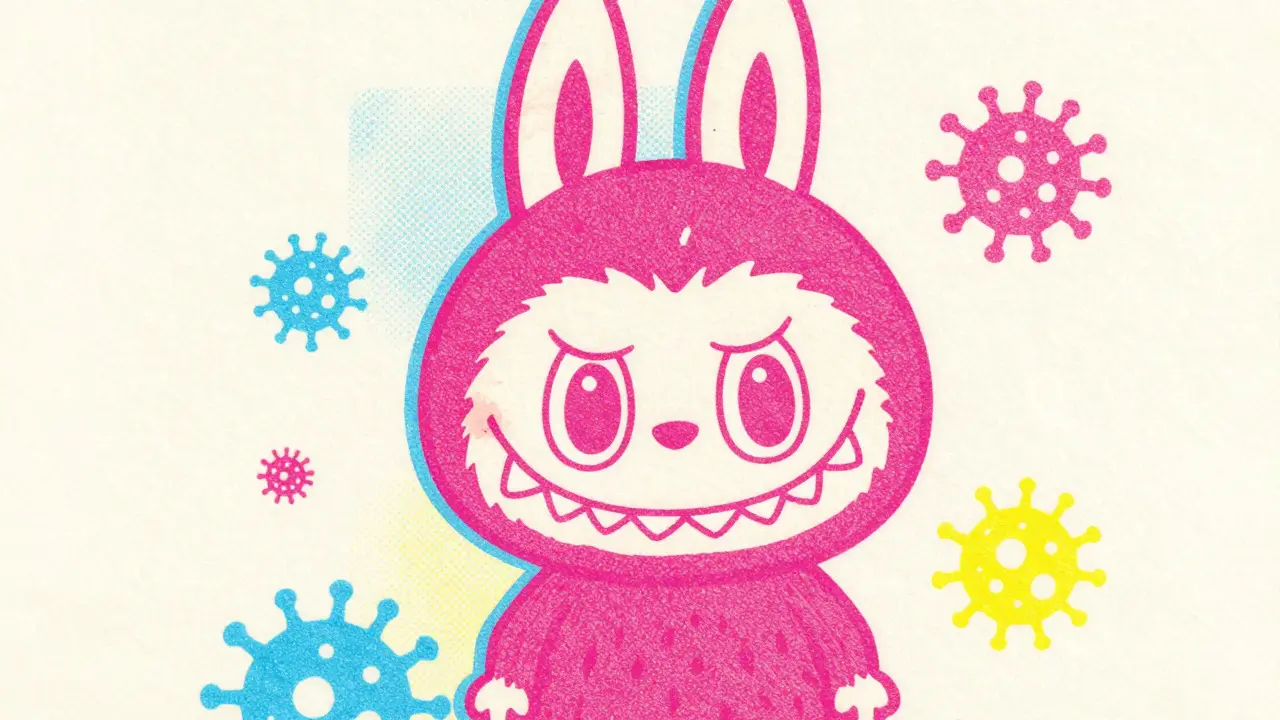
Have you seen those mischievous, elf-like toys with sharp teeth and big smiles everywhere lately? They are called Labubu, a character created by artist Kasing Lung and sold globally by toy giant Pop Mart. They have become a massive cultural phenomenon in Asia and beyond. Naturally, when something goes viral in the internet age, someone tries to turn it into a cryptocurrency. That is exactly what happened with the LABUBU token.
If you are wondering what the Labubu crypto coin actually is, the short answer is: it is not one single coin. It is a family of unofficial, community-driven meme tokens that piggyback on the popularity of the physical toys. These tokens exist on multiple blockchains, primarily Solana, BNB Smart Chain, and Ethereum. Because there is no official partnership between Pop Mart and these crypto projects, buying LABUBU is a high-risk, speculative play driven entirely by hype and community sentiment.
The Origin Story: From Toys to Tokens
To understand the coin, you first need to understand the character. Labubu is part of a collection called "The Monsters." The character design features large ears, serrated teeth, and a playful, slightly chaotic personality. This aesthetic resonated deeply with collectors, leading to sold-out releases and long lines outside Pop Mart stores worldwide.
In October 2024, this real-world hype spilled over into the crypto world. A group of developers launched the first major LABUBU token on the Solana blockchain using the popular launchpad Pump.fun. Pump.fun is known for allowing anyone to create a token instantly with minimal friction. This specific launch was marketed as a "fair launch," meaning there was no presale for insiders, no team allocation, and no initial marketing budget funded by early investors. Instead, the supply was distributed directly to the public.
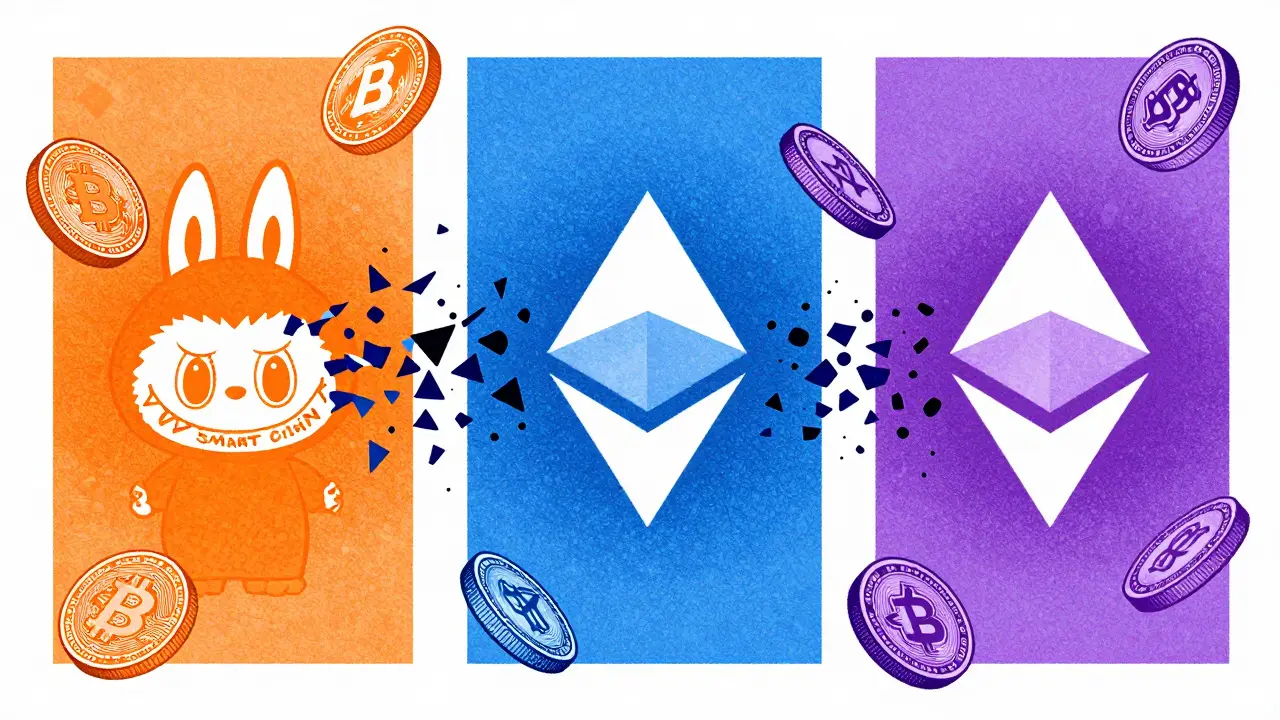
Following the Solana launch, other developers saw the opportunity and created their own versions on different networks. By early 2025, you could find LABUBU tokens on BNB Smart Chain (formerly Binance Smart Chain) and even Ethereum. This fragmentation is the most important thing to remember: there is no central authority telling you which one is the "real" Labubu coin. You have to do your own detective work.
Solana vs. BNB vs. Ethereum: Which One Is It?
Since there are multiple tokens with the same ticker symbol (LABUBU), you need to know which chain you are looking at. Each version has different technical characteristics, contract addresses, and market behaviors.
| Blockchain | Launch Date | Total Supply | Key Features | Risk Profile |
|---|---|---|---|---|
| Solana (SOL) | October 2024 | 1,000,000,000 | Fair launch via Pump.fun, zero taxes, locked liquidity, mint authority revoked. | High (Meme volatility, but transparent mechanics) |
| BNB Smart Chain (BSC) | January 2025 | 1,000,000,000 | Multiple contracts exist. Some have transaction taxes for rewards/marketing. | Very High (Fragmented, potential rug pull risks) |
| Ethereum (ETH) | 2024 | 1,000,000,000 | ERC-20 standard. Very low circulating supply reported. Low liquidity. | Extreme (Illiquid, potentially dormant) |
The Solana variant is generally considered the most prominent because it launched first and benefited from the speed and low fees of the Solana network. Its tokenomics are simple: a fixed supply of 1 billion tokens, no transaction taxes, and liquidity provider tokens were burned at launch. Burning LP tokens means the creators cannot easily pull the money out of the trading pool, which is a basic safety measure against a common scam known as a "rug pull."
The BNB Smart Chain variants are more complicated. There is at least one major contract (address starting with 0x6848...) and another branded as "Labubu Meme" (address starting with 0xF391...). The latter introduces transaction taxes-meaning a percentage of every trade is taken automatically to fund marketing or distribute USDT rewards. While this sounds nice, high taxes can make it difficult to sell your tokens if the price drops, and they add complexity that many experienced traders dislike.
The Ethereum variant appears largely inactive. Data suggests it has effectively zero circulating supply in active wallets, meaning very few people are actually holding or trading it. The high gas fees on Ethereum also make it impractical for trading such a low-value meme coin.
Tokenomics and How the Money Moves
Meme coins rarely have utility. They don't offer voting rights, staking yields (usually), or access to exclusive software. Their value comes purely from demand. If enough people believe the Labubu brand is cool and want to buy the token, the price goes up. If interest fades, the price crashes.
Let's look at the numbers. As of mid-2026, the Solana-based LABUBU has a total supply of roughly 1 billion tokens. However, not all of them are in circulation; some may be lost or held in dormant wallets. Market data shows the price fluctuating wildly. In late 2024, it traded for fractions of a cent (around $0.00002). By mid-2026, prices hovered around $0.0003 to $0.0008 depending on the exchange. This represents a significant percentage gain, but in absolute dollar terms, the market capitalization remains relatively small-often under $1 million at certain snapshots, though it spiked higher during peak hype periods in 2025.
This volatility is normal for micro-cap meme coins. A single tweet from an influencer or a news article about Pop Mart selling out can cause the price to double or halve within hours. There is no underlying revenue stream to support the price. It is a pure speculation game.
How to Buy LABUBU (Step-by-Step)
If you decide you want to take the risk, here is how you typically acquire the Solana version, which is the most liquid option. You will need a digital wallet compatible with the Solana network.
- Set Up a Wallet: Download a mobile or browser wallet like Phantom or Solflare. Create a new wallet and securely write down your seed phrase (the 12-24 words). Never share this phrase with anyone.
- Buy SOL: Go to a centralized exchange like Coinbase, Kraken, or Binance. Buy Solana (SOL) cryptocurrency and withdraw it to your new wallet address.
- Find the Correct Contract Address: This is crucial. Do not just search for "LABUBU" on a decentralized exchange, as you might find a fake copycat token. Copy the verified contract address from a reliable tracker like CoinMarketCap or DexScreener. For the main Solana token, ensure the address matches the one associated with the Pump.fun fair launch.
- Swap on a DEX: Connect your wallet to a Solana decentralized exchange like Raydium or Jupiter. Paste the LABUBU contract address into the swap interface. Set your slippage tolerance (usually 1-5% for volatile tokens) and confirm the transaction.
- Verify Receipt: Check your wallet balance to ensure the LABUBU tokens arrived. Remember, you now hold a speculative asset. Only invest what you can afford to lose completely.
For BNB Chain tokens, the process is similar but requires a wallet like MetaMask configured for BSC, and you would use PancakeSwap instead of Raydium. Just be extra careful to verify the contract address, as scams are rampant on BSC.
Risks and Red Flags
Before you click "buy," consider these serious risks. Meme coins are often called "digital lottery tickets" for a reason.
- No Official Backing: Pop Mart has not endorsed any of these tokens. This means the project relies entirely on fan enthusiasm. If the toy trend dies, the token likely follows.
- Fragmentation: With tokens on three different chains, liquidity is split. This makes it harder for any single version to gain massive institutional attention compared to unified brands like Dogecoin.
- Liquidity Risk: On smaller exchanges or for less popular variants (like the Ethereum one), you might buy tokens but find no one willing to buy them back from you. You could be stuck holding bags worth pennies.
- Scams and Copycats: Scammers frequently create fake tokens with the same name and logo. Always double-check the contract address. If a website asks for your seed phrase, it is a scam.
- Regulatory Uncertainty: Using trademarked characters without permission exists in a legal gray area. While rare, there is a theoretical risk that IP holders could take action against the token contracts, though this has not happened yet.
Is LABUBU a Good Investment?
That depends on your definition of investment. If you mean "will this make me rich slowly and safely?" the answer is almost certainly no. Meme coins are not investments in the traditional sense; they are speculative assets.
However, if you enjoy the culture of crypto memes, follow the trends closely, and want to bet on the continued popularity of Asian collectibles, LABUBU offers exposure to that niche. The Solana version has shown resilience due to its fair-launch structure and locked liquidity, which builds some trust among traders. But remember, past performance does not guarantee future results. The price has swung by orders of magnitude in less than two years.
Treat it like entertainment spending. If you buy $100 worth of LABUBU, assume it could go to $0. If it goes to $1,000, great-you won the lottery. But never rely on it for rent or savings.
Is Labubu crypto officially partnered with Pop Mart?
No. As of 2026, there is no official partnership between Pop Mart (the company behind Labubu toys) and any LABUBU cryptocurrency token. All existing tokens are unofficial, community-created meme coins.
Which blockchain is the best Labubu token on?
The Solana (SOL) version is generally considered the most legitimate and liquid. It launched fairly via Pump.fun in October 2024, has zero transaction taxes, and locked liquidity. The BNB and Ethereum versions are more fragmented and carry higher risks of illiquidity or complex tax structures.
What is the total supply of LABUBU tokens?
Most major LABUBU variants, including the primary Solana token, have a fixed total supply of 1,000,000,000 (1 billion) tokens. This supply was set at launch and cannot be increased because the mint authority was revoked.
Are there transaction taxes on Labubu crypto?
It depends on the chain. The Solana LABUBU token has zero transaction taxes. However, some BNB Smart Chain variants, such as "Labubu Meme," implement transaction taxes that are used for marketing or USDT rewards. Always check the specific tokenomics before buying.
How do I avoid buying a fake Labubu token?
Always verify the contract address. Do not rely solely on the token name or logo. Use reputable aggregators like CoinMarketCap, CoinGecko, or DexScreener to find the verified contract address for the specific chain you are interested in. Paste this exact address into your decentralized exchange.
Why is the price of LABUBU so volatile?
Like all meme coins, LABUBU has no fundamental utility or revenue stream. Its price is driven entirely by social media hype, community sentiment, and speculation. Small amounts of buying or selling can cause large percentage swings in price, especially given its relatively small market capitalization.