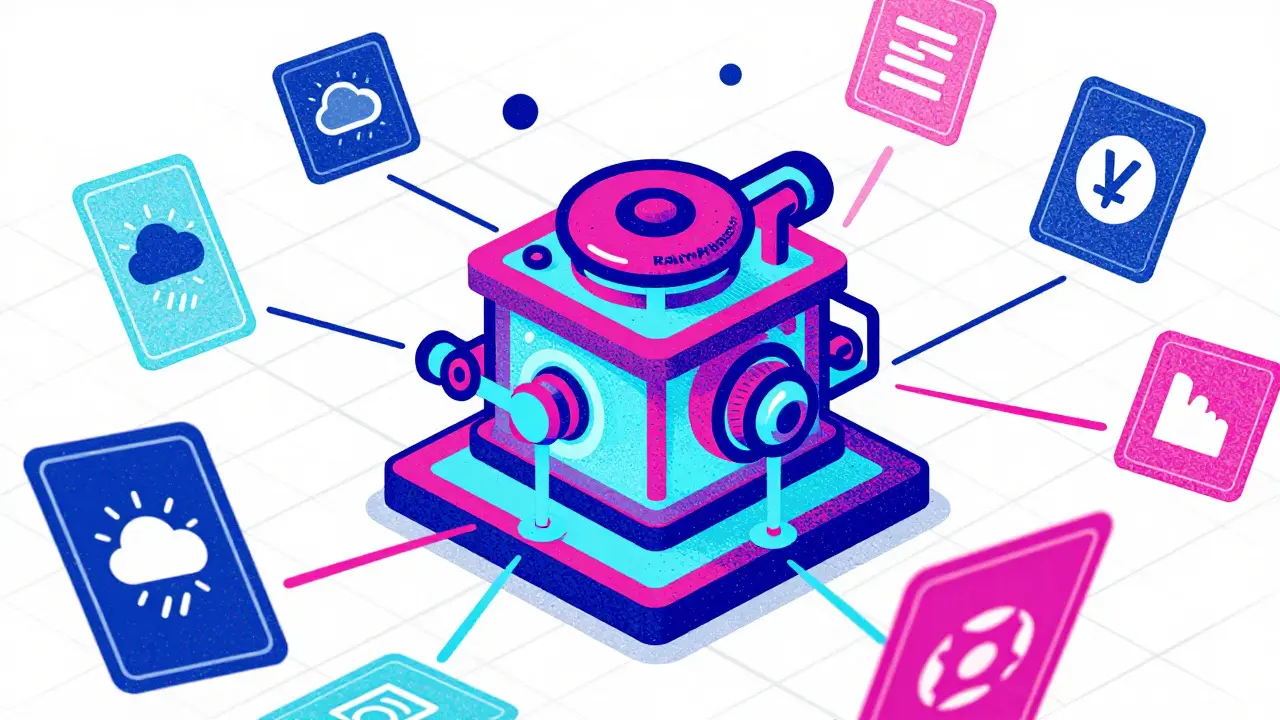
You might have seen the ticker RAIN on your portfolio tracker and wondered if it’s the next big thing or just another meme coin. The confusion is real because several unrelated projects use the same symbol. However, when people ask "What is Rain crypto?" in 2026, they are almost always referring to Rain Protocol, a decentralized infrastructure for prediction markets built on Arbitrum.
Rain isn't just a place to bet on sports; it's the engine that powers those bets. Think of it as the Uniswap of prediction markets. It provides the liquidity and resolution logic so anyone can create a market on anything from election outcomes to weather events. As of late August 2026, the protocol has climbed into the top 15 cryptocurrencies by market cap, signaling a massive shift in how we view on-chain derivatives.
The Core Concept: Automated Outcome Markets
Rain Protocol is a fully decentralized prediction markets protocol that allows permissionless creation of custom markets on real-world events. Unlike traditional bookmakers that require you to pick a side against a house limit, Rain uses an Automated Market Maker (AMM) model. This means liquidity comes from a pool of stablecoins, not from matching individual buyers and sellers in an order book.
This architecture solves two major problems in crypto betting:
- Liquidity Fragmentation: In peer-to-peer markets, finding someone willing to trade at your price is hard. Rain’s AMM ensures you can always buy or sell outcome shares based on current probability pricing.
- Resolution Complexity: Who decides who won? Rain uses a hybrid oracle system. For public markets, an AI-driven agent called Olympus AI verifies outcomes. For private markets, the creator acts as the resolver. This keeps disputes low and finality fast.
The result is a smooth experience where you deposit USDT, buy shares in an event, and wait for the AI or human oracle to settle the contract. No manual gas management is needed thanks to account abstraction features that hide technical complexity behind simple wallet signatures.
Decoding the RAIN Token: Utility vs. Speculation
If the protocol is the car, the RAIN token is the fuel and the steering wheel. But what does it actually do? According to the official whitepaper, RAIN serves two primary functions:
- Deflationary Mechanism: A fixed 2.5% of all trading volume is used to buy back and burn RAIN tokens. This reduces circulating supply over time, theoretically increasing scarcity as usage grows.
- Future Governance: While not yet fully active, RAIN holders will eventually gain DAO voting rights. This means long-term holders could vote on fee structures, new market categories, and treasury management.
It is crucial to note that you don’t *need* RAIN to use the platform. You can trade markets using stablecoins. The token is primarily for those who want to align with the protocol’s growth or participate in future governance. This distinction matters because it separates utility holders from pure speculators.
Tokenomics and Supply Structure
Understanding the numbers helps you gauge risk. The total supply of RAIN is approximately 1.15 trillion tokens. As of August 2026, the circulating supply sits around 709 billion, meaning roughly 62% of the token is already in circulation.
| Metric | Value | Note |
|---|---|---|
| Total Supply | ~1.15 Trillion | Fixed initial allocation |
| Circulating Supply | ~709 Billion | Active in market |
| Burn Rate | 2.5% | Of trading volume |
| Market Cap | ~$12.3 Billion | Ranked #13 globally |
| Price Range | $0.016 - $0.0175 | Current trading band |
The deflationary aspect is significant. In May 2026, a single burn event removed 7.4 billion tokens from circulation, contributing to a 20% price rally. These burns are deterministic and on-chain, meaning no one can change the rule arbitrarily. However, large liquidity injections by the Rain Foundation can also move the price, creating volatility that doesn't always reflect fundamental usage.

Not All RAINs Are Created Equal
Here is where most investors get tripped up. The ticker RAIN is shared by several distinct projects. If you’re looking at a chart showing a price of $5.00, you’re likely looking at the wrong asset.
- Rain Protocol (Arbitrum): The major player. Price ~$0.017. Market cap ~$12B. Used for prediction markets.
- Rain Coin (Polygon/BSC): An automated meme coin. Price ~$5.10. Market cap ~$5M. Uses a redistribution model with daily bonuses.
- RainCheck (Stellar): A loyalty/rewards token. Price varies. Focused on commerce aggregation.
Always check the network. Rain Protocol operates primarily on Arbitrum. If your exchange lists RAIN but shows a different price or network, double-check the contract address before buying. Confusing these assets can lead to holding a low-liquidity meme coin instead of the high-cap infrastructure project.
Technical Architecture and Developer Ecosystem
Rain positions itself as infrastructure, not just a consumer app. Developers can access the protocol via a Read/Write SDK and API. This allows them to build their own front-end prediction platforms without writing smart contracts from scratch.
For example, a sports betting site could integrate Rain’s backend to handle liquidity and settlement while keeping its own user interface. This modular approach mirrors how DeFi protocols like Aave or Compound work, providing the core financial logic while letting others build the user experience on top. The protocol supports cross-chain bridges, though Arbitrem remains the primary execution environment due to its low fees and high throughput.

Market Performance and Volatility
Rain has experienced dramatic swings in 2026. After launching in beta in November 2025, the token saw a rapid ascent. By March 2026, it had broken out of a consolidation range between $0.0070 and $0.0085, surging nearly 480% above its all-time low within nine months.
However, this growth hasn't been linear. In March, a $10 million sell-off caused a 17% daily drop, breaking key support levels. Technical indicators like Bollinger Bands showed strong downward pressure. Yet, the recovery was swift, driven by liquidity injections and continued institutional interest. Currently, the token trades in a tighter band, with analysts watching the $0.0126-$0.0150 zone as a critical decision point for the next leg up or down.
Risks and Considerations
No investment is without risk, and RAIN has specific vulnerabilities:
- Oracle Risk: Even with AI assistance, market resolution relies on oracles. If an oracle fails or is manipulated, payouts could be delayed or incorrect.
- Regulatory Uncertainty: Prediction markets exist in a gray area legally. How regulators treat event-based financial products in major jurisdictions could impact adoption.
- Treasury Centralization: Large liquidity moves by the Rain Foundation can influence price independently of market demand. This creates potential for short-term dislocations.
Experts generally recommend RAIN for users who intend to actively use the protocol or build on it, rather than for passive holders seeking steady yield. The token’s value is tightly coupled to the success of on-chain prediction markets.
Is RAIN a good investment for beginners?
RAIN is a high-beta altcoin with significant volatility. Beginners should understand that its price moves are often driven by liquidity events and news rather than steady cash flow. It is best suited for those who plan to use the prediction markets or have a higher risk tolerance.
How do I buy RAIN safely?
Buy RAIN on major exchanges like Kraken, Bybit, or Binance. Ensure you are purchasing the token on the Arbitrum network. Verify the contract address on CoinGecko or CoinMarketCap to avoid buying the wrong RAIN token (like the meme coin version).
Does RAIN pay dividends or staking rewards?
Currently, RAIN does not offer native staking rewards or dividends. Its value proposition comes from its deflationary burn mechanism and future governance rights. Any 'yield' is speculative price appreciation, not protocol-generated income.
What happens when a market resolves on Rain?
Once the oracle (AI or human) confirms the outcome, winning shares are redeemed for the underlying stablecoin (usually USDT). Losing shares become worthless. The process is automated and typically takes minutes to hours depending on dispute status.
How is Rain different from Polymarket?
While both are prediction markets, Rain focuses on being a composable infrastructure layer (like Uniswap) allowing third parties to build their own platforms. Polymarket is more of a standalone consumer-facing application. Rain also emphasizes AI-driven oracle resolution more heavily than many competitors.

Ian Munro
August 29, 2026 AT 06:57The AMM model is the real differentiator here. Order books in prediction markets are notoriously thin, so removing that friction is a significant engineering win for liquidity depth.
Trista Dennis
August 30, 2026 AT 05:01Oh look, another project pretending to be infrastructure while acting like a casino.
"Uniswap of prediction markets"? Sure. Because nothing says "decentralized finance" like an AI deciding who wins your bet on whether it rains in London. The oracle risk section is doing a lot of heavy lifting there. If the AI hallucinates a hurricane, do we get paid or does the treasury just burn more tokens to cover the loss?
I'm just saying, check the contract address before you buy. Last thing we need is a bag of $5 meme coins masquerading as top-15 cap tech. It's always the same trick: dress up a gambling mechanism in smart contracts and call it innovation. 🙄
Alan Hawkins
August 30, 2026 AT 10:36Fair point about the oracle risk, but I think the hybrid approach is actually pretty clever for now. Pure human oracles are slow and prone to disputes, while pure AI can be brittle against edge cases. Combining them seems like a reasonable middle ground until one technology matures enough to stand alone.
Also, the fact that you don't *need* the token to use the platform is a good sign. It means the utility is separated from the speculation, which usually leads to healthier adoption curves in the long run. We've seen too many projects where the only way to use the app was to buy their expensive gas token first.
Valentine Okpala
August 30, 2026 AT 11:42It’s fascinating how we’ve normalized betting on reality itself. 🤔
When we started with simple sports odds, it felt like a game of chance. Now, with protocols like this, it’s becoming a market for probability itself. There’s something almost philosophical about pricing the likelihood of a political outcome or a weather event. Are we trading on information, or are we trading on our collective bias?
I’m not sure if the AI resolver will ever truly capture the nuance of complex real-world events, but the speed of settlement is undeniable. It changes the tempo of engagement entirely. We’re moving from weekly bets to instant resolutions. It’s efficient, yes, but is it wise? Maybe. Perhaps. Only time will tell if the 'wisdom of the crowd' holds up when the crowd is also an algorithm. 😌
Bill Patterson
August 31, 2026 AT 22:45burn rate is just marketing fluff
if volume drops the price tanks anyway. supply doesn't matter if demand is dead. classic crypto hype cycle stuff. i'll wait for the next crash to buy the dip like always. 📉
Rachel Etheridge
September 1, 2026 AT 18:00OMG did everyone miss the part about the DIFFERENT RAIN TOKENS?? 🚨🚨
I made this exact mistake last year! Bought what I thought was the big protocol coin on a random exchange and ended up with the Polygon meme coin at $5.00. Cried for three days straight. The chart looked so similar on some trackers because they just used the ticker symbol without checking the network!
Please people, CHECK THE CONTRACT ADDRESS. Seriously. It saved me thousands in tears (and actual money). The Arbitrum one is the legit one. Don't be a dummy like me. Also the volatility is wild, my heart couldn't take the March dip, nearly sold everything at the bottom out of pure panic. Stay strong folks! 💪😭
Matt Reckdenwald
September 2, 2026 AT 08:05This distinction between the infrastructure layer and the consumer app is crucial, and often overlooked in these discussions.
Think of it this way: Polymarket is the storefront, but Rain is the warehouse and the logistics network behind it. For developers, having a modular SDK means they can focus on user experience and niche markets-like specific sports leagues or local weather events-without reinventing the wheel for liquidity and settlement. This composability is where the real value lies for the ecosystem.
If we see even a few major front-ends integrate this backend, the volume could skyrocket, making the deflationary mechanics much more potent than they currently appear. It’s a quiet revolution happening under the hood, and I hope the community appreciates the engineering effort rather than just chasing the price action. It’s about building durable tools for a decentralized future. 🌱