Ever tried to swap Bitcoin for Ethereum without trusting a centralized exchange? It’s messy. You usually have to wrap your assets, pay multiple fees, and wait through multi-hop transactions. Enter RUNE, the native utility token of THORChain, a decentralized liquidity protocol that allows users to swap native assets across different blockchains directly. If you’ve seen the ticker RUNE pop up in your portfolio or news feed, you’re likely looking at one of two things: the heavyweight infrastructure token powering THORChain, or a tiny, obscure gaming token on Binance Smart Chain. For 99% of investors and developers, "Rune" means THORChain. Let’s cut through the noise and figure out exactly what this asset does, why it matters, and how its unique economics work.
The Core Problem: Blockchain Fragmentation
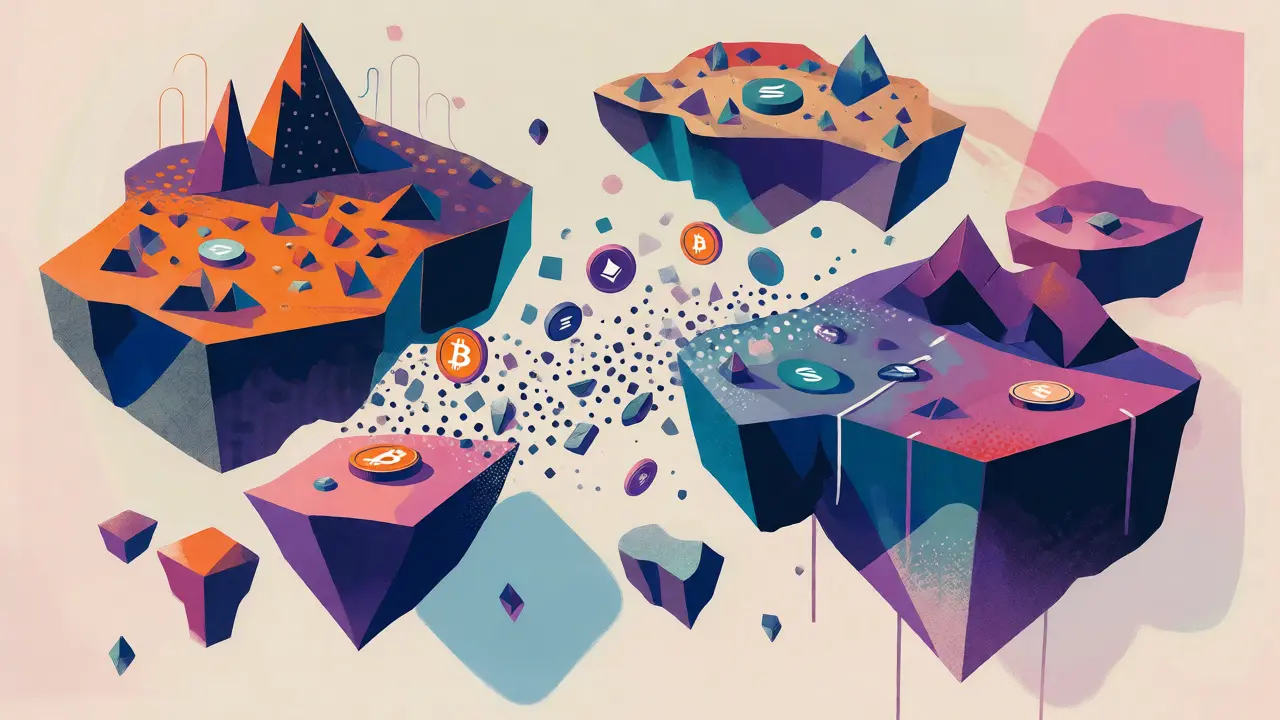
Blockchains are like isolated islands. Bitcoin doesn’t talk to Ethereum; Ethereum doesn’t natively speak Solana. To move value between them, you typically rely on bridges or wrapped tokens, which introduce security risks and complexity. THORChain solves this by creating a unified layer where all chains can interact. Think of it as a universal adapter for cryptocurrencies. At the heart of this system is RUNE. It isn’t just another coin to hold; it’s the glue that holds the entire network together. Without RUNE, there are no swaps, no security, and no governance. It serves as the settlement currency, meaning every trade on the platform ultimately routes through it.
How THORChain Uses RUNE
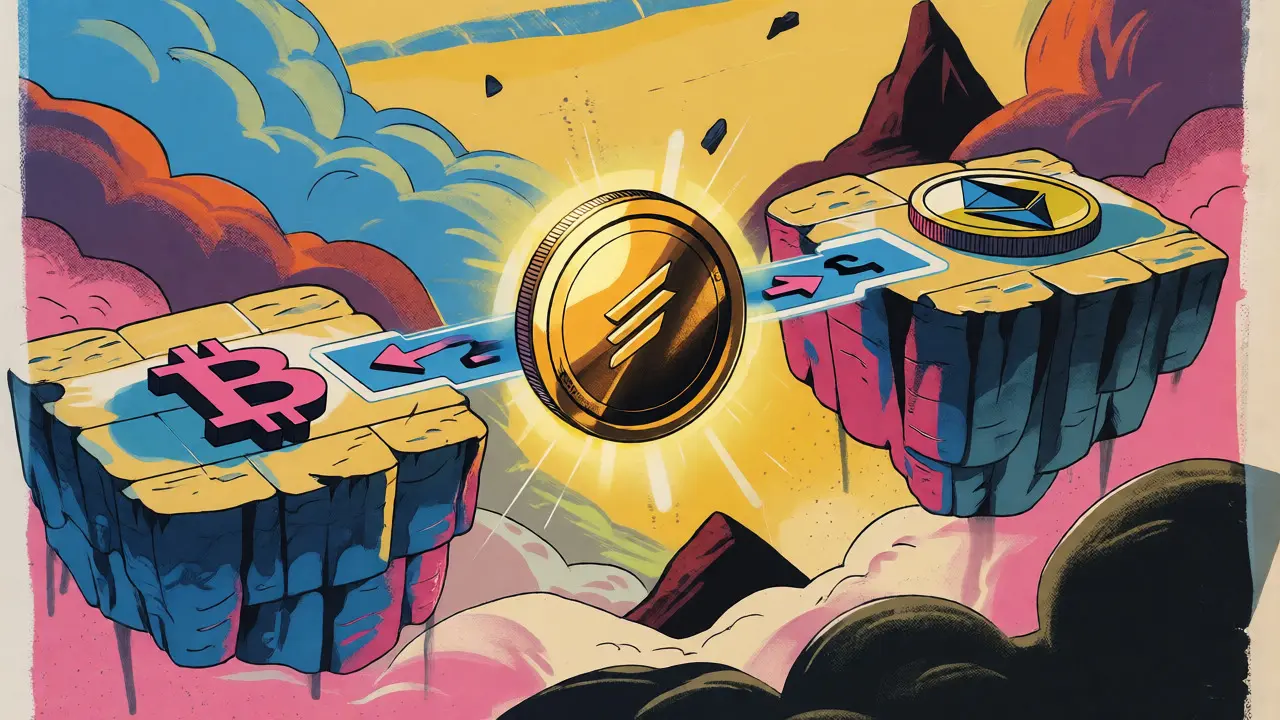
You might wonder, "Why do I need RUNE if I’m swapping BTC for ETH?" The answer lies in how THORChain structures its liquidity pools. Unlike traditional exchanges where you might see a direct BTC/ETH pair, THORChain uses an intermediary model. Every liquidity pool is paired with RUNE. So, if you want to swap Bitcoin for Ethereum, the process looks like this: BTC goes into a BTC-RUNE pool, converts to RUNE, then that RUNE flows into an ETH-RUNE pool to become ETH. This single-step swap feels seamless to you, but under the hood, RUNE is doing the heavy lifting.
This design creates constant structural demand for the token. Every time someone swaps any asset on THORChain, they are effectively buying and selling RUNE. It acts as the base currency for the entire ecosystem, similar to how USD often serves as the base currency in global forex markets, but decentralized and programmatic.
The Four Pillars of RUNE’s Utility
Documentation from THORChain explicitly outlines four critical roles for RUNE. Understanding these helps you grasp why the token has value beyond mere speculation.
- Liquidity Backbone: As mentioned, RUNE pairs with every other asset in the protocol. Liquidity providers must deposit equal values of the external asset and RUNE (a 1:1 ratio). This ensures that the pricing of all assets remains aligned relative to RUNE.
- Security Collateral: Validators (nodes) who secure the network must bond large amounts of RUNE. If a validator acts maliciously, their bonded RUNE gets slashed. More bonded RUNE makes the network harder to attack because an attacker would need to acquire a massive portion of the circulating supply to compromise consensus.
- Governance Signal: RUNE holders can delegate their stake to validators, influencing which chains are supported and how protocol parameters evolve. It’s a way for economic stakeholders to steer the ship.
- Incentive Medium: Rewards for validators and liquidity providers are paid in RUNE, sourced from real network fees rather than inflationary emissions. This aligns rewards with actual usage.
Tokenomics: Deflationary and Fully Unlocked
Crypto investors hate surprises, especially regarding supply unlocks. Here’s good news: the final unlock of THORChain’s RUNE occurred in 2023. There are no vesting schedules left. Every token is already in circulation, except for a small strategic reserve. But the story doesn’t end there. Under the ADR-023 architecture update, THORChain introduced a deflationary mechanism. A portion of the fees collected from swaps is burned, permanently removing RUNE from circulation.
| Metric | Value / Status | Implication |
|---|---|---|
| Max Supply | ~360 Million | Fixed cap prevents infinite inflation. |
| Circulating Supply | ~328 Million | Nearly all tokens are live and tradable. |
| Vesting Status | Complete (2023) | No future sell pressure from early investors. |
| Supply Trend | Deflationary | Fees are burned, reducing total supply over time. |
This deflationary aspect is crucial. If network usage grows, more fees are generated, and more RUNE is burned. This creates a potential flywheel effect: higher usage leads to higher burns, which can support price stability or appreciation if demand keeps pace.
Market Position and Price Context
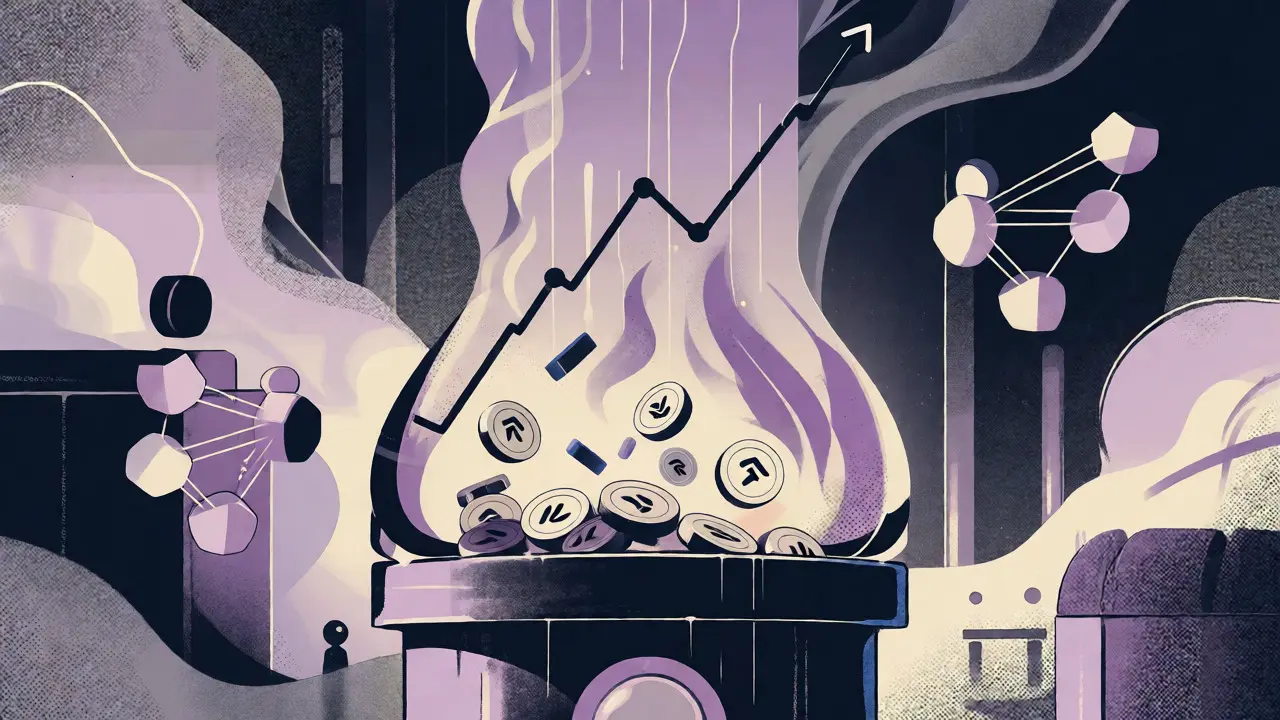
As of October 2026, THORChain’s RUNE trades around the $0.50-$0.52 range. While this might seem low compared to its all-time highs, context matters. RUNE is a mid-cap asset with significant liquidity, often seeing daily trading volumes in the tens of millions of dollars. It’s listed on major centralized exchanges like Binance, Kraken, and Gate.io, making it accessible to retail traders. However, its price is heavily correlated with broader market sentiment. Recent analysis suggests that macroeconomic factors, such as Federal Reserve interest rate decisions, significantly influence RUNE’s short-term movements. Traders often watch support levels near $0.495 and resistance near $0.511 as key indicators of momentum.
The Confusion: THORChain vs. BSC Gaming Rune
Here is where beginners get tripped up. There is another token with the ticker RUNE on the Binance Smart Chain (BSC). This is a dark-fantasy gaming token with a tiny supply-only about 22,500 tokens total-and negligible volume compared to THORChain. When you search for "RUNE" on most major trackers like CoinGecko or CoinMarketCap, the primary result is almost always THORChain. Always verify the contract address and the project description. If the description mentions "cross-chain," "liquidity pools," or "THORChain," you’re looking at the right one. If it talks about "guilds," "NFT weapons," and "dark fantasy," you’ve found the niche gaming token.
How to Get Involved with RUNE
Buying RUNE is straightforward. You can purchase it on centralized exchanges using credit cards or bank transfers. Alternatively, true believers often buy it directly via THORChain itself, skipping the middleman entirely. But holding is just step one. Many users choose to provide liquidity. By depositing equal values of BTC and RUNE (or other pairs), you earn a share of the swap fees. Keep in mind, though, that providing liquidity exposes you to impermanent loss, especially since RUNE is volatile. Validators, on the other hand, run nodes and bond larger amounts of RUNE to earn higher rewards, but this requires technical expertise and uptime guarantees.
Is RUNE a Good Investment?
That depends on your thesis. If you believe in a future where blockchains interoperate seamlessly without relying on centralized custodians, THORChain is a leading candidate. RUNE captures value from this activity through fees and security bonding. Its fully unlocked supply removes a common bearish argument against altcoins. However, it faces stiff competition from other interoperability solutions and Layer-2 scaling networks. Success hinges on THORChain maintaining high swap volumes and robust security. If usage drops, fee revenue falls, and the deflationary engine slows down.
Is RUNE the same as THORChain?
Not exactly. THORChain is the name of the blockchain network and protocol. RUNE is the native cryptocurrency token that powers that network. You use RUNE to interact with THORChain.
Why does THORChain require RUNE for every swap?
THORChain uses RUNE as a universal settlement currency. All assets are paired against RUNE in liquidity pools. This simplifies routing and ensures consistent pricing across all supported blockchains, allowing for direct native asset swaps.
Can I stake RUNE?
Yes. You can delegate RUNE to validators to help secure the network and earn rewards. You can also provide liquidity in pools to earn swap fees. Both methods generate yield denominated in RUNE.
What is the difference between THORChain RUNE and BSC Rune?
THORChain RUNE is a major infrastructure token with hundreds of millions in circulation and billions in market cap. BSC Rune is a minor gaming token with a tiny supply and minimal volume. They are completely unrelated projects sharing the same ticker symbol.
Is RUNE deflationary?
Yes, due to its burn mechanism. A portion of the fees generated by the network is destroyed, reducing the total supply over time. This contrasts with many tokens that inflate supply through new emissions.