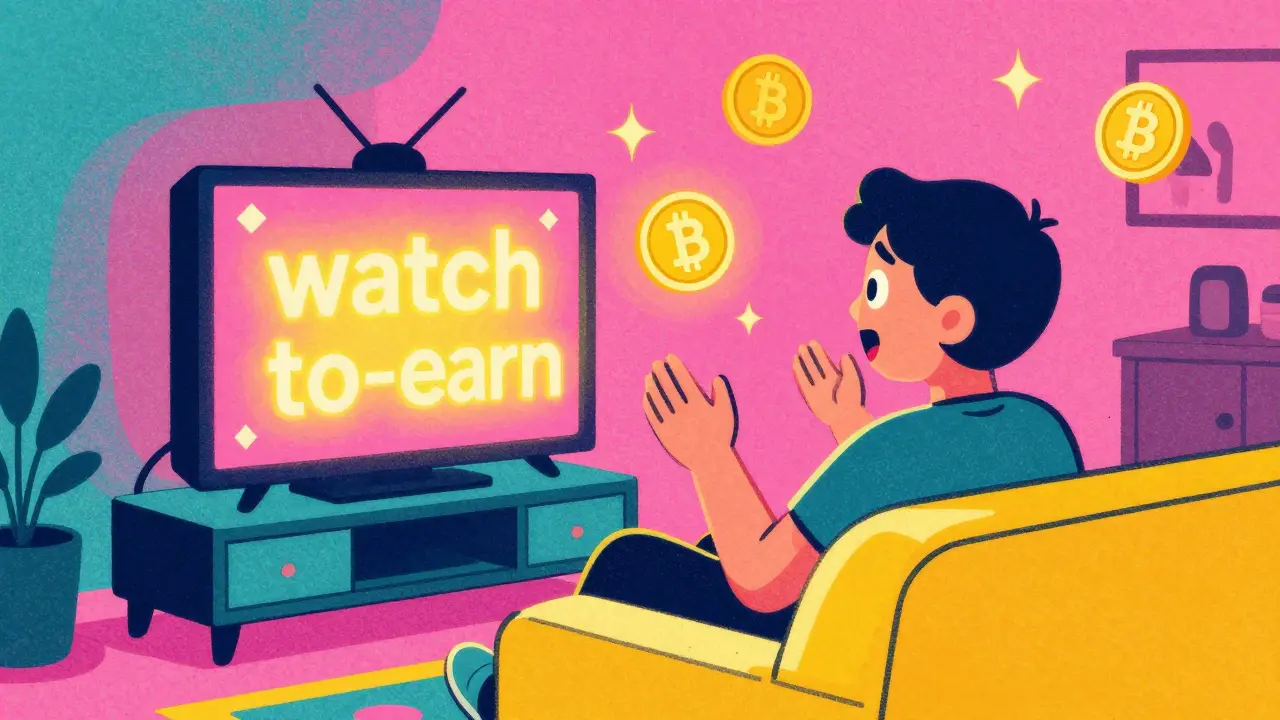
Imagine getting paid just for binge-watching your favorite series or following a new show. It sounds like a dream, but that is exactly what Sator (SAO) is a decentralized application platform designed to bridge traditional entertainment with blockchain rewards. Instead of just giving your attention to a streaming giant for free, this project aims to turn viewers into stakeholders by rewarding them with cryptocurrency for their engagement.
How Sator Actually Works
Most of us are used to the same old deal: we pay a monthly subscription or watch endless ads, and the platform keeps all the data and profit. Sator flips this script. It creates a system where viewers, content creators, and rights holders are all aligned. When you watch content through their ecosystem, you earn SAO tokens.
For the creators, it is less about the coins and more about the growth. They get a tool to expand their global reach and attract loyal fans who are financially incentivized to keep watching. This creates a feedback loop: more viewers lead to more data and value for the creator, which in turn attracts more content to the platform.
The Technical Side: Ethereum, Solana, and the Bridge
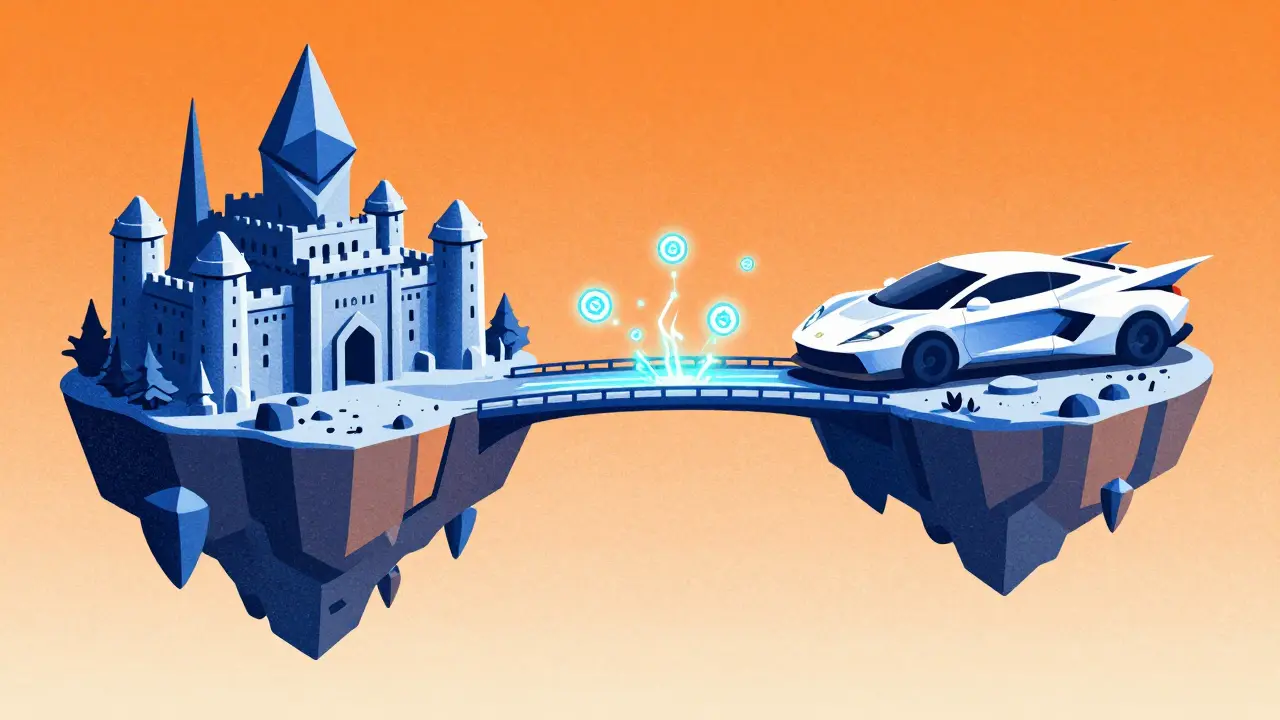
Sator doesn't lock itself into one ecosystem. To keep things fast and scalable, it operates on both Ethereum and Solana. Since these two blockchains don't naturally talk to each other, the platform uses Wormhole, which is a cross-chain interoperability protocol that lets users move their tokens back and forth without a headache.
Why does this matter? Ethereum provides the security and a massive existing user base, while Solana offers the lightning-fast transaction speeds and low fees necessary for a high-volume rewards system. If you had to pay a $10 gas fee to claim a $0.50 reward, the system would break. Using a dual-chain approach solves that problem.
Breaking Down the SAO Tokenomics
The SAO token is the fuel for this entire operation. There is a hard cap of 500 million tokens, which means no one can just print more and dilute your holdings. However, the distribution has been a point of contention for early investors. A large chunk (about 39%) went to private and pre-sale rounds, while only a tiny fraction (0.34%) was available for the public sale.
To keep people from selling their tokens immediately, Sator introduced a staking mechanism. By locking up your SAO, you can unlock multipliers that boost your earnings across the platform. The more you stake, the higher your multiplier goes, rewarding long-term believers over short-term flippers.
| Attribute | Value / Detail |
|---|---|
| Total Supply | 500 Million SAO |
| Circulating Supply | ~54.91 Million SAO |
| Blockchains | Ethereum & Solana |
| Bridge Technology | Wormhole |
| Primary Use Case | Watch-to-Earn Rewards & Staking |
NFTs and the Future of Content Ownership
Beyond just coins, Sator is leaning into the NFT space. But they aren't just selling JPEGs of monkeys. They focus on show-specific NFTs that have actual utility. Imagine owning a digital collectible from a hit show that gives you early access to new episodes, special voting rights on plot points, or a unique badge on your profile that proves you were an early viewer.
This transforms the viewer from a passive consumer into a collector. It adds a layer of gamification to watching TV, making the experience feel more like a community event and less like a lonely session on the couch.
The Cold Hard Truth: Market Performance
We have to talk about the price, because it has been a wild ride. Sator launched its Initial DEX Offering (IDO) in October 2021 at $0.044. Shortly after, it hit an all-time high of $0.2654 in November 2021. For a moment, it looked like a moonshot. Then, the crash happened.
By March 2025, the token hit a devastating low of $0.00004709. For many who bought in during the seed or strategic rounds, the losses have been upwards of 99%. The current market cap is a fraction of what it once was, reflecting a brutal reality: having a cool idea doesn't always translate to a stable token price.
Currently, the token trades around $0.000273. While some analysts suggest it could bounce back toward $0.000528 by the end of 2026, the Fear & Greed Index often hovers in the 'Fear' zone. It is a high-risk, high-reward scenario where the technology is promising, but the financial history is scarred.
The Roadblocks to Success
Sator isn't just fighting other coins; it's fighting Netflix, Disney+, and YouTube. These giants have billions of dollars and decades of user habit. For Sator to truly scale, it needs massive partnerships. It's one thing to have a decentralized app; it's another to convince a major studio to distribute their content through a blockchain-based reward system.
There is also the regulatory hurdle. Giving out crypto rewards for watching content can be a gray area in some countries, and navigating those laws while trying to grow a global audience is a tightrope walk. The success of the project depends entirely on whether they can find a "killer app" or a hit show that makes the watch-to-earn model indispensable.
Is Sator (SAO) a safe investment?
No investment in small-cap utility tokens is "safe." SAO has shown extreme volatility, losing over 99% of its value from its peak. While the technology is innovative, the price history suggests a very high risk profile. Always do your own research and only invest what you can afford to lose.
How do I earn SAO tokens?
You earn tokens by engaging with content on the Sator platform. This typically involves watching television shows or streaming content and participating in the platform's engagement mechanisms. Staking existing SAO tokens can further increase these rewards through multipliers.
What happens if I stake my SAO?
Staking your tokens locks them for a period, which in exchange unlocks reward multipliers. These multipliers increase your earnings from platform activities. The goal is to incentivize long-term holding rather than short-term trading.
Which blockchains support SAO?
SAO is a cross-chain token that operates on both Ethereum and Solana. It uses the Wormhole bridge to allow users to transfer tokens between these two networks seamlessly.
What is the total supply of SAO tokens?
The total supply is fixed at 500 million SAO tokens. This capped supply is intended to prevent inflation, though the circulating supply is currently much lower, around 54.91 million.
What to do next?
If you are a viewer, the best way to start is by exploring their dApp to see which content is currently available for rewards. If you are a trader, keep a close eye on the volume-to-market cap ratio; a high ratio can sometimes signal a turnaround, but in this case, it also highlights the volatility.
For those interested in the broader space, look into other "Watch-to-Earn" or "Play-to-Earn" projects. Comparing how Sator handles its reward multipliers versus how other platforms distribute tokens will give you a better idea of whether this model is sustainable or just a passing trend.
AP Fisher
April 28, 2026 AT 05:33The idea of getting paid to watch TV is pretty cool. I wonder if there are a lot of shows on there right now.
edie rosa
April 28, 2026 AT 06:18Typical crypto scam masquerading as innovation. It is honestly disgusting how these projects lure in naive people with the promise of "free money" while the venture capitalists dump their pre-sale tokens on the retail crowd. The 0.34% public sale is a blatant red flag and shows exactly who this project was designed to benefit. It's not about entertainment, it's about an exit strategy for the elite. We keep seeing the same cycle of greed and collapse and people still fall for it because they're too lazy to see the obvious manipulation. The ethics of this distribution model are nonexistent.
Michael Repak
April 29, 2026 AT 23:57I really love the way the dual-chain approach is handled here!!! It's so smart to use Solana for the speed and Ethereum for the security!!! Great breakdown of a complex topic!!!
debra hoskins
May 1, 2026 AT 14:11This whole "watch-to-earn" gimmick feels like a digital carnival ride. Total vaporware. The notion that a tiny coin can disrupt the monolithic grip of Disney is a laughable delusion. It's just another shiny bauble for the degenerate gamblers.
Pramendra Singh
May 3, 2026 AT 08:44It is nice to see the potential for creators to reach more people. I hope the developers can find a way to make the token more stable for everyone involved.
Bevon Findley
May 3, 2026 AT 21:27Quite a quaint attempt at disruption. :) Very cute. 🥂
Kristi Swartz
May 4, 2026 AT 16:00The tokenomics are fundamentally flawed because the distribution favors insiders over the public which is why the price collapsed it is basic economics
Alex Mazonowicz
May 5, 2026 AT 07:56Stay positive everyone!!! The tech is definitely there and the future looks bright for blockchain entertainment!!! Keep believing!!!
Harvey Alford
May 6, 2026 AT 00:47I lost money on this. Help me.
VIVEK SINGH
May 7, 2026 AT 15:47Oh, look at us, imagining a world where watching garbage TV makes us rich. Truly a pinnacle of human evolution.
Let's analyze this "innovation" with a grain of salt. You have a project that loses 99% of its value and we're talking about "multipliers" and "bridges." It's a beautiful bridge to nowhere. The irony is that the only thing being "earned" here is a lesson in market volatility. While the dream of decentralized media is a noble pursuit in a vacuum, the execution here is a masterclass in how to burn capital while pretending to revolutionize a living room activity. We are essentially paying for the privilege of being the product, just with a different set of tokens. It's a philosophical paradox: the tool meant to liberate the viewer has simply turned the viewer into a speculative asset. Truly groundbreaking stuff if you enjoy watching your portfolio evaporate while binge-watching a show that probably had a better budget than the coin's current market cap.