Remember the hype around athlete NFTs in late 2021? If you were active in crypto back then, you likely saw the buzz surrounding Tracy McGrady, the NBA legend, and his collaboration with ARCHE Network. This wasn't just another celebrity drop; it was a specific, high-profile airdrop campaign tied to one of the most iconic moments in basketball history: scoring 13 points in 35 seconds.
The project, officially titled 'Time 13 Points in 35 Seconds,' launched in November 2021. It brought together ARCHE Network, NFKings, and Binance NFT to create a limited series of digital collectibles. For many users, this was their first exposure to how major sports figures were leveraging blockchain technology to connect with fans. But what exactly happened during that airdrop? Who got the NFTs, and what did they actually contain?
Key Takeaways
- Launch Date: The airdrop distribution began on November 7, 2021, with the official collection launch on November 19, 2021.
- Quantity: Exactly 3,513 NFT blind boxes were distributed, mirroring the "35 seconds, 13 points" statistic.
- Partners: The project involved ARCHE Network, NFKings, Binance NFT, and CoinMarketCap for distribution.
- Utility: Each box contained a T-MAC Collector's Edition NFT and a ticket for future events.
- Significance: It was one of the first exclusive licensing deals for a specific NBA moment by an athlete directly partnering with a DeFi/NFT platform.
What Was the ARCHE x Tracy McGrady Project?
To understand the value of this airdrop, you have to look at who was behind it. ARCHE Network is a decentralized protocol-as-a-service (DPaaS) platform designed to serve users in the Metaverse environment, offering services like Matchmaker, Swap, Farm, and Lending alongside its NFT marketplace. At the time, ARCHE was launching its V2.0 platform, and they needed a big name to showcase their capabilities. Enter Tracy McGrady.
McGrady didn't just lend his face; he granted exclusive licensing rights for his famous 35-second run. This was crucial because, in the early days of NFTs, authenticity was a huge concern. By securing exclusive rights, ARCHE ensured that this specific digital series was the only authorized representation of that particular game moment. The technical backbone was provided by NFKings, which handled the minting process, while Binance NFT served as the primary marketplace where these assets could be traded after the initial distribution.
Why does this matter? Because it set a precedent. Before this, many athlete NFTs were generic or produced by third-party companies without deep personal involvement. Here, McGrady personally endorsed the concept, stating that NFTs allowed fans to "relive those moments." This direct engagement added a layer of trust and narrative depth that generic drops often lacked.
AirDrop Mechanics: How Distribution Worked
The distribution strategy was cleverly aligned with the theme. Instead of a random number, the team chose 3,513 blind boxes. Why? To represent the 35 seconds and 13 points from McGrady's historic performance against the San Antonio Spurs. This thematic connection made the drop memorable and gave collectors a sense of owning a piece of that specific statistical achievement.
The actual distribution took place on November 7, 2021, two weeks before the public launch. The partner for this phase was CoinMarketCap, a leading cryptocurrency data provider and community platform that leveraged its user base to distribute the airdrop to qualified members. Users had to meet specific eligibility criteria through the CoinMarketCap platform to receive their share. While the exact requirements varied based on their internal algorithms at the time, the goal was to reward active community members rather than purely speculators.
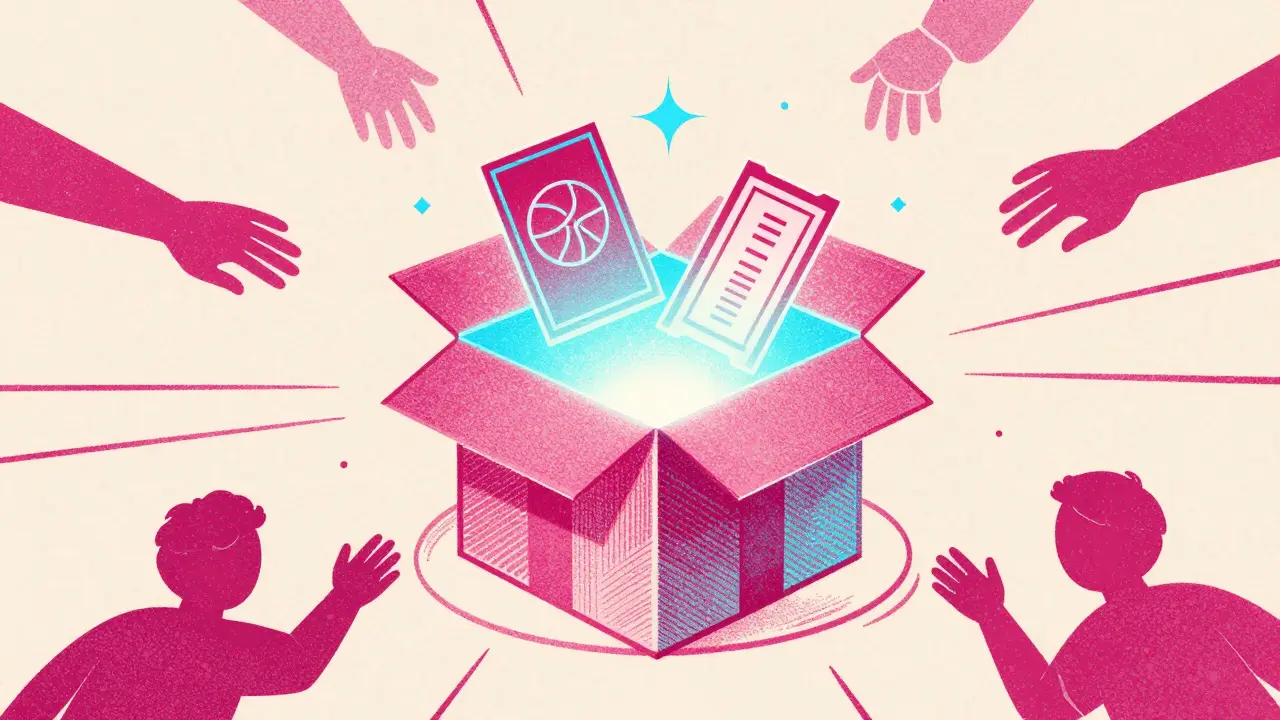
Each recipient received a "Mystery Box." Inside, there were two main components:
- T-MAC Time Collector's Edition NFT: The core digital asset representing the moment.
- Special Event Ticket: A utility token granting access to future experiences or events related to the collection.
Technical Infrastructure and Platform Integration
Behind the scenes, this project required sophisticated technical coordination. ARCHE Network utilized its DPaaS architecture to deploy smart contracts that enabled both IDO (Initial DEX Offering) and MysteryBox functionalities. This meant the smart contract logic had to handle not just the storage of the NFT, but also the reveal mechanism for the blind boxes and the integration with the secondary market.
The hosting on Binance NFT provided massive exposure. As one of the largest exchange-operated NFT marketplaces globally, Binance offered high trading liquidity and a robust user interface. This integration meant that once the airdrop recipients decided to trade, they had immediate access to a large pool of buyers. The platform supported standard features like price filtering, auctions, and royalty fee structures, ensuring that McGrady and the project partners would continue to earn royalties on secondary sales.
Furthermore, the timing coincided with ARCHE's V2.0 launch. This strategic alignment meant that traffic generated by the McGrady drop flowed directly into the new ARCHE platform features. For users, this created a seamless experience: they could claim their airdrop, explore the NFT on Binance, and potentially use ARCHE's DeFi tools (like Farm or Lending) within the same ecosystem. This cross-pollination of NFT and DeFi utilities was a hallmark of successful projects during that era.
Market Context and Long-Term Impact
November 2021 was the peak of the NFT bull run. High-profile sales of NBA Top Shot moments and other athlete endorsements were driving mainstream attention into the space. In this context, the McGrady airdrop was not an isolated event but part of a broader convergence of sports memorabilia and blockchain technology.
Binance was simultaneously working with other retired stars like Allen Iverson, indicating a deliberate strategy to capture the sports memorabilia market. However, the McGrady collaboration stood out due to the specificity of the licensed moment. Rather than a general "Allen Iverson Career" pack, this was about one specific, dramatic sequence. This narrative focus helped drive emotional engagement among basketball fans, who recognized the significance of the 35-second run.
From a market perspective, the collection benefited from the exclusivity. Since ARCHE held the exclusive license for this specific moment, scarcity was guaranteed. This is a critical value driver in NFTs. Without exclusive rights, anyone could mint a similar video clip, diluting the value. Here, the legal backing from McGrady’s estate/team ensured that the digital asset held a unique position in the market.
Comparison with Other Athlete NFT Drops
To better understand the positioning of this project, let's compare it with typical athlete NFT releases of that time.
| Feature | ARCHE x McGrady | Typical Third-Party Drop |
|---|---|---|
| Licensing Rights | Exclusive for specific moment | Often non-exclusive or generic |
| Distribution Method | Targeted Airdrop via CoinMarketCap | Public Mint or Whitelist Only |
| Utility Component | NFT + Event Ticket | NFT Only |
| Platform Integration | ARCHE DeFi + Binance NFT | Single Marketplace |
| Athlete Engagement | Personal Endorsement & Quote | Logo Usage Only |
This table highlights why the ARCHE project was considered a step forward. It combined exclusive intellectual property, multi-platform utility, and genuine athlete engagement. Most competitors at the time were still figuring out how to add utility beyond the image itself.
Frequently Asked Questions
Who was eligible for the ARCHE x Tracy McGrady airdrop?
Eligibility was determined through CoinMarketCap. Users who met the platform's specific criteria at the time of distribution (November 7, 2021) received the blind boxes. These criteria typically involved account activity or holdings on the platform, though exact thresholds were managed internally by CoinMarketCap.
What was inside the Mystery Box?
Each box contained a 'T-MAC Time Collector's Edition NFT' and a special ticket for future events. The NFT represented the digital collectible of the 13-point, 35-second moment, while the ticket provided utility for accessing upcoming experiences related to the collection.
Where could these NFTs be traded?
The primary marketplace for trading these NFTs was Binance NFT. This platform provided liquidity and standard trading features like auctions and fixed-price listings. Recipients could hold them as collectibles or sell them on the secondary market once public trading opened.
Why was the number of NFTs 3,513?
The number 3,513 was chosen to mirror the statistics of Tracy McGrady's famous play: 13 points scored in 35 seconds. This thematic alignment reinforced the narrative of the collection and emphasized the exclusivity tied to that specific historical moment.
Did Tracy McGrady have exclusive control over this moment?
Yes, ARCHE Network secured exclusive NFT licensing rights for this specific 35-second, 13-point scoring moment. This made it the first and only authorized digital collectible series based on this particular basketball achievement, distinguishing it from generic career collections.
Nia Franklin
August 17, 2026 AT 02:23Oh my gosh, I remember this!!! It was such a wild time for crypto!! 🏀✨ The idea of linking the NFT to that specific 35-second run? Genius! I still have mine in my wallet, mostly as a memory keeper. Who else remembers the hype around Binance NFT back then??
Marco Maldonado
August 18, 2026 AT 16:49Let's be real here. This whole thing was just another American cash grab disguised as 'innovation.' You see these guys slapping an NBA logo on a JPEG and calling it 'exclusive' while the rest of the world watches from the sidelines. The US market is saturated with this kind of speculative nonsense. While we're all hyping up a retired player's highlight reel, Europe is building actual utility protocols. Don't get me wrong, T-Mac was a legend, but don't let the nostalgia fool you into thinking this blockchain integration did anything more than pump prices for insiders. It's all about who controls the narrative, and right now, that's firmly in American hands.
Quang Thai Tran
August 20, 2026 AT 16:35One must observe, with a degree of necessary skepticism, that the 'exclusivity' claimed by ARCHE Network is merely a contractual fiction until proven otherwise by immutable ledger data. Consider: if the smart contract logic allowed for secondary minting or if the IP rights were not fully irrevocable, the scarcity value collapses instantly. Furthermore, the reliance on CoinMarketCap for distribution suggests a centralized gatekeeping mechanism that contradicts the very ethos of decentralization. One cannot help but wonder if the 'Mystery Box' reveal algorithm was truly random or subtly manipulated to favor early adopters with deeper pockets. The convergence of DeFi and NFTs is often touted as a symbiotic relationship, yet in practice, it frequently serves as a vector for regulatory capture. We are witnessing the quiet erosion of true ownership under the guise of digital collectibles. The timestamp of November 2021 aligns suspiciously with the peak of retail speculation, suggesting timing was engineered for maximum liquidity extraction rather than community benefit. Until the underlying code is audited by independent third parties beyond the project's own team, one should remain cautious. The 'ticket' component is particularly opaque; without verifiable redemption history, it remains a promise rather than an asset. This is not innovation; it is institutionalized speculation dressed in athletic wear.
Melissa G
August 21, 2026 AT 11:24The philosophical implication of owning a 'moment' is fascinating. We are essentially commodifying time itself. By freezing those 35 seconds into a digital token, we strip the play of its ephemeral nature, which is part of what makes sports so beautiful. Yet, there is something comforting in preserving history, even digitally. It reflects our human desire to hold onto fleeting experiences before they fade into collective memory. Perhaps the value isn't in the asset, but in the shared narrative it creates among fans.
Dianne Ritter
August 21, 2026 AT 12:35I think both sides have a point. It was definitely a big deal at the time, and the exclusivity angle made sense for collectors. But yeah, the centralization through CoinMarketCap was a bit ironic given the 'decentralized' branding. Still, cool to see how far athlete NFTs have come since then.
Daniel Brown
August 21, 2026 AT 19:31Just wanted to add that the technical side was actually pretty solid for 2021. NFKings handled the minting well, and the integration with Binance gave it real liquidity. A lot of people forget how hard it was to find good UX in NFT platforms back then. This was one of the smoother experiences I had during that era.