Bitfinex Crypto Exchange Review 2026: Is It Right for You?
If you’ve been trading crypto for a while, you’ve probably heard of Bitfinex. It’s not the flashiest exchange out there. No TikTok ads. No celebrity endorsements. But if you’re serious about trading - especially with leverage, derivatives, or large volumes - Bitfinex has been quietly building one of the most powerful platforms in crypto since 2012. The question isn’t whether it’s popular. It’s whether it’s right for you.
Let’s cut through the noise. Bitfinex isn’t for beginners. It’s not for people who want to buy $50 of Bitcoin and call it a day. It’s built for traders who care about execution speed, order precision, and market depth. If you’re still figuring out what a limit order is, this isn’t your starting point. But if you’ve been trading for over two years and you’re tired of slippage on other platforms, Bitfinex might be the tool you’ve been missing.
What Bitfinex Actually Offers
Bitfinex doesn’t try to be everything to everyone. It focuses on what matters to active traders: spot trading, margin trading up to 10x, perpetual futures, staking, and peer-to-peer lending. You can trade around 170 cryptocurrencies, including major ones like BTC, ETH, SOL, and XRP, plus lesser-known altcoins and stablecoins like USDT and EURT. The selection isn’t as wide as Binance’s 350+ coins, but it’s carefully curated for liquidity.
What sets Bitfinex apart isn’t the number of coins - it’s the depth of the order books. On major pairs like BTC/USD or ETH/USDT, you can move $10 million without triggering big price swings. That’s rare. Most exchanges see slippage after $1 million. Bitfinex’s infrastructure was built for institutional traders, and that shows in how orders fill. Even during the 2025 Bitcoin volatility spike, users reported near-instant execution with minimal price impact.
The platform also supports advanced order types like OCO (One Cancels the Other), trailing stops, and conditional orders - tools you won’t find on Coinbase or Kraken’s retail interface. If you’re using trading bots or manual strategies that rely on precise triggers, Bitfinex gives you the control you need.
Fees: High for Fiat, Low for Crypto
Bitfinex’s fee structure is split into two worlds: crypto and fiat.
For crypto trading, the basic taker fee is 0.2%, and the maker fee is 0.1%. That’s standard. But here’s the kicker: if you hold LEO, Bitfinex’s native token, you get discounted rates. With just 1,000 LEO, taker fees drop to 0.13% and maker fees stay at 0.1%. High-volume traders (over $10 million monthly) get even better rates. Compared to Binance’s 0.1% taker fee (without discounts), Bitfinex is slightly higher - but the difference shrinks once you use LEO.
Where Bitfinex hurts is fiat. Depositing USD, EUR, GBP, or JPY via bank transfer costs $10-$25. Credit card deposits? Forget it - they don’t offer them. Wire transfers take 3-5 days and come with extra fees from your bank. If you’re depositing small amounts frequently, you’ll eat into your profits fast. That’s why most active users on Bitfinex fund their accounts with crypto and then trade into other coins. Fiat is treated as an afterthought.
Security: Proven Track Record, But No Insurance
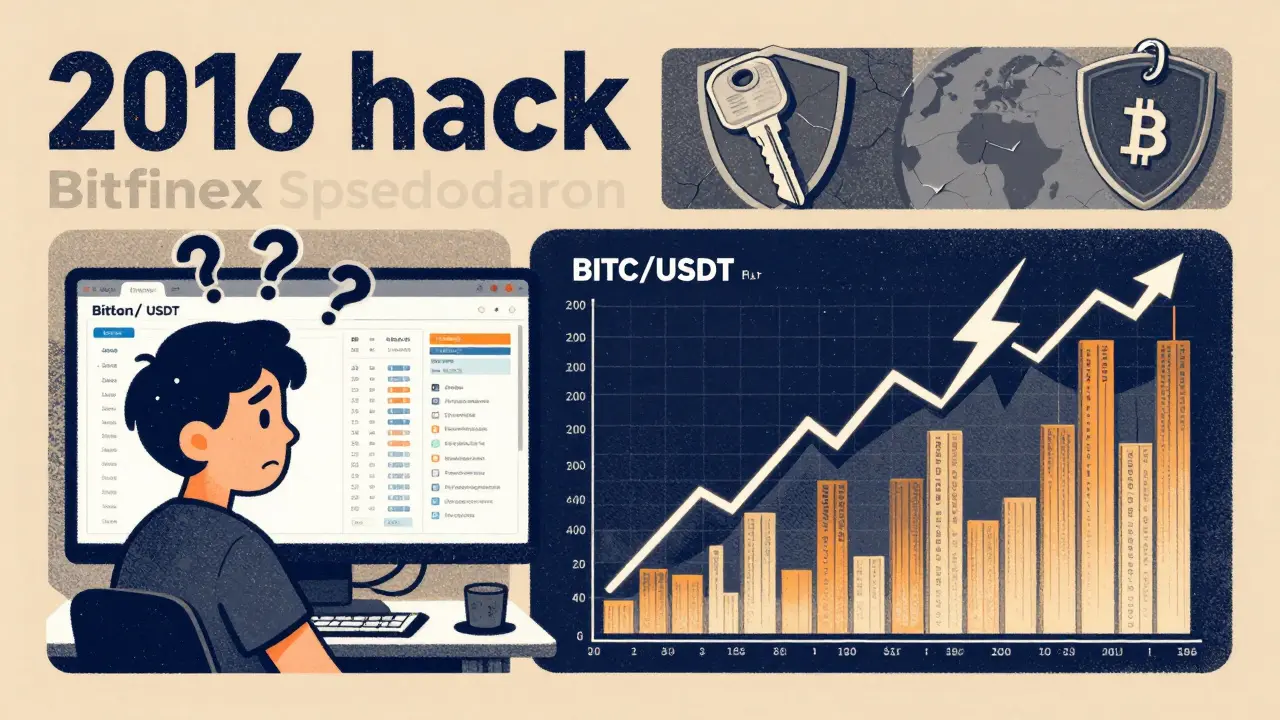
Bitfinex was hacked in 2016. Around 120,000 BTC - worth $72 million at the time - disappeared. Most exchanges would’ve collapsed. Bitfinex didn’t. They raised funds, issued LEO tokens to cover losses, and repaid every single customer 100%. That’s not normal. It’s rare. And it’s why many experienced traders still trust them.
Today, Bitfinex stores 95% of assets in cold storage. They use multi-signature wallets and have a bug bounty program that’s paid out over $2 million since 2020. Their security score on CertiK is high. But here’s the problem: there’s no insurance. Not on crypto. Not on fiat. If another breach happens, there’s no guarantee you’ll get your money back. Unlike Coinbase, which carries third-party insurance, Bitfinex relies on its own reserves and reputation.
That’s a risk. But for many, it’s a calculated one. They trust Bitfinex’s history more than a corporate insurance policy. Still, if you’re storing large sums long-term, consider moving them to a hardware wallet after trading.
Customer Support: The Weak Link
This is where Bitfinex falls apart for most users.
No live chat. No phone support during weekends. Email responses take 3-7 days. Trustpilot is full of complaints about accounts being frozen for weeks without explanation. One user reported being locked out for 12 days after a simple withdrawal request triggered a security flag. No call. No update. Just silence.
Even worse: the support team often replies with copy-pasted answers that don’t address your issue. If you need help with a technical problem - like a failed margin position or a stuck withdrawal - you’re on your own. Most users turn to Reddit or Bitfinex’s Telegram channel for help, where experienced traders share tips.
Compare that to Binance or Kraken, where you can get live chat in under 5 minutes. Bitfinex doesn’t care about hand-holding. They assume you already know what you’re doing. If you don’t, you’ll feel abandoned.
Who Should Use Bitfinex? Who Should Avoid It?
Bitfinex is a specialist tool. It’s not a general-purpose app.
Use Bitfinex if:
- You’ve traded crypto for at least 2 years
- You trade with leverage or derivatives regularly
- You value low latency and deep order books over a pretty interface
- You’re comfortable with complex order types and manual risk management
- You’re okay with slow fiat deposits and no live support
Avoid Bitfinex if:
- You’re new to crypto and just want to buy Bitcoin
- You need fast customer service when things go wrong
- You rely on credit card deposits or instant fiat withdrawals
- You want a platform with educational content or beginner tutorials
- You’re uncomfortable with the lack of deposit insurance
Bitfinex’s user base reflects this. According to their 2025 survey, 78% of active traders have over two years of experience. Retail growth has dropped 7.2% year-over-year, but institutional usage is up 3.1%. They’re not trying to attract new users. They’re holding onto the ones who know how to use them.

Compared to the Competition
Here’s how Bitfinex stacks up against top rivals:
| Feature | Bitfinex | Binance | Kraken Pro |
|---|---|---|---|
| Cryptocurrencies | ~170 | 350+ | 200+ |
| Taker Fee (base) | 0.2% | 0.1% | 0.16% |
| Margin Leverage | Up to 10x | Up to 125x | Up to 5x |
| Fiat Support | USD, EUR, GBP, JPY | 20+ currencies | 10+ currencies |
| Live Chat Support | No | Yes | Yes |
| Insurance on Deposits | No | No | Yes (USD only) |
| Proof of Reserves | Not published | Published monthly | Published quarterly |
Bitfinex wins on execution speed and derivatives depth. Binance wins on variety and ease of use. Kraken wins on compliance and insurance. If you’re trading $100,000+ per month, Bitfinex’s low slippage and OCO orders give you an edge. If you’re trading $5,000 a month, you’re better off on Kraken or even Binance.
The Bottom Line
Bitfinex isn’t broken. It’s just not for everyone. It’s a scalpel, not a Swiss Army knife. It doesn’t try to be friendly. It doesn’t explain things. It assumes you already know what you’re doing - and it delivers raw, unfiltered trading power.
If you’re an experienced trader who’s frustrated with poor order fills on other platforms, Bitfinex is still one of the best in the world. The liquidity, the speed, the advanced tools - they’re unmatched for professional strategies.
But if you’re new, or if you value customer service, insurance, or simple onboarding, walk away. There are better options. And if you do decide to try it, start small. Test the withdrawal process. See how long support takes. Don’t deposit your life savings until you’ve been through a real trade and a real withdrawal.
Bitfinex has survived 12 years, a major hack, and regulatory pressure. That says something. But survival doesn’t mean safety. It means resilience. And that’s exactly what you need to use it.
Is Bitfinex safe to use in 2026?
Bitfinex has a strong security track record, including repaying all customers after its 2016 hack. It uses cold storage and multi-sig wallets, and its bug bounty program is active. However, it does not offer insurance on deposits - crypto or fiat. If another breach occurs, there’s no guarantee you’ll be reimbursed. Use it for trading, not long-term storage.
Can beginners use Bitfinex?
Technically yes, but it’s not recommended. The interface is complex, with no tutorials or guided onboarding. Customer support is slow and unhelpful for new users. Most beginners struggle with basic functions like placing limit orders or managing margin. Start with Coinbase or Kraken instead, then move to Bitfinex once you’re comfortable with trading mechanics.
How long does KYC take on Bitfinex?
Full KYC verification typically takes 3-5 business days. You’ll need to submit government ID, proof of address, and sometimes a selfie video. The process is manual and slow. Once approved, you gain access to all deposit and withdrawal methods. Don’t expect instant access - this isn’t a crypto app for quick signups.
Does Bitfinex have a mobile app?
Yes, Bitfinex has a mobile app for iOS and Android. But it’s basic. It lets you check balances, place simple orders, and view your portfolio. Advanced features like OCO orders, margin settings, and derivatives trading are only available on the web platform. The app is useful for monitoring, not for serious trading.
Why does Bitfinex not publish Proof of Reserves?
Bitfinex has never published a formal Proof of Reserves audit. While they claim to hold 100% of customer funds, they don’t provide third-party verification like Binance or Kraken. This is a major red flag for regulators and cautious users. Some analysts believe this is due to legal concerns in their operating jurisdictions. Until they do, many institutional investors avoid them.
What’s the minimum deposit on Bitfinex?
The minimum deposit is $25 for fiat currencies (USD, EUR, GBP, JPY). For crypto, there’s no minimum - you can deposit even small amounts like 0.001 BTC. However, withdrawal fees for fiat are high ($10-$25), so depositing small amounts frequently isn’t cost-effective. Most users deposit larger sums once and trade from there.
Can I stake or lend on Bitfinex?
Yes. Bitfinex offers staking for over 30 proof-of-stake coins like ETH, SOL, and ADA, with annual yields ranging from 3% to 12%. They also have a peer-to-peer lending platform where you can lend your crypto to other traders and earn interest (typically 5-15% APR). These features are useful for passive income, but returns fluctuate with market demand.
Next Steps
If you’re still considering Bitfinex, do this:
- Start with a small deposit - $100 in crypto, not fiat.
- Place one limit order and one OCO order. See how fast they execute.
- Try a withdrawal. Time how long it takes.
- Send an email to support with a simple question. Wait 5 days.
- Only then decide if the speed and tools are worth the hassle.
Bitfinex doesn’t need to convince you. It just needs to work for you. And if it does - you’ll know.