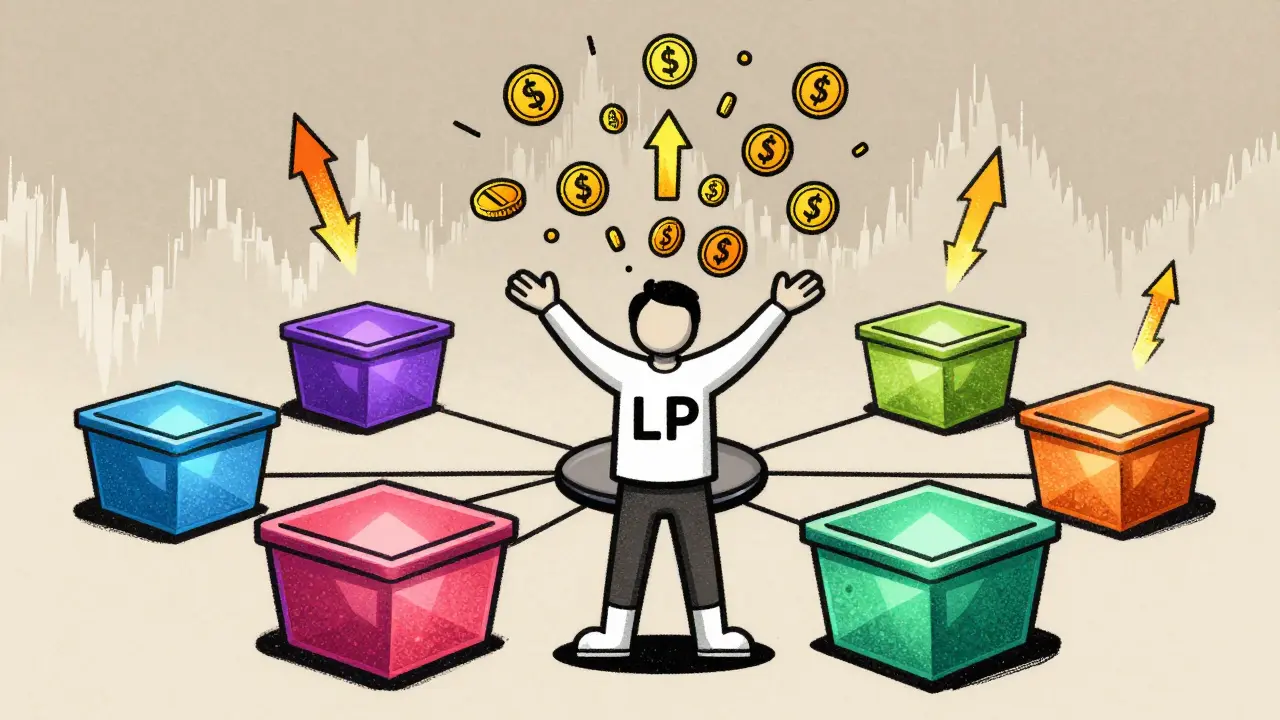
Most crypto traders focus on buying low and selling high. But what if you could make money just by keeping your tokens in a pool-even when prices swing wildly? That’s the promise of Meteora DLMM, a decentralized exchange built on Solana that’s changing how liquidity providers earn. Unlike traditional exchanges where you just trade, Meteora lets you become the market itself. And for those who understand how to use it, the returns are noticeably better than on other Solana DEXes.
What Makes Meteora DLMM Different?
Meteora DLMM isn’t just another crypto exchange. It’s a liquidity engine. Launched in 2023 as a rebrand of Mercurial Finance, it’s now one of the top three decentralized exchanges on Solana, behind only Raydium and Jupiter. But while those platforms focus on trading volume, Meteora’s real strength is how it pays liquidity providers. Its secret? Bin-based liquidity. Instead of spreading your funds evenly across a price range like Uniswap or Orca, Meteora lets you lock your capital into specific price intervals-called “bins.” Each bin acts like its own mini-pool. If a trade happens within your bin, you earn fees. And because you’re not wasting capital on price ranges where no one trades, your money works harder. This isn’t theory. In October 2024, Meteora reported $528 million in total value locked (TVL) and $284 million in daily trading volume. It supports over 600 assets across 6,700 markets. And with Solana’s speed-transactions confirm in 400 milliseconds and cost just $0.00025-it’s one of the most efficient DeFi platforms on the market.How It Works: Spot, Curve, and Bid-Ask Modes
Meteora gives you three ways to deploy your liquidity:- Spot Mode: Distributes your funds evenly across a wide price range. Best for beginners or if you’re unsure where prices will go.
- Curve Mode: Concentrates your liquidity around the current market price. This is where the real profits happen. In tests, Curve mode delivered 22.7% higher capital efficiency than Uniswap V3 in volatile markets.
- Bid-Ask Mode: Lets you bet on price direction. You can put more capital below the current price if you think it’ll drop, or above if you think it’ll rise. This turns liquidity provision into a tactical play.
Double Income: Trading Fees + Lending Yields
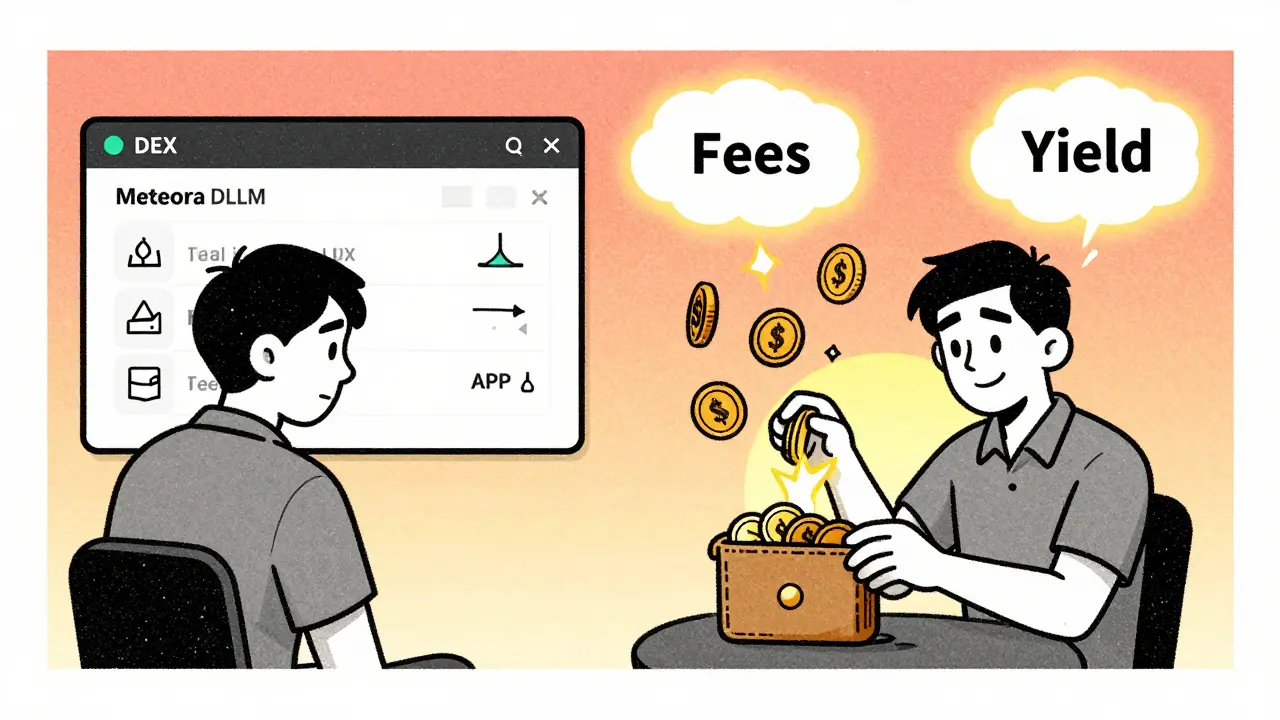
Here’s where Meteora really separates itself. Most DeFi platforms make you choose: earn trading fees or lend your tokens for yield. Meteora does both. Through its Dynamic Vaults feature, your liquidity in Meteora pools is automatically lent out to major Solana lending protocols like Marginfi and Solend. That means you get:- Trading fees from swaps in your bin
- Lending yields from your deposited assets
Security and Risk Controls
With over $500 million at stake, security can’t be an afterthought. Meteora uses the Hermes monitoring system to track 37 risk parameters in real time. It also limits exposure: no single asset can make up more than 15% of any pool. That prevents one token crash from wiping out a liquidity pool. The protocol was audited by CertiK in Q3 2024. No critical vulnerabilities were found. But there’s a catch: complexity increases risk. Security expert Dr. Samczsun pointed out that Meteora’s advanced architecture creates a larger attack surface than simpler AMMs. That’s true. But Meteora compensates with layered safeguards-real-time alerts, allocation caps, and a governance body called the Expert DAO, made up of 12 veteran DeFi managers overseeing $4.2 billion in total capital. For most users, the risk is manageable. The bigger issue isn’t hacking-it’s misconfiguring your bins.Compared to Raydium, Orca, and Jupiter
Here’s how Meteora stacks up against its main rivals:| Feature | Meteora DLMM | Raydium | Orca | Jupiter |
|---|---|---|---|---|
| TVL (Oct 2024) | $528M | $327M | $210M | $1.1B |
| Trading Volume (24h) | $284M | $198M | $120M | $450M |
| LP Profitability | #1 on Solana | Medium | Medium | Low |
| Slippage (same trade size) | 43% lower than Raydium | Baseline | Higher | Low |
| Fee Adjustment | Dynamic (auto-up during volatility) | Fixed | Fixed | Fixed |
| Lending Yield Integration | Yes (Dynamic Vaults) | No | No | No |
| Onboarding Time | 37% longer than Raydium | Baseline | Shortest | Short |
Who Should Use Meteora DLMM?
This isn’t a platform for casual traders. If you just want to swap SOL for ETH, use Jupiter. If you’re new to DeFi, start with Orca. Meteora DLMM is for:- Liquidity providers who want to maximize yield
- Traders who actively manage their positions
- Users comfortable with price bins and volatility adjustments
- People holding memecoins or new tokens that spike fast
Getting Started: The Learning Curve
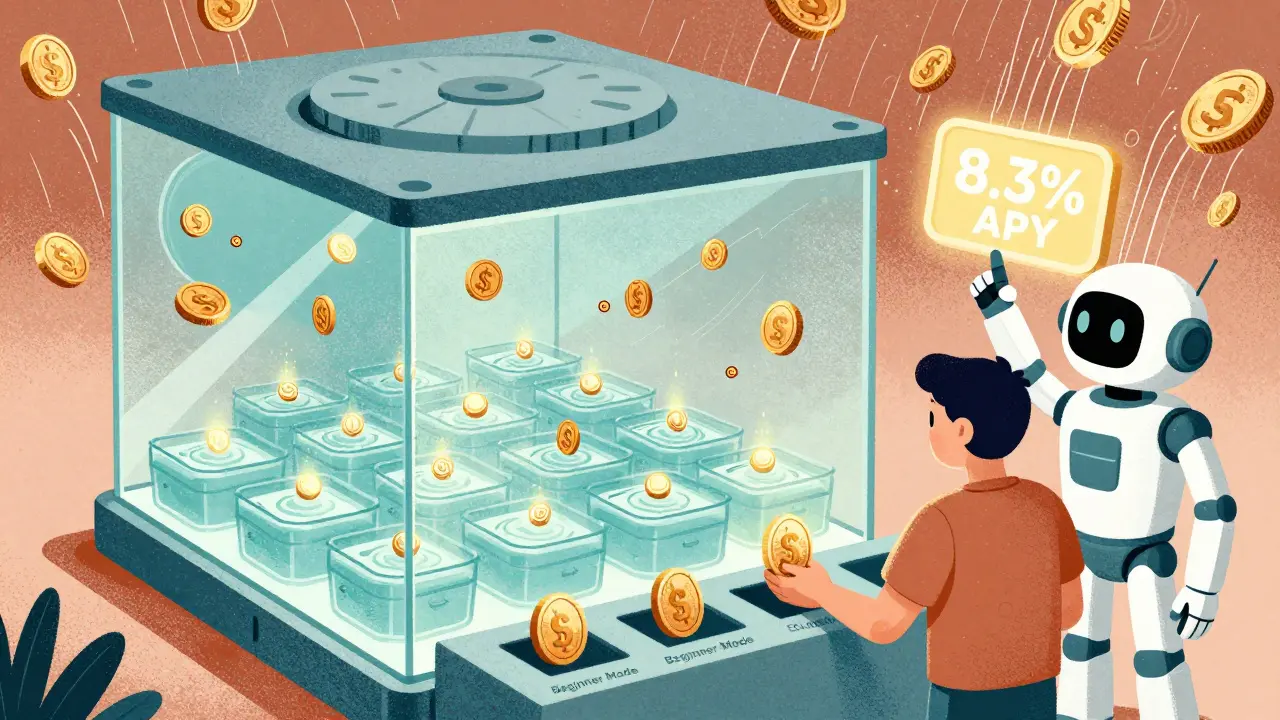
You’ll need a Solana wallet: Phantom, Backpack, or Slope. Connect it, pick a pool (SOL/USDC is the safest starting point), and choose your mode. Meteora offers a “Beginner Mode” that auto-sets your bins. It’s not optimal, but it’s better than nothing. Most users spend 4-8 hours learning the full system. There are now video tutorials, detailed guides, and a responsive Discord community with 17-minute average response times. Common mistakes:- Picking bins too wide → you spread your capital too thin
- Picking bins too narrow → you miss trades entirely
- Choosing the wrong fee tier → too low in volatility, too high in calm markets
The Future: MET Token and Expansion
Meteora’s final step toward full decentralization is the MET governance token, expected to launch in Q1 2025. 55% of tokens will go to liquidity providers through mining programs. That means your participation now could earn you future rewards. The roadmap includes:- Integration with Solana’s Firedancer validator (faster, cheaper transactions)
- Expansion to Ethereum Layer 2s via Wormhole
- A complete UI overhaul to cut onboarding time
Final Verdict
Meteora DLMM isn’t the easiest crypto exchange. But it’s the most profitable for those who put in the time. If you’re tired of earning 5% APY on your stablecoins and want to hit 8%+, this is your tool. It’s not magic-it’s math. Better capital use. Dynamic fees. Dual income. Lower slippage. For professional LPs, it’s already the gold standard on Solana. For newcomers? Start small. Use Beginner Mode. Learn one bin at a time. The returns are worth the effort.Is Meteora DLMM safe to use?
Yes, for users who understand the risks. Meteora has been audited by CertiK and uses real-time monitoring with allocation caps to limit exposure. The biggest risk isn’t hacking-it’s user error. Misconfiguring price bins or choosing the wrong fee tier can reduce your earnings. Always start with small amounts and use the Beginner Mode until you’re comfortable.
How does Meteora make money?
Meteora doesn’t charge users trading fees directly. Instead, it takes a small portion of the trading fees earned by liquidity providers-typically around 10-20%-to fund development and operations. This aligns its incentives with LPs: the more users earn, the more Meteora earns. It’s a win-win structure.
Can I lose money using Meteora DLMM?
Yes, but not in the way you might think. You won’t lose money to a hack if you use trusted wallets. But you can lose out on potential earnings if your price bins are set too wide or too narrow. You also face impermanent loss if the price of your paired tokens moves sharply outside your range. That’s true for all concentrated liquidity DEXes. Meteora reduces this risk by 28% compared to standard models, according to Stanford research, but it doesn’t eliminate it.
Do I need to hold MET token to use Meteora?
No. The MET token is scheduled for launch in Q1 2025 and will be used for governance and future incentives. You can use all of Meteora’s features right now without holding any token. Your earnings come from trading fees and lending yields, not from owning MET.
Is Meteora better than Raydium for beginners?
Not really. Raydium is simpler, faster to set up, and has a cleaner interface. If you’re just starting out, Raydium or Orca are better choices. Meteora is designed for those who want to optimize their returns and are willing to learn how price bins and dynamic fees work. Once you understand it, Meteora gives you significantly higher yields-but the learning curve is real.
What’s the best asset pair to start with on Meteora?
SOL/USDC is the safest starting point. It’s the most liquid pair on Solana, has low volatility compared to memecoins, and offers stable yields. Once you’re comfortable, try pairs like ETH/USDC (via Wormhole) or high-volume memecoins like BONK or WIF, where Meteora’s dynamic fees really shine.



Brenda Platt
January 26, 2026 AT 13:21Okay but can we talk about how Meteora’s Dynamic Vaults are basically giving you free money? 🤯 I started with SOL/USDC and my APY jumped from 5.2% on Raydium to 8.7% in two weeks. No extra work. Just set it and forget it… until the next bin adjustment 😅
Mark Estareja
January 27, 2026 AT 13:30Let’s be real - this is just a glorified AMM with fee layering and yield aggregation. The ‘bin-based liquidity’ is just Uniswap V3 with a Solana wrapper. The 22.7% capital efficiency claim? Backtested on a 30-day window during a bull run. Real-world volatility? You’ll get liquidated if you don’t monitor your bins every 4 hours. This isn’t passive income - it’s active DeFi labor.
Melissa Contreras López
January 27, 2026 AT 15:56Y’all are overcomplicating this. 🌱 I’m a total newbie and I used Beginner Mode for my first $500. Took me 20 minutes. Got 1.9% monthly on SOL/USDC. Didn’t cry. Didn’t panic. Didn’t need a PhD in DeFi. Meteora’s UI is clunky, sure - but the rewards? Real. And the Discord crew helped me fix my bin width in 12 minutes. You don’t need to be a wizard. Just start small, stay curious, and don’t let fear stop you. You got this 💪✨
Mike Stay
January 28, 2026 AT 21:11While it is indeed true that Meteora DLMM represents a significant architectural advancement within the Solana decentralized finance ecosystem, one must also acknowledge the broader macroeconomic context in which this innovation has emerged. The convergence of high-throughput blockchain infrastructure, dynamic fee mechanisms, and integrated lending protocols has created a novel paradigm for liquidity provision - one that, while computationally efficient and economically incentivized, still demands a high degree of user literacy. The fact that Meteora achieves a 43% reduction in slippage compared to Raydium is not merely a technical triumph, but a testament to the maturation of algorithmic market-making on permissionless networks. Furthermore, the upcoming MET token distribution, which allocates 55% of supply to liquidity providers, signals a profound commitment to decentralized governance and equitable value capture. One might argue that the 37% longer onboarding time is not a flaw, but rather a necessary friction - a filter that ensures only those who are truly invested in the protocol’s long-term success participate. In this light, Meteora is not simply a DEX - it is a socioeconomic experiment in capital efficiency, and one that may very well redefine the future of DeFi.
Taylor Mills
January 29, 2026 AT 10:30