You’re staring at your wallet, wondering if you should pay $15 in gas fees just to swap a few dollars’ worth of tokens. If you’ve tried trading on Ethereum lately, that pain is familiar. Now imagine doing the same trade for pennies, with instant confirmation, and still keeping full control of your keys. That’s the promise of PancakeSwap on the Binance Smart Chain (BSC). But with so many decentralized exchanges popping up, does the latest version-PancakeSwap v3-actually deliver? Or is it just hype wrapped in a cute pancake logo?
I’ve spent weeks testing PancakeSwap v3, moving funds across chains, providing liquidity, and swapping obscure tokens. The verdict? It’s not perfect, but for anyone operating within the BSC ecosystem, it’s hard to beat. Let’s break down what works, what doesn’t, and whether this platform deserves your trust in 2026.
What Exactly Is PancakeSwap v3?
At its core, PancakeSwap is a decentralized exchange (DEX) that uses an automated market maker (AMM) model to facilitate token swaps without intermediaries. Unlike centralized exchanges like Coinbase or Binance, you don’t deposit funds into their custody. You connect your Web3 wallet, sign transactions directly from your device, and trade peer-to-peer via smart contracts.
The "v3" designation refers to the major upgrade inspired by Uniswap v3’s concentrated liquidity mechanics. This allows liquidity providers (LPs) to allocate capital within specific price ranges rather than spreading it across all possible prices. For traders, this means deeper liquidity at popular price points and lower slippage. For LPs, it means higher fee efficiency but also higher risk if the price moves out of range.
Launched initially in September 2020, PancakeSwap has evolved from a simple fork of Uniswap into a multi-chain DeFi powerhouse. By 2026, it operates on eight blockchains, including Ethereum, Polygon zkEVM, zkSync Era, Linea, Base, Arbitrum One, Aptos, and Solana. However, its heart remains on BSC, where it generates over 64% of the network’s total protocol revenue.
Fees and Trading Costs: Where Your Money Goes
Let’s talk numbers because this is why most people choose PancakeSwap over Ethereum-based alternatives. The standard swap fee on PancakeSwap v3 is 0.25%. Compare that to Uniswap v3’s typical 0.3%-1% tiers plus significantly higher gas costs, and the savings become obvious.
But fees aren’t just about the swap percentage. They include:
- Network Gas Fees: On BSC, these are negligible, often under $0.10 per transaction. On Ethereum mainnet, they can spike to $20+ during congestion.
- Liquidity Provider Fees: Part of the 0.25% goes to LPs who provide the tokens you’re trading against.
- Protocol Fees: A small cut goes to the CAKE treasury for development and incentives.
If you’re trading perpetual futures on PancakeSwap, the fee structure changes. Makers pay 0.02%, while takers pay 0.07%. These rates are competitive with some centralized derivatives platforms, especially when you factor in the lack of KYC requirements.
| Feature | PancakeSwap v3 (BSC) | Uniswap v3 (Ethereum) | SushiSwap (Multi-chain) |
|---|---|---|---|
| Average Swap Fee | 0.25% | 0.3% - 1.0% | 0.3% |
| Avg. Gas Cost (USD) | $0.05 - $0.15 | $5.00 - $25.00+ | $0.10 - $2.00 (chain dependent) |
| KYC Required? | No | No | No |
| Supported Chains | 9+ | Ethereum, Polygon, etc. | Many |
Security and Trust: Can You Sleep Well?
Decentralized finance carries inherent risks. Smart contract bugs, rug pulls, and user error are real threats. So, how secure is PancakeSwap? The codebase is open-source and has been audited by three reputable firms: CertiK, Peckshield, and SlowMist. These audits check for vulnerabilities in logic, access controls, and economic assumptions.
Additionally, PancakeSwap uses multi-signature security protocols for its smart contracts. This means no single developer can unilaterally change critical parameters or drain funds. It’s a robust setup, but remember: audits reduce risk; they don’t eliminate it. Always check the contract address before interacting with any new pool.
Your private keys never leave your wallet. Whether you use MetaMask, Trust Wallet, or Binance Smart Wallet, you retain custody. This non-custodial nature is a double-edged sword. You’re safe from exchange hacks, but if you lose your seed phrase, there’s no customer support hotline to call.

Features Beyond Swapping: Farming, Staking, and NFTs
PancakeSwap isn’t just a place to swap tokens. It’s a comprehensive DeFi ecosystem. Here’s what else you can do:
Liquidity Pools and Yield Farming
This is where the magic happens for passive income seekers. You provide two tokens (e.g., BNB and USDT) to a pool. In return, you earn trading fees and potentially CAKE tokens as rewards. With v3’s concentrated liquidity, you can set custom price ranges. If you’re experienced, this boosts your capital efficiency. If you’re new, stick to auto-compounding vaults to simplify things.
Staking CAKE
You can stake CAKE tokens to earn more CAKE. There are different lock-up periods: flexible (no lock), 3-month, 6-month, and 12-month. Longer locks yield higher APRs. As of mid-2026, flexible staking offers around 8-12% APY, while longer terms can push higher depending on emissions rates.
NFT Marketplace
PancakeSwap launched its own NFT marketplace. While not as bustling as OpenSea, it integrates seamlessly with the platform. You can buy, sell, and mint NFTs using BNB or CAKE. Some NFTs even offer utility within the PancakeSwap ecosystem, such as boosted farm yields.
Prediction Markets
For gamblers at heart, PancakeSwap offers prediction markets. You bet on whether the price of BNB will go up or down in the next five minutes. It’s high-risk, high-reward, and purely speculative. Treat it like a casino, not an investment strategy.
User Experience: How Easy Is It to Use?
The interface is clean and intuitive, especially if you’ve used any DeFi app before. Connecting a wallet takes seconds. Swapping tokens is straightforward: select input, select output, confirm. Slippage settings are adjustable, though defaults usually work fine for liquid pairs.
However, beginners might find the sheer number of features overwhelming. Where do you start? Which pool is safest? What does “impermanent loss” actually mean? The documentation is extensive, but reading through it requires patience. I recommend starting with small trades to get comfortable before diving into farming.
One downside: there’s no traditional customer support. No live chat, no email ticket system. Help comes from community forums, Telegram groups, and Discord channels. Responses vary in speed and quality. If you’re stuck on a technical issue, you might wait hours-or days-for an answer.
Pros and Cons: The Honest Breakdown
Let’s strip away the marketing fluff. Here’s what you need to know before committing your capital.
Pros
- Low Fees: BSC’s infrastructure keeps costs minimal compared to Ethereum.
- High Liquidity: Dominant presence on BSC ensures deep order books for major pairs.
- No KYC: Trade anonymously with just a wallet connection.
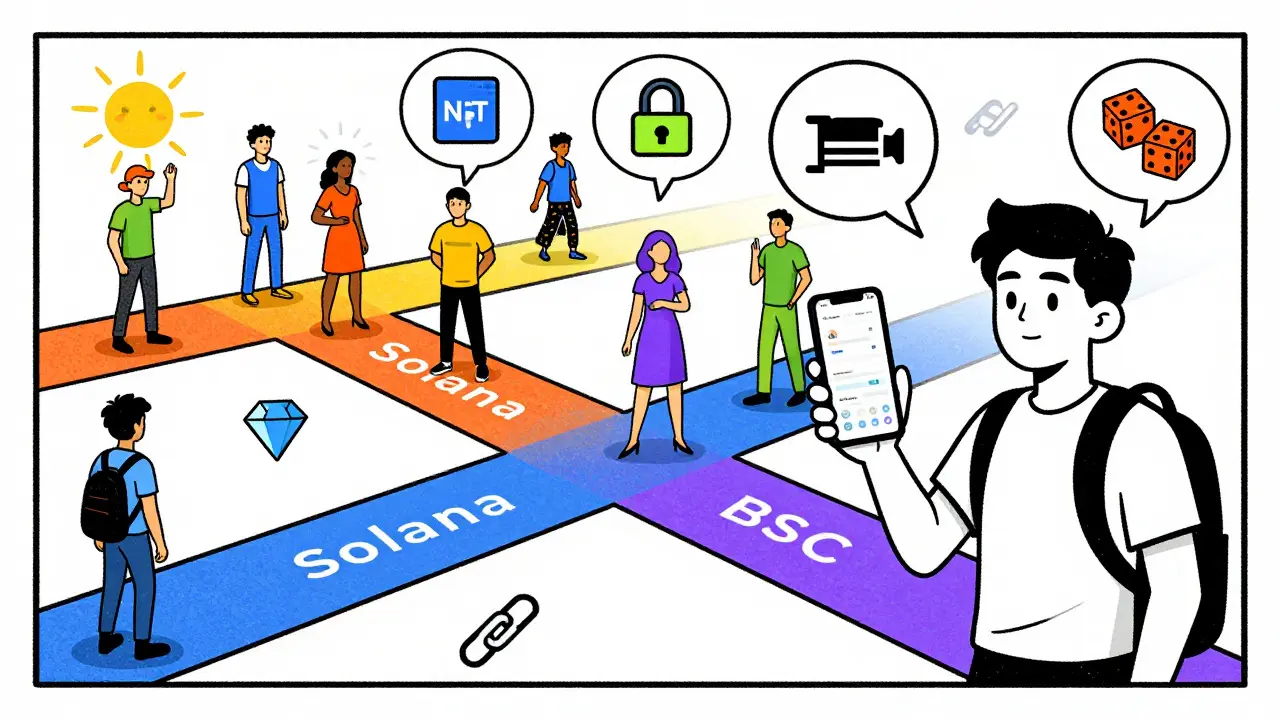
- Multi-Chain Support: Access assets on Solana, Arbitrum, Base, and more via cross-chain bridges.
- Rich Feature Set: Spot trading, futures, farming, staking, NFTs, and predictions in one place.
Cons
- Complexity for Beginners: Advanced features like concentrated liquidity require education.
- Impermanent Loss Risk: Providing liquidity can result in losses if token prices diverge sharply.
- No Fiat On-Ramp: You must already hold crypto to trade. Buying BTC/ETH elsewhere first adds steps.
- Regulatory Uncertainty: As a DEX, it operates in a gray area. Future regulations could impact operations.
- Community-Only Support: Lack of professional customer service can be frustrating for novices.
Who Should Use PancakeSwap v3?
This platform shines for intermediate to advanced crypto users who prioritize cost-efficiency and decentralization. If you’re tired of paying high gas fees on Ethereum and want to participate in DeFi without handing over your keys, PancakeSwap is a strong contender.
It’s less ideal for absolute beginners who expect hand-holding or those who only trade Bitcoin and Ethereum occasionally. For them, a centralized exchange with fiat integration might be simpler. Also, if you need institutional-grade compliance reports, PancakeSwap’s lack of KYC makes it unsuitable.
Final Verdict: Worth Your Time?
PancakeSwap v3 has matured into a robust, feature-rich DEX that dominates the BSC landscape. Its combination of low fees, high liquidity, and innovative features like concentrated liquidity makes it a top choice for active traders and yield farmers. While the learning curve exists, the payoff-in both financial savings and educational value-is substantial.
Just remember: DeFi is volatile. Do your own research, start small, and never invest more than you can afford to lose. PancakeSwap provides the tools, but you drive the car.
Is PancakeSwap safe to use?
Yes, PancakeSwap is considered safe due to multiple third-party audits by firms like CertiK and Peckshield. However, always verify contract addresses and be aware of risks associated with individual liquidity pools, such as impermanent loss or smart contract exploits in newer tokens.
Do I need KYC to use PancakeSwap?
No, PancakeSwap is a decentralized exchange and does not require Know Your Customer (KYC) verification. You only need a compatible Web3 wallet like MetaMask or Trust Wallet to connect and trade.
What are the fees on PancakeSwap v3?
Standard swap fees are typically 0.25%. Additionally, you pay network gas fees, which are very low on Binance Smart Chain (usually under $0.10). Perpetual futures trading fees are 0.02% for makers and 0.07% for takers.
Can I buy Bitcoin directly on PancakeSwap?
You cannot buy Bitcoin with fiat currency directly on PancakeSwap. You must first acquire cryptocurrency (like BNB or USDT) from a centralized exchange or another source, then bridge or transfer it to the BSC network to trade on PancakeSwap.
What is impermanent loss?
Impermanent loss occurs when the price of the tokens you provided as liquidity changes compared to when you deposited them. If the price ratio shifts significantly, you might end up with less value than if you had just held the tokens. It's called "impermanent" because the loss disappears if the price returns to its original level.