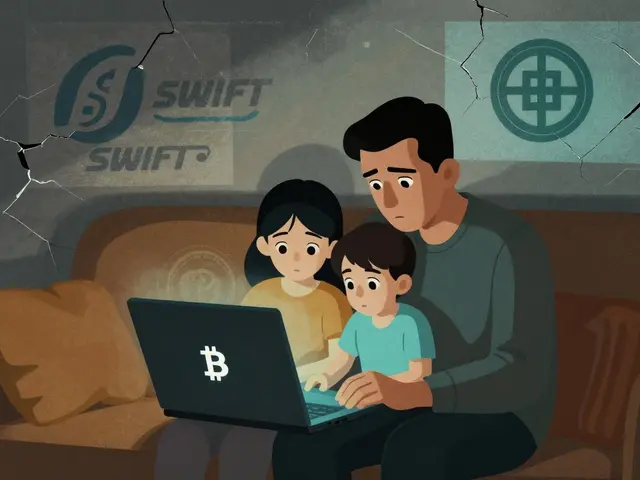
Imagine waking up one day to find your digital assets locked behind a wall that’s slowly eating them alive. That was the reality for users of TOKOK, a cryptocurrency exchange that operated from 2018 until its abrupt closure in July 2022. If you’re searching for this platform today, you might be confused by outdated reviews or lingering questions about your own funds. The short answer? TOKOK is dead. But understanding how it died-and why it matters-could save you from making similar mistakes with other exchanges.
The Rise and Fall of a Mid-Tier Player
TOKOK wasn’t always a cautionary tale. Registered in the British Virgin Islands under the entity Kindly Keep Network Technology Limited, it positioned itself as a global hub for trading numerous digital assets. During its operational peak around 2020-2021, it attracted attention for its mobile apps on iOS and Android and a referral program that paid out up to 50% of trading fees. For a while, it looked like a viable option for traders who wanted more than just Bitcoin and Ethereum.
But here’s the thing: volume doesn’t equal trust. While TOKOK processed roughly $18.7 million in daily trades at its height, that was a mere 0.05% of what industry giants like Binance handled. It never secured major regulatory licenses or published transparent security audits. This lack of oversight became its Achilles' heel when market conditions turned sour during the "crypto winter" of 2022.
The Shocking Closure Announcement
On July 31, 2022, TOKOK dropped a bombshell: the website was closing. But instead of facilitating orderly withdrawals, they introduced a policy that raised immediate red flags. They announced a 5% monthly management fee on all undrawn assets. Think about that for a second. If you left $1,000 on the platform, you’d lose $50 every month. After a year, you’d have less than $600 left. This isn’t standard practice; it’s a classic indicator of an exit scam.
Industry analysts and community members quickly labeled the move malicious. Unlike reputable exchanges that freeze accounts temporarily during crises, TOKOK actively eroded user balances. Reddit threads and Trustpilot reviews exploded with complaints about unresponsive support and failed withdrawal attempts. The consensus shifted from "mid-tier exchange" to "avoid at all costs" almost overnight.
| Feature | TOKOK (Historical) | Industry Standard (Reputable Exchanges) |
|---|---|---|
| Regulatory Status | British Virgin Islands registration only; no major licenses. | Licensed in multiple jurisdictions (e.g., US, EU, Singapore). |
| Referral Program | Up to 50% revenue share for high token holders. | Typically 20-25% revenue share. |
| Security Audits | No public third-party audits disclosed. | Regular Proof-of-Reserves and security audits. |
| US Customer Access | Allowed US investors without explicit prohibition. | Often restricted or requires specific compliance steps. |
Why Users Lost Money: The Fee Trap
The most painful part for TOKOK users wasn’t just the closure-it was the financial bleed. The 5% monthly fee compounded rapidly. Let’s do the math: if you had $1,000 stuck on TOKOK after July 2022, by August 2023, you’d have lost over 40% of your principal. By mid-2024, that number would exceed 60%. This structure suggests the company knew it couldn’t return funds and tried to monetize the delay.
User experiences documented on forums like BitcoinTalk showed customer support response times ballooning from 12 hours to over 72 hours in the months leading up to the shutdown. When support did respond, it was often with generic templates ignoring specific withdrawal requests. This pattern-deteriorating service followed by punitive fees-is textbook behavior for failing platforms trying to squeeze last-minute value from trapped capital.
TOKOK vs. Tokocrypto: Don’t Get Confused
A common point of confusion arises because of the similarly named Tokocrypto. These are two completely different entities. Tokocrypto is an Indonesian exchange regulated by BAPPEBTI (the Commodity Futures Trading Regulatory Agency) and remains operational. TOKOK, however, has no connection to Indonesia’s regulatory framework and ceased operations permanently.
If you see reviews mentioning "Tokocrypto" with positive ratings for local payment methods, don’t assume those apply to TOKOK. The latter never established a strong foothold in any single region, targeting a broad, multilingual audience without the deep local integration that successful regional exchanges rely on. This lack of focus made it vulnerable when larger players expanded globally.

Lessons Learned: How to Spot the Next TOKOK
So, what should you take away from this disaster? First, check the regulatory footprint. A simple BVI registration means little compared to licenses from bodies like the SEC, FCA, or MAS. Second, look for transparency. Reputable exchanges publish proof-of-reserves and undergo regular audits. TOKOK did neither. Third, watch for aggressive marketing gimmicks. While TOKOK’s referral program was generous, it distracted from core issues like liquidity depth and security infrastructure.
Also, be wary of exchanges that allow US customers without clear compliance frameworks. In the US, regulations are strict, and operating in a gray area often signals risk. Finally, keep your holdings diversified. Don’t leave large amounts of capital on smaller, less-regulated exchanges. The convenience of a wide asset list isn’t worth the risk of losing everything to a sudden shutdown.
What Happens Now?
As of September 2026, there is no indication of TOKOK reviving. Comparison sites listing it for "2025" are using automated templates, not current data. CoinCodex and Cryptowisser both flag it as non-operational. For former users, asset recovery is unlikely. The compounding fees have likely consumed most remaining balances, and legal avenues for pursuing a defunct BVI entity are complex and costly.
The TOKOK case serves as a stark reminder in the cryptocurrency space: not all that glitters is gold. High-yield referrals and easy sign-ups can mask structural weaknesses. Always prioritize security and regulation over novelty.
Is TOKOK crypto exchange still open?
No, TOKOK closed its doors in July 2022. The website is inaccessible, and the exchange is considered defunct by major tracking platforms like CoinCodex and Cryptowisser.
Can I withdraw my money from TOKOK?
Withdrawals are effectively impossible now. Before closure, many users reported failed attempts. After closure, the platform imposed a 5% monthly fee on undrawn assets, further reducing any potential balance until it reaches zero.
Was TOKOK a scam?
Many experts and users label it a probable exit scam due to the post-closure fee structure and lack of regulatory transparency. While not legally proven in all courts, the behavioral patterns align closely with known exit scam tactics.
Is TOKOK the same as Tokocrypto?
No. Tokocrypto is a separate, operational Indonesian exchange regulated by BAPPEBTI. TOKOK was registered in the British Virgin Islands and has no relation to Tokocrypto.
Did TOKOK allow US customers?
Yes, during its operation, TOKOK did not explicitly prohibit US investors from creating accounts, though it lacked specific US regulatory licenses which added risk for American traders.
Rishi Mehta
September 4, 2026 AT 16:18I still have nightmares about this, honestly.
It wasn't just losing money, it was the sheer audacity of that 5% monthly fee. They looked us dead in the eye and said 'we're going to eat your capital while you sleep' and we had no recourse because they were registered in some obscure BVI shell company with zero actual oversight. I remember checking my balance every single day hoping for a miracle withdrawal but instead watching it bleed out like an open wound. The support team didn't even pretend to care anymore by the end, just sending those robotic copy-paste replies that felt like a slap in the face. It’s infuriating how many people still fall for these 'high referral bonus' traps without checking if there's actually a license behind the curtain. We trusted them with our hard-earned crypto and they treated us like collateral damage in their little exit scam theater production. I hope everyone reading this learns from our pain because seeing another platform do this makes me want to scream into the void. 😤
Michael Rubin
September 4, 2026 AT 19:19I appreciate the detailed breakdown here. It helps to see the timeline laid out clearly rather than just rumors. I kept my exposure low so the impact was manageable but the principle stands.
Eugene McGrath
September 5, 2026 AT 06:26Typical offshore garbage 🗑️
Look at the regulatory status column in that table. BVI registration is basically a joke compared to SEC or FCA standards. These mid-tier exchanges always pump volume with wash trading and fake liquidity then dump on retail when the bear market hits. TOKOK had zero proof of reserves which is the absolute bare minimum for any exchange claiming to be trustworthy in 2022. If you don't hold your keys you don't own your coins and platforms like this prove why. The 5% management fee was just a polite way of saying 'your money is gone and we're keeping what's left.' Don't get confused with Tokocrypto either that's a legit Indonesian entity under BAPPEBTI completely different beast. Stop falling for high APY promises from unlicensed entities it's always too good to be true. Stick to major players with real audits or self-custody period.
Jess Emmerson
September 5, 2026 AT 07:08Hey guys, just wanted to add a bit of context from the support side. Before the shutdown, ticket response times went from hours to days. It’s a classic warning sign. When support starts ghosting you, run.
Also, regarding the Tokocrypto confusion: yeah, totally different. One is regulated in Indonesia, the other was a global mess. Good callout on the diversification point. Never keep all your eggs in one basket especially not a basket made of glass. Stay safe out there!
Sasha Wilde
September 6, 2026 AT 06:01Actually, if you look deeper into the corporate structure of Kindly Keep Network Technology Limited, you’ll find that the lack of transparency wasn't an accident it was a feature 🧐
Most users focus on the fees but miss the bigger picture. The absence of third-party security audits meant that no one knew if the assets were actually there or if they were being leveraged elsewhere. This is standard operating procedure for failing exchanges trying to delay the inevitable collapse. The 5% fee wasn't just greed it was a mechanism to reduce liability over time as balances dwindled to zero through attrition. By the time legal action could be taken most accounts would be negligible. It’s a sophisticated form of theft masked as administrative cost. People need to stop looking at UI/UX and start looking at legal frameworks and audit trails. Otherwise you’re just gambling with extra steps. 💀
Gabriela Gonzalez
September 7, 2026 AT 09:06This is such a powerful reminder! 🌟 Thank you for sharing this. It really highlights why we need to stay vigilant and always check for licenses before depositing. Sending positive vibes to everyone who lost funds! 💪❤️
Saket Kulkarni
September 8, 2026 AT 14:00The philosophical implication here is quite profound. Trust in decentralized finance often relies on centralized intermediaries which creates a paradox. If the intermediary fails due to poor governance the decentralization benefit is nullified. We must learn to value structural integrity over superficial features like referral bonuses. A simple BVI registration does not equate to moral or financial responsibility. Therefore one should approach such platforms with extreme caution and skepticism. It is a lesson in humility for all participants in the digital asset economy.
Kathy Siew
September 10, 2026 AT 02:17Lol imagine trusting a website with no audits with your life savings. But hey at least they gave us a great story to tell grandkids right? 'Grandpa did you lose money on TOKOK?' 'Yes child I did and it hurt.' 🙄 Anyway solid article. Just make sure ppl dont confuse it with Tokocrypto again cause that gets annoying fast.
Emerson Droguet
September 11, 2026 AT 08:41I am writing to express my gratitude for this comprehensive analysis. The distinction between TOKOK and Tokocrypto is particularly valuable for newcomers who may inadvertently conflate the two entities. Furthermore, the emphasis on regulatory compliance serves as a crucial educational point. I would recommend that prospective investors utilize resources such as the SEC’s EDGAR database or equivalent international bodies to verify licensing status before committing capital. It is essential to prioritize long-term security over short-term promotional incentives. This case study provides a clear framework for evaluating risk in emerging cryptocurrency markets. I trust this information will assist many in avoiding similar pitfalls in the future.
Ted Thoroughgood
September 11, 2026 AT 11:52Wow great info!! 🎉 Really helpful for anyone new to crypto. I learned so much from this post. Thanks for taking the time to write it up! It’s scary how fast things can go wrong but knowing what to look for helps us feel more confident. Let’s keep supporting each other in this wild market! 🚀💰