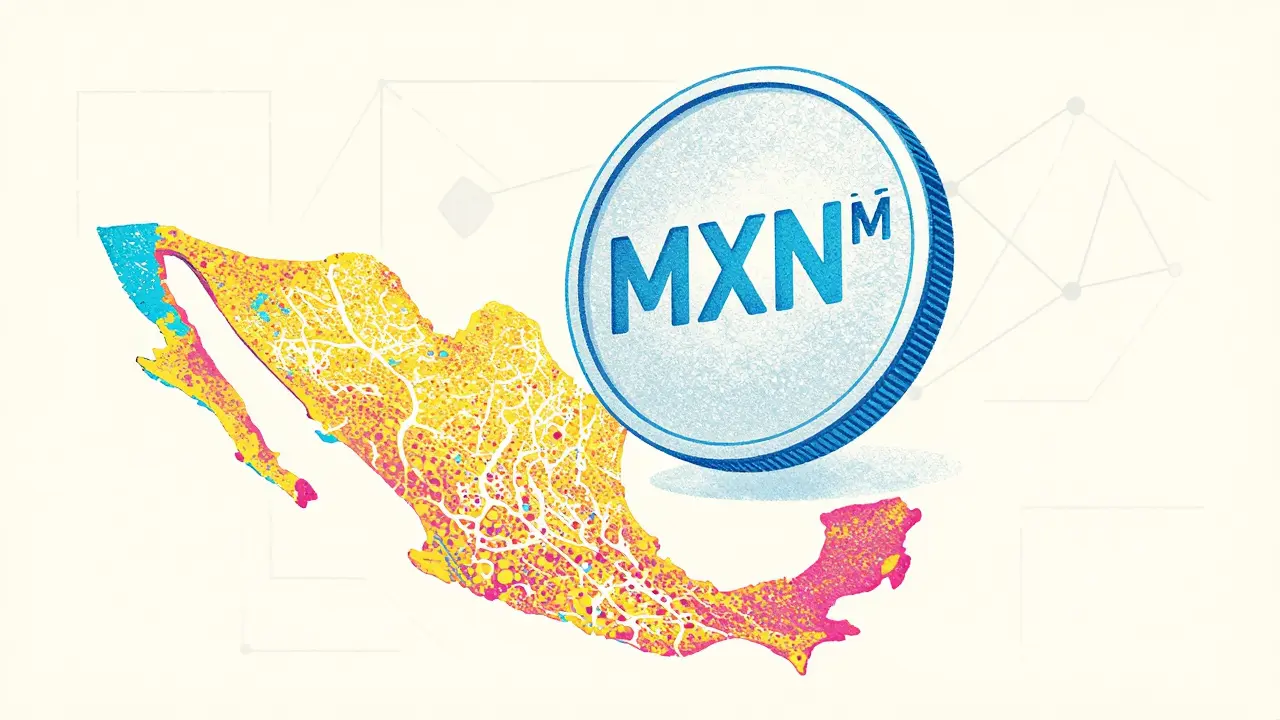
Tether MXNt is a digital currency pegged to the Mexican Peso, designed to offer price stability for users in Mexico without converting to US dollars. If you have seen this ticker symbol and wondered if it is just another coin or a useful tool for your wallet, you are not alone. It belongs to the family of stablecoins created by Tether Operations Limited, the same company behind the massive USD₮ (USDT). But unlike its dollar-backed sibling, MXN₮ has a very different story to tell.
You might be looking for a way to hold digital assets that don't swing wildly in value while staying within the Mexican economy. Or perhaps you are a trader trying to avoid the fees associated with swapping pesos for dollars every time you buy crypto. That is exactly what MXN₮ was built for. However, before you rush to buy it, there are some hard truths about liquidity, availability, and real-world usage that you need to know. Let's break down what this token actually is, how it works, and whether it deserves a spot in your portfolio right now.
The Basics: What Is Tether MXNt?
To understand MXN₮, you first need to grasp the concept of a stablecoin. A stablecoin is a cryptocurrency that aims to keep its value steady by tying it to an asset like a fiat currency. In this case, one token of MXN₮ is supposed to equal one Mexican Peso (MXN). This means if the peso is worth $0.05 USD, your MXN₮ should also be worth roughly $0.05 USD.
Tether launched MXN₮ in May 2022. It operates as an ERC-20 token on the Ethereum blockchain. This technical detail matters because it means you can store it in any wallet that supports Ethereum tokens, such as MetaMask or Trust Wallet. Unlike USDT, which lives on more than 14 different blockchains to maximize speed and lower fees, MXN₮ exists only on Ethereum. This limits where you can use it but simplifies the technical infrastructure for Tether.
The supply of MXN₮ is capped at 20 million tokens. As of late 2024, data from tracking sites like Holder.io showed that nearly all of these tokens were in circulation, with around 19.56 million active. There is no mechanism to mint new ones beyond this cap, which makes it a fixed-supply asset rather than an elastic one that expands and contracts based on demand.
Why Would You Use MXN₮ Instead of USDT?
If USDT is the king of stablecoins, why does MXN₮ exist? The answer lies in local convenience and cost avoidance. For many people in Mexico, converting pesos to dollars involves bank fees, exchange rate spreads, and sometimes bureaucratic hurdles. By using MXN₮, you can transact in a digital format that mirrors your local currency without touching the US dollar market.
This is particularly useful for specific scenarios:
- Avoiding Conversion Fees: If you earn in pesos and want to trade crypto, buying MXN₮ directly saves you the double conversion cost (Peso → Dollar → Crypto).
- Hedging Local Volatility: While the peso is relatively stable compared to some emerging market currencies, holding it digitally allows for faster movement between exchanges than traditional banking transfers.
- Regional Trading Pairs: Some niche traders prefer to keep their base currency in pesos to simplify accounting and tax reporting in Mexico.
However, this benefit comes with a significant trade-off: isolation. Because MXN₮ is tied strictly to the peso and has limited adoption, you cannot easily use it on decentralized finance (DeFi) platforms or other major exchanges. It is a tool for a very specific job, not a universal key.
Liquidity and Market Reality: The Big Problem
Here is where things get tricky. When we talk about "liquidity," we mean how easily you can buy or sell an asset without moving its price drastically. For a stablecoin, high liquidity is essential. You should be able to swap 10,000 MXN₮ for pesos instantly with zero slippage. Unfortunately, MXN₮ struggles here.
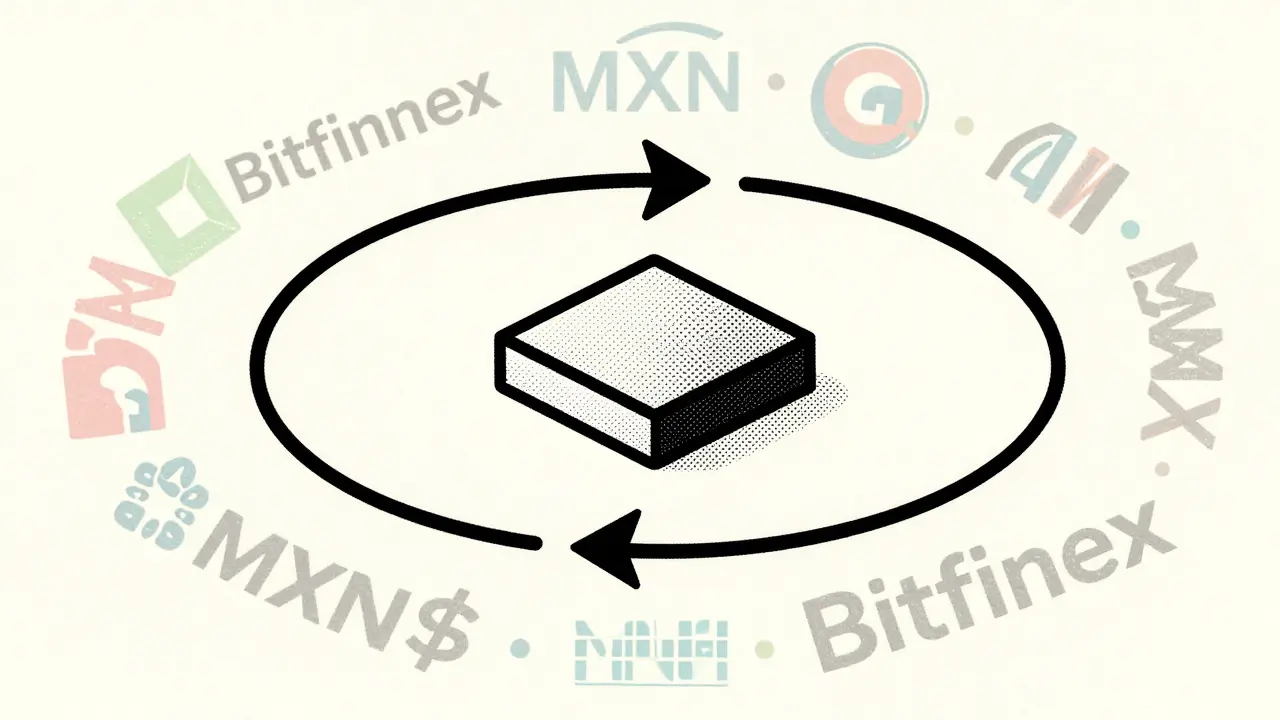
Data from early 2024 revealed that MXN₮ had virtually no trading volume outside of one platform: Bitfinex. Bitfinex is owned by iFinex Inc., the same parent company that owns Tether. This creates a closed loop. You can buy MXN₮ on Bitfinex, and you can sell it back to Bitfinex. But if you try to move it elsewhere, you will find almost no buyers.
Reports from analytics firms like RWA.xyz noted that monthly transfer volumes for MXN₮ often hit zero. With only a handful of active wallet addresses, the network effect is missing. If you hold MXN₮, you are essentially betting that Bitfinex will remain open and willing to convert your tokens back to pesos at any time. This lack of broad market support makes it risky for anyone who needs quick access to their funds across multiple platforms.
| Feature | MXN₮ (Tether MXN) | USD₮ (USDT) | USDC |
|---|---|---|---|
| Pegged To | Mexican Peso (MXN) | US Dollar (USD) | US Dollar (USD) |
| Blockchains | Ethereum Only | 14+ Networks | 10+ Networks |
| Primary Exchange | Bitfinex | Binance, Coinbase, Kraken, etc. | Coinbase, Binance, etc. |
| Liquidity | Very Low | Extremely High | High |
| Use Case | Niche Regional Trading | Global Reserve Asset | Regulated Global Reserve |
How to Buy and Store MXN₮
If you decide that the benefits outweigh the risks, getting your hands on MXN₮ is straightforward but restrictive. Since Bitfinex is the primary hub, you must start there.
- Create a Bitfinex Account: Sign up on the Bitfinex website or app. You will need to complete KYC (Know Your Customer) verification, which involves uploading ID documents. This is standard for regulated exchanges.
- Fund Your Account in Pesos: Deposit Mexican Pesos via wire transfer or supported local payment methods. Be aware that deposit times can take 3-5 business days depending on banking partners.
- Buy MXN₮: Navigate to the trading pair section and look for MXN/MXNT. Place a limit order to buy the tokens at the current market price.
- Withdraw to a Wallet: If you want to self-custody your tokens, withdraw them to an Ethereum-compatible wallet. Remember to select the ERC-20 network to avoid losing your funds.
Keep in mind that minimum deposit requirements may apply. Some reports suggest a minimum threshold of 1,000 MXN₮ for certain operations, which could be a barrier for small-scale investors. Also, withdrawal processing times average around 72 hours, so this is not a solution for emergency cash needs.

Risks and Regulatory Considerations
No discussion of Tether products is complete without addressing regulatory history. Tether has faced scrutiny over the years, including an $18.5 million settlement with the New York Attorney General in 2021 regarding misleading statements about USDT reserves. While these issues primarily concerned the dollar-backed token, they cast a shadow over the entire ecosystem.
In Mexico, the Financial Technology Institutions Law (Ley Fintech), enacted in 2019, requires crypto issuers to register with the CNBV (Comisión Nacional Bancaria y de Valores). Tether Operations Limited is registered in the British Virgin Islands, creating a jurisdictional gray area for Mexican users. This means that if something goes wrong with your MXN₮ holdings, consumer protection laws in Mexico may not offer you direct recourse against Tether.
Furthermore, the peg itself is not immune to slippage. User reports from forums indicated instances where the price deviated significantly from the 1:1 ratio during periods of low liquidity. One user noted experiencing 0.5% slippage on trades as small as $100 USD equivalent. For a stablecoin, this is unacceptable volatility.
Is MXN₮ Worth It in 2026?
Looking ahead, the outlook for MXN₮ remains cautious. Industry analysts predict minimal growth for single-country stablecoins unless they gain broader exchange support or integrate into local DeFi ecosystems. Currently, MXN₮ lacks both. There are no major Mexican businesses accepting it, and no prominent DeFi protocols supporting it.
If you are a casual investor or someone looking for a reliable store of value, stick to USDT or USDC. They offer global liquidity, multi-chain support, and deeper market integration. MXN₮ is best suited for advanced traders who specifically need to hedge peso exposure within the Bitfinex ecosystem and understand the liquidity risks involved.
For most people, the convenience of avoiding dollar conversion fees does not outweigh the difficulty of exiting the position. Until Tether expands MXN₮ to other exchanges or integrates it into broader financial rails, it will remain a niche product with limited utility.
Can I use MXN₮ on Binance or Coinbase?
No, currently MXN₮ is only traded on Bitfinex. It is not listed on major global exchanges like Binance, Coinbase, or Kraken. This limits your ability to move the asset freely between platforms.
Is MXN₮ safe to hold?
Safety depends on Tether's reserve backing and Bitfinex's operational stability. While Tether claims 100% reserve backing, independent audits for MXN₮ specifically are scarce. The main risk is liquidity: if you need to sell quickly, you may face slippage or delays.
What blockchain does MXN₮ run on?
MXN₮ runs exclusively on the Ethereum blockchain as an ERC-20 token. Ensure your wallet supports Ethereum when storing or sending these tokens to avoid loss.
Why is the price of MXN₮ sometimes off from 1 MXN?
Due to extremely low trading volume and limited liquidity, the market price can deviate from the theoretical 1:1 peg. Without enough buyers and sellers, even small trades can cause price fluctuations.
Can I earn interest on MXN₮?
Currently, there are no major lending platforms or DeFi protocols that support MXN₮. Therefore, you cannot easily stake it or lend it out to earn yield, unlike USDT or USDC.
Is MXN₮ legal in Mexico?
Cryptocurrency trading is legal in Mexico under the Ley Fintech, but Tether is registered offshore. This means you can own it, but you may not have the same consumer protections as with locally regulated banks or exchanges.

Tricia Alach
May 14, 2026 AT 14:54honestly this feels like a digital ghost town to me. i mean who really needs a stablecoin that only lives on one exchange? it just seems so... isolated.
the idea of tying your money to something you cant even move freely is kinda scary if u ask me. maybe its fine for some niche traders but for the rest of us it looks like a trap waiting to happen.
Jan Gilmore
May 16, 2026 AT 13:22You are completely missing the point here, and frankly, it shows a lack of basic financial literacy. The existence of MXN₮ isn't about 'freedom' in the way you naive idealists think; it's about arbitrage efficiency within a closed loop system. Bitfinex has a specific user base that requires peso liquidity without the slippage of converting to USD and back. It is a tool for a very specific job, not a universal key, as the article clearly states.
If you cannot grasp the concept of regional stablecoins serving local fiat pairs to reduce FX spreads, then perhaps you should stick to buying USDT on Binance where everyone else goes. Don't confuse 'low liquidity' with 'useless.' Low liquidity means high entry barriers, which filters out the retail noise. That is by design. You can't just waltz in here and dismiss sophisticated financial instruments because they don't fit your simplistic worldview of crypto adoption.
Caique Muniz
May 17, 2026 AT 11:13lol yeah keep telling urself that jan. it's not 'sophisticated' it's just bad business. nobody wants to be locked into an exchange owned by the same company that prints the money. sounds like a cult to me. also why does the author sound like a robot? boring af.
Bradley Geldenhuys
May 18, 2026 AT 03:36Look, I get the skepticism, and honestly, I share it to some degree. But let's try to see the bigger picture here, okay? The world is moving towards fragmented digital economies. Maybe having a local pegged asset IS the future for emerging markets, even if it feels clunky now.
I'm not saying it's perfect, far from it. The risks are real. But we gotta encourage innovation, right? Even if it fails, it teaches us something. So instead of tearing it down, maybe we should ask how Tether could improve the UX? How can they make it safer? We need more optimism in this space, not just cynicism. Let's build together, folks! Don't let fear stop progress!
robert Whitehead
May 18, 2026 AT 12:51This entire ecosystem reeks of moral hazard and regulatory evasion. Tether operating from the British Virgin Islands while targeting Mexican users is not 'innovation,' it is predatory behavior disguised as convenience. You people are blind to the fact that when this inevitably collapses or gets shut down by regulators, the average user will have zero recourse. There is no consumer protection. There is no audit transparency specific to MXN₮ reserves.
To suggest holding this as a 'store of value' is irresponsible. It is a gamble on Bitfinex's solvency and Tether's continued ability to skirt international banking laws. If you are trading this, you are either ignorant of the risks or complicit in a system that exploits information asymmetry. Stop pretending this is a neutral financial tool. It is a vehicle for capital flight and potential money laundering, structured specifically to avoid oversight. The fact that anyone here sees anything other than danger is disturbing. Wake up.