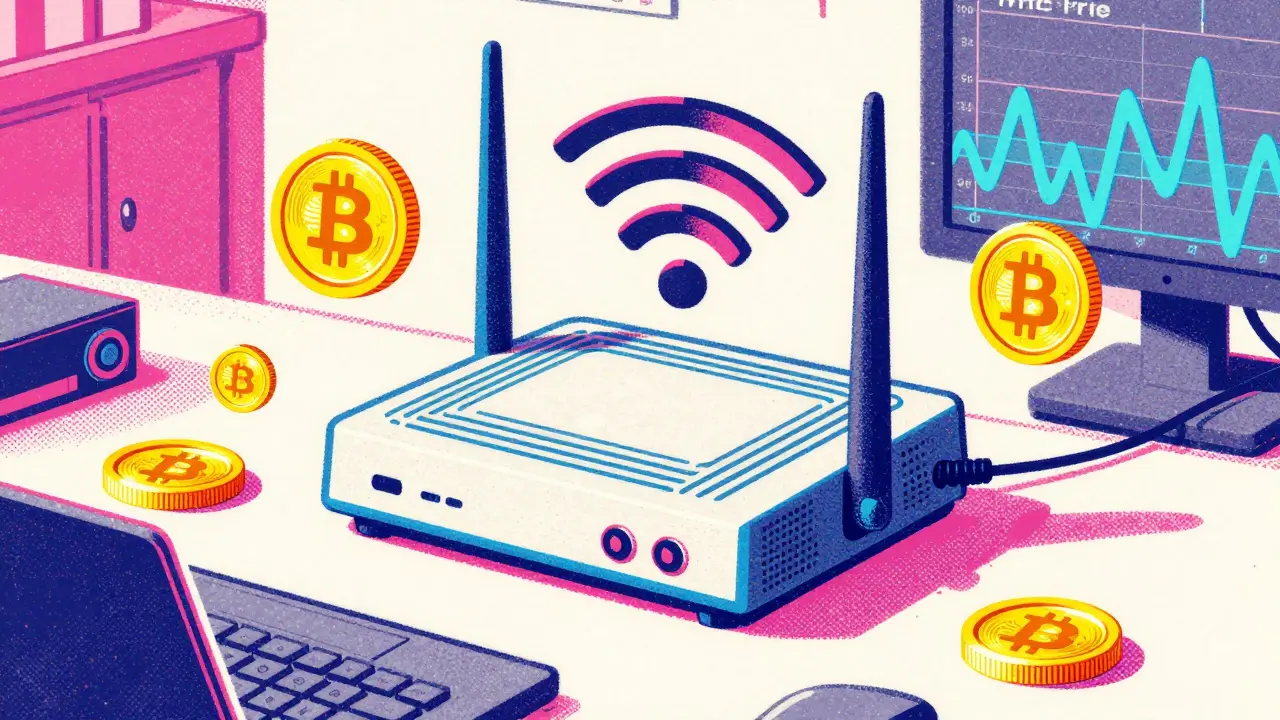
Remember the hype around decentralized wireless networks in 2021? If you were scrolling through crypto Twitter back then, you likely saw mentions of Wicrypt is a blockchain project that aimed to create a peer-to-peer internet sharing network using physical Wi-Fi devices. The promise was simple: buy a router, share your bandwidth, and earn cryptocurrency. For many, this sounded like passive income with zero effort. But if you are looking for details on the "Wicrypt NFT & Device Drop" airdrop today, the reality is quite different from the marketing promises of three years ago.
This article cuts through the noise. We will look at what the Wicrypt airdrop actually was, how the device drop worked, and most importantly, where the project stands in 2026. You need to know whether it is still worth your time or if you should move on to more active projects.
What Was the Wicrypt Airdrop?
To understand the current situation, we first need to clarify what happened during the initial launch. Many users confuse the Token Generation Event (TGE) with an open airdrop. The WNT token is the native utility token of the Wicrypt Network, used for governance and rewarding bandwidth sharing. This token launched via a TGE on December 5, 2021. It was not a free-for-all giveaway. Instead, it was distributed to early investors, team members, and participants in their Initial DEX Offering (IDO) on Cardano’s OccamRazer platform.
The term "airdrop" in the context of Wicrypt usually refers to two specific mechanisms:
- Token Vesting Releases: A portion of the tokens was locked and released linearly over time. Some allocations unlocked over two months, while others had a 36-month vesting schedule. This wasn't an airdrop you could claim instantly; it was a gradual distribution to prevent market dumping.
- Community Rewards: Early adopters who deployed devices received WNT tokens as rewards for sharing bandwidth. This was performance-based, not random. You earned tokens by keeping your device online and providing usable internet connectivity to others.
If you are searching for a button to click and receive free WNT tokens today, you will be disappointed. That window closed years ago. The initial distribution phase ended long before 2024.
Understanding the Device Drop
The "Device Drop" was the hardware component of the ecosystem. Wicrypt sold specialized routers designed to handle both standard Wi-Fi traffic and blockchain verification tasks. These weren't just ordinary home routers. They featured dual-band Wi-Fi (2.4GHz and 5GHz), gigabit Ethernet ports, and ARM-based processors optimized for running the Wicrypt node software.
Here is how the device model worked:
- Purchase: Users bought the hardware directly from Wicrypt’s official store. At launch, the price was $99 per unit.
- Setup: You connected the device to your existing internet connection. The setup process was relatively straightforward, involving basic configuration steps.
- Earning: Once online, the device shared unused bandwidth with other users in the network. In return, the protocol rewarded you with WNT tokens based on the amount of data shared and the quality of service provided.
The idea was compelling, especially in regions with expensive or unreliable internet. However, the execution faced significant hurdles. Shipping delays were common, with some users waiting six to eight weeks for delivery. Hardware issues, such as overheating in tropical climates, also reduced uptime and earnings for many participants.
| Feature | Wicrypt Router | Standard Home Router |
|---|---|---|
| Processor | ARM-based (optimized for blockchain) | Standard consumer chip |
| Wi-Fi Bands | Dual-band (2.4GHz + 5GHz) | Often single-band or basic dual-band |
| Primary Function | Bandwidth sharing + Node operation | Local network connectivity only |
| Crypto Integration | Built-in wallet and reward tracking | None |
| Price at Launch | $99 USD | $50 - $150 USD |
The Role of NFTs in the Ecosystem
You might have seen references to "NFTs" in older Wicrypt documentation. Unlike modern NFT projects focused on art or gaming assets, Wicrypt’s approach to non-fungible tokens was functional. The NFTs served as digital certificates of ownership for the physical devices. When you bought a router, you received an NFT that proved you owned the hardware and entitled you to the associated rewards.
This system aimed to solve a common problem in decentralized networks: verifying that a hotspot is real and physically present. By linking the physical device to a unique NFT on the blockchain, Wicrypt attempted to prevent sybil attacks, where one person creates multiple fake accounts to drain rewards. However, the complexity of managing these NFTs added friction for average users who just wanted to set up a router and forget about it.
Current Status of Wicrypt in 2026
Here is the hard truth you need to hear. As of May 2026, the Wicrypt project is effectively inactive. If you hold WNT tokens, they are likely illiquid. Major exchanges delisted the token, and trading volume on decentralized exchanges dried up completely after mid-2022.
Several red flags appeared well before the final shutdown:
- Development Stagnation: The official GitHub repository shows minimal activity after March 2022. No major updates or bug fixes have been committed since then.
- Community Decline: The primary Telegram group shrank from over 8,000 members in late 2021 to fewer than 1,200 active users by late 2025. Most discussions now revolve around unresolved support tickets rather than new features.
- Hardware Issues: Reports of device failures increased over time. Without regular firmware updates, older models became incompatible with evolving network standards, rendering them useless for earning rewards.
Industry analysts noted that projects combining physical hardware with blockchain tokenomics face exceptional challenges. Over 70% of similar initiatives failed to maintain operations beyond 18 months. Wicrypt fits this pattern. While the concept of monetizing unused bandwidth remains valid, the execution did not scale successfully outside its initial test markets in Nigeria.
Comparison with Competitors
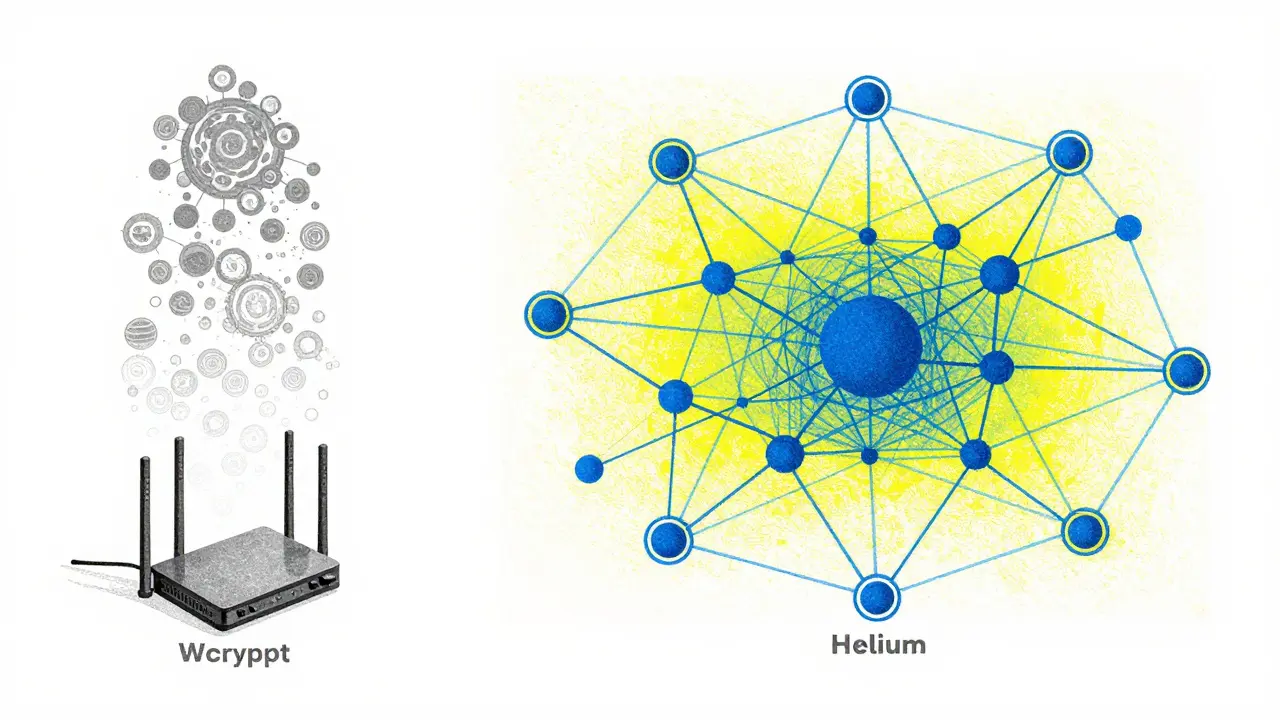
To put Wicrypt’s trajectory into perspective, let’s compare it with Helium, the most successful decentralized wireless network to date. Both projects aimed to decentralize connectivity, but their outcomes diverged sharply.
| Metric | Wicrypt (WNT) | Helium (HNT/IOT/MOBILE) |
|---|---|---|
| Technology Focus | Wi-Fi Bandwidth Sharing | LoRaWAN IoT & 5G Mobile |
| Peak Market Cap | Modest (under $10M) | $1.2 Billion (2021 peak) |
| Device Deployment | ~1,200 units (estimated) | 500,000+ hotspots globally |
| Token Liquidity | Delisted / Illiquid | Highly liquid on major exchanges |
| Geographic Reach | Limited (primarily Africa) | Global presence |
| Current Activity | Inactive | Active development and expansion |
Helium succeeded because it partnered with major telecom providers and expanded into mobile coverage. Wicrypt remained isolated, focusing on a niche market without securing strategic alliances. This lack of scalability ultimately doomed the project.
Risks and Lessons Learned
If you are considering investing in similar decentralized infrastructure projects, take note of the pitfalls Wicrypt encountered. First, hardware dependency is a double-edged sword. While it ensures physical presence, it introduces supply chain risks, shipping delays, and maintenance burdens. Second, tokenomics must align with long-term sustainability. Wicrypt’s concentrated token distribution and long vesting schedules created selling pressure that the market couldn’t absorb.
Third, community engagement is critical. A project can have great technology, but if users abandon the platform due to poor support or technical glitches, the network effect collapses. Wicrypt’s customer support was initially responsive, but as issues mounted, the team struggled to keep up.
What Should You Do Now?
If you currently own Wicrypt hardware or tokens, your options are limited. Selling WNT tokens may require finding a private buyer or using a decentralized exchange with very low liquidity, which often results in significant slippage. The hardware itself has little resale value since it cannot connect to an active network.
For those interested in decentralized wireless networks, consider exploring active alternatives. Projects like Helium, Filecoin (for storage), or Akash (for compute) offer more robust ecosystems with ongoing development and liquidity. Always research the team’s track record, audit reports, and community health before committing funds.
Remember, the crypto space moves fast. What seems promising today can become obsolete tomorrow. Stay informed, diversify your portfolio, and never invest more than you can afford to lose.
Is the Wicrypt WNT airdrop still active in 2026?
No, the Wicrypt airdrop and token distribution events concluded in 2021-2022. There are no active airdrops for WNT tokens. Any website claiming to offer free WNT tokens today is likely a scam.
Can I still buy Wicrypt devices and earn rewards?
While you might find old stock on secondary markets, buying a Wicrypt device is not recommended. The network is largely inactive, meaning you will not earn meaningful rewards. Additionally, there is no official support for new hardware setups.
Where can I trade WNT tokens?
WNT tokens are delisted from major centralized exchanges. Trading is extremely limited to obscure decentralized exchanges with very low liquidity. Attempting to sell large amounts may result in significant losses due to slippage.
Why did the Wicrypt project fail?
Wicrypt struggled with hardware adoption rates, limited geographic reach, and insufficient strategic partnerships. Combined with development stagnation and high operational costs for physical devices, the project could not achieve the network effects needed for sustainability.
Are there better alternatives to Wicrypt?
Yes, Helium is the leading competitor in decentralized wireless networks. Other options include Filecoin for decentralized storage and Akash for decentralized compute. These projects have larger communities, active development, and better liquidity.


mark valmart
May 29, 2026 AT 18:57yeah i remember when this thing was supposed to be the next big thing but honestly it just died out pretty fast
Diana Morris
May 30, 2026 AT 03:55stop buying into these dead projects people need to wake up and realize that hardware crypto is mostly a scam unless its helium or something proven
Joshua Alcover
May 31, 2026 AT 22:18The epistemological failure of Wicrypt lies not merely in its technical inadequacies but in the fundamental ontological contradiction of attempting to impose decentralized consensus mechanisms upon inherently centralized physical infrastructure paradigms. The hegemonic narrative of 'passive income' served as a siren call, luring participants into a labyrinth of vesting schedules and liquidity traps that were structurally designed to extract value from the periphery rather than distribute it equitably across the network topology. One must interrogate the socio-economic implications of such tokenomic models which prioritize speculative accumulation over genuine utility creation thereby reinforcing existing power asymmetries within the digital ecosystem.
Bill Gunn
June 1, 2026 AT 13:23I actually bought one of those routers back in the day 🤦♂️ It sat on my shelf gathering dust for two years before I finally threw it out. The whole NFT certificate thing felt like extra friction for no real benefit especially when you consider how easy it is to fake hotspots anyway. If you are holding any tokens right now just accept the loss and move on to something with actual volume like Helium or maybe even look into Akash Network for compute resources 💻🚀
Hadleigh Edwards
June 2, 2026 AT 10:29It is truly fascinating to observe the trajectory of such projects because they serve as invaluable case studies in the broader evolution of decentralized infrastructure initiatives which often struggle to reconcile the theoretical elegance of blockchain-based incentive structures with the gritty realities of hardware deployment logistics and supply chain management challenges that inevitably arise when scaling beyond initial pilot programs in specific geographic regions where internet connectivity issues might otherwise provide a compelling use case for bandwidth sharing protocols yet ultimately fail to achieve critical mass due to insufficient network effects and lack of strategic partnerships with major telecommunications providers who could have potentially facilitated wider adoption and integration into existing consumer ecosystems thereby creating a sustainable feedback loop between token rewards and actual utility consumption patterns.
Crystal Davis
June 2, 2026 AT 22:40Let's be clear about the mechanics here. The delisting wasn't an accident; it was a mathematical certainty given the token distribution model. The long vesting periods created a massive overhang of sell pressure that the tiny market cap simply couldn't absorb once the hype cycle ended. Anyone claiming there is still value in WNT is either misinformed or actively trying to offload bags onto retail investors who don't understand basic liquidity dynamics. The GitHub activity dried up in 2022 because the team realized the unit economics were broken. Hardware maintenance costs exceeded the revenue generated from shared bandwidth by a factor of ten. It was a Ponzi scheme disguised as DePIN.
Christina Pearce
June 4, 2026 AT 11:55I found the comparison table really helpful actually. It makes so much sense why Helium succeeded while Wicrypt failed. The geographic reach difference is huge. I wonder if anyone has tried to repurpose those Wicrypt routers for normal home use or if they are totally useless without the software support?
Bill Gunn
June 5, 2026 AT 01:19@Christina Pearce yeah I tried using mine as a regular router but the firmware was locked down tight 😅 You can't really flash open source firmware on them easily. They are basically expensive paperweights now. Best to recycle the electronics properly.
Barclay Chantel
June 5, 2026 AT 19:33How utterly tedious to revisit this charade. The entire premise of monetizing household Wi-Fi bandwidth was predicated on a naive understanding of both network engineering and human behavior. The notion that individuals would willingly expose their local networks to strangers for the promise of fractional cents in a volatile cryptocurrency is laughable at best and indicative of a profound lack of digital literacy among the participant base. Furthermore, the reliance on NFTs as proof of device ownership was a pretentious solution to a non-existent problem, adding unnecessary complexity for the sake of appearing innovative. It is no surprise that such a poorly conceived project collapsed under the weight of its own absurdity.
Craig Swanson
June 7, 2026 AT 03:11Look I know this hurts to hear but you have to cut your losses and learn from this experience. Many people got burned by early DePIN projects because the technology wasn't ready for prime time. Don't let this stop you from exploring crypto though. There are great opportunities in storage and compute networks right now. Just make sure you do your own research and look for projects with active development teams and real users. You can bounce back from this if you stay informed and keep learning about how these networks actually work.